- Our Products
-
Choose your Cabinet Style
-

Getting kitchen cabinet hinge types wholesale OEM specifications right before a first container order saves distributors from costly rework after installation. Hinge choice affects door alignment, closing sound, cycle life, and how well a full cabinet line holds up under daily use in a busy household kitchen. This guide breaks down the main hinge categories, opening angles, cycle-life expectations, and how to specify hardware correctly when sourcing from a Vietnam OEM factory, along with the defects an inspection team should catch before a container ships.
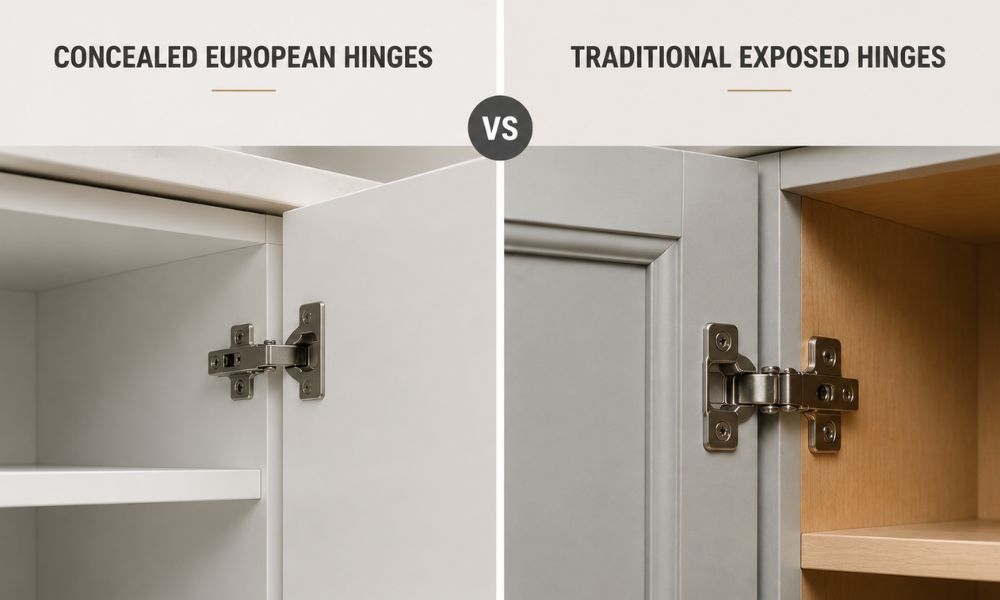
Different hinge styles suit different cabinet designs.
Concealed hinges, often called European hinges, mount inside the cabinet box and stay hidden when the door is closed. They dominate modern kitchen cabinet programs because they give a clean, uninterrupted door line with no visible hardware.
Exposed hinges sit on the outside face of the door and frame, giving a more traditional or decorative look. Distributors targeting farmhouse or classic kitchen lines still request exposed hinges, but concealed hardware now covers the large majority of kitchen cabinet hinge types wholesale OEM buyers order for standard programs.
Soft-close hinges use a small hydraulic damper to slow the door in the last few inches of travel, preventing slamming and reducing wear on the cabinet box over time. This feature has become close to standard across kitchen cabinet hinge types wholesale OEM buyers request for US and Canadian retail programs.
Opening angles typically run 90°, 105°, 110°, or 165°, depending on cabinet layout and whether doors need to clear an adjacent appliance or island edge. Buyers should confirm the opening angle against their own cabinet box design before finalizing a hardware spec sheet, since the wrong angle can cause doors to bind against neighboring cabinets or appliance handles.
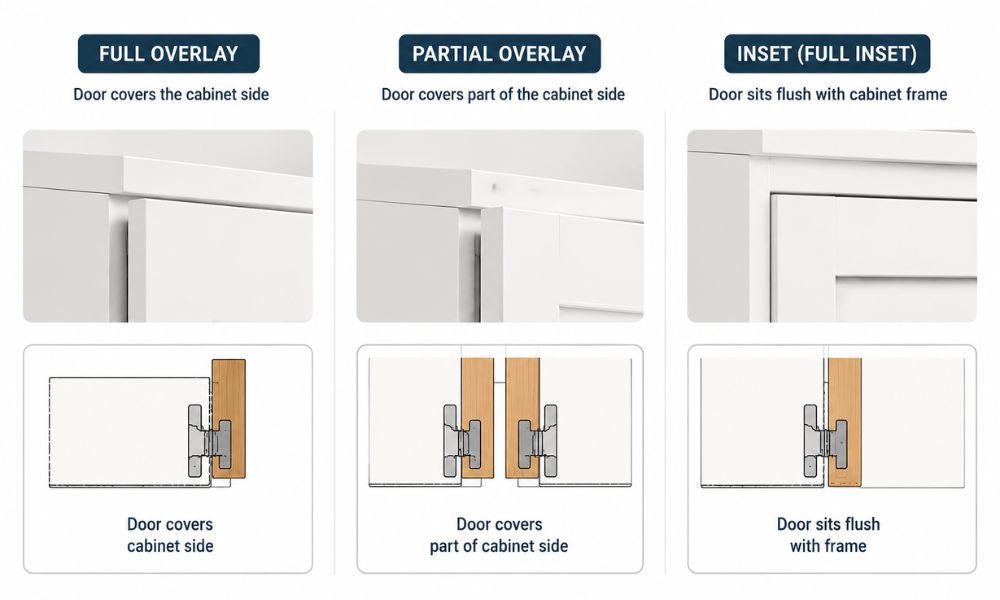
Opening angle and overlay type should match the cabinet design.
Full overlay hinges let the door cover most or all of the cabinet box front, which is the look most modern kitchen lines use today. Roughly 1-1/4 inch overlay has become the most common spec, giving a cleaner appearance with minimal visible frame.
Partial overlay suits face-frame cabinet construction where doors only partially cover the frame, while inset hinges sit doors flush within the frame opening for a distinct, traditional profile. Each overlay type requires a different hinge cup boring depth and mounting plate, so buyers should specify overlay type clearly on every kitchen cabinet hinge types wholesale OEM purchase order.
Boring depth and cup placement can shift slightly depending on door thickness and finish. Our thermofoil kitchen cabinets manufacturer Vietnam line uses standard MDF door thickness, while lacquer kitchen cabinets manufacturer Vietnam and high gloss kitchen cabinets manufacturer Vietnam doors can carry slightly different edge treatments that affect hinge seating.
Door material also plays a role — see our kitchen cabinet wood species OEM Vietnam guide for how species and substrate choice affects screw-holding strength for hinge mounting plates over the long term.
Hinges are typically made from cold-rolled steel or stainless steel, with stainless holding up better in humid climates and coastal environments. Cycle-life ratings matter for wholesale buyers building a warranty program — most quality concealed hinges are rated for 50,000 to 100,000 open-close cycles before hardware failure.
Buyers should request cycle-test documentation from any hardware supplier before committing to a full container order. A qualified Vietnam OEM factory sourcing kitchen cabinet hinge types wholesale OEM buyers can rely on should provide this data as standard, not as a special request.
Coastal and humid-climate distributors in particular should push for stainless steel hinges over cold-rolled steel, even at a modest cost premium. Cold-rolled steel hinges can develop surface corrosion within a few years in high-humidity environments, which shows up as stiff or squeaky hinge action long before the mechanical cycle rating is reached.
Hardware cost is typically quoted separately from the cabinet box price, since hinge grade and soft-close features shift the per-door cost meaningfully. For a full breakdown of base cabinet pricing across finish categories, see our kitchen cabinet FOB price Vietnam guide, then request a hardware-specific quote once you have confirmed door count and hinge grade.
Upgrading from standard soft-close to premium branded hinges (such as Blum or Hettich equivalents) typically adds a modest per-door cost but reduces warranty claims significantly over the life of a distribution program. Buyers running a private-label catalog should weigh that upgrade cost against their target retail price point and expected claim volume before locking in a hardware grade for the full order, since a warranty claim on hardware often costs more in service time than the original per-door upgrade would have.
Minimum order quantity is one 40ft container, the same threshold that applies across all Starvia finish categories. Hardware selection rarely changes production lead time on its own, but hinge specification options outside a factory’s standard stocked range can add scheduling time.
Full details on how door style and finish complexity affect production timelines are covered in our kitchen cabinet lead time Vietnam OEM factory guide, which is worth reviewing alongside your hardware spec sheet before confirming a ship date.
Transit time from Hai Phong to Los Angeles/Long Beach runs 18-22 days; East Coast ports run 28-32 days. Current West Coast ocean freight rates sit around $3,200 per FEU, with East Coast rates around $5,000 per FEU as of Q2 2026, based on benchmarks tracked by freight platforms such as Freightos.
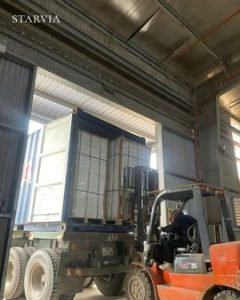
Hinges and mounting hardware should ship pre-installed on doors wherever possible, with loose hardware bagged and labeled by cabinet number. This reduces on-site assembly time for distributors and cuts down on lost-hardware claims after container unloading.
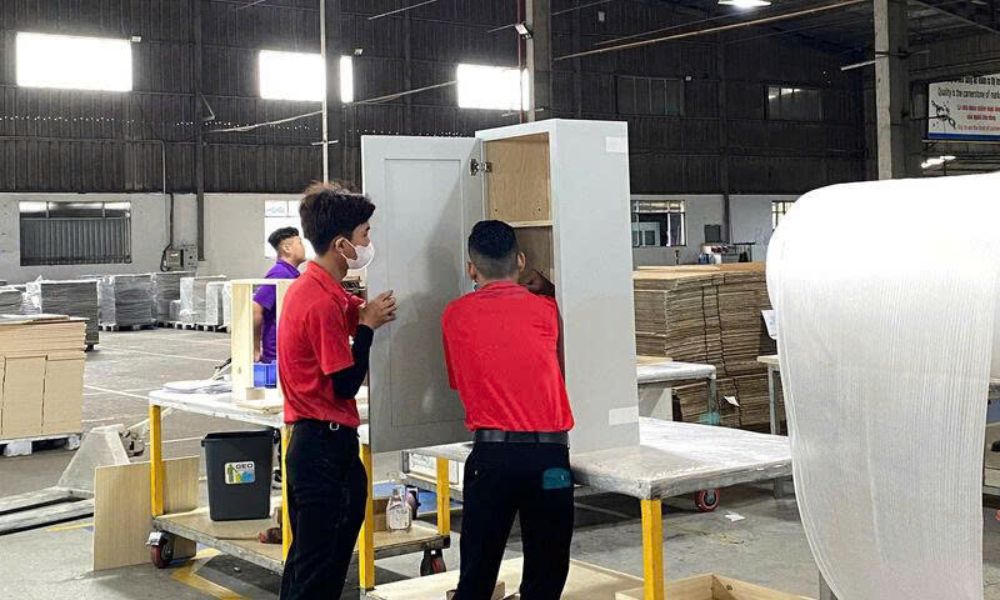
Every hinge should be inspected before export.
Every hinge batch should be checked for consistent spring tension, smooth soft-close action, and correct boring alignment before doors are packed. A misaligned boring pattern is one of the most common defects flagged during final inspection, since it causes doors to sit unevenly once installed.
Buyers should request sample doors with hardware pre-installed to test the actual soft-close feel and door alignment before approving a full production run. This is especially important for buyers building a private-label program where hardware feel directly affects customer perception of quality.
| Hinge Type | Best Fit For | Typical Cycle Rating |
|---|---|---|
| Concealed soft-close | Modern kitchens, standard programs | 50,000-100,000 cycles |
| Concealed standard (non soft-close) | Budget-tier programs | 50,000 cycles |
| Exposed decorative | Farmhouse, traditional lines | Varies by style |
| Inset hinges | Face-frame, flush-door construction | 50,000+ cycles |
Hinges rarely ship alone on a full container order — most kitchen cabinet hinge types wholesale OEM purchase orders also specify drawer slides, and the two hardware categories should be sourced together for consistent cycle-life quality. Full-extension, soft-close drawer slides now pair almost universally with soft-close hinges on mid-range and premium cabinet lines.
Buyers bundling both hardware types from the same Vietnam OEM factory typically get better per-unit pricing than sourcing hinges and slides from separate suppliers. It also simplifies quality control, since one factory is accountable for the full hardware program rather than two vendors pointing at each other after a warranty claim, which matters most when a container arrives with a mixed hardware defect.
Door sag is the most visible defect linked to hinge quality, usually caused by undersized hinges paired with heavier door panels such as solid wood or lacquer plywood. Buyers should confirm hinge load rating against door weight before finalizing a spec sheet, particularly for tall pantry doors or wide base cabinet doors.
Spring tension inconsistency is a second common issue — doors that close firmly on one cabinet but drift open on another usually indicate a batch with inconsistent spring tension. This defect is often invisible until doors have been installed and used for several weeks, which is why cycle-testing documentation matters more than a one-time visual inspection.
A third defect worth checking is boring depth consistency across a full production run. Even a 1mm variation in cup boring depth can cause visible door misalignment once hardware is installed, so buyers should request boring depth tolerance data alongside standard hinge specifications. Factories running Homag CNC boring equipment with tight tolerance control typically show far fewer of these alignment defects than shops using manual boring jigs.
What is the difference between concealed and exposed hinges? Concealed hinges hide inside the cabinet box for a clean look, while exposed hinges mount visibly on the door face and frame for a more traditional appearance.
Are soft-close hinges worth the extra cost? Yes for most wholesale programs — soft-close hinges reduce slamming damage and are now expected by end customers in mid-range and premium kitchen lines.
Can a Vietnam OEM factory match a specific branded hinge? Most factories can source or match equivalent specifications to popular branded hinges, though buyers should confirm cycle rating and boring pattern compatibility on a physical sample first.
What opening angle should I specify? Standard base and wall cabinets typically use 105° or 110° hinges, while corner cabinets or units near appliances may need 165° hinges to clear adjacent surfaces.
Before placing a first order, confirm the following with any Vietnam OEM factory: hinge material and cycle-life documentation, correct opening angle for your cabinet layout, overlay type matched to your door style, soft-close availability, and hardware packing method for container shipment.
A supplier of kitchen cabinet hinge types wholesale OEM buyers can scale with should also provide a written hardware spec sheet for every order and offer sample doors with hardware pre-installed before a full production run begins. This design-forward hardware approach lines up with the minimalist trends tracked by the National Kitchen and Bath Association, where clean concealed hardware remains a top request from designers.
Buyers should also ask whether a factory can supply matching hardware across multiple finish lines within the same order, since many distributors run thermofoil, lacquer, and high gloss SKUs side by side under one catalog. Consistent hinge and slide specifications across finish lines reduce the number of separate hardware programs a distributor has to manage and support after installation.
For broader hardware context beyond hinges — drawer slides, handles, and pulls — see our full kitchen cabinet hardware guide covering specifications across all cabinet hardware categories.
Starvia’s Vietnam OEM factory supplies concealed soft-close hinges as standard across thermofoil, lacquer, high gloss, and solid wood cabinet lines for distributors and importers across the US, Canada, Australia, and Europe, with cycle-test documentation available on every hardware batch. To request current hardware specifications, samples, or a hinge-specific quote, get in touch with our team directly.
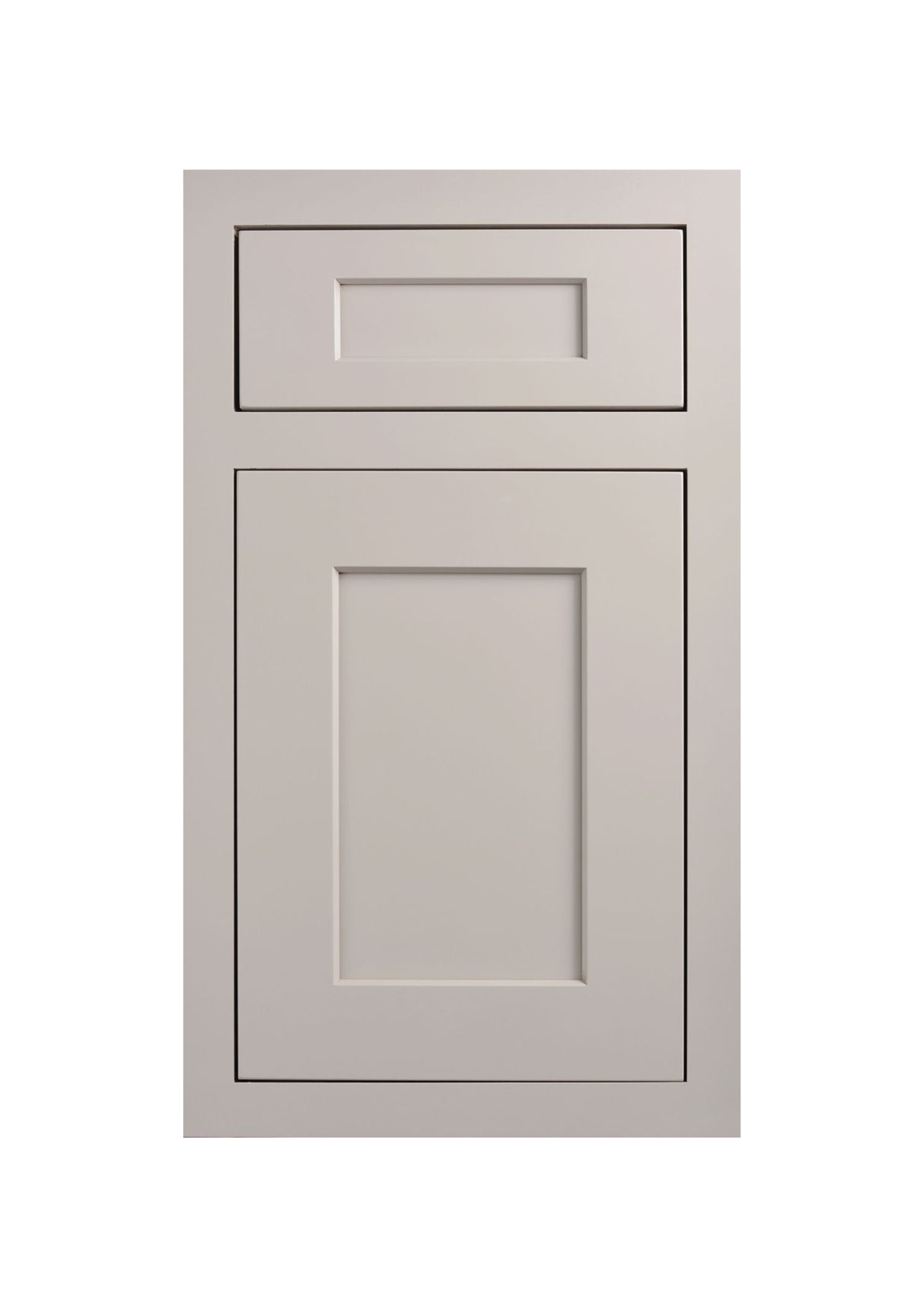 View collection
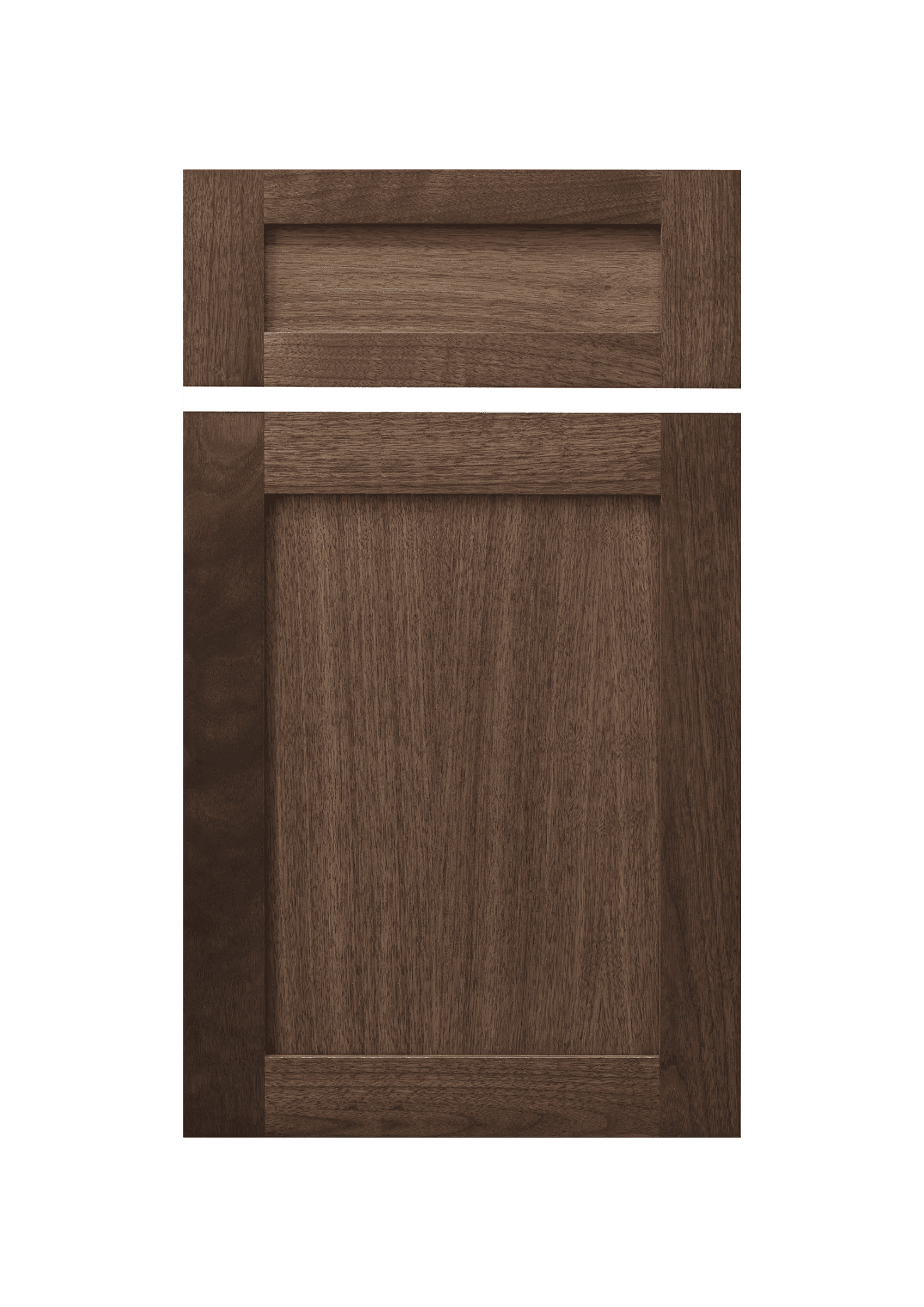 View collection
 View collection
 View collection