- Our Products
-
Choose your Cabinet Style
-

Getting kitchen cabinet container loading wholesale OEM planning right determines whether a buyer pays ocean freight for empty air or for cabinets. Flat-pack kitchen cabinets are what the shipping industry calls light bulky cargo — they fill a container’s cubic space long before they come close to its weight limit, which means the number that actually controls your freight cost per unit is cubic meters used, not kilograms shipped. Buyers who treat weight as the main planning variable are optimizing for the wrong constraint entirely.
Ocean freight uses a concept called stowage factor: the cubic space one metric ton of cargo occupies. Dense cargo like stone or metal “weighs out,” hitting the container’s weight limit before its cubic capacity is full. Light bulky cargo like flat-pack cabinets does the opposite — it “cubes out,” filling the container’s volume long before weight becomes a constraint.
This single distinction is why a kitchen cabinet container loading wholesale OEM order should be planned around cubic meter efficiency first, with weight as a secondary check rather than the primary constraint most buyers assume it is.
A standard 20ft container holds 33.2 CBM nominal, a standard 40ft holds 67.7 CBM, and a 40ft high cube holds 76.3 CBM. But nominal capacity is not what actually loads — real-world planning figures run meaningfully lower once carton shape, palletizing, and bracing are accounted for.
| Container | Nominal CBM | Realistic Loaded CBM | Max Payload |
|---|---|---|---|
| 20ft Standard | 33.2 CBM | 25-28 CBM | 28,130 kg |
| 40ft Standard | 67.7 CBM | 54-58 CBM | 28,750 kg |
| 40ft High Cube | 76.3 CBM | 65-68 CBM | Varies by carrier |
A kitchen cabinet container loading wholesale OEM factory quoting your shipment should plan against the realistic loaded figure, not the nominal container spec — the gap between the two is routinely 8 to 11 CBM on a 40ft container alone, equivalent to leaving several cabinet sets of space unused if not planned for. A free CBM calculator is a useful independent check against any container-count estimate a factory provides.
Two factories quoting the same cabinet order can arrive at different container counts even when working from identical cabinet dimensions, because loading method and planning discipline, not the cabinets themselves, drive the gap between nominal and realistic CBM. A factory that engineers its loading plan in advance — mapping carton dimensions against container interior space before cutting any cartons — routinely captures several additional percentage points of utilization compared to one that loads reactively on the day of container stuffing.
This gap compounds directly into landed cost per unit: a kitchen cabinet container loading wholesale OEM factory achieving higher realistic CBM utilization ships the same order in fewer containers, and that savings should show up in your freight quote, not just in the factory’s own margin.
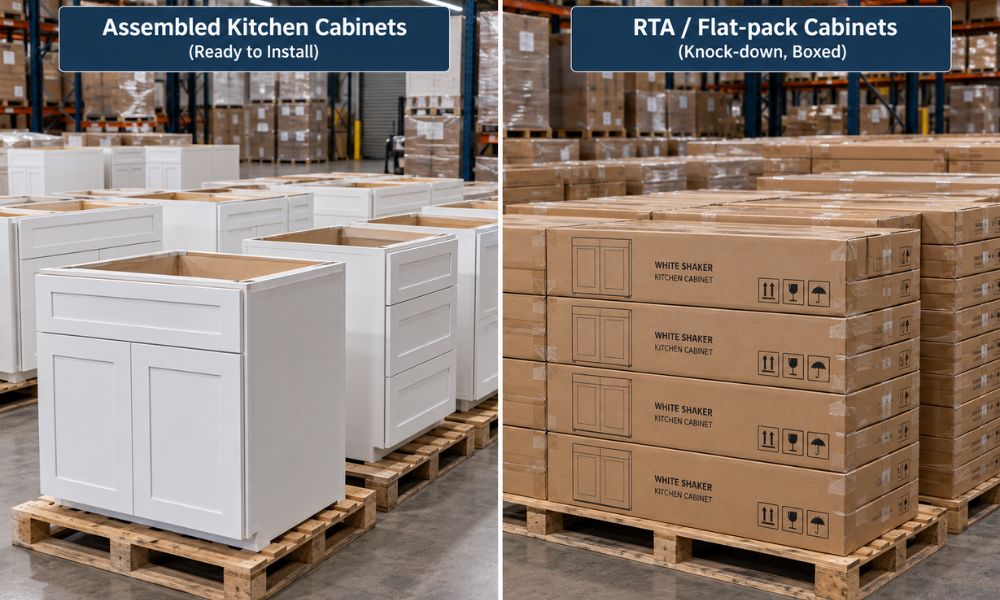
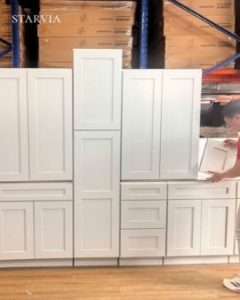
Flat-pack construction reduces unused interior cabinet space, allowing more units to fit into a shipping container.
An assembled cabinet box ships mostly empty air inside its own frame — the interior cavity that holds dishes and pots on a customer’s wall contributes zero value during transit but still occupies full cubic space in the container. Knock-down (flat-pack) construction collapses that same cabinet into flat panels that nest together, reclaiming the wasted interior volume entirely.
This is the structural reason flat-pack and RTA cabinet lines ship meaningfully more units per container than fully assembled equivalents, independent of any specific percentage figure — the principle holds regardless of exact cabinet dimensions, because the volume being reclaimed is the hollow interior space every assembled box carries.
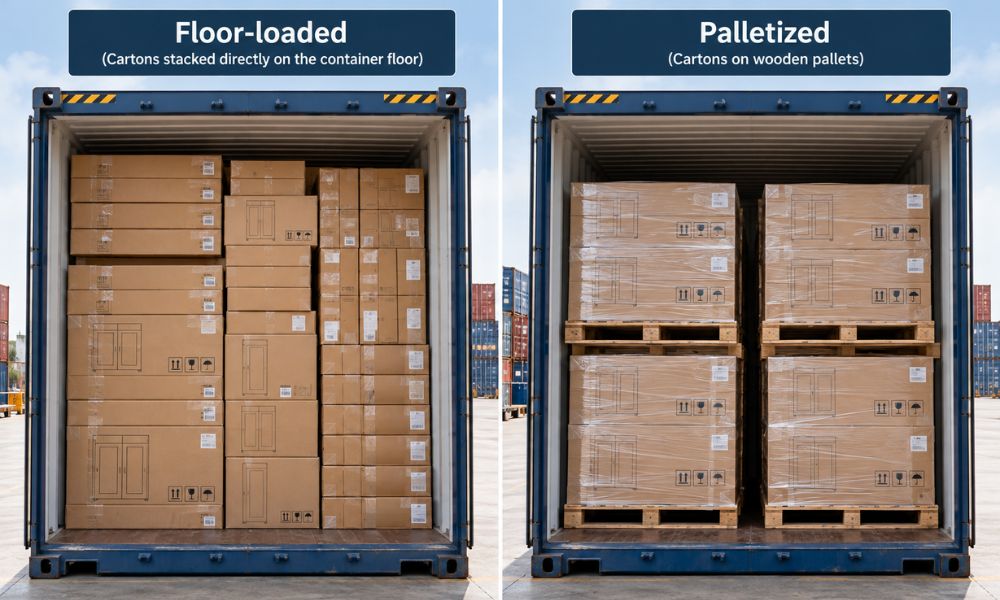
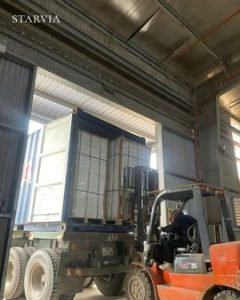
Floor loading can improve cubic space utilization, while palletizing simplifies handling and unloading
Palletizing a container load gives up roughly 10 to 15 percent of available cubic volume compared to floor loading, since pallet decks and the gaps between pallets consume space that direct floor stacking does not. Floor loading maximizes cubic utilization but increases handling time and crushing risk if cartons are not braced correctly, which is why many factories use a hybrid approach: floor-loaded tiers through the body of the container with a few pallets positioned near the door for easier unloading.
A kitchen cabinet container loading wholesale OEM factory should disclose which method it uses by default, since the 10 to 15 percent volume difference directly affects how many units fit per container and therefore your landed cost per cabinet.
Container door-plate maximum gross weight runs around 30 metric tons, but the practical constraint for most shipments is road transport: standard chassis limits typically cap safe cargo weight around 17 to 19 metric tons for a 20ft container and 19 to 20 metric tons for a 40ft container.
Using the core material weight data from our core material comparison — plywood at roughly 2.1 to 2.3 lb per square foot — a standard base cabinet box built from 3/4-inch plywood typically runs well under the per-unit weight that would push a full container toward its road weight limit before its cubic space fills.
In practice, a kitchen cabinet container loading wholesale OEM shipment reaches its cubic limit first in nearly every case, which is why buyers should negotiate and verify loading efficiency in cubic terms rather than spending negotiating effort on weight allowances that rarely become the binding constraint.
Request your factory’s actual carton dimensions per cabinet SKU, not just the finished cabinet dimensions, since packaging adds measurable volume on every side. Multiply carton length by width by height for each SKU, sum across your order quantity, and divide by the realistic loaded CBM figure for your container size to estimate how many containers your order requires — then compare that figure against your factory’s quote.
This calculation is the same discipline covered in our standard sizing guide, since cabinet width increments directly determine how efficiently cartons nest together inside a container versus leaving irregular gaps.
Ask your kitchen cabinet container loading wholesale OEM supplier for a loading plan or stuffing diagram for your specific order, not just a container-count estimate. A factory that can show carton dimensions, stacking pattern, and projected CBM utilization percentage is giving you a verifiable number rather than a rounded guess that may understate your actual container requirement.
This verification matters especially for multifamily and production-builder orders, where even a small per-container inefficiency compounds across dozens of containers into a meaningful freight cost difference by the time the full order ships.
Buyers ordering primarily base and wall cabinet boxes benefit most from flat-pack construction, since box components nest efficiently and the interior cavity reclamation is largest relative to finished size. Buyers ordering a significant share of accessories, drawer boxes, or small hardware-heavy components should confirm these items are palletized separately rather than loose-packed around larger cabinet cartons, since loose small items are the most common source of unplanned crushing damage and wasted void space in a mixed container load.
Reference your quality control checklist to confirm packaging integrity is verified before container sealing, since a damaged carton discovered on arrival is far more costly to resolve than one caught during pre-shipment inspection.
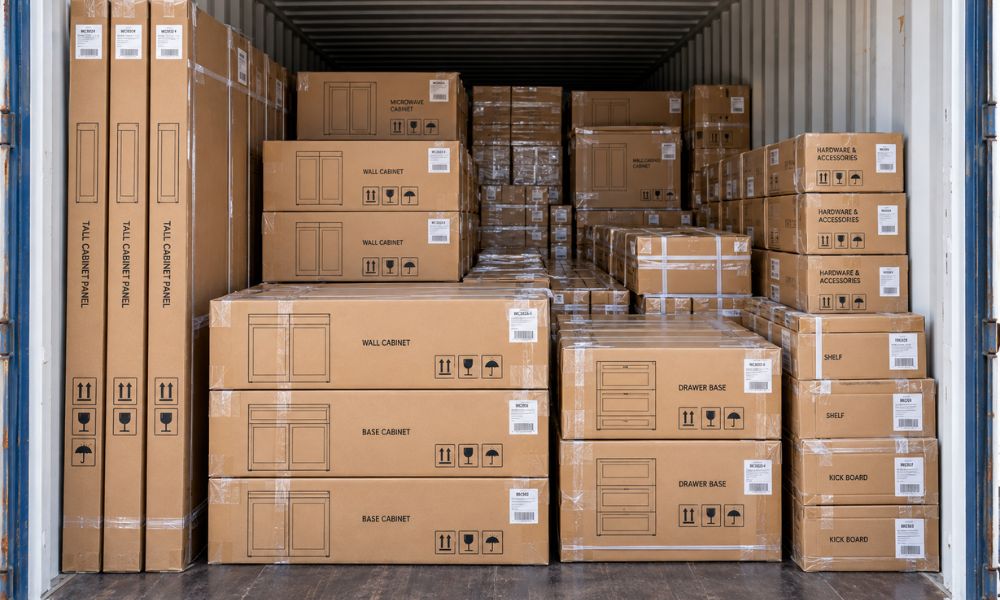
A well-planned mixed-SKU loading strategy accommodates different cabinet sizes while minimizing wasted container space.
A container loaded with a single cabinet width and style nests predictably, since every carton shares the same footprint and stacks without irregular gaps. A real kitchen order rarely looks like that — it mixes base cabinets, wall cabinets, tall units, and accessories in a dozen different widths, and each size transition creates a small void unless the loading plan accounts for it deliberately.
Buyers placing varied, multi-SKU orders should ask specifically how their factory sequences different cabinet sizes during loading, since a factory experienced with mixed-SKU kitchen orders fills these transition gaps with smaller accessory cartons rather than leaving them as wasted cubic space. This is a meaningfully different skill from loading a single-SKU bulk order, and it is worth confirming before committing to a container count on a varied order.
Is weight ever the binding constraint for a kitchen cabinet shipment? Rarely — flat-pack cabinets are light bulky cargo that typically fill a container’s cubic space well before approaching road weight limits, so volume planning should be the primary focus.
How much space does palletizing actually cost me? Roughly 10 to 15 percent of available cubic volume compared to floor loading, though palletizing also reduces handling risk and unloading time, which some buyers consider a worthwhile trade-off.
Does flat-pack construction always mean more units per container? In virtually every case, yes, because flat-pack reclaims the hollow interior volume that an assembled cabinet box carries as dead space during transit.
What is the difference between nominal and realistic loaded CBM? Nominal CBM is the container’s theoretical maximum interior volume; realistic loaded CBM accounts for carton shape, bracing, and loading method, and is typically 8 to 11 CBM lower on a 40ft container.
Should I ask for a stuffing diagram on every order? It is most valuable on large or multi-container orders, where even small loading inefficiencies compound into a meaningful freight cost difference across the full shipment.
Does container choice (20ft vs 40ft vs 40HC) depend on my order size? Yes — smaller orders may not justify a 40ft container’s capacity, while larger multifamily or production-builder orders typically benefit from 40HC’s additional realistic loaded CBM over a standard 40ft container.
Why do two factories quote different container counts for the same order? Loading method and planning discipline, not the cabinets themselves, usually explain the difference — a factory with an engineered loading plan captures more realistic CBM utilization than one loading reactively, and that difference should be verifiable through carton dimensions and a stuffing diagram.
Starvia plans kitchen cabinet container loading wholesale OEM shipments around realistic loaded CBM and verified carton dimensions, with stuffing diagrams available for buyer review before container booking, covering single-SKU bulk orders and mixed multifamily specifications alike. If your next order needs a container count verified against actual loading data rather than a rounded estimate, talk to our production team before you finalize your shipping plan.

 View collection
 View collection
 View collection
 View collection