- Our Products
-
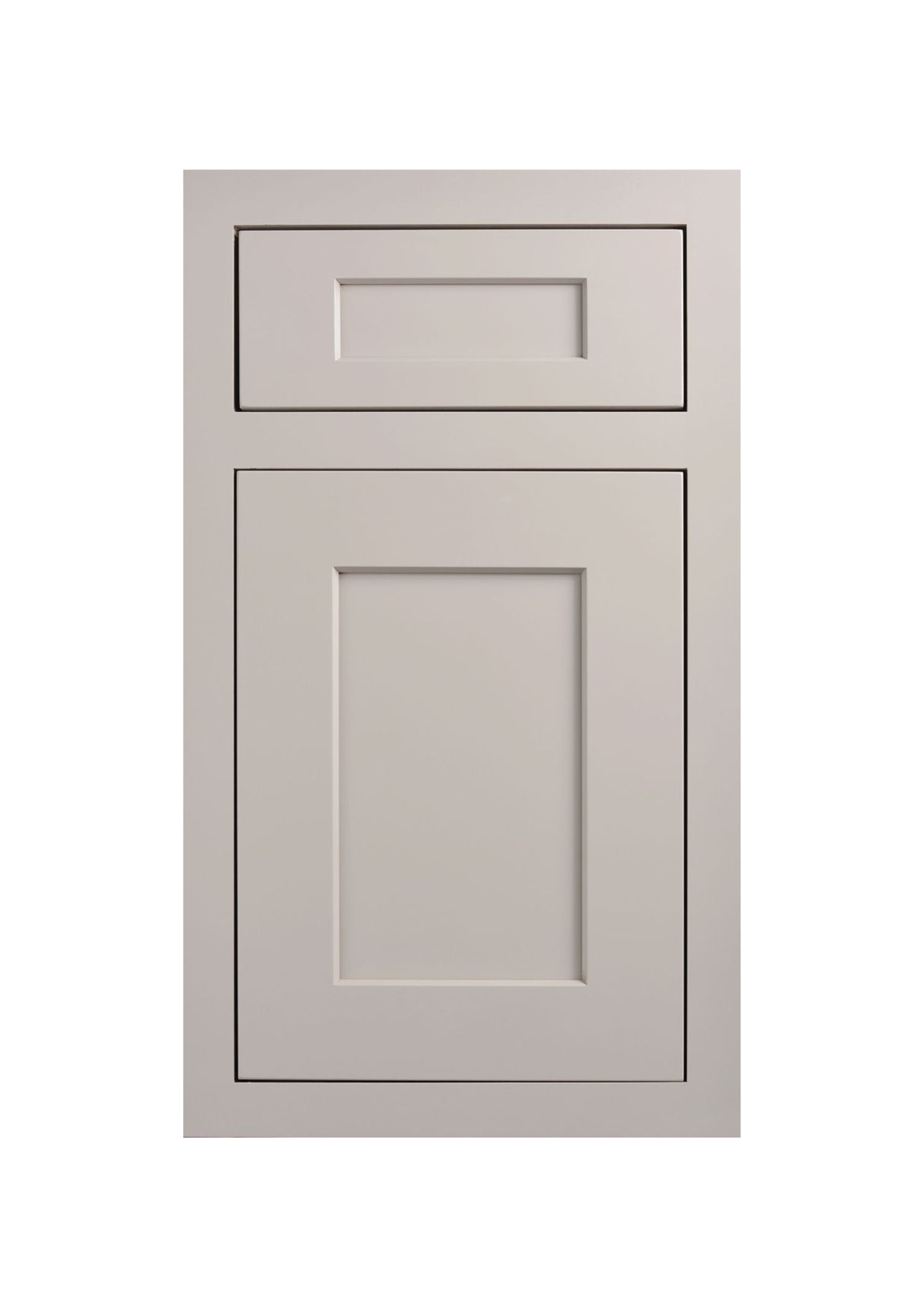
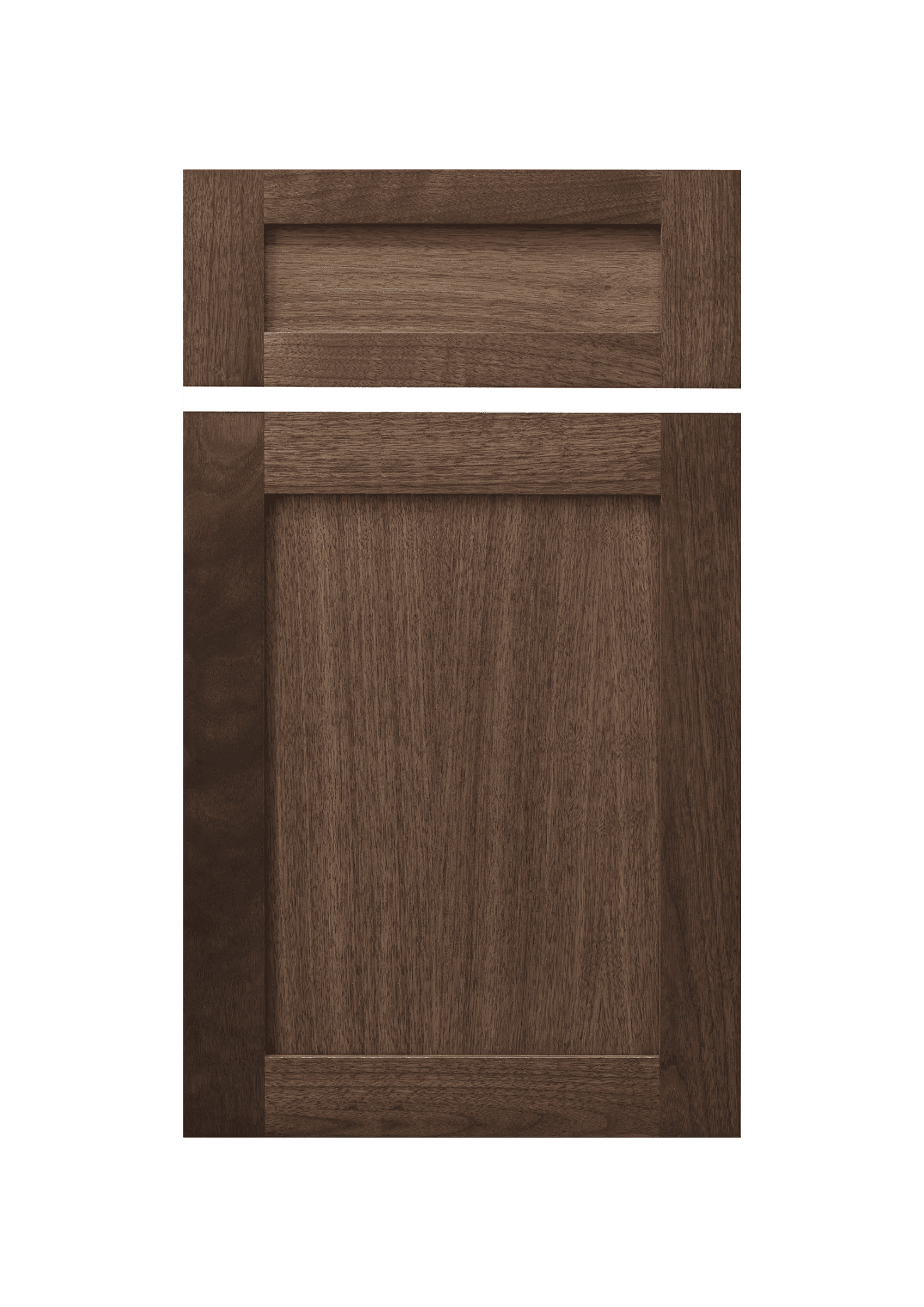
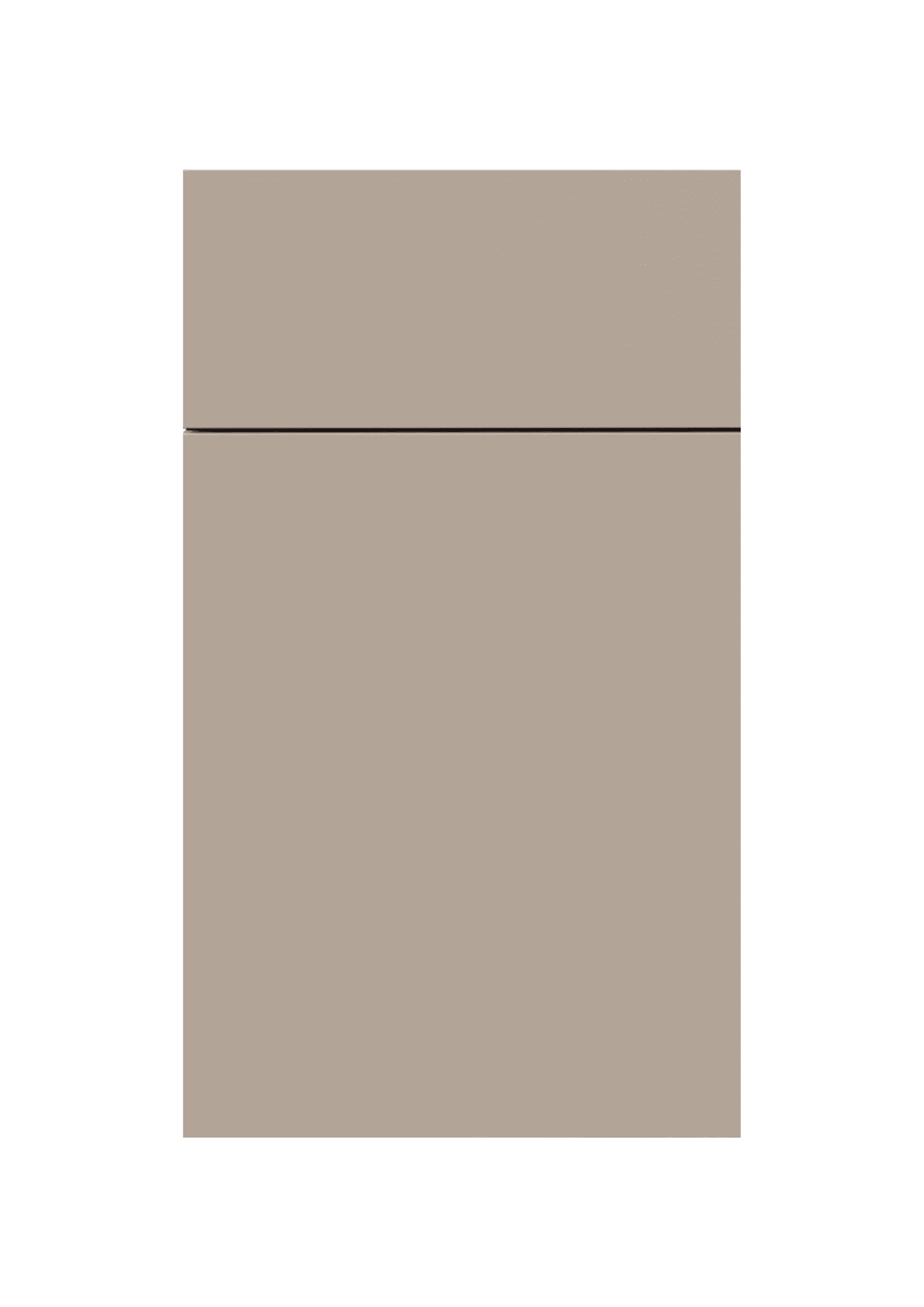
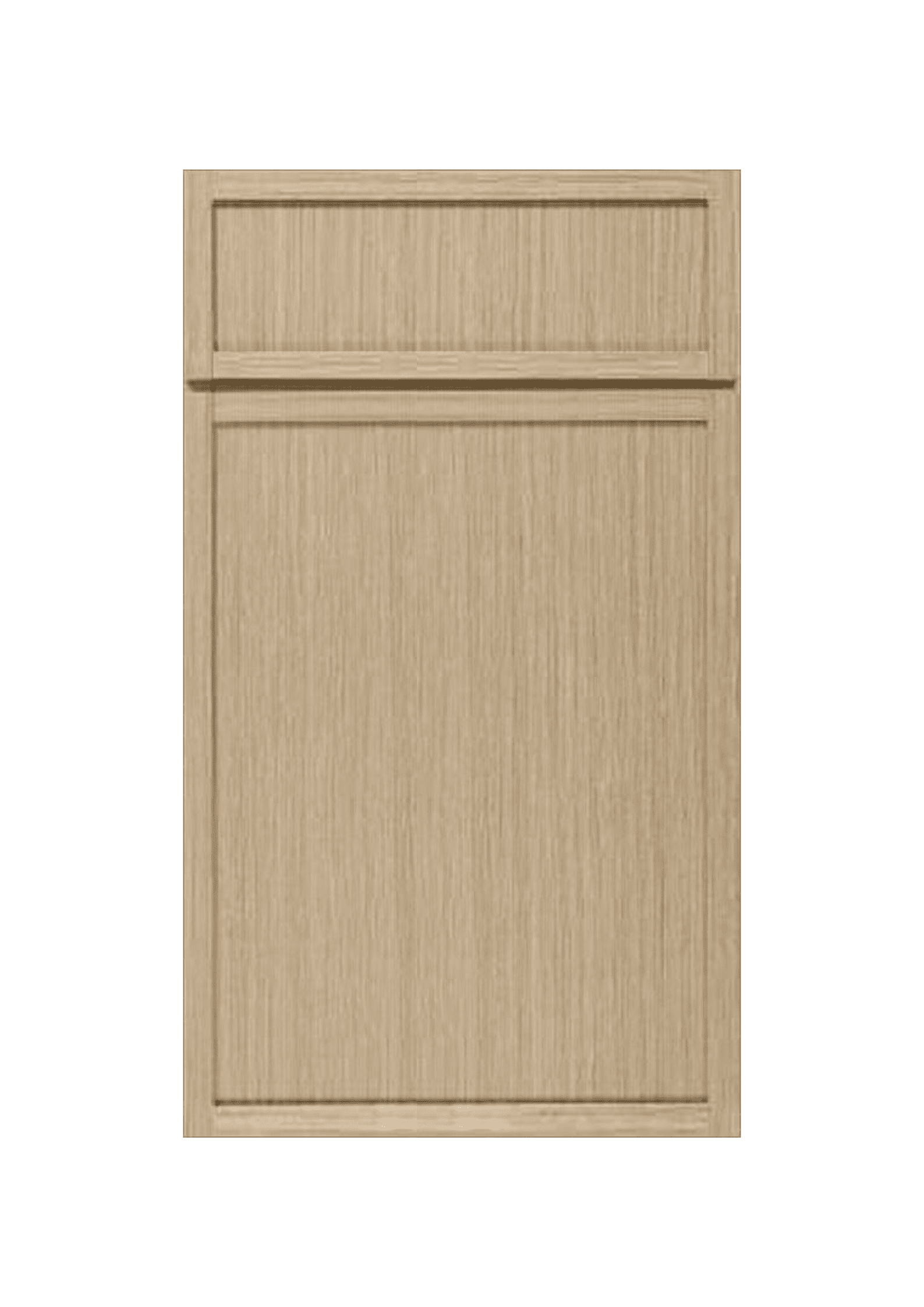
Choose your Cabinet Style
-

Getting kitchen cabinet edge banding wholesale OEM specifications right is the difference between a cabinet panel that stays sealed against moisture for fifteen years and one where the edge starts peeling within the first humid summer. Edge banding is the strip of PVC, melamine, or wood veneer applied to a panel’s raw cut edge, and its thickness, bond strength, and heat resistance are all independently testable numbers — not a single generic spec a factory can wave away as “standard edging.”
Buyers who treat edge banding as a cosmetic finishing step, rather than a tested structural barrier, are the ones most likely to see peeling or swelling edges reported back from the field.
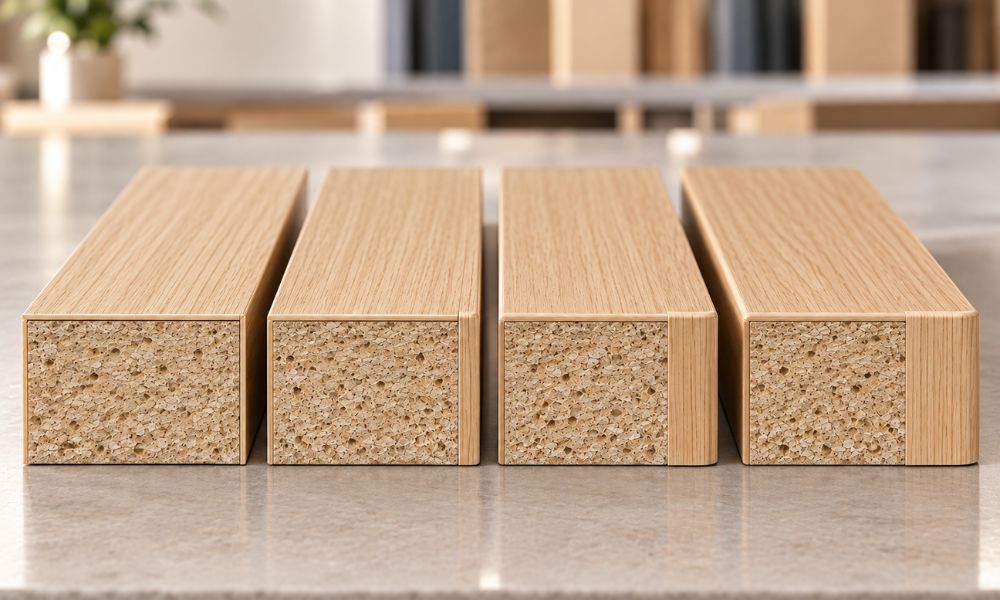
Edge banding thickness should be selected according to cabinet component use and exposure.
Edge banding comes in five common thicknesses: 0.4mm, 0.8mm, 1mm, 2mm, and 3mm. The 0.4mm option suits low-friction, low-cost interior cabinet parts, while 0.8mm covers mid-range wardrobes and bookshelves. For general visible edges on kitchen cabinets, wardrobes, and desks, 1mm is the standard thickness, with 2mm reserved for premium cabinet doors and commercial or hospitality pieces, and 3mm for heavy-use settings like school furniture and laboratory counters that see frequent impact.
A kitchen cabinet edge banding wholesale OEM factory defaulting to 0.4mm or 0.8mm on visible kitchen edges is specifying below the industry-standard thickness for that application, trading a lower per-unit cost for edge durability the buyer may not realize they gave up.
| Thickness | Typical Application |
|---|---|
| 0.4mm | Low-cost interior parts, low friction |
| 0.8mm | Mid-range wardrobes, bookshelves |
| 1mm | Kitchen cabinets, wardrobes, desks (visible edges) |
| 2mm | Premium cabinet doors, commercial/hospitality |
| 3mm | Heavy-use: school furniture, lab counters |
Bond quality for edge banding is measured with a 90-degree peel test, and the furniture testing handbook published by CATAS, the Italian furniture and wood panel testing institute, sets a pass threshold of at least 1 N/mm for standard adhesive bonding, rising to at least 30 N/cm peel tear strength for energy-transfer bonding methods like laser or hot-air edging. A separate pull-off test requires at least 1.2 N/mm² of bond strength, with full detachment on either surface flagged for review.
A kitchen cabinet edge banding wholesale OEM factory that cannot provide peel test results against these thresholds is asking buyers to trust bond quality on appearance alone, which is not a reliable indicator of how the edge will hold up after repeated door and drawer use.
Edge banding near a dishwasher, range, or sink faces heat and moisture exposure that interior panels rarely see. The CATAS heat resistance test ramps temperature from 40°C in 10°C steps and requires no visible defect at 70°C to pass; the water contact test requires no defect after a full 60 minutes of standing water contact. These two tests map directly onto the two failure modes buyers actually see in the field: edge lifting near a heat source and edge swelling or delamination near a sink or dishwasher.
This moisture exposure risk is the same concern covered in our core material comparison, where unsealed panel edges are identified as the fastest path for water to reach and swell a particleboard or MDF core — properly bonded edge banding is the first line of defense against exactly that failure mode.
Edge banding thickness is manufactured to a tolerance band, not an exact figure, and the allowed variance differs by edge material. For plastic (PVC) edges in the 0.71mm to 1.40mm range — which covers the 1mm kitchen cabinet standard — the tolerance is plus or minus 0.10mm, while paper edges in the same nominal range hold a tighter plus or minus 0.05mm tolerance. Width tolerance across all edge material types is plus or minus 0.3mm, measured with a micrometer at 0.01mm resolution across at least three reading points.
A kitchen cabinet edge banding wholesale OEM factory working within these published tolerance bands is producing edges that match industry testing norms; a factory with looser, undisclosed tolerances introduces thickness variation that can show up as visible inconsistency across a kitchen’s door and panel edges.
Edge banding adhesive bonds poorly to a panel that is outside its target moisture range at the time of application. Reference moisture ranges are 5-13% for particleboard, 4-14% for MDF, 8-12% for plywood, and 8% plus or minus 2% for solid wood, each measured to EN 322. Panel squareness also matters: particleboard and MDF are held to a maximum deviation of 2mm per meter, while plywood and solid wood are held to a tighter 1mm per meter standard.
This connects directly to the panel selection guidance in our box construction guide, since a factory controlling panel moisture content before edge banding is applied is addressing the same underlying moisture-management discipline that governs core material selection throughout the cabinet box.
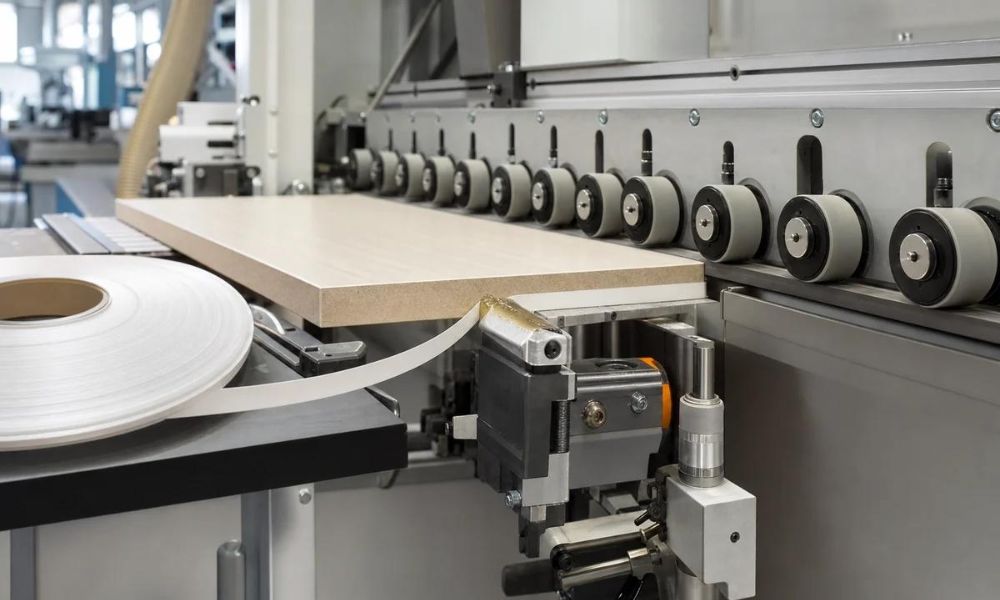
Automated edge banding requires controlled feed speed, adhesive application, and roller pressure.
Process research on particleboard and MDF edge banding, published in the peer-reviewed journal BioResources, found that feed speed and adhesive spread rate both shift peel strength by a meaningful margin even when the adhesive itself is unchanged. The study found particleboard peel strength peaked near a 10 meter-per-minute feed speed versus a 14 meter-per-minute manufacturer baseline, while MDF peaked closer to 15 meters per minute — different optimal settings for the two core materials run on the same production line.
The same study found adhesive spread rate peaking around 360 to 373 grams per square meter against a 380 gram baseline, with optimized settings improving peel strength by roughly 7 to 9 percent over baseline production settings. A kitchen cabinet edge banding wholesale OEM factory tuning feed speed and adhesive amount by core material, rather than running one fixed setting across particleboard and MDF alike, is applying a real, measurable bond-strength improvement rather than a marketing claim.
Bonding pressure differs by edge thickness: roughly 3 bar of roller pressure for edges up to 1mm, rising to 5 to 6 bar for edges over 2mm, reflecting the greater force needed to seat a thicker, stiffer band against the panel edge. Adhesive application temperature also varies by adhesive type, running 120-150°C for polyurethane adhesives and 180-210°C for EVA and polyolefin adhesives, with assembly temperature held at least 15°C above the adhesive’s softening point.
A kitchen cabinet edge banding wholesale OEM factory adjusting roller pressure for edge thickness, rather than running a single pressure setting across 1mm and 3mm bands alike, is more likely to achieve consistent bond quality across a mixed-thickness production run.
Standard base and wall cabinet box edges — mostly hidden once doors and panels are installed — perform adequately at 0.4mm to 0.8mm. Visible door, drawer front, and shelf edges should specify 1mm as the kitchen cabinet baseline, with 2mm reserved for high-traffic commercial kitchens or multifamily common-area cabinetry where impact frequency is materially higher than a single-family kitchen.
This component-level matching follows the same specification discipline used for the drawer box construction covered in our drawer box guide: match the material and thickness to the actual mechanical and exposure demand on that specific component, not a single default applied uniformly across the whole kitchen.
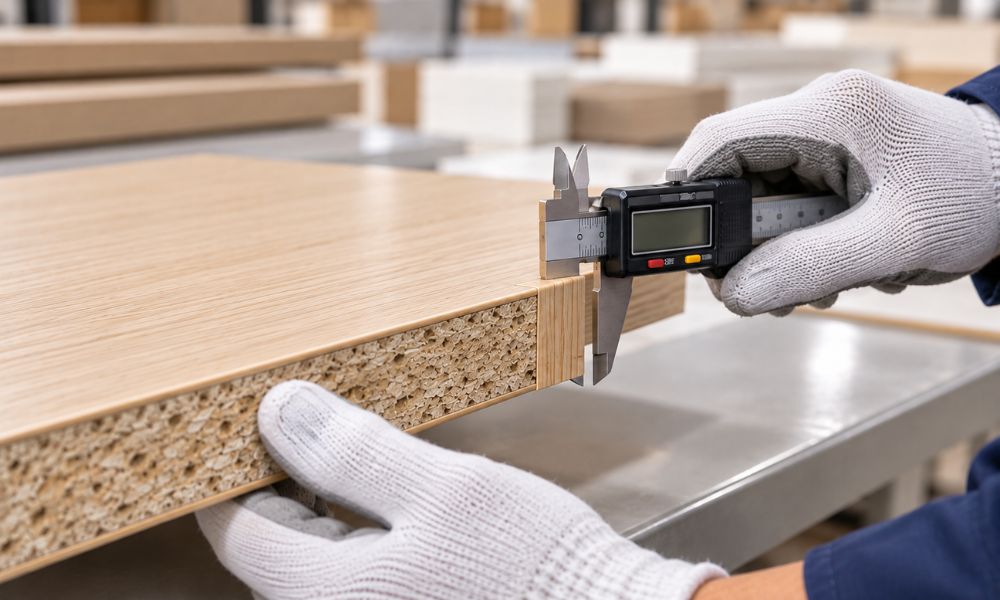
Edge thickness inspection is one checkpoint in verifying consistent OEM cabinet production quality.
Request a sample panel edge-banded to your specified thickness and adhesive type, then check it against the measurable thresholds above — peel strength, heat resistance at 70°C, and water contact at 60 minutes — rather than relying on a visual inspection alone, which cannot detect a bond that passes appearance but fails under heat or moisture. This is the same verification discipline applied during a quality control audit: confirm the tested, numeric result, not a general assurance that “our edge banding is good quality.”
For multifamily and production-builder orders, edge banding consistency matters more with scale: a bond that passes on a sample but drifts out of tolerance across a long production run shows up as peeling edges reported unit by unit over the following year, rather than as a single early failure a factory can quietly address.
What edge banding thickness should I expect on a standard kitchen cabinet? 1mm is the industry standard for visible kitchen cabinet edges; 0.4mm to 0.8mm is acceptable for hidden box edges, while 2mm to 3mm applies to premium or heavy-commercial applications.
How do I know if edge banding bond strength is actually adequate? Request peel test results — at least 1 N/mm for standard bonding or 30 N/cm for laser/hot-air bonding — rather than relying on a visual or touch inspection, which cannot reliably detect a weak bond.
Does edge banding really prevent moisture damage? Yes — a properly bonded edge is the primary barrier preventing water from reaching and swelling the particleboard or MDF core at a cut panel edge, which is otherwise the fastest path for moisture damage.
Why would a factory use different feed speeds for particleboard versus MDF? Because the two materials peak in peel strength at different feed speeds — research found roughly 10 meters per minute optimal for particleboard versus 15 for MDF — so one fixed setting across both materials leaves bond strength on the table for one of them.
Is thicker edge banding always better? Not necessarily for cost-efficiency — thicker bands cost more and are reserved for higher-impact or premium applications; matching thickness to actual component exposure, rather than defaulting to the thickest option everywhere, is the more efficient specification.
Can edge banding quality vary across a large production run even with the same spec sheet? Yes — panel moisture content, feed speed, and adhesive amount all shift slightly across a long run, which is why sample testing early and periodically through a multifamily or bulk order matters more than a single pre-production sample alone.
Starvia specifies kitchen cabinet edge banding wholesale OEM thickness and bond strength by component — 1mm as the visible-edge kitchen standard, tuned feed speed and adhesive amount by core material, with tested sample edges available for buyer verification before production starts. If your next order needs edge banding thickness and bond strength confirmed against these published thresholds, talk to our production team before you approve samples and release your deposit.



 View collection
 View collection
 View collection
 View collection