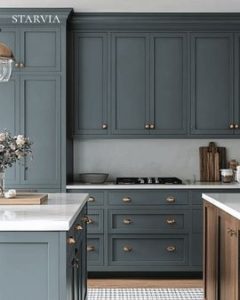
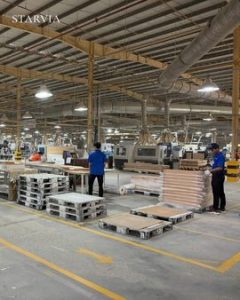
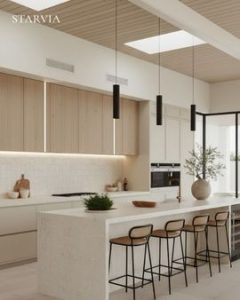
- Our Products
-
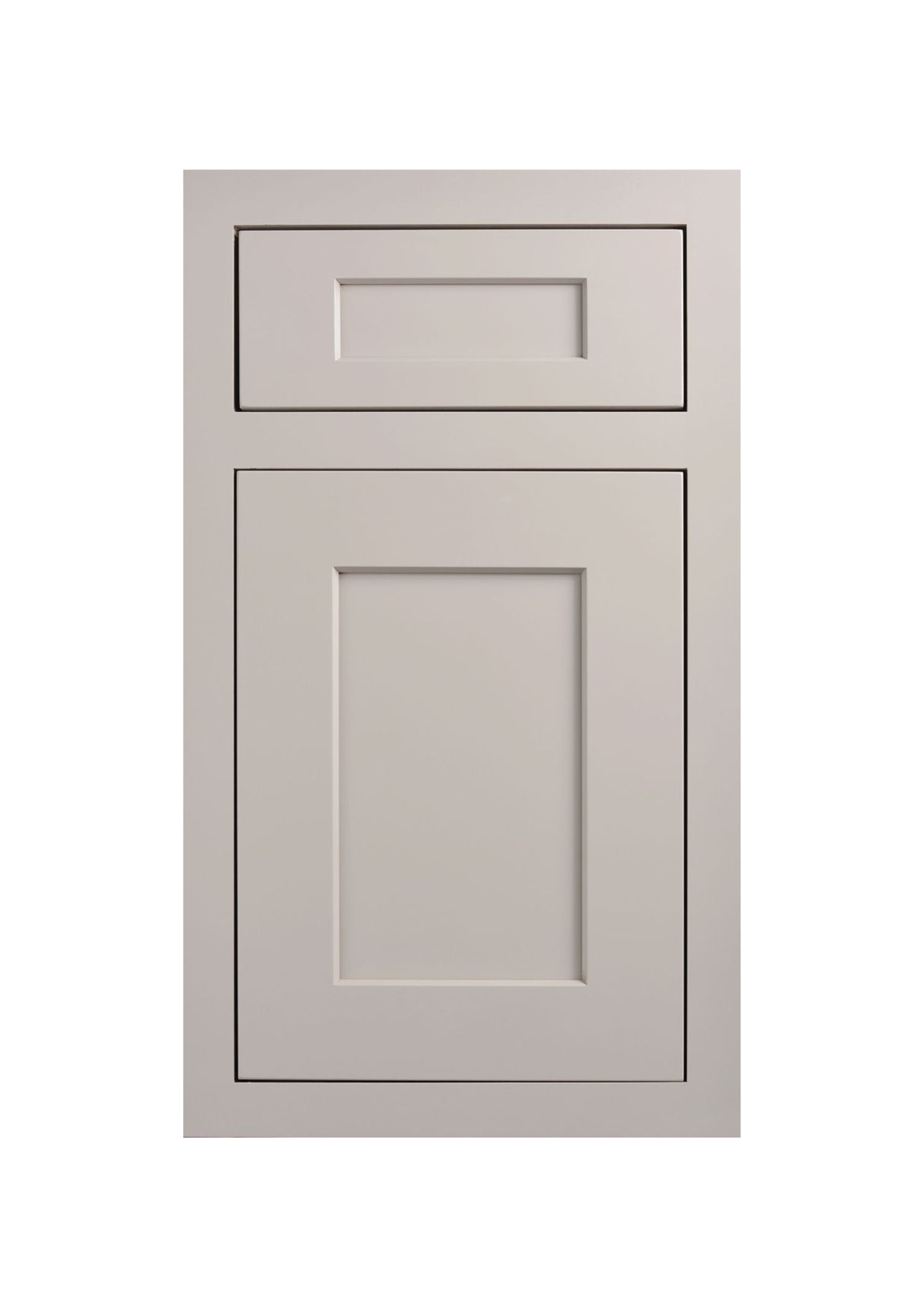
Choose your Cabinet Style
-

Kitchen cabinet wood species OEM Vietnam sourcing decisions shape landed cost, finish quality, and shipping weight before a single container leaves port. Buyers evaluating factories often focus on price alone and overlook how species and panel choice affect long-term performance. This guide breaks down the wood and panel options Vietnam OEM factories actually use.
Import buyers in the US, Canada, Australia, and Europe are working with tighter freight budgets and stricter compliance rules in 2026. Choosing the right substrate and veneer combination can lower FOB cost by 10-15% without sacrificing durability. The sections below cover species, pricing, lead time, and compliance in one place.
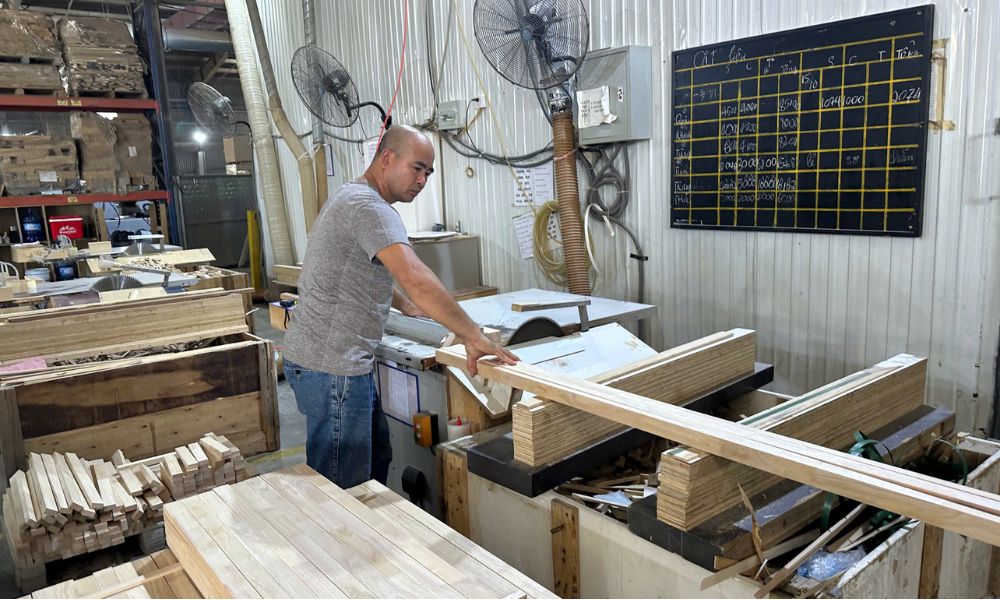
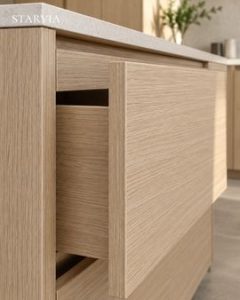
Every cabinet project starts with careful material inspection.
Every kitchen cabinet wood species OEM Vietnam factories offer comes with trade-offs in weight, stability, and finish compatibility. Solid oak resists dents but adds container weight and freight cost. Engineered panels like plywood and MDF cost less and ship lighter, but their moisture resistance depends on core quality and glue-line standards.
Buyers who lock in a species before checking factory capability often face change orders mid-production. A factory built around melamine-faced particleboard may not have the sanding line or spray booth needed for solid maple. Confirming panel capability during the sampling stage prevents costly delays later.
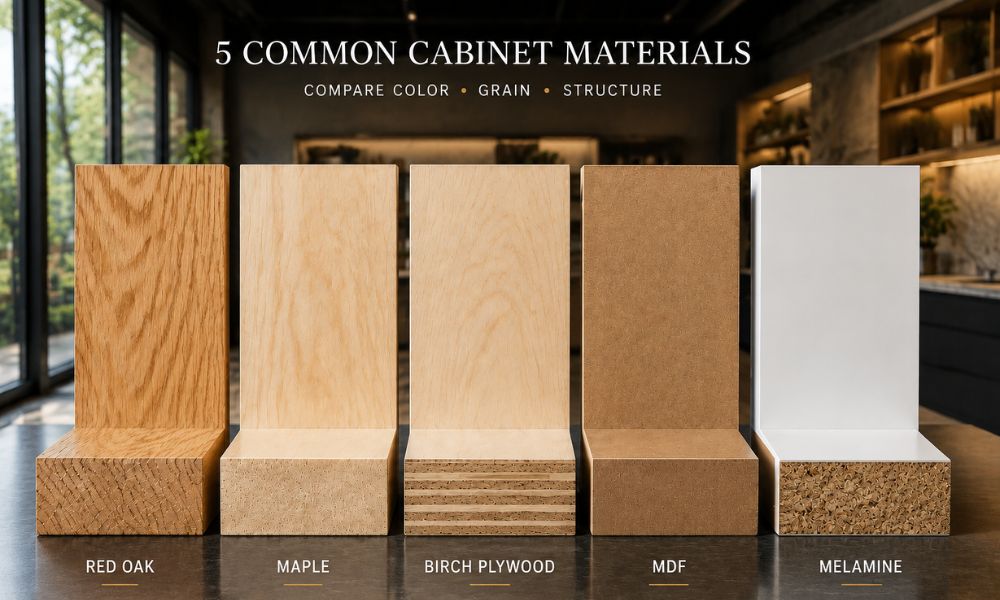
Different cabinet materials serve different product categories.
Vietnam factories typically stock five core substrate categories for export cabinetry. Each one serves a different price tier and finish target, from painted shaker doors to natural wood grain fronts.
Red oak remains the standard for traditional and transitional kitchens. Its open, straight grain takes stain evenly and shows a classic ribbon pattern under clear coat. Factories in Vietnam source oak veneer and lumber from managed forests and mill it in-house for door frames and face panels. Our oak kitchen cabinet manufacturing guide covers grading and finish options in more detail.
Maple is the preferred substrate for painted cabinets because its tight, closed grain leaves a smooth surface with no visible texture under paint. It costs slightly less than oak but more than birch or poplar. Maple also holds up well to CNC profiling, making it a common choice for shaker and raised-panel door programs.
Birch plywood is the workhorse core material across nearly every cabinet box built for export. Its cross-laminated layers resist warping better than MDF, and its light, even color takes paint and stain equally well. Buyers who want the full technical breakdown can review our plywood kitchen cabinet guide for core grades and thickness options.
MDF gives the smoothest surface for painted and high-gloss doors because it has no grain to telegraph through finish. Melamine-faced particleboard is the most economical option for cabinet boxes and shelving, especially for builder-grade programs. Both materials depend heavily on formaldehyde emission compliance, covered later in this guide.
Rubberwood and acacia are regional hardwoods commonly available across Southeast Asia at competitive cost. They offer decent hardness for face frames and drawer boxes, though grain consistency varies more than oak or maple. Some buyers specify these species for accent pieces rather than full door programs.
Finish choice narrows the wood species field fast, so it pays to decide on sheen and color before locking in a substrate. High-gloss and thermofoil doors need a perfectly flat, grain-free surface, which rules out solid oak or maple entirely. MDF is the standard core for both of these finishes because it machines flat and holds a crisp edge profile.
Buyers targeting a lacquer finish for a premium painted look should review our lacquer kitchen cabinet guide, since lacquer over MDF behaves differently than lacquer over solid maple. Thermofoil and high-gloss buyers can check our thermofoil cabinet guide and high-gloss cabinet guide for substrate and edge-banding specifications.
Stained finishes work best on species with visible, attractive grain such as oak, maple, and ash. Painted finishes favor closed-grain substrates like maple, birch plywood, and MDF, since open grain species can telegraph texture through multiple paint coats. Matching finish to species early prevents costly rework after the first production sample.
The most frequent mistake is specifying a species by name without confirming the factory’s actual capability to mill and finish it. Not every OEM factory runs the same equipment, and a factory optimized for melamine board may sub-contract solid wood work, adding cost and time. Always ask for a factory audit report or video walkthrough of the specific production line.
A second common mistake is comparing FOB quotes across factories without normalizing for species and panel type. A quote for melamine board construction will always look cheaper than one for solid maple, but they are not the same product. Request itemized quotes broken out by substrate, hardware, and finish so comparisons are accurate.
A third mistake is skipping a physical sample in the exact species and finish combination that will ship. Color renderings and marketing photos rarely capture how a species takes stain or how a painted MDF edge profile actually looks in person. A cut sample costs little compared to a full container of the wrong specification.
The table below summarizes how the main substrate options compare on the factors that matter most to import buyers: cost, weight, and finish behavior.
| Material | Relative Cost | Best Finish | Container Weight Impact |
|---|---|---|---|
| Red Oak (solid) | High | Stain, clear coat | Heavy |
| Maple (solid) | Mid-high | Paint, light stain | Medium-heavy |
| Birch Plywood | Mid | Paint, stain, veneer | Medium |
| MDF | Low-mid | Paint, high-gloss, thermofoil | Medium |
| Melamine Board | Low | Melamine foil only | Light |
Many OEM programs mix substrates deliberately: plywood boxes with MDF doors, or maple frames with a melamine interior. This hybrid approach is now standard practice across most Vietnam OEM factories because it balances cost against durability.
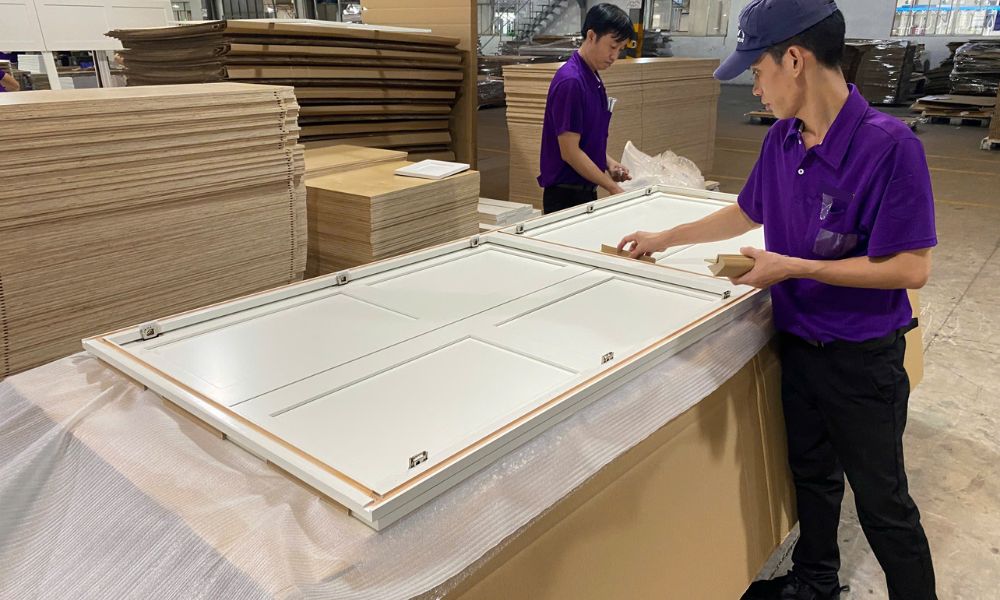
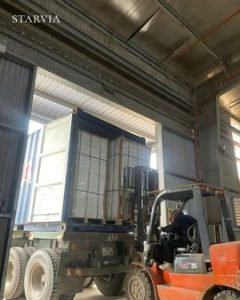
Export-ready cabinets prepared for international shipment.
Species and panel choice is one of the biggest levers on FOB pricing, often more significant than door style or hardware grade. A 40ft container of melamine cabinetry typically runs $42,000-$52,000 FOB, while the same layout in plywood construction runs $60,000-$72,000 FOB. Solid oak or maple face frames push the price toward the higher end of that plywood range or above it.
Buyers should request FOB quotes broken out by substrate so they can compare apples to apples across factories. Our detailed kitchen cabinet FOB price guide explains how to read and negotiate these quotes line by line.
Solid wood species generally add one to two weeks to production because lumber needs kiln-drying and grading before milling. Engineered panels like plywood and MDF are typically ready-cut from suppliers, shortening the front end of the schedule. Minimum order quantity stays consistent across species at one 40ft container, but factories may batch solid wood runs to reduce machine changeovers.
Shipping time from Vietnam does not change by species, only by destination port. Hai Phong to Los Angeles or Long Beach runs 18-22 days, while East Coast ports take 28-32 days. Our lead time guide covers the full production and shipping timeline for OEM orders.
Engineered panels containing urea-formaldehyde resin fall under strict emission limits in North America. Reputable Vietnam OEM factories certify their MDF, plywood, and particleboard under CARB Phase 2 standards, matching requirements set by the California Air Resources Board and referenced in EPA formaldehyde emission standards.
Buyers should ask for the specific certificate number, not just a general compliance claim, before confirming a purchase order. Sustainability-minded buyers can also request FSC chain-of-custody documentation for solid wood species like oak and maple, which is increasingly requested by retail partners in Europe and Australia.
Start with the retail price point of the finished kitchen, since that determines whether painted MDF, stained plywood, or solid maple makes commercial sense. Next, confirm the destination market’s compliance rules, since CARB and EPA TSCA Title VI apply regardless of species chosen. Finally, request physical samples in the actual species and finish combination before committing to a full container order.
A kitchen cabinet wood species OEM Vietnam decision should never be made from a color chip alone. Ask the factory for a cut sample showing core, veneer, and finish together so the grain and sheen match what will actually ship.
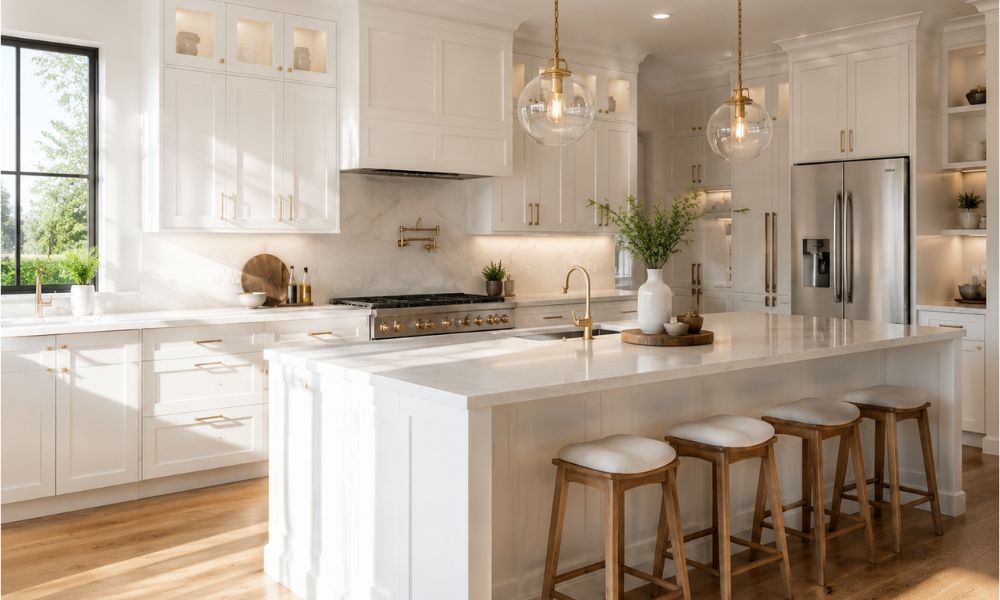
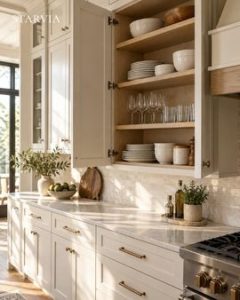
Finished kitchen featuring premium OEM cabinets from Vietnam.
Solid oak and hard maple are the most dent-resistant options among species commonly used in kitchen cabinet wood species OEM Vietnam production. Birch plywood offers strong warp resistance for cabinet boxes even though it is not a solid hardwood.
Plywood holds screws and hinges better and resists moisture damage, making it the stronger choice for cabinet boxes. MDF produces a smoother painted or high-gloss surface, making it the better choice for flat-panel or thermofoil doors.
Yes. Solid wood species typically require kiln-drying and grading, which can add one to two weeks compared with ready-cut engineered panels like plywood or MDF.
Reputable OEM factories certify composite wood products under CARB Phase 2 and provide a certificate number on request. Buyers should always verify this documentation before placing a purchase order.
Yes, mixing substrates is common practice. Many programs use plywood boxes with solid wood or MDF doors to balance cost, weight, and finish quality across a single kitchen cabinet wood species OEM Vietnam order.
Melamine-faced particleboard is the lightest option, followed by MDF and birch plywood. Solid oak and maple add the most weight per container, which can raise freight cost on a per-unit basis for high-volume orders.
FSC chain-of-custody certification is not legally required in most markets but is increasingly requested by retail partners in Europe and Australia. Buyers can review chain-of-custody standards directly through the Forest Stewardship Council before adding it as a purchase order requirement.
Choosing the right kitchen cabinet wood species OEM Vietnam factories can supply comes down to matching substrate to retail price point, compliance requirements, and finish target. Oak and maple suit premium stained or painted programs, while plywood and MDF cover the mid-market efficiently. Melamine board remains the value option for builder-grade projects.
Buyers who confirm species capability, certification, and FOB pricing before sampling avoid the most common causes of production delay. To discuss species options and request samples for your next container, connect with our team to start the conversation.
 View collection
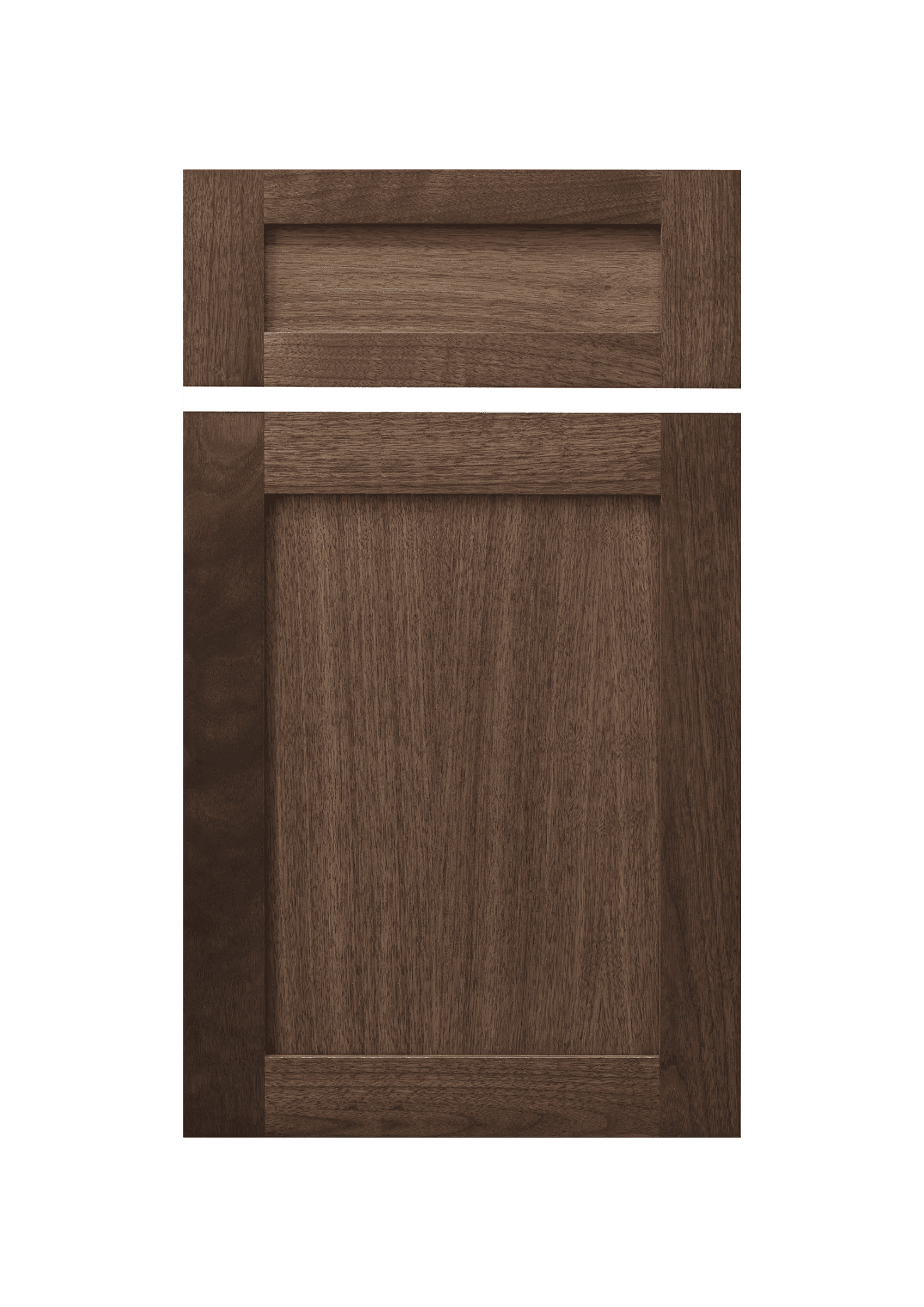 View collection
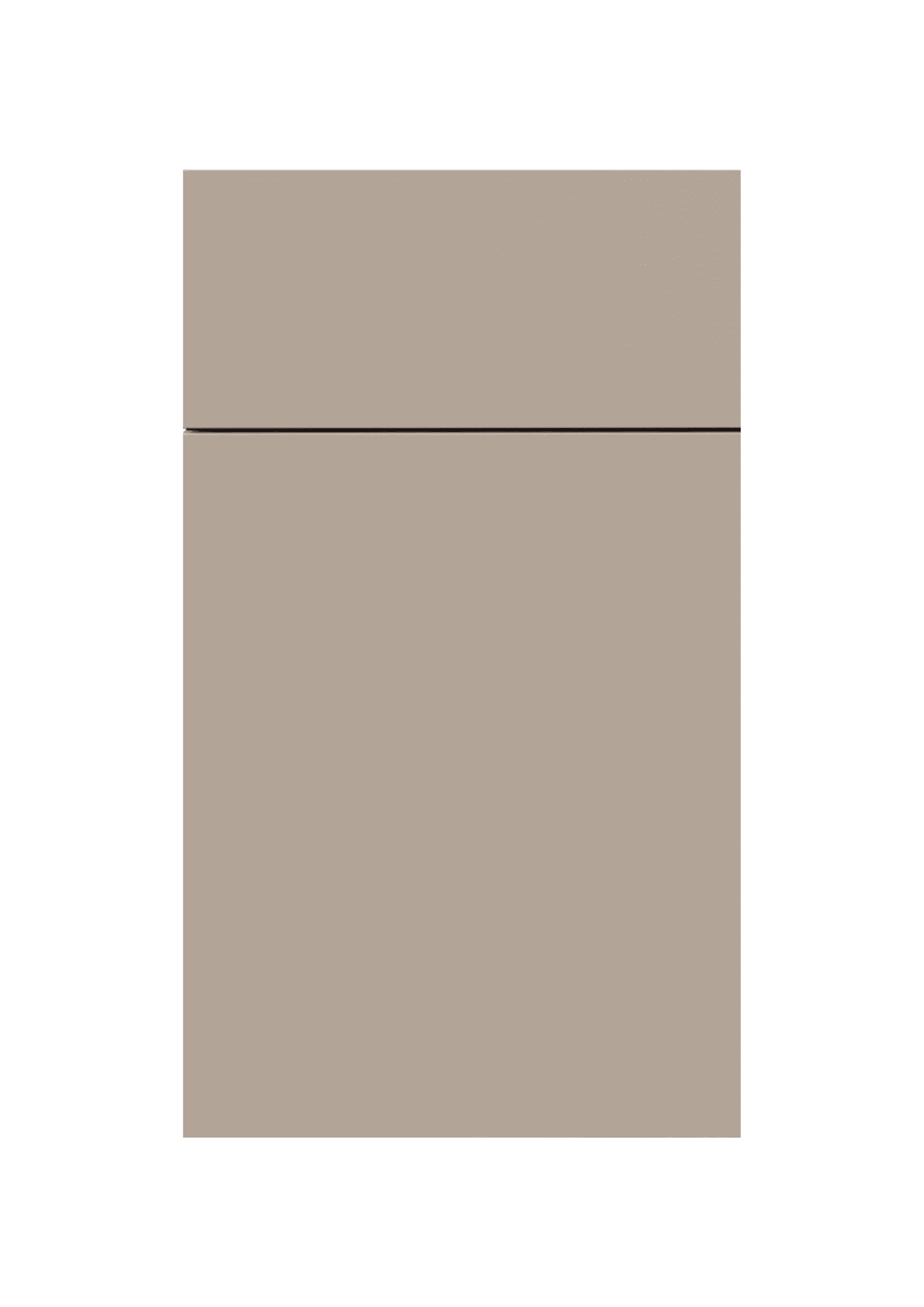 View collection
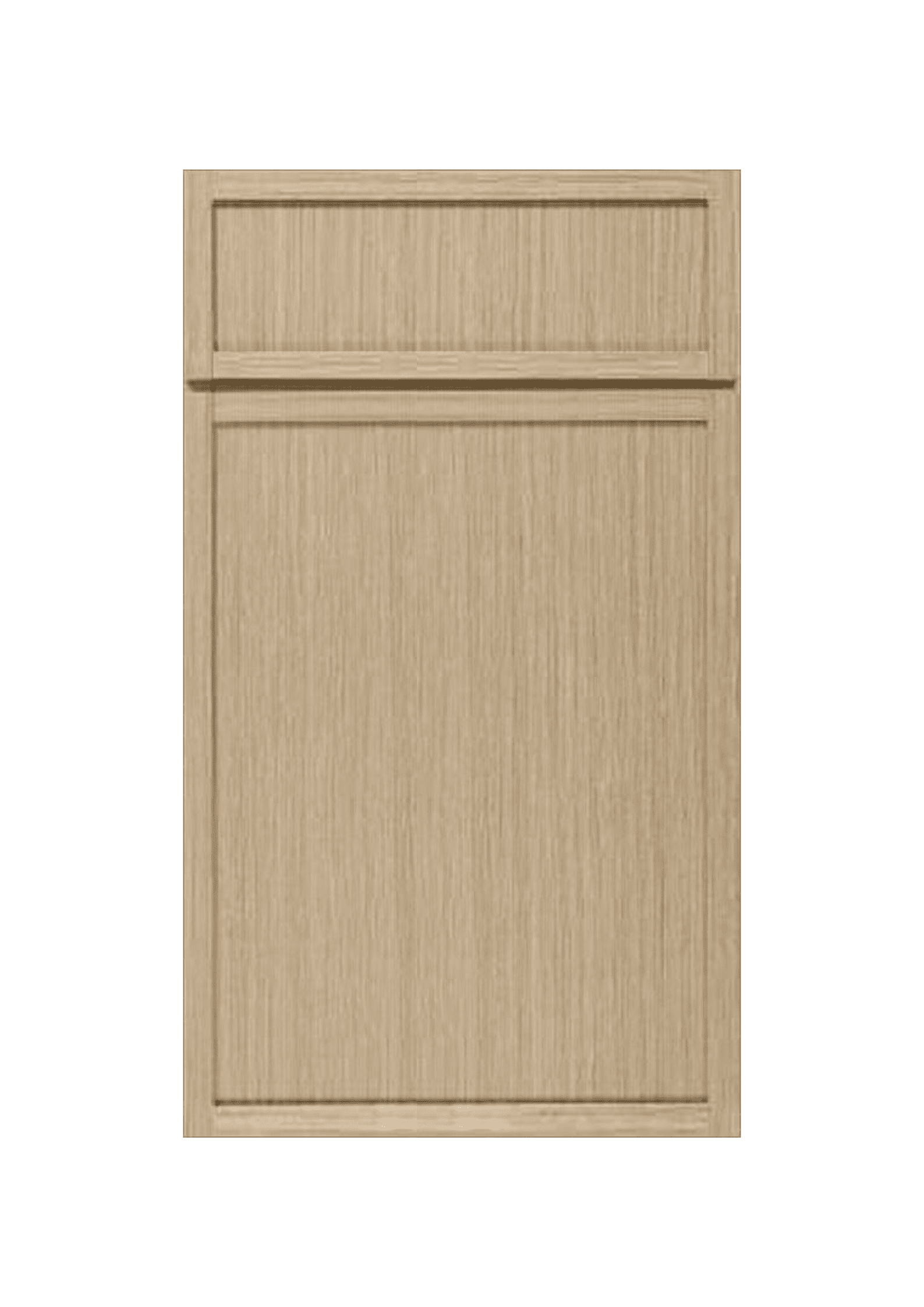 View collection