- Our Products
-
Choose your Cabinet Style
-
Finding a high gloss kitchen cabinets manufacturer Vietnam buyers can trust starts with understanding two very different production routes: acrylic panel and UV-cured lacquer. Both deliver the mirror-bright, light-reflecting surface driving demand in modern kitchen design, but they differ sharply in cost, durability, and repair options. This guide breaks down manufacturing process, pricing, quality control, and how to vet a Vietnam OEM factory before placing a first container order, along with the sourcing checklist experienced importers use to avoid finish-quality surprises on arrival.
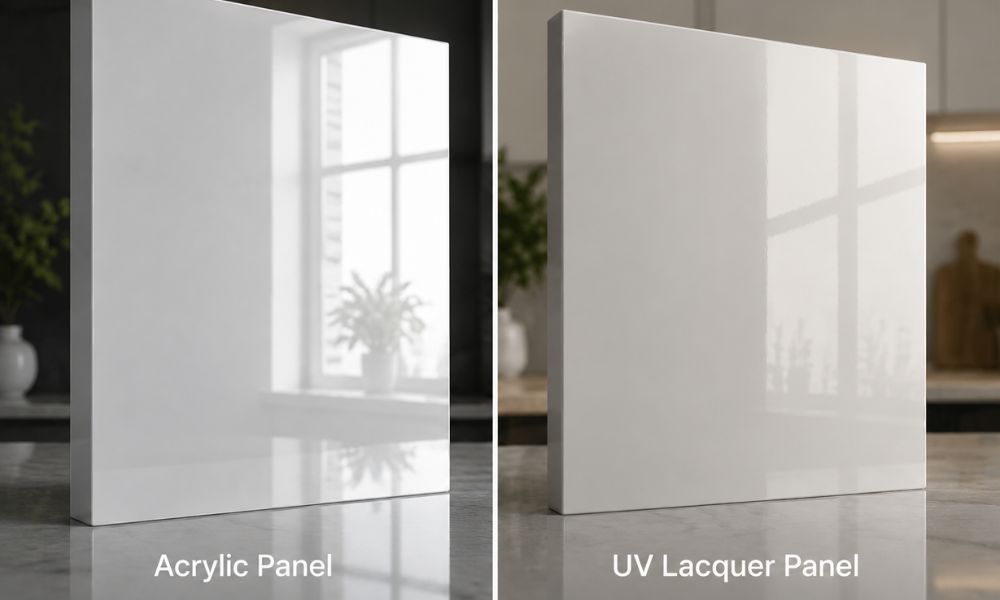
Comparison between acrylic and UV lacquer cabinet finishes.
High gloss acrylic doors bond a rigid, high-shine acrylic sheet onto an MDF or plywood substrate under heat and pressure. The acrylic layer is factory-formed to a consistent sheen level, which gives acrylic doors excellent color uniformity across a full production run.
UV lacquer doors take a different route: multiple layers of lacquer are sprayed onto an MDF panel, then cured under UV light and polished to a mirror finish. A qualified high gloss kitchen cabinets manufacturer in Vietnam typically offers both routes, since acrylic suits high-volume standard colors while UV lacquer suits smaller runs needing color matching flexibility.
Both processes demand tightly controlled spray booths and polishing lines — any dust contamination or uneven pressure shows immediately on a reflective surface, which is why factory QC standards matter more here than on matte finishes. Buyers evaluating a new supplier should ask specifically which of the two processes a given factory runs, since tooling, curing equipment, and finish consistency differ meaningfully between them.
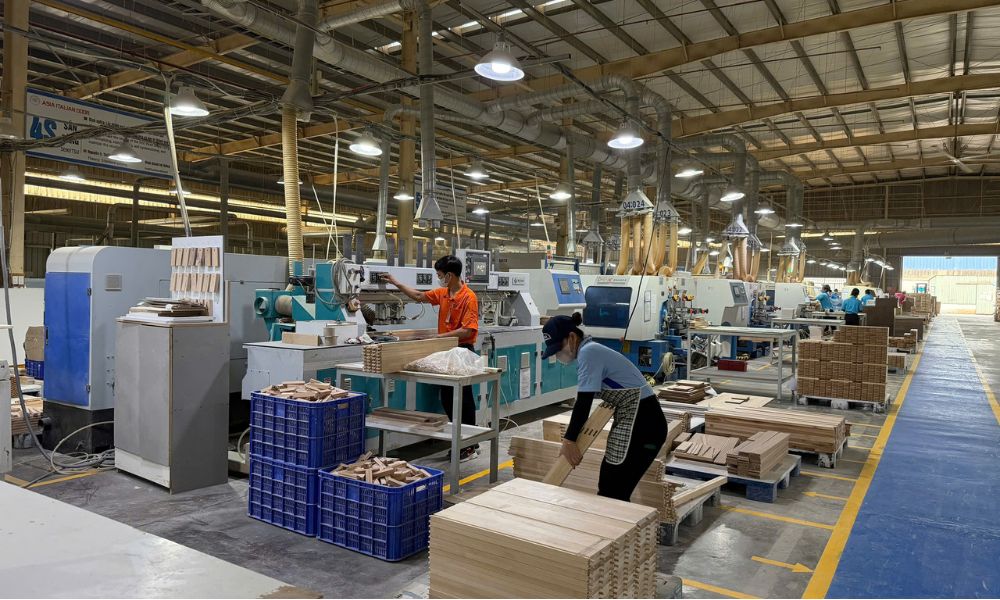
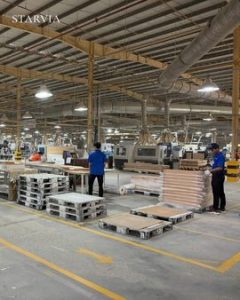
Automated production line for premium high gloss cabinets in Vietnam.
High gloss remains one of the strongest-performing finish categories in modern kitchen design because it reflects light and makes smaller kitchens feel brighter and more spacious. A Vietnam-based high gloss kitchen cabinets manufacturer gives distributors export-grade finish quality at a lower landed cost than domestic US or EU acrylic and lacquer production.
Vietnam’s cabinet export sector has invested heavily in dust-controlled spray facilities and automated polishing lines over the past decade, closing much of the finish-quality gap that once separated Vietnam OEM factories from European high gloss specialists.
Our production facilities in Vietnam run approximately 150 containers per month across roughly 1,000,000 sq ft of manufacturing space, supported by a workforce of about 1,000 employees. That scale lets a high gloss kitchen cabinets manufacturer in Vietnam serve both boutique orders and large multi-container programs from the same finish lines.
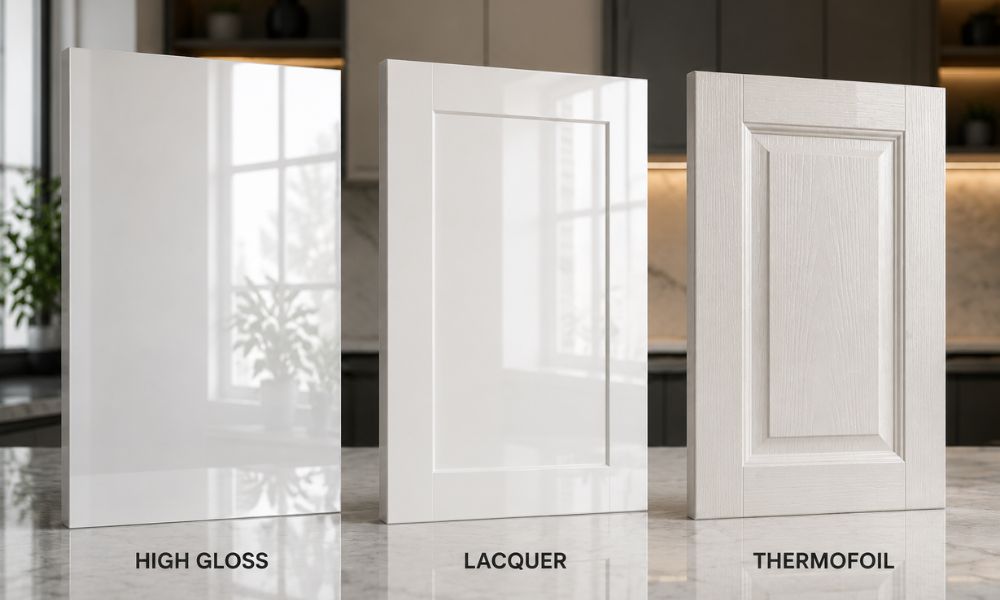
Compare three common cabinet finishes for wholesale projects.
High gloss is a premium tier, so it helps to compare it against the other finish options available from the same Vietnam OEM factory.
Many distributors position high gloss as their premium SKU alongside a mid-tier lacquer and an entry-level thermofoil line, all sourced from the same Vietnam OEM factory to simplify container consolidation.
High gloss acrylic and UV lacquer doors both use an MDF substrate underneath the finish layer, so formaldehyde emission compliance applies the same way it does to any composite wood cabinet door. Our Vietnam OEM factory holds CARB Phase 2 certification (No. CARB/EPA23072), meeting the composite wood requirements enforced by the California Air Resources Board.
This aligns with the EPA’s TSCA Title VI formaldehyde emission standards, which apply nationwide to composite wood cabinet imports. Any high gloss kitchen cabinets manufacturer Vietnam buyers shortlist should provide this certification in writing before a first container ships.
Buyers building sustainability credentials into their sourcing program can also request FSC chain-of-custody documentation; see the Forest Stewardship Council for program requirements relevant to composite wood substrates.
High gloss sits at the premium end of the Vietnam OEM pricing structure, closer to lacquer plywood than to entry-level melamine or thermofoil. Buyers should budget for the additional spray layers, UV curing, and polishing steps that high gloss production requires compared to a standard painted finish.
For a full breakdown across all finish categories — melamine, plywood, lacquer, and solid wood — see our detailed kitchen cabinet FOB price Vietnam guide, then request a high gloss-specific quote once you have a target door count and color list.
Minimum order quantity is one 40ft container, the same threshold that applies across all finish categories at our Vietnam OEM factory. High gloss runs typically need a slightly longer scheduling window than matte finishes because of the extra curing and polishing stages.
Full details on how door style and finish complexity affect production timelines are covered in our kitchen cabinet lead time Vietnam OEM factory guide, which is worth reviewing before committing to a ship date with your own customers.
Transit time from Hai Phong to Los Angeles/Long Beach runs 18-22 days; East Coast ports run 28-32 days. Current West Coast ocean freight rates sit around $3,200 per FEU, with East Coast rates around $5,000 per FEU as of Q2 2026.
These freight numbers matter even more for high gloss programs, since panels require extra corner protection during transit to avoid the chipping and edge damage that shows clearly on a reflective surface. Buyers should also factor in the Section 232 tariff on Vietnam-origin goods rising from 25% to 50% starting January 1, 2027 when planning premium-tier import economics.
Reflective surfaces expose finishing flaws that would be invisible on matte or textured doors — dust nibs, orange peel texture, and uneven sheen all show up under direct light. A serious high gloss kitchen cabinets manufacturer in Vietnam should inspect every panel under raking light before packing, not just under standard overhead lighting.
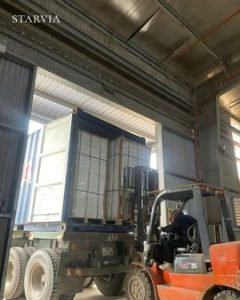
Edge and corner protection during packing matters as much as the finish itself. Panels should ship with foam corner guards and interleaving sheets to prevent surface-to-surface contact, since even light rubbing during transit can dull a high gloss finish permanently.
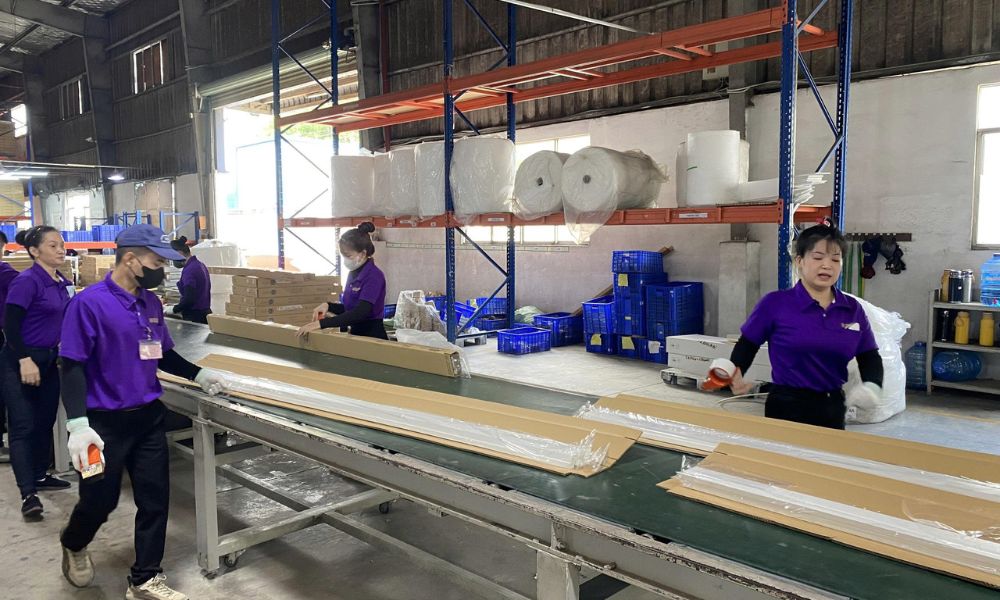
Protective export packaging minimizes shipping damage.
| Finish Category | Relative Cost Tier | Best Fit For |
|---|---|---|
| Thermofoil / Melamine | Entry-level | Builder-grade, high-volume programs |
| Standard Lacquer | Mid-tier | Broad color range, semi-gloss to matte |
| High Gloss Acrylic | Premium | Consistent color, high-volume gloss runs |
| High Gloss UV Lacquer | Premium | Custom color matching, smaller runs |
Most high gloss programs run 20-30 standard colors, with white, gray, and dark navy or black consistently the top sellers across US and Canadian distributor catalogs. Custom color codes are possible on UV lacquer lines, but acrylic panels are typically limited to the manufacturer’s pre-formed sheet colors since the finish layer is applied before the door is cut to size.
Panel size matters more for high gloss than for matte finishes, since larger uninterrupted surfaces show waviness and reflection distortion more easily. A qualified high gloss kitchen cabinets manufacturer in Vietnam should confirm maximum panel dimensions for flatness tolerance before a buyer finalizes tall pantry or large island door specifications. Edge treatment also affects perceived quality — PVC edge banding in a matching gloss finish keeps the seamless look consistent around the full door profile.
Is acrylic or UV lacquer better for high gloss cabinets? Acrylic offers stronger color consistency across large orders, while UV lacquer offers more flexibility for matching a specific color code. Neither is universally “better” — the right choice depends on order volume, color program, and how tightly a buyer needs to match an existing brand color code.
Do high gloss cabinets scratch easily? Reflective surfaces show scratches and fingerprints more visibly than matte finishes, even though the underlying material may be similarly durable. Buyers should set customer expectations around cleaning frequency accordingly.
Can a high gloss kitchen cabinets manufacturer in Vietnam match a specific color code? Yes, most factories can match a Pantone or RAL code within UV lacquer production, though color accuracy should always be confirmed on a physical sample before a full container run.
What is the minimum order for a first high gloss container? MOQ is one 40ft container FOB Hai Phong, the same as other finish categories, which lets first-time importers test market response before scaling.
High gloss cabinets reflect light and make kitchens feel larger and brighter, which is why the finish remains popular in compact urban kitchens and modern renovation projects. The look pairs well with minimalist hardware and handleless door systems currently trending across the markets tracked by design bodies such as the National Kitchen and Bath Association.
The trade-offs should be disclosed to end customers: high gloss surfaces show fingerprints, smudges, and fine scratches more readily than matte finishes, and repairs on a damaged acrylic panel often require full panel replacement rather than a spot touch-up. For buyers targeting premium urban and design-forward projects, that maintenance trade-off is usually acceptable given the visual impact.
Before placing a first order, confirm the following with any Vietnam OEM factory: CARB Phase 2 and EPA TSCA documentation on file, raking-light panel inspection as standard QC, physical color-matched samples before full production, current pricing by finish type, and realistic lead time given the extra curing steps high gloss requires.
A high gloss kitchen cabinets manufacturer Vietnam buyers can scale with should also demonstrate consistent monthly container output and show packing photos with proper corner and edge protection — a sign the factory understands how fragile a reflective finish is during ocean transit. Ask for a claim-rate history on chipped corners and delamination from existing US or Canadian distributors before committing volume, and compare that history against the tolerance your own customers expect at delivery.
Vietnam’s position as a leading high gloss kitchen cabinets manufacturer for global buyers has strengthened as US cabinet demand climbed to an estimated $20.9B in Q2 2026, part of a global market projected to grow from $80.7B toward $144B by 2030. Import programs that lock in reliable Vietnam OEM capacity now are better positioned as premium finish demand grows and as the 2027 tariff adjustment reshapes sourcing economics across Southeast Asia.
Starvia’s Vietnam OEM factory produces high gloss, lacquer, thermofoil, plywood, and solid wood kitchen cabinets for distributors and importers across the US, Canada, Australia, and Europe, with dedicated spray booths and polishing lines built specifically for reflective finishes. To request current high gloss pricing, samples, or production scheduling, get in touch with our team directly.
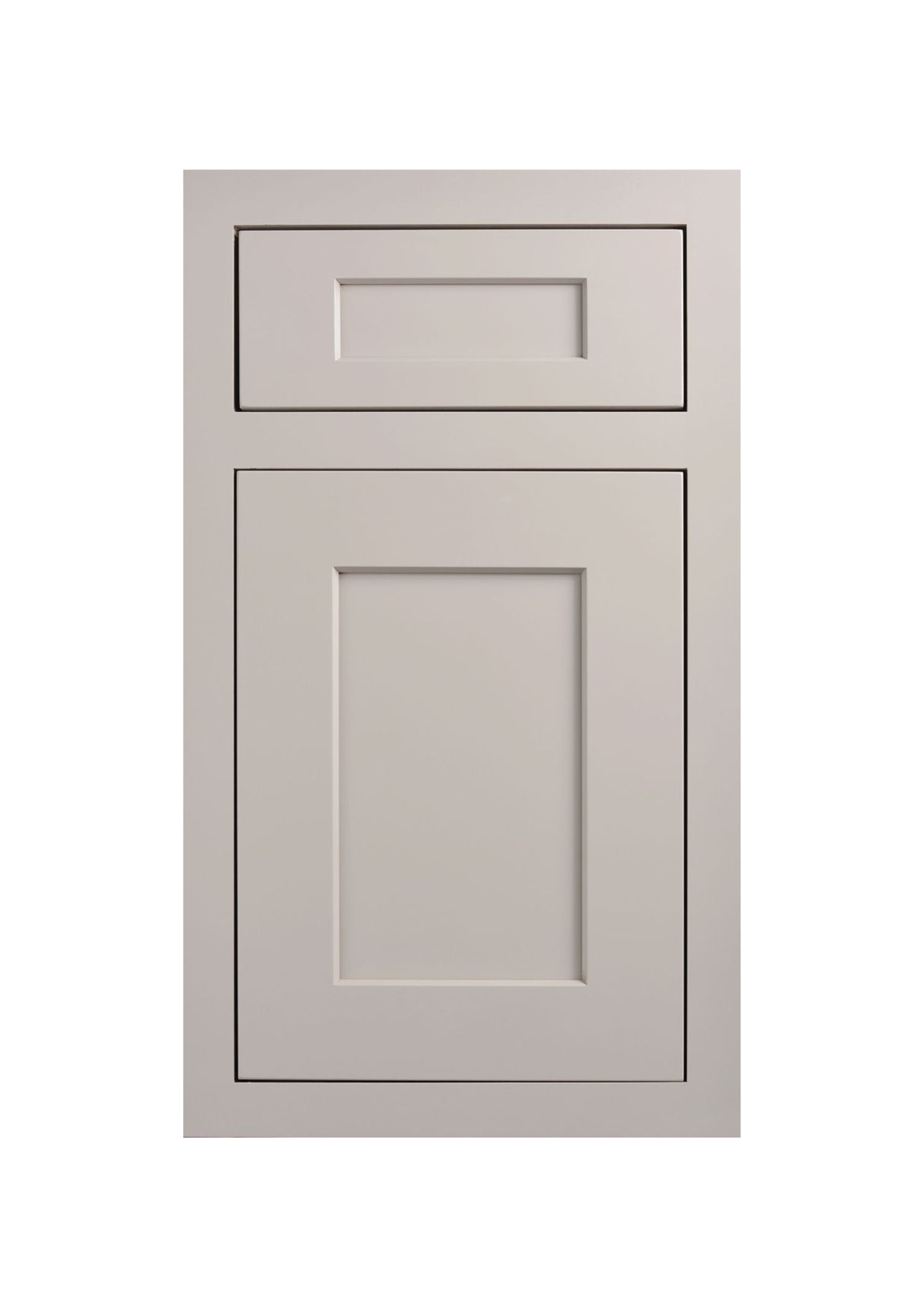 View collection
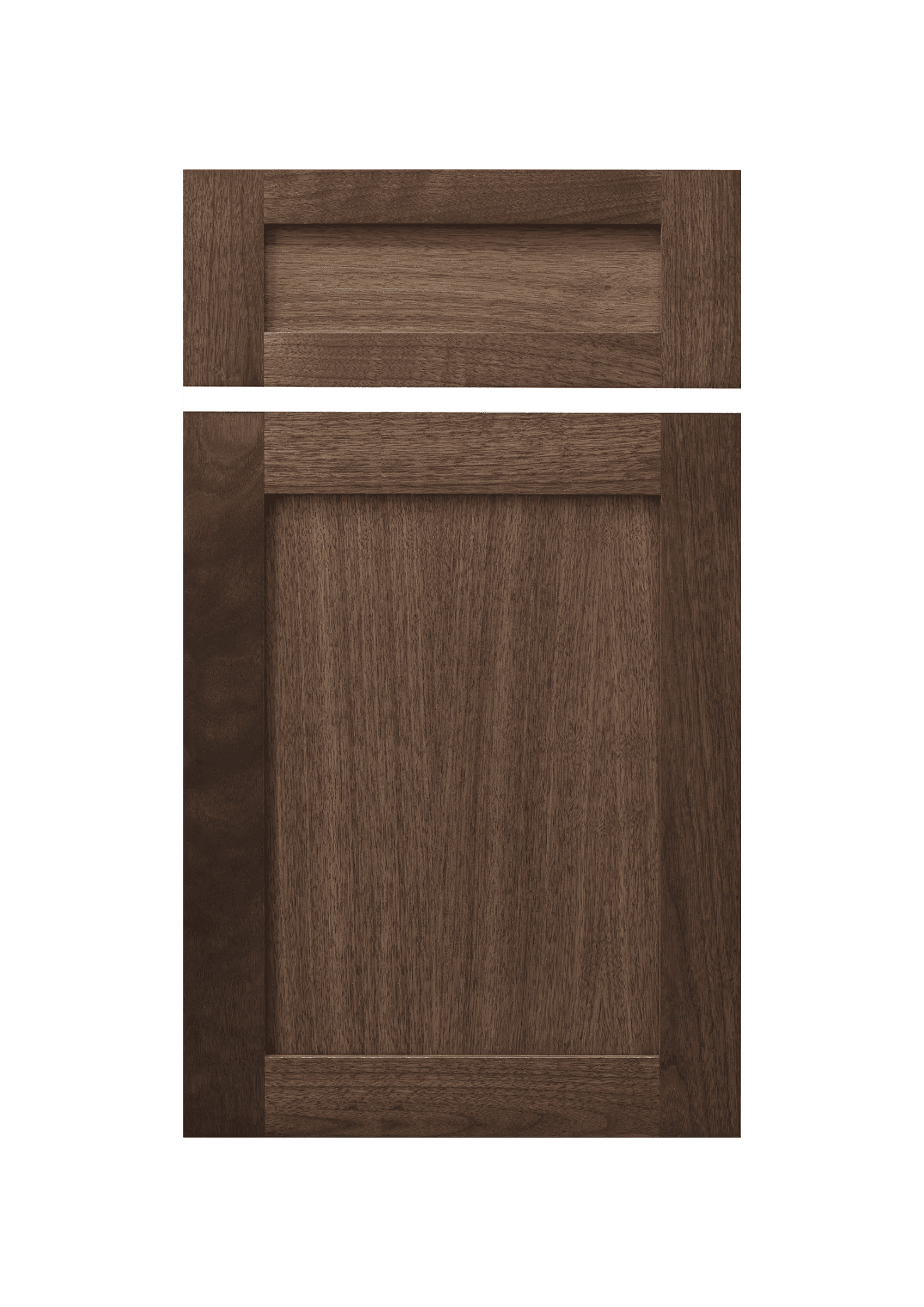 View collection
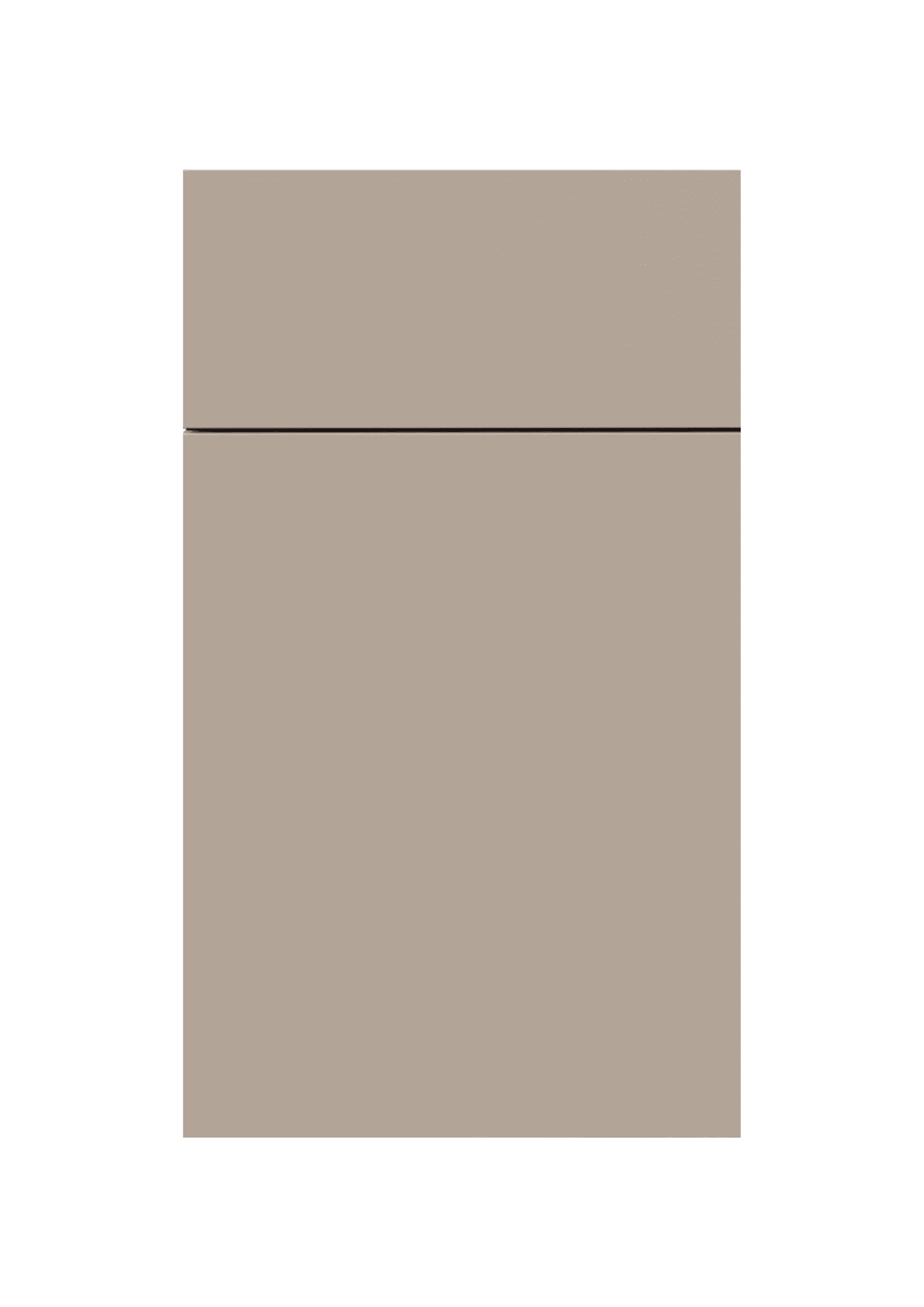 View collection
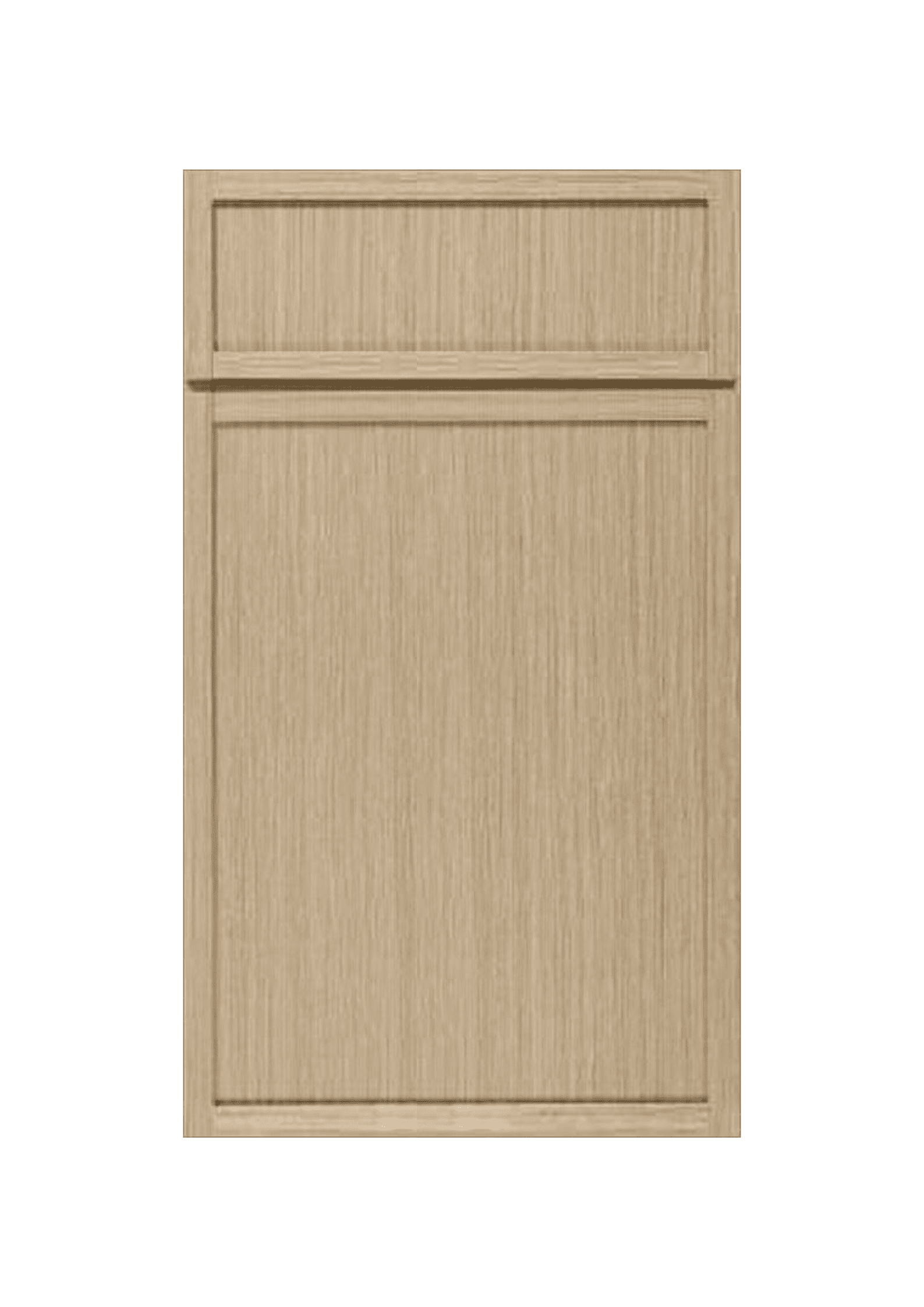 View collection