- Our Products
-
Choose your Cabinet Style
-

Thermofoil kitchen cabinets manufacturer Vietnam sourcing has become one of the fastest-growing categories for US and Canadian wholesale buyers in 2026, as import costs for solid wood and lacquer lines continue to climb. Thermofoil offers a seamless, moisture-resistant finish at a lower landed cost than painted or veneered doors, which makes it an attractive product line for builders, remodelers, and cabinet dealers who need consistent quality without the premium price tag. This guide covers what thermofoil cabinets are, how they compare to laminate and melamine, what to expect from a Vietnam OEM factory on specs and pricing, and the questions buyers ask most before placing a first container order.
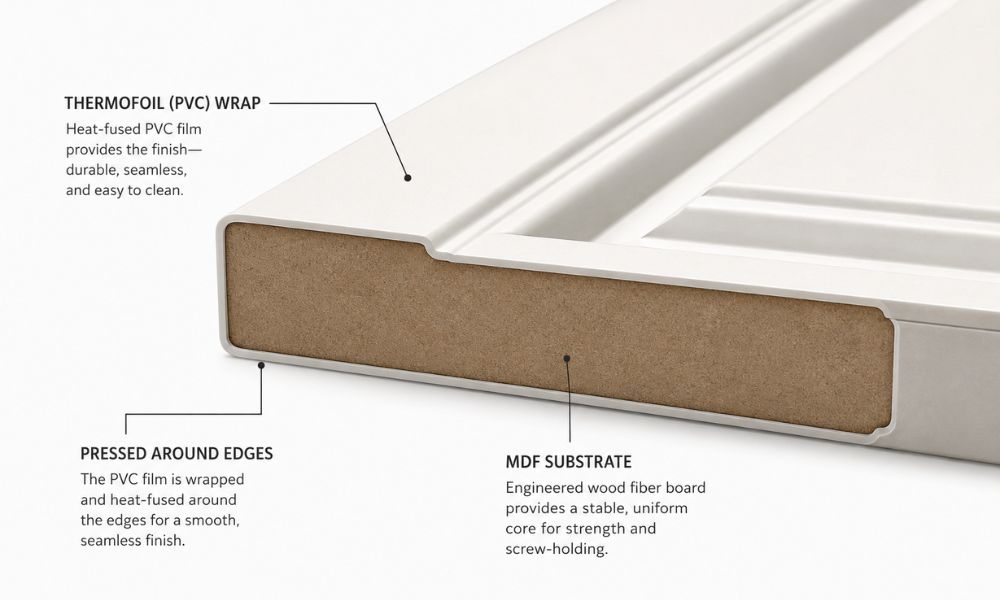
PVC film is vacuum pressed over an MDF core to create a seamless cabinet door.
Thermofoil is a flexible PVC film that is vacuum-pressed onto an MDF (medium-density fiberboard) substrate under heat, producing a smooth, seamless surface with no visible seams around profiled edges or door panels. Because the film wraps continuously over routed details, thermofoil doors avoid the joint lines typical of painted frame-and-panel construction. According to the National Kitchen and Bath Association (NKBA), thermofoil remains one of the most requested finish categories in the value and mid-market segments because it combines a factory-finished look with strong resistance to moisture and everyday wear.
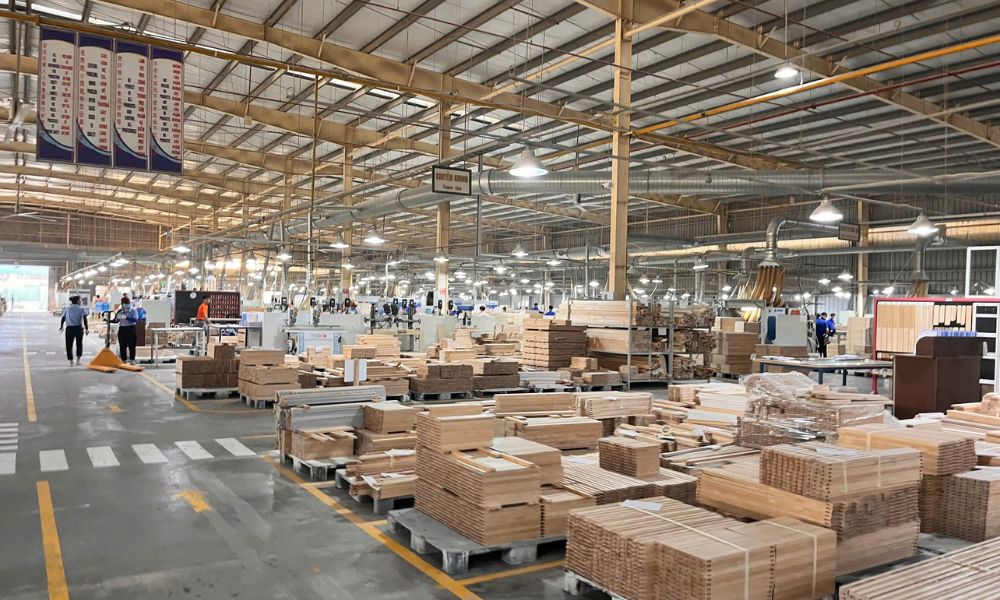
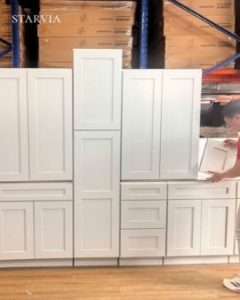
Large-scale cabinet production supports consistent quality and volume.
Buyers choosing a thermofoil kitchen cabinets manufacturer Vietnam partner are typically responding to two pressures at once: rising per-unit costs from traditional suppliers and tightening lead-time expectations from their own customers. A Vietnam OEM factory producing thermofoil lines can run high-volume MDF machining and vacuum-press lamination on the same production floor, which keeps unit costs predictable across large orders. If you’re comparing sourcing options, you can also read our guide on Vietnam Kitchen Cabinet Manufacturer to understand production capabilities, certifications, and export advantages.
Our Vietnam OEM factory operates roughly 1,000,000 square feet of production space with about 1,000 employees, shipping approximately 150 containers per month across melamine, thermofoil, and lacquer product lines — enough throughput to support both sample orders and full-container repeat business without capacity bottlenecks.
Global demand also supports this shift. The global kitchen cabinet market is valued at roughly $80.7 billion and is projected to reach $144 billion by 2030, while US cabinet demand alone is estimated at $20.9 billion for 2026. At the same time, US housing starts came in at 1,177,000 units in May 2026 and the NAHB Housing Market Index sat at 35 out of 100, signaling a builder market that is cost-conscious and increasingly selective about supplier value — exactly the environment where a competitively priced thermofoil kitchen cabinets manufacturer Vietnam option gains share.
Buyers evaluating a thermofoil kitchen cabinets manufacturer Vietnam quote often want to know how the finish stacks up against laminate and melamine, since all three start from an engineered wood core.
For buyers building a program around routed, shaker-adjacent, or arched door profiles, thermofoil typically wins on finish consistency and unit cost. For flat-panel, high-heat-exposure kitchens, laminate is often the safer specification.
A reliable thermofoil kitchen cabinets manufacturer Vietnam partner should be able to document machining tolerance, certification, and finish programs before a sample order ships.
Our production line runs Homag CNC equipment holding ±0.5mm tolerance on box and door components, which keeps hinge boring and panel dimensions consistent across large production runs — a common failure point with lower-tier suppliers. All board substrates used in our thermofoil and melamine lines carry CARB Phase 2 certification (No. CARB/EPA23072), meeting the formaldehyde emission limits set out in the EPA’s Formaldehyde Emission Standards for Composite Wood Products (TSCA Title VI) as well as the underlying California Air Resources Board Composite Wood ATCM. Finish programs cover a broad color and texture range so dealers can build out full product lines rather than a single SKU.
The typical process for a new thermofoil kitchen cabinets manufacturer Vietnam relationship follows four steps:
Ocean freight rates are a meaningful part of landed cost when evaluating any OEM quote. As of Q2 2026, West Coast container rates are running around $3,200 per FEU and East Coast rates around $5,000 per FEU, according to freight benchmarking data tracked by Freightos. Buyers should also factor in the Section 232 tariff schedule on Vietnam-origin wood products, which is set to increase from 25% to 50% starting January 1, 2027 — a strong incentive to lock in current-rate container orders and build inventory ahead of the change rather than waiting.
Before finalizing a thermofoil kitchen cabinets manufacturer Vietnam order, wholesale buyers should confirm: CARB Phase 2 or equivalent formaldehyde certification documentation, third-party or in-house dimensional QC reports (target ±0.5mm or tighter), packaging rated for ocean freight to prevent corner and edge damage, and a written finish-matching policy for repeat orders. Buyers sourcing FSC-certified components for green building programs can also request FSC chain-of-custody documentation where applicable.
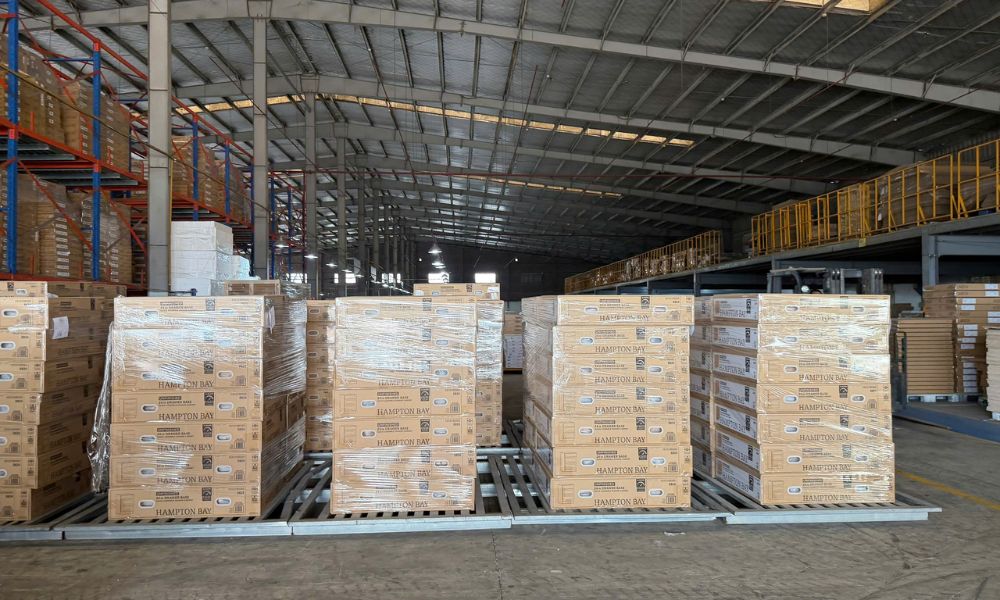
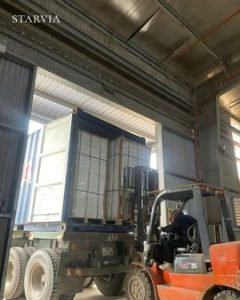
Proper packaging helps protect thermofoil surfaces during ocean freight.
Thermofoil surfaces are more vulnerable to corner impact and edge chipping than solid wood, so export packaging matters more here than with most other finish categories. A qualified thermofoil kitchen cabinets manufacturer Vietnam facility should package each cabinet unit in corner-protected cartons, use interlocking pallet layouts rated for 40ft container loading, and separate door faces from box units to prevent surface contact damage during transit. Buyers should request packaging photos and, for first orders, a container loading video before the shipment departs. Container humidity control is also worth confirming, since MDF cores can absorb moisture during long ocean transit if packaging is not properly sealed — a detail that matters more on 28–32 day East Coast routes than on shorter West Coast lanes.
The most frequent issue reported by dealers switching to a new thermofoil kitchen cabinets manufacturer Vietnam supplier is skipping the sample-order stage to save time. Color and sheen can vary between factory batches, and a sample order is the only reliable way to confirm the finish matches marketing photos before a full container ships. A second common mistake is failing to lock in a written specification sheet covering hinge type, box material, and edge-banding color — verbal agreements on these details tend to create disputes at final inspection. Finally, buyers sometimes underestimate lead time by not accounting for both production time and the 18–32 day ocean transit window when planning inventory for a launch date or seasonal remodeling push.
With proper installation away from direct heat sources, thermofoil cabinets typically perform well for 10–15 years. Placement near ranges or ovens can shorten this lifespan due to heat-related delamination, so specification guidance matters at the design stage.
Yes. Thermofoil is generally the most cost-effective factory-finished option because it eliminates the paint, primer, and multi-coat finishing labor required for painted door programs, while still delivering a smooth, consistent surface.
Repair options are limited compared to painted or solid wood doors. Chipped, peeled, or bubbled thermofoil surfaces usually require full door or drawer front replacement rather than spot refinishing, which is why buyers should confirm packaging and handling standards with their supplier upfront.
Most Vietnam OEM factories, including ours, set MOQ at one 40ft container. This typically covers several kitchen sets depending on box configuration and door style.
Lighter, white thermofoil finishes can show gradual yellowing with prolonged UV exposure. Buyers specifying light colors for sun-exposed installations should discuss UV-stable finish programs with their manufacturer.
Transit time depends on the destination port. West Coast ports such as Los Angeles and Long Beach typically take 18–22 days from departure, while East Coast ports take 28–32 days. Total lead time should also include production time, which varies by order size and finish program complexity.
Thermofoil performs best on routed, profiled, or arched door styles where the seamless PVC wrap can follow the contour without visible seams. Flat slab doors can also use thermofoil, though buyers wanting maximum heat and scratch resistance on flat panels sometimes prefer high-pressure laminate instead.
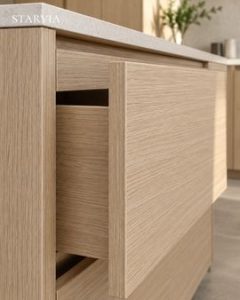
Dealers building a full catalog rather than a single SKU typically pair thermofoil door faces with melamine box construction to keep the finished cabinet within the same price bracket across an entire kitchen set. This combination lets a thermofoil kitchen cabinets manufacturer Vietnam partner offer buyers a wide finish program — from matte white and gray tones to woodgrain-textured PVC films that mimic painted or stained wood at a lower cost — without requiring separate tooling for each color. Because the vacuum-press process uses shared MDF core stock, adding new finish options to an existing product range is generally faster and less capital-intensive than introducing a new painted or lacquered line, which benefits buyers who want to test new colors each season without committing to large minimum runs per finish.
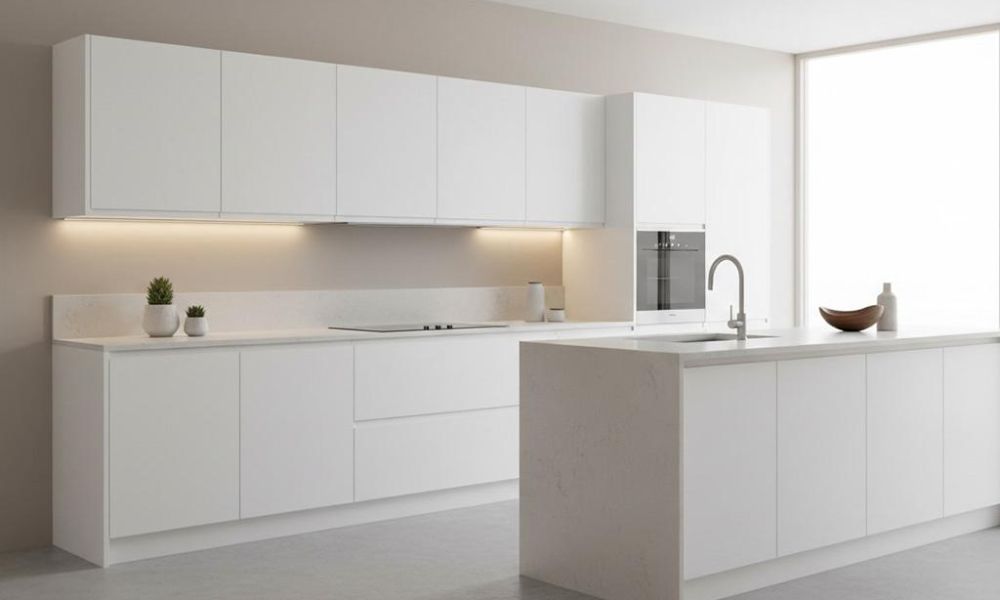
Finished thermofoil cabinets combine a clean appearance with cost-effective manufacturing.
For wholesale buyers and dealers building out a value-tier product line, a thermofoil kitchen cabinets manufacturer Vietnam partnership offers a practical balance of finish quality, moisture resistance, and per-container cost — particularly relevant given current freight rates and the tariff increase scheduled for 2027. Requesting a sample order, reviewing CARB Phase 2 documentation, and confirming dimensional tolerance are the three steps that separate a reliable OEM relationship from a costly sourcing mistake. Buyers ready to move forward can request a sample kit and container quote directly from our sales team.

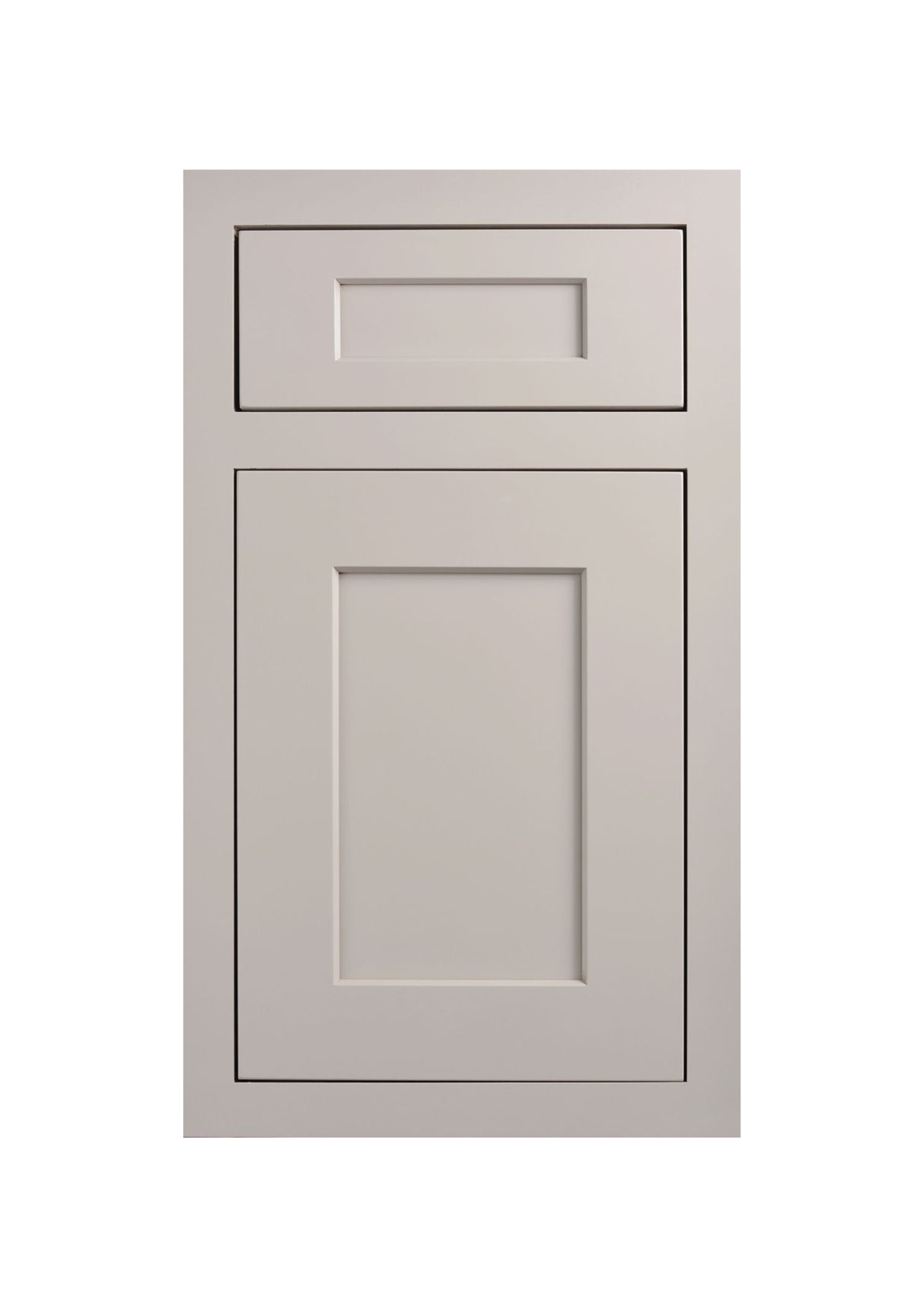 View collection
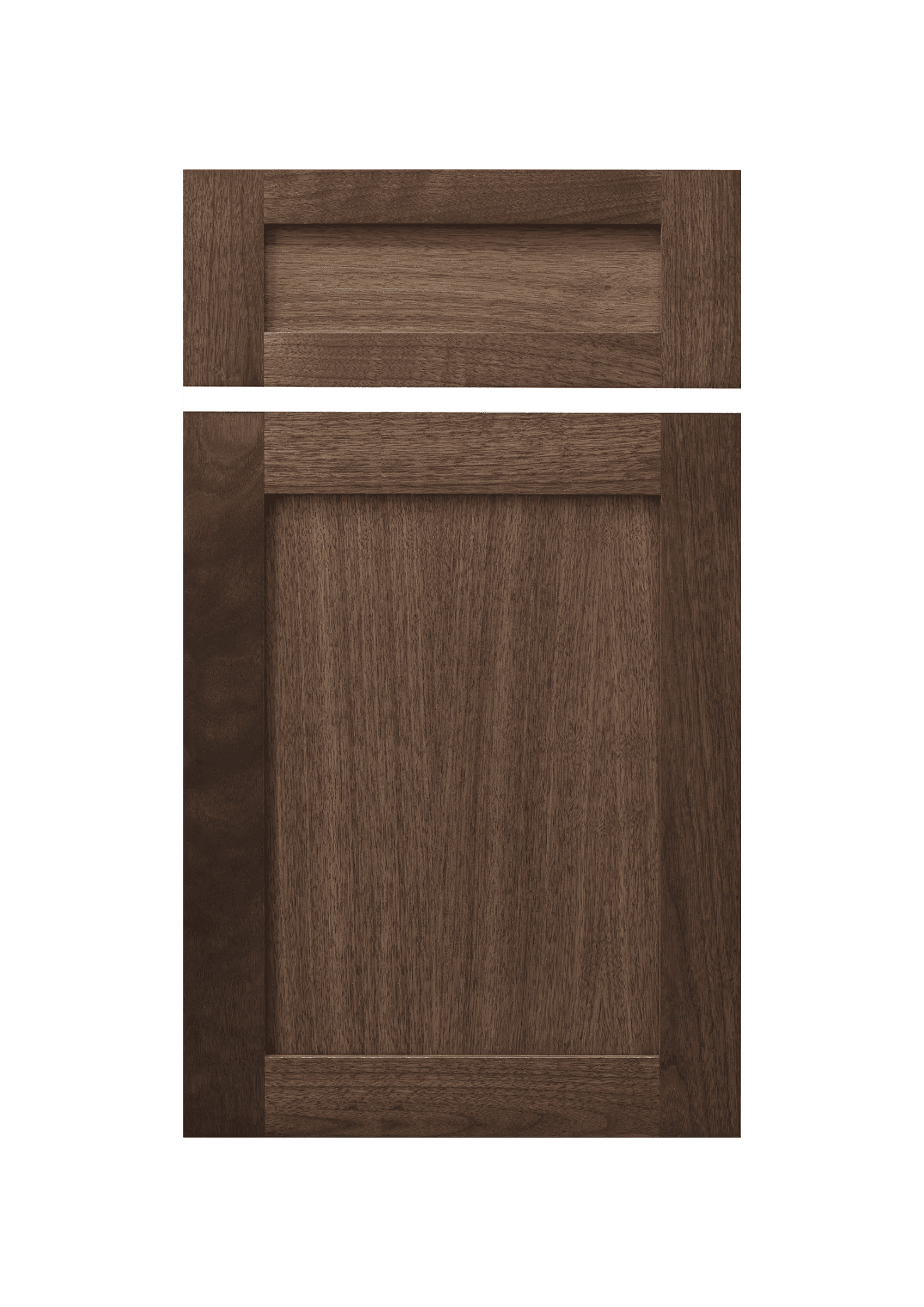 View collection
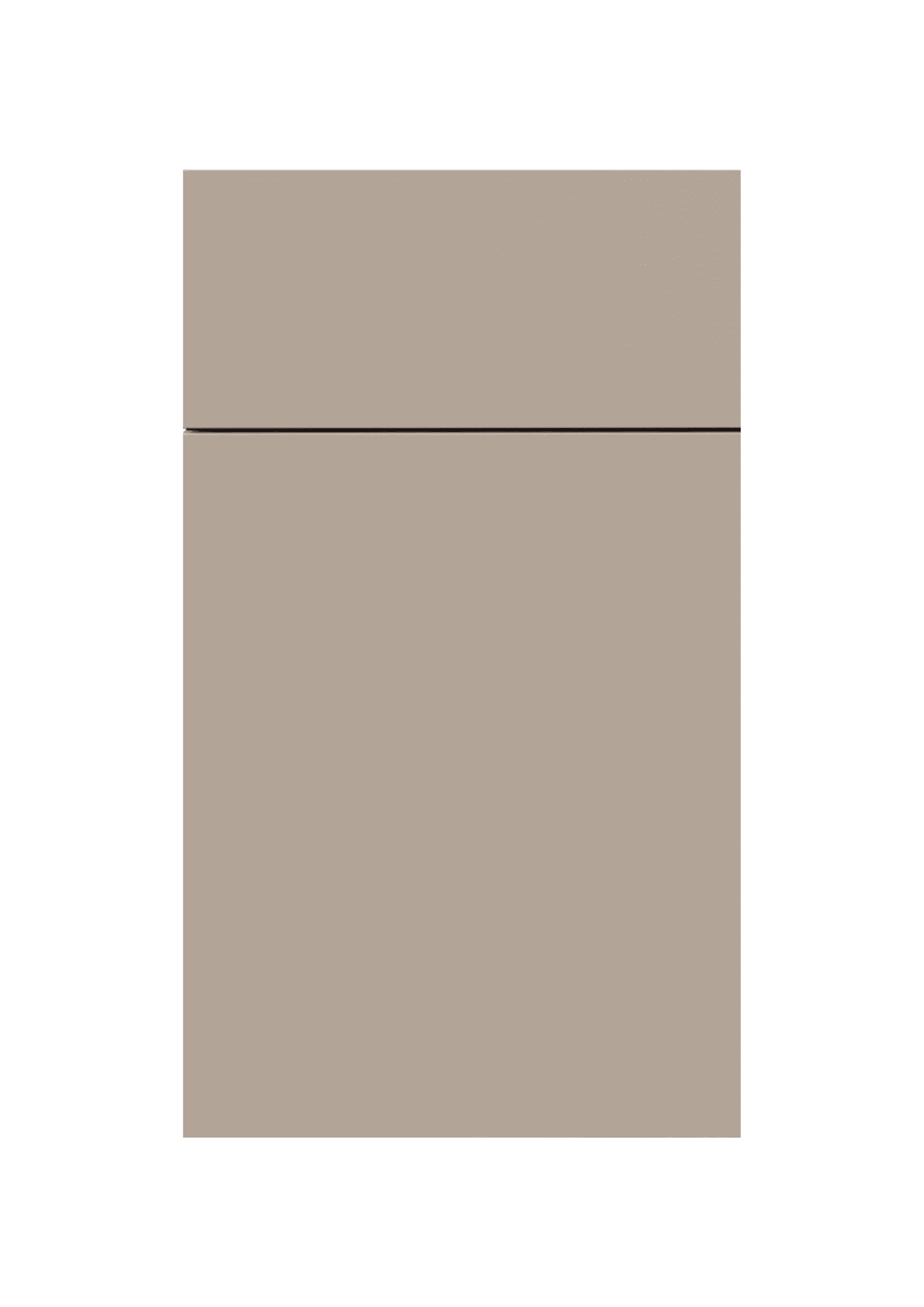 View collection
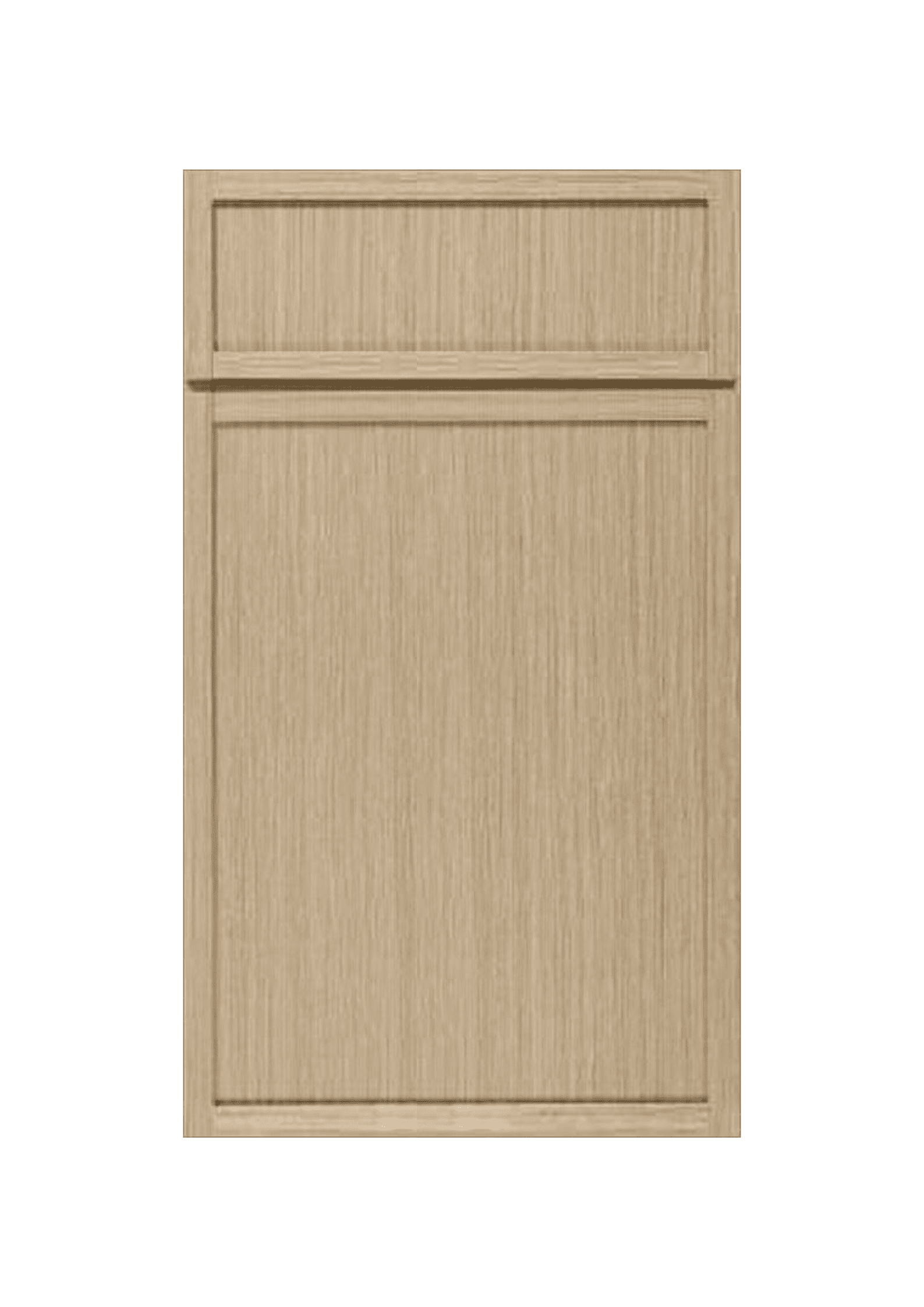 View collection