- Our Products
-
Choose your Cabinet Style
-

For many distributors and private-label brands, choosing to import kitchen cabinets from Vietnam offers significant cost and supply chain advantages. With factory pricing 40–60% below comparable US domestic wholesale rates, CARB Phase 2 compliant manufacturing, and a mature export infrastructure built over two decades, Vietnam is now a primary supply source for a wide range of cabinet programs — from volume RTA lines to premium semi-custom collections.
Many buyers evaluating Asian sourcing options also compare Vietnam with China in terms of cost, lead time, and quality. Read our guide on Vietnam vs China kitchen cabinets to understand the key differences.
But importing cabinets from Vietnam is not simply a matter of finding a factory and placing an order. Successful buyers follow a structured process: factory vetting, product specification, compliance documentation, container planning, and freight coordination. This guide walks through each stage so you can confidently import kitchen cabinets from Vietnam while minimizing risks and optimizing costs.
The most common mistake first-time importers make is approaching Vietnam factories without a clear product spec. Factories can produce almost anything, but without defined parameters, you’ll spend weeks cycling through samples that don’t match your market requirements. Before reaching out, lock down the following:
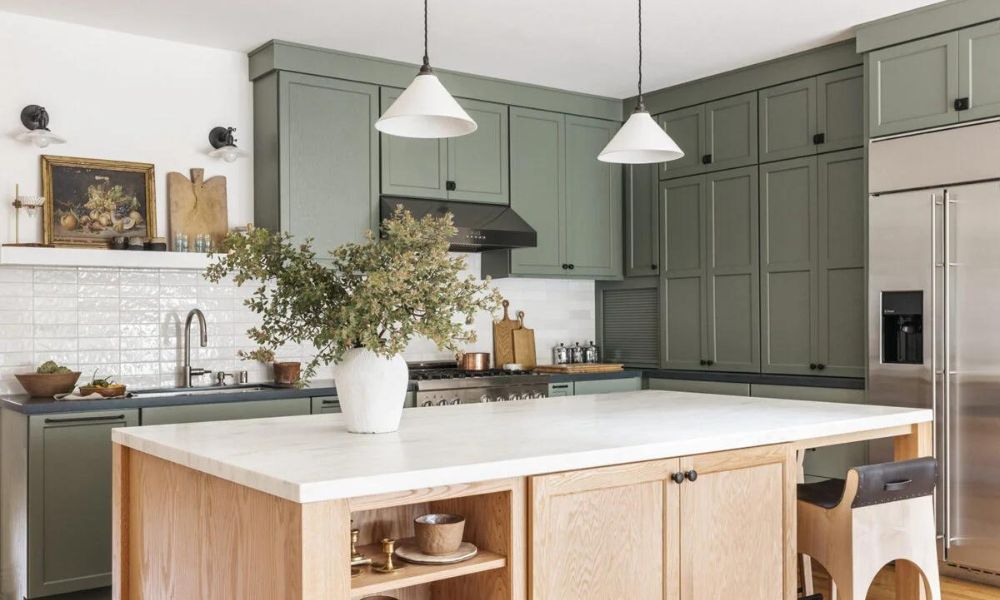
Defining cabinet styles, materials, and finishes helps buyers source efficiently.
Before you import kitchen cabinets from Vietnam, defining your product specifications is essential to ensure the factory can meet your market requirements.
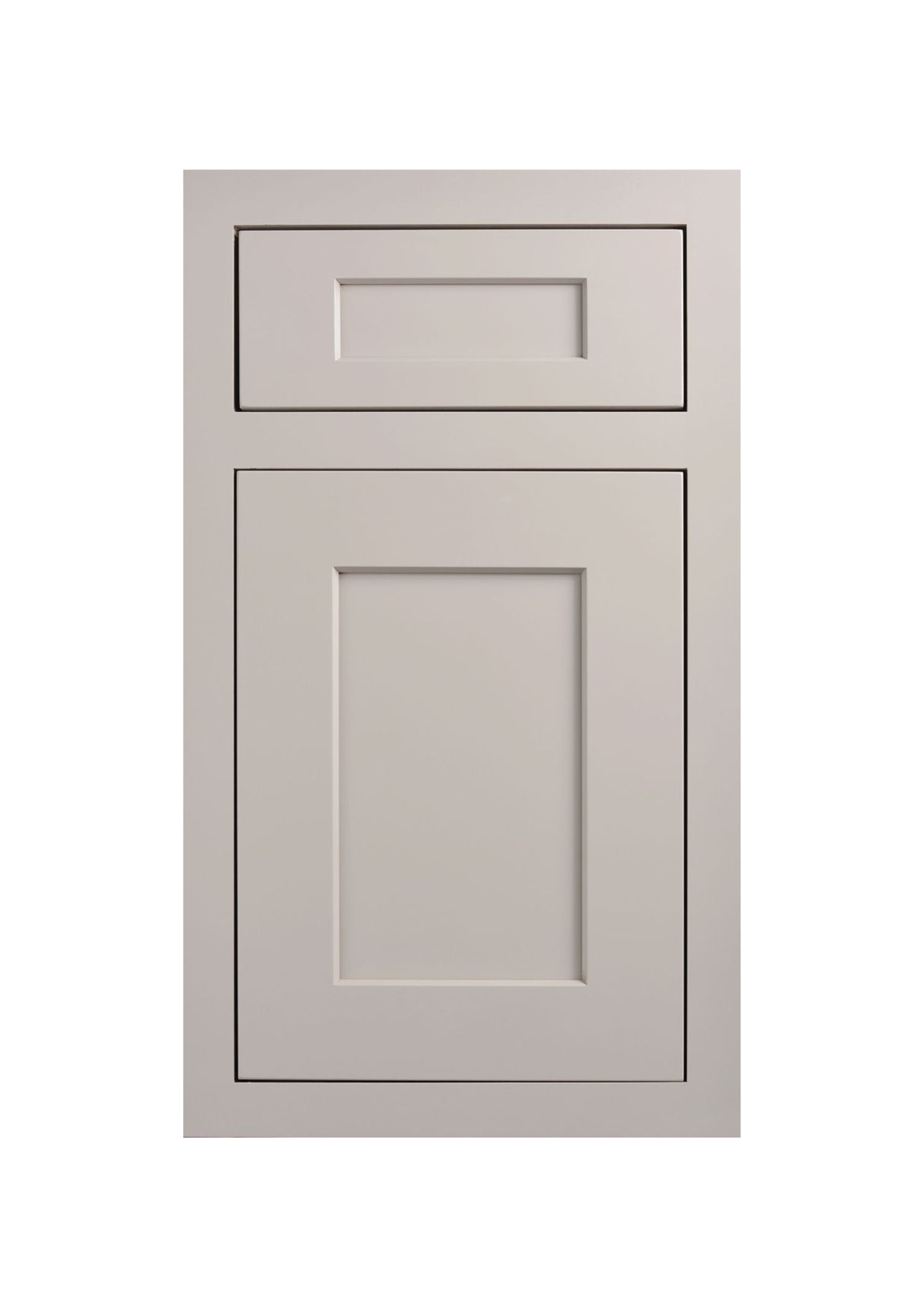
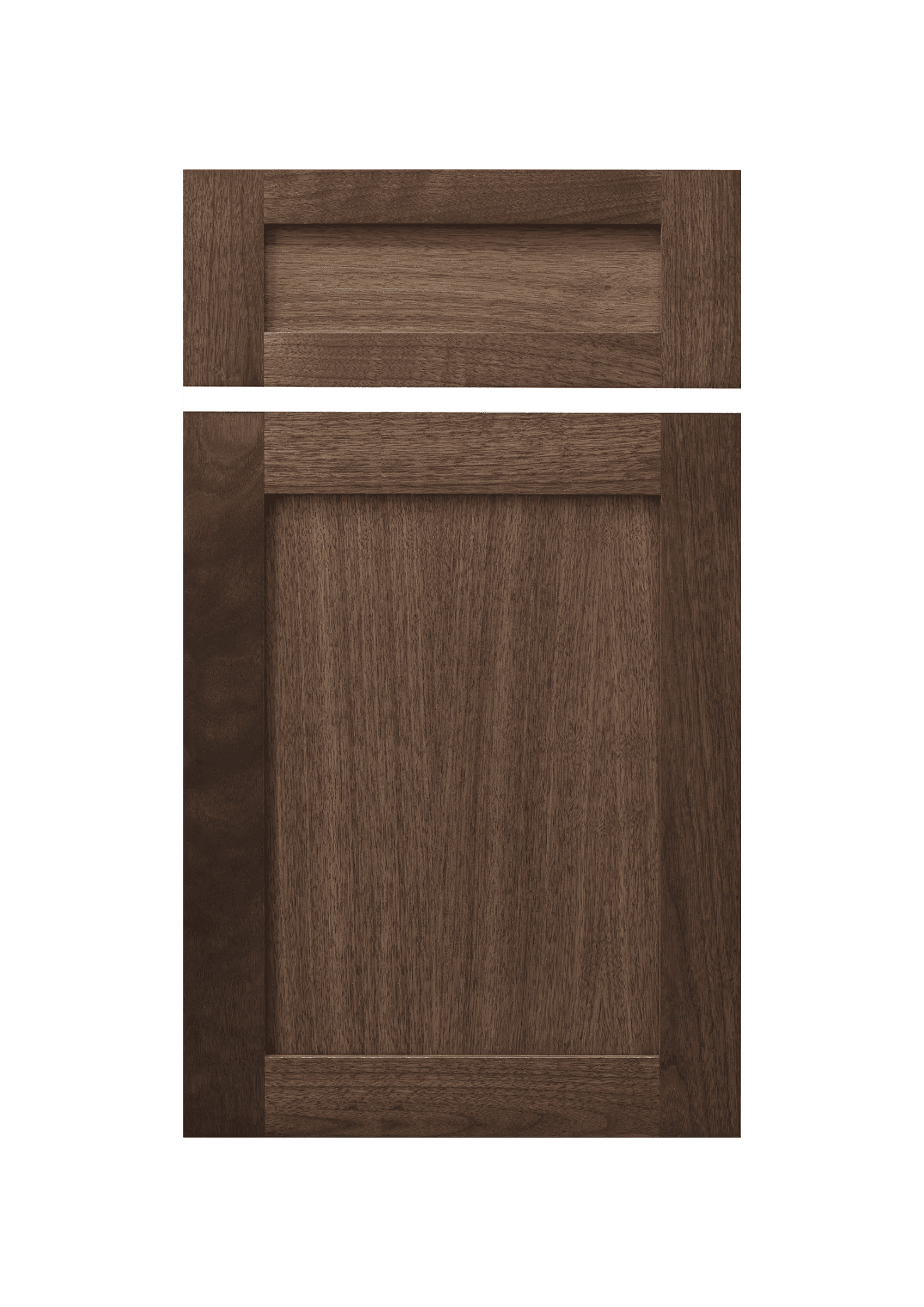
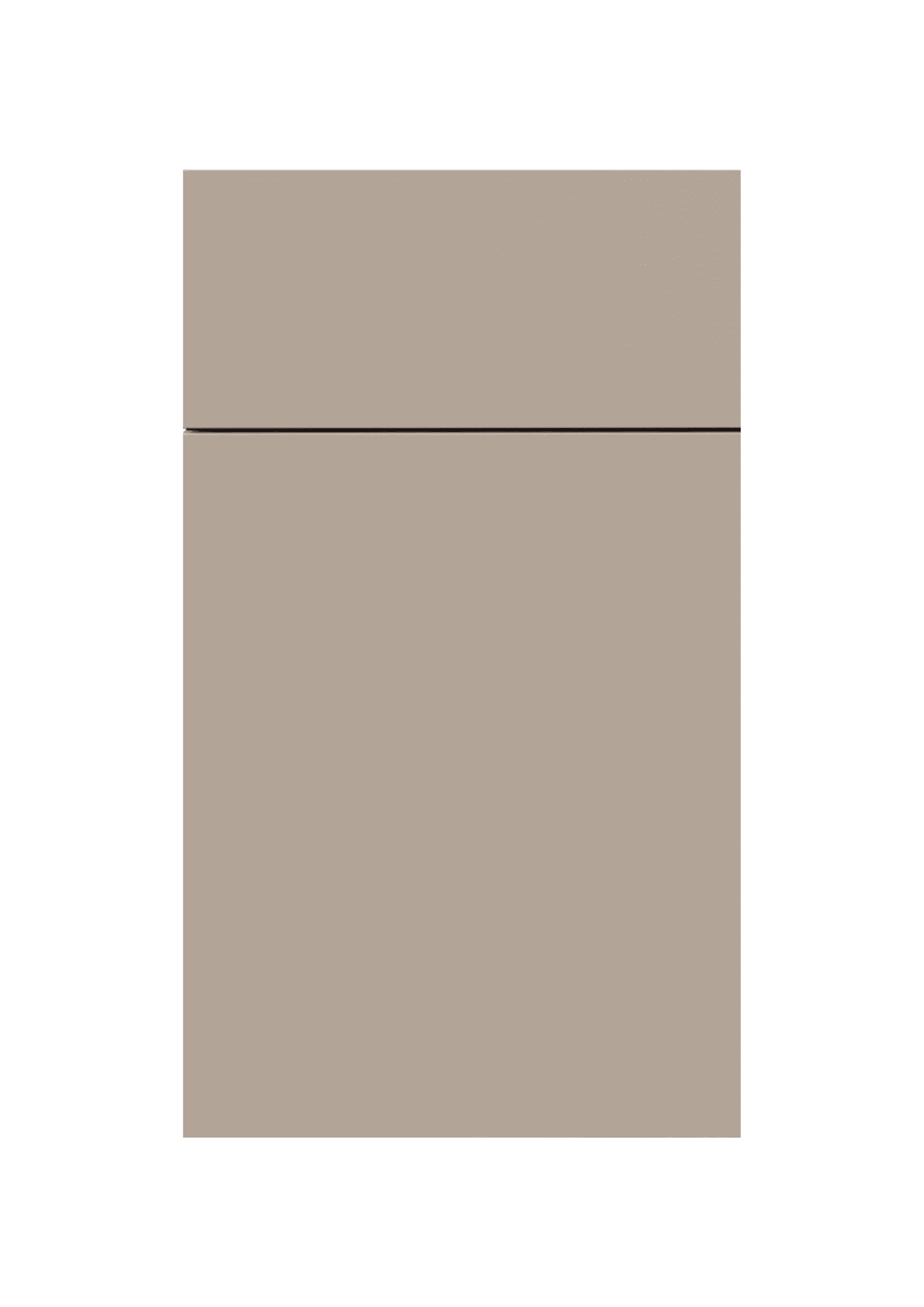
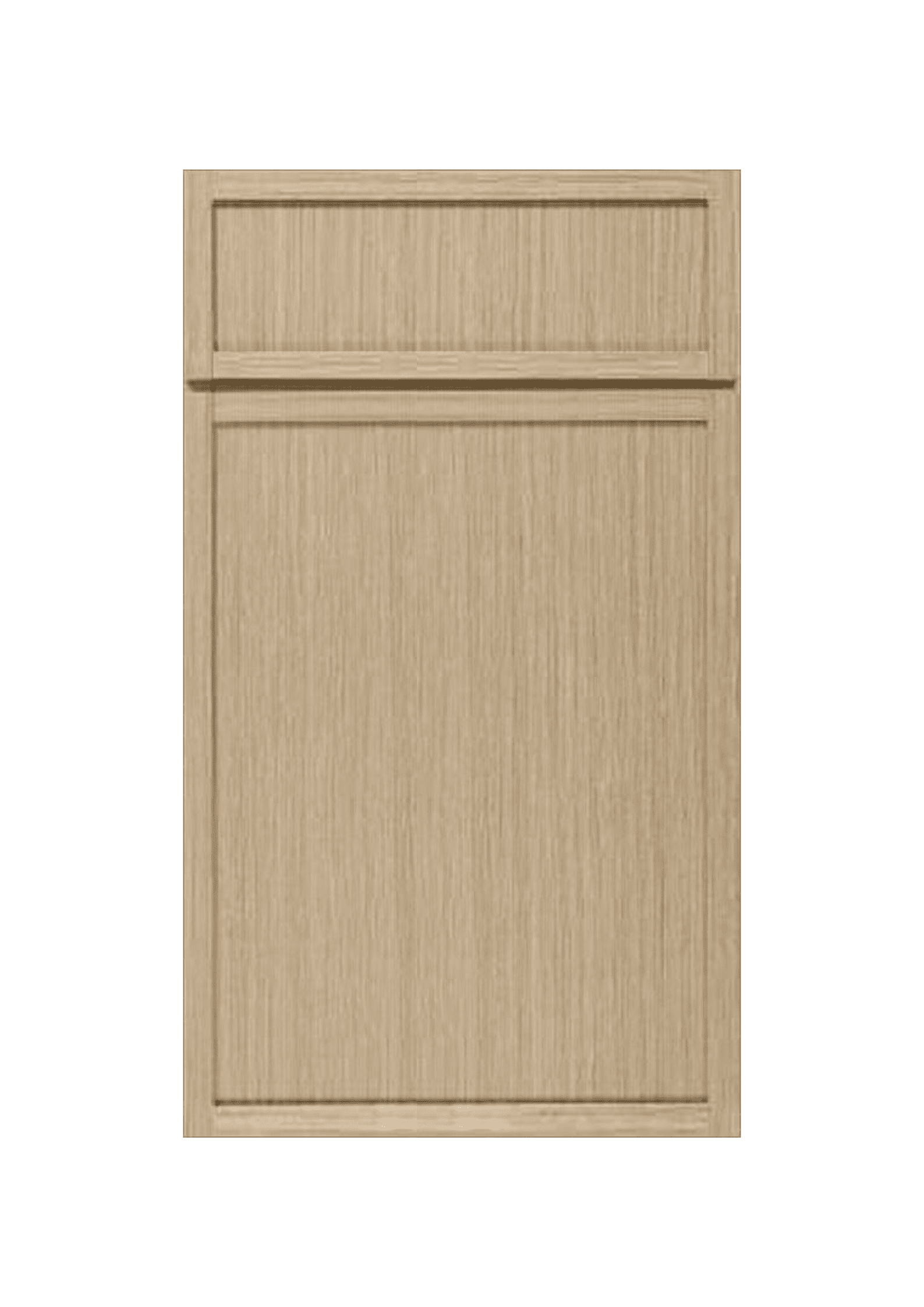
Door style and construction type. Framed (face-frame) construction is standard for Shaker, Raised Panel, and Inset doors — which together account for the majority of US residential cabinet sales. Frameless (full-access European) construction is required for slab and flat-panel doors common in modern and contemporary kitchens. Your factory needs to run the construction type your program requires.
Box material. Specify all-plywood construction if your market demands it — and for mid- to premium-tier US programs, it does. Plywood boxes command a price premium over MDF or particleboard but are a standard buyer expectation for anything sold above entry-level. Document whether you need 1/2″ or 3/4″ plywood, and whether you want a hardwood face frame or ply frame.
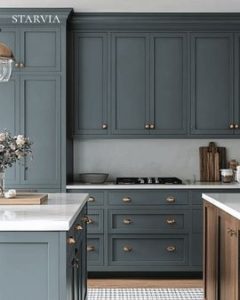
Finish and color. Painted (MDF or solid wood) and thermofoil (melamine wrap over MDF) are the two most common finish categories. For 2026, the highest-demand finishes in the US are White Shaker, Sage Green, Navy Blue, Walnut/White Oak, and Off-White/Linen. Specify the finish category, color, and sheen level (matte, satin, semi-gloss).
Hardware. Soft-close hinges and drawer slides are the baseline expectation for US buyers. Dovetail drawer boxes with full-extension undermount slides (Blum Tandem or equivalent) are required for mid-premium programs. If you have a specific hardware brand preference, state it upfront — many Vietnam factories stock Blum, Grass, and equivalent Asian-manufactured soft-close hardware.
Compliance requirements. CARB Phase 2 certification is mandatory for sale in California and is the accepted US national standard. Request a valid CARB certification from the factory’s composite panel suppliers before committing to production.
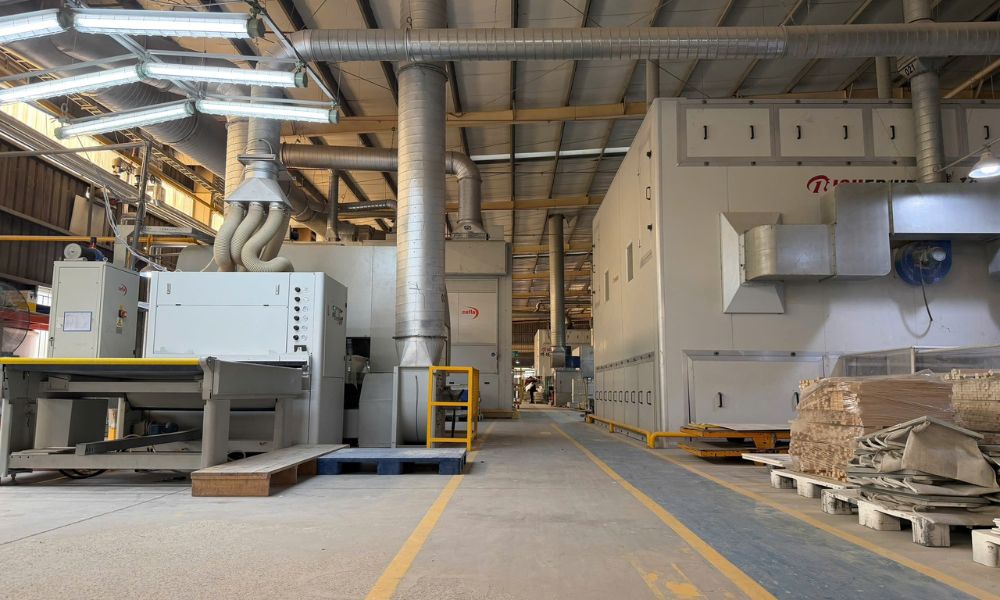
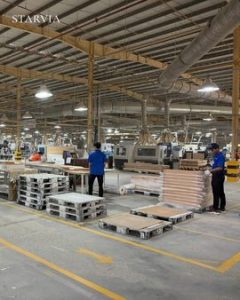
Experienced export factories provide compliance, quality control, and scalable production.
Not all Vietnam cabinet factories are equal. The country’s cabinet manufacturing sector ranges from small workshops producing a few containers per month to large integrated facilities with annual export volumes in the thousands of containers. For a sustainable import program, you need a factory with the capacity, compliance infrastructure, and communication capability to support your business reliably.
Buyers looking to import kitchen cabinets from Vietnam should prioritize factories with proven export experience and compliance certifications.
Key vetting criteria for a Vietnam cabinet factory:
Kitchen cabinets are relatively light but bulky, which means container utilization is a key variable in landed cost. Most US buyers use 40ft high-cube (40’HQ) containers for maximum capacity. A well-packed 40’HQ can hold approximately 50–75 RTA cabinet units for a standard 10×10 kitchen layout, depending on box sizes, packing density, and whether cabinets are shipped assembled or flat-pack.
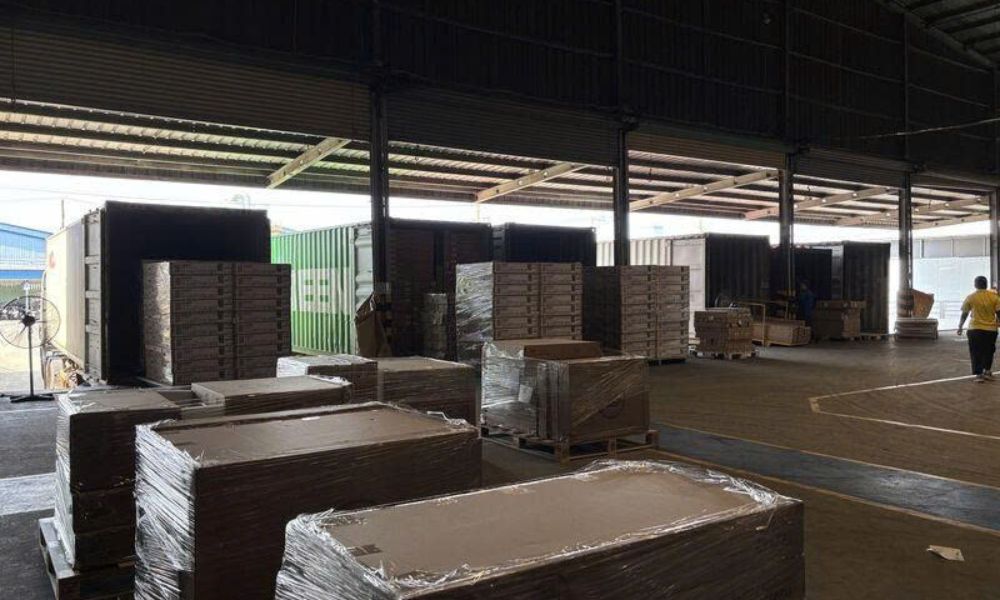
Flat-pack RTA cabinets maximize container utilization and reduce freight costs.
RTA (ready-to-assemble, flat-pack) shipping dramatically improves container efficiency. Flat-pack cabinets require less volume per unit than pre-assembled cabinets, allowing more kitchens per container — which directly lowers per-unit freight cost. For high-volume programs targeting the RTA wholesale segment, flat-pack is the standard. For premium semi-custom programs where installation labor is already factored in, pre-assembled may be preferred for the end-customer experience.
Freight routing from Vietnam to the US West Coast (Los Angeles, Long Beach) typically runs 18–25 days ocean transit. East Coast ports (Savannah, Baltimore, New York/New Jersey) add 7–12 additional transit days. Factor in port processing, inland drayage, and any US customs examination time — total door-to-door from Vietnam factory to US warehouse is typically 35–55 days once the container departs the factory.
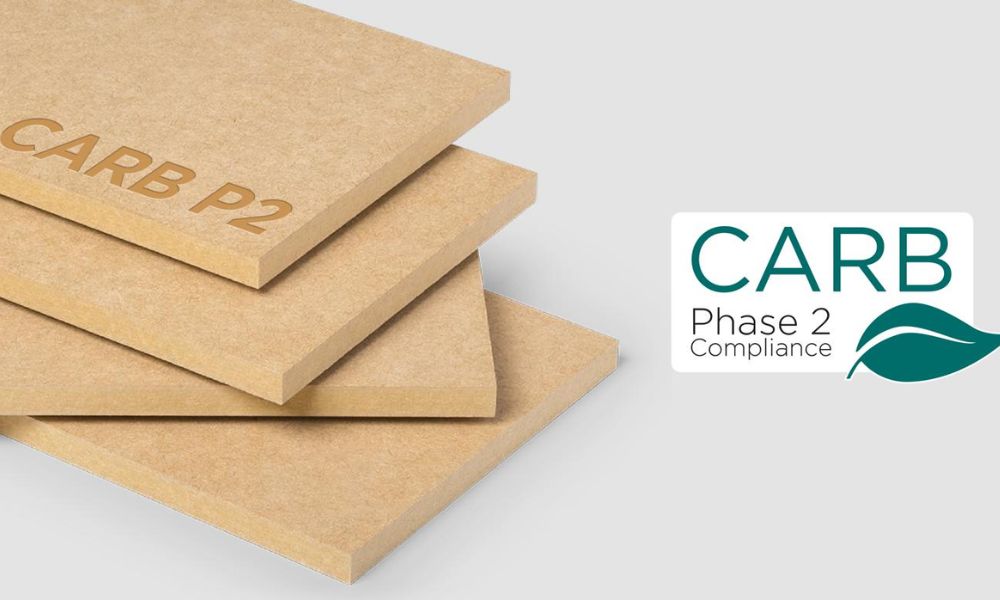
CARB Phase 2 certification is essential for cabinet imports into the US market.
Kitchen cabinets imported from Vietnam into the US are classified under HTS code 9403.40 (wooden furniture for kitchens). As of mid-2026, Vietnam-origin kitchen cabinets are subject to standard Most Favored Nation (MFN) import duties — verify current rates via the USITC HTS database plus any applicable Section 301 or anti-dumping/countervailing duty orders. Buyers should verify current duty rates with a licensed US customs broker before finalizing landed cost calculations, as the tariff landscape has been volatile.
Required import documentation for a standard kitchen cabinet shipment includes: commercial invoice, packing list, bill of lading (ocean B/L), certificate of origin (Form E for ASEAN preferences where applicable), and CARB compliance documentation for composite wood products. If your product includes solid wood components, a CITES certificate may be required depending on species.
Understanding tariffs and documentation requirements is critical for companies that import kitchen cabinets from Vietnam into the US market.
Working with a licensed customs broker who has experience with furniture and cabinetry imports is strongly recommended for first-time importers. The broker can advise on duty classification, help you structure your purchase documentation to minimize classification risk, and handle ISF (Importer Security Filing) 24-hour advance filing requirements.
For orders above a certain volume threshold — typically 2+ containers — commissioning a third-party quality inspection before container loading is standard practice. US-based inspection firms with Vietnam operations (SGS, Bureau Veritas, Intertek, QIMA) can conduct pre-shipment inspections against your approved sample and specification sheet. The inspection report gives you documented evidence of conformance — or the ability to hold shipment and require remediation before the container seals.
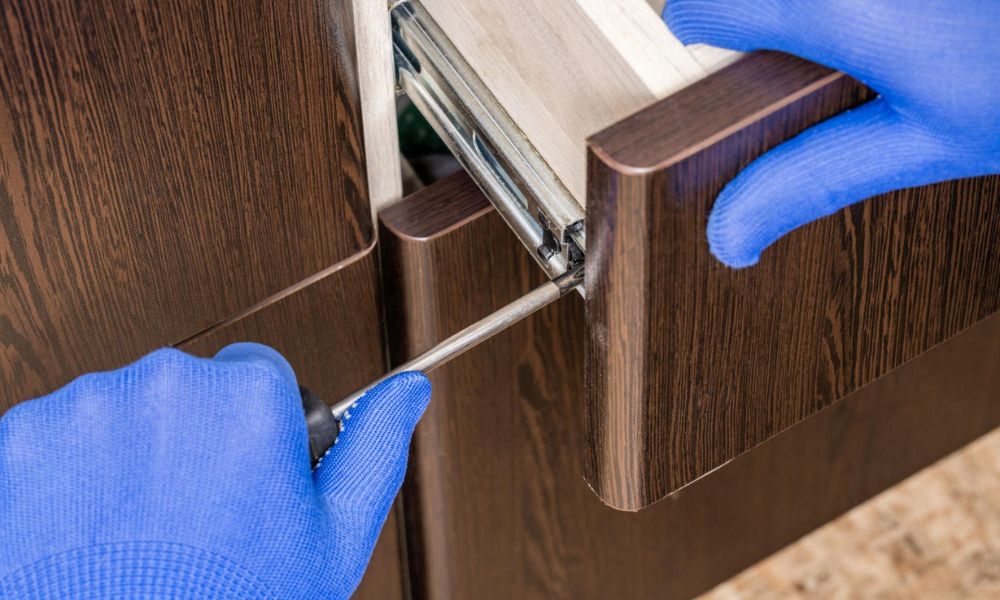
Third-party inspections help ensure consistent quality before shipment.
Key inspection checkpoints for kitchen cabinets: finish color consistency (compare to signed color sample), door-to-frame gap uniformity, hinge and drawer slide function, box squareness (within 1/16″ tolerance is industry standard), surface defect assessment (scratches, dents, finish voids), and hardware installation (correct placement, full installation of all soft-close mechanisms).
For US importers, distributors, and private-label brands looking to build a reliable Vietnam cabinet supply chain, Starvia offers a fully integrated OEM partnership. With 20+ years of export manufacturing experience and dedicated programs for the US, Canadian, Australian, and European markets, Starvia provides CARB Phase 2 compliant production across four style collections — Shaker, Inset, Slab, and Slim — in a full range of 2026 trending finishes including White, Sage Green, Navy Blue, Walnut, and White Oak.
Starvia supports private-label packaging, custom dimensions, RTA and pre-assembled configurations, and flexible MOQs for buyers building new programs. The team is experienced in US import documentation, compliance certification, and container optimization for both 20ft and 40ft loads.
Whether you are placing your first Vietnam cabinet order or looking to consolidate your supply base with a single factory capable of running your full style range, the process above gives you the framework to move from inquiry to container with confidence.
Explore Starvia’s collections at starvia.com.vn or contact us for OEM pricing.


 View collection
 View collection
 View collection
 View collection