- Our Products
-
Choose your Cabinet Style
-
Private label kitchen cabinets Vietnam sourcing lets a brand sell cabinets under its own name without owning or running a factory. A buyer selects a product line, applies its own branding and packaging, and the factory ships the order ready to sell – no tooling investment, no production staff, no factory floor to manage. This guide breaks down how private label sourcing differs from OEM and ODM, what a program actually involves, and what to check before committing volume to a Vietnam factory.
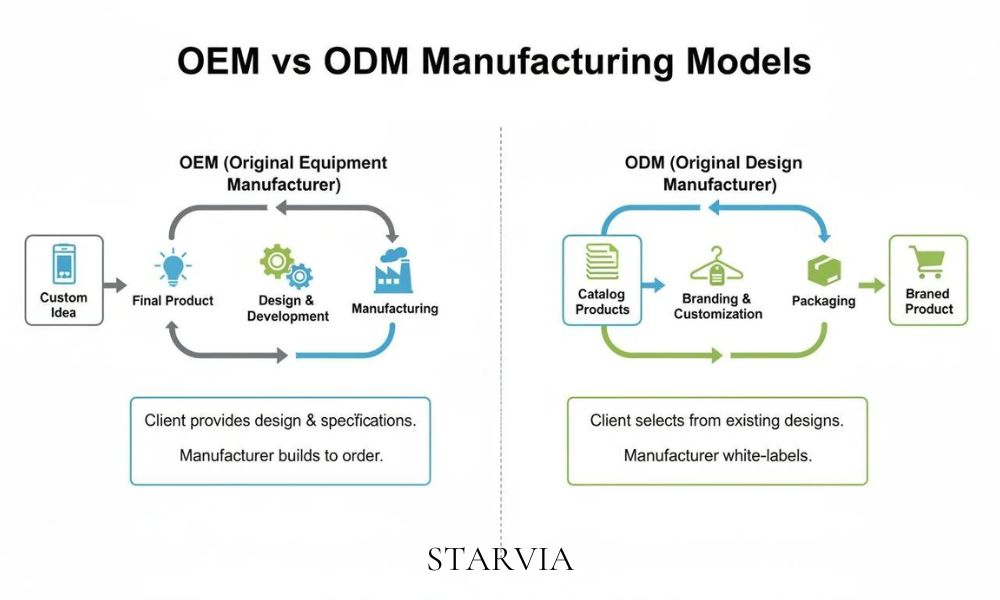
Understanding the differences between private label, OEM and ODM cabinet manufacturing helps buyers choose the right sourcing model.
Private label, OEM, and ODM get used interchangeably in cabinet sourcing conversations, but they describe different levels of buyer involvement. Private label means selecting from a factory’s existing product line and selling it under a buyer’s own brand name, with minimal changes to the underlying design.
OEM (Original Equipment Manufacturer) production goes further: the buyer supplies detailed specifications – structure, materials, finish, hardware – and the factory builds to that spec sheet under the buyer’s brand. ODM (Original Design Manufacturer) sits in between, where the factory’s own design team develops the product and the buyer applies branding with light modification. Private label kitchen cabinets Vietnam programs typically start at the simpler end of this spectrum and can move toward full OEM as a distributor’s catalog matures.
Vietnam now supplies roughly 40% of US wooden kitchen furniture imports by value, up from about 28% just a few years ago, according to UN Comtrade trade data. That shift reflects a broader move by US distributors away from carrying inventory risk on their own production and toward partnering directly with export-grade Vietnam factories.
Sourcing private label kitchen cabinets Vietnam direct from a factory typically cuts procurement cost 20-35% compared to buying through a domestic distributor layer, since a brand is paying factory pricing instead of a marked-up middleman price. That margin is what lets smaller cabinet brands compete on price against distributors carrying much larger catalogs.
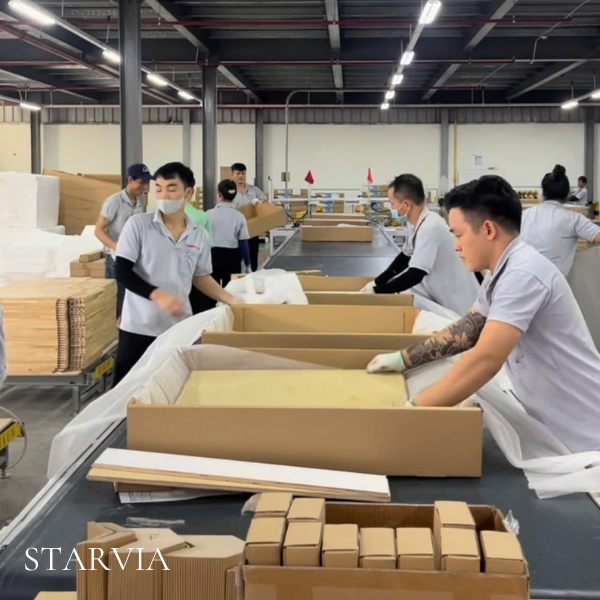
From catalog selection and branding to production and export, every step is coordinated before shipment.
A private label kitchen cabinets Vietnam program typically starts with a catalog review, where a buyer selects finish lines, door styles, and box construction from the factory’s existing product range rather than designing from scratch. This step alone usually takes less time than a full OEM development cycle, since the underlying product is already in production.
Once a product line is selected, the buyer supplies branding assets – box labels, catalog artwork, and any brand-specific packaging requirements. The factory then produces the order under the buyer’s label rather than its own, with no reference to the manufacturer’s name appearing on the finished product or packaging.
Sample approval comes next: most buyers request a physical sample under their own labeling before committing to a full container, confirming color match, hardware feel, and packaging quality match what will ship at volume. Only after sample sign-off does the factory schedule full production against a confirmed ship date.
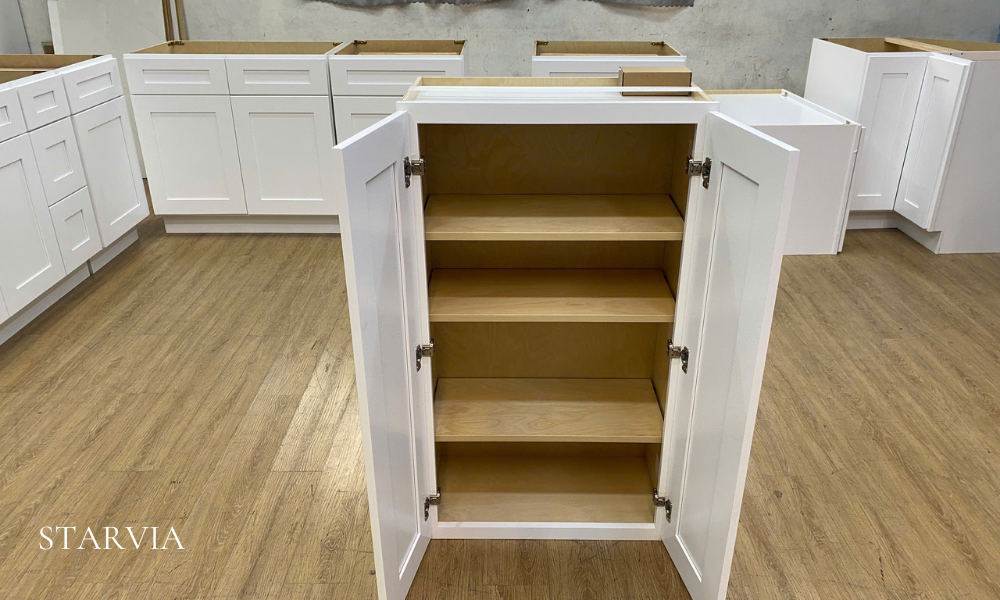
Private label brands often build catalogs across premium, mid-range and value cabinet collections.
Private label kitchen cabinets Vietnam buyers typically build a catalog across three tiers, matching each to a different price point in their own brand’s lineup.
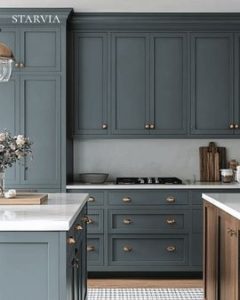
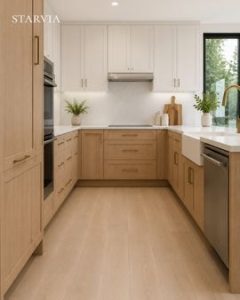
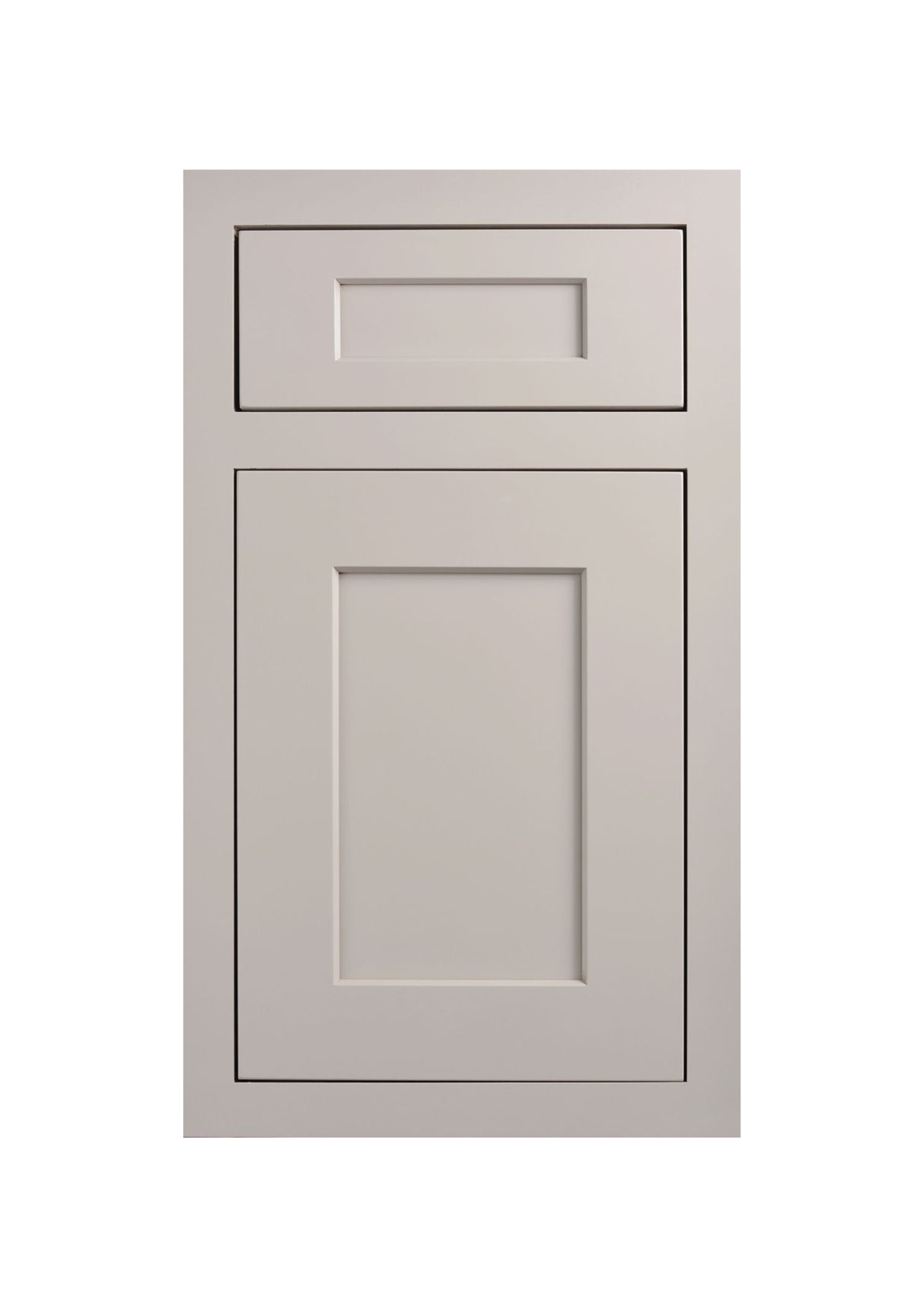
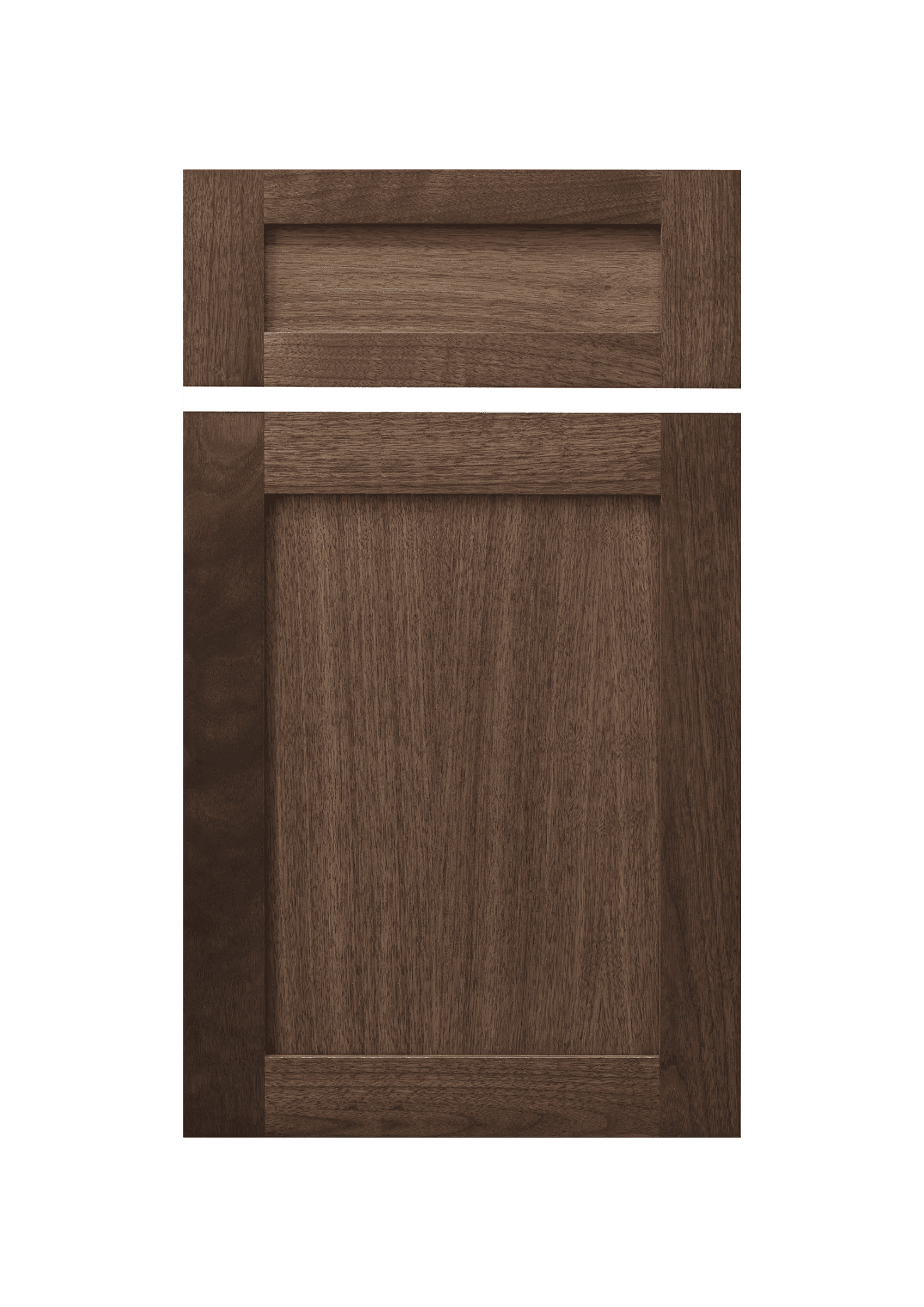
Solid Shaker anchors the premium tier – a timeless door profile with durable painted finishes, solid wood doors, and soft-close hardware, giving a private label brand a flagship product that photographs well in marketing.
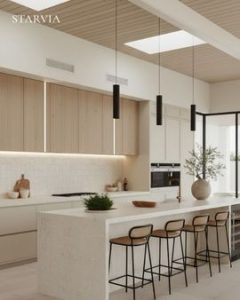
HDF Painted Shaker covers the mid-tier private label catalog, delivering the same clean Shaker look on an HDF substrate at a lower per-door cost. Many private label brands lead their catalog with this tier since it balances visual quality against margin.
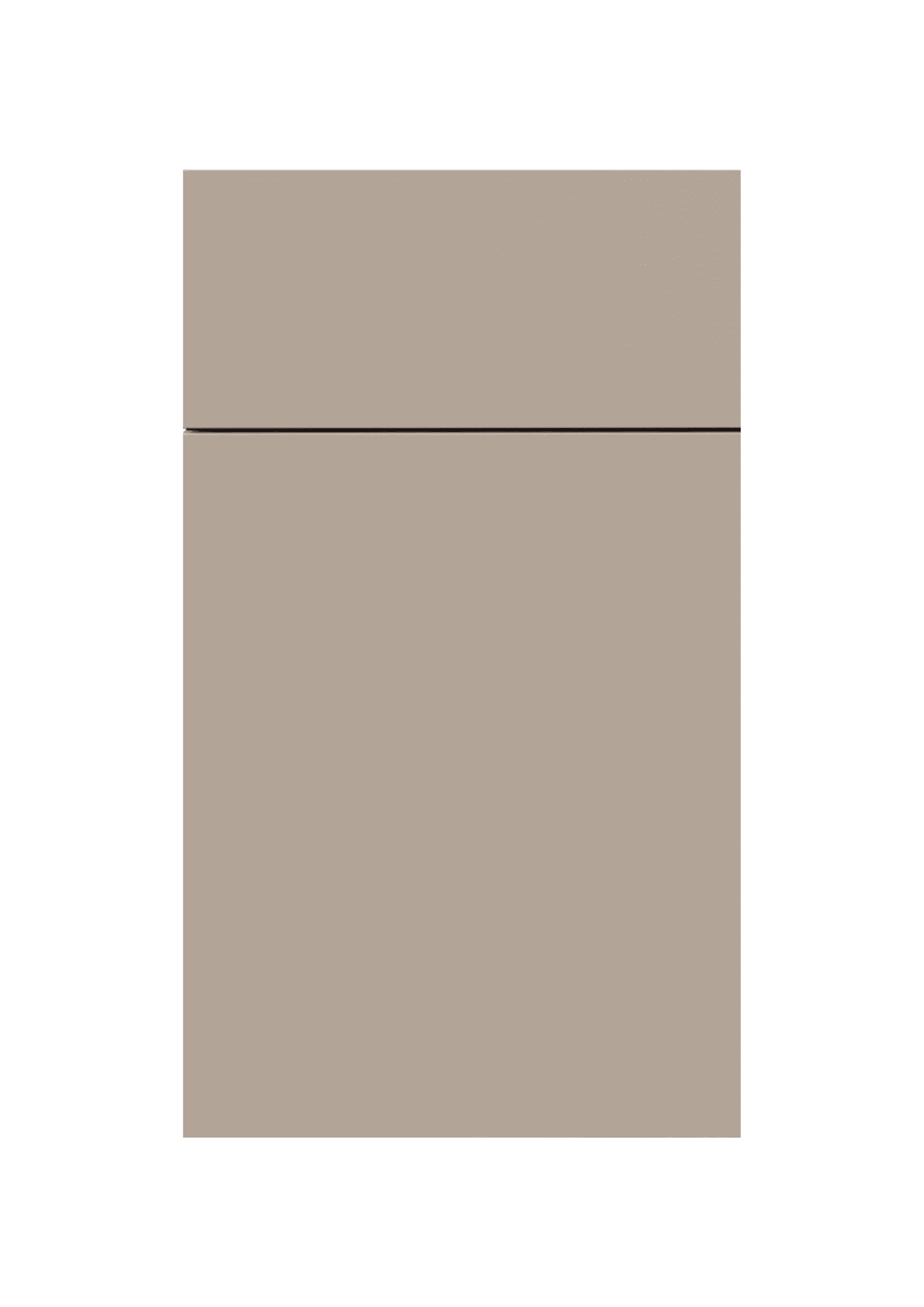
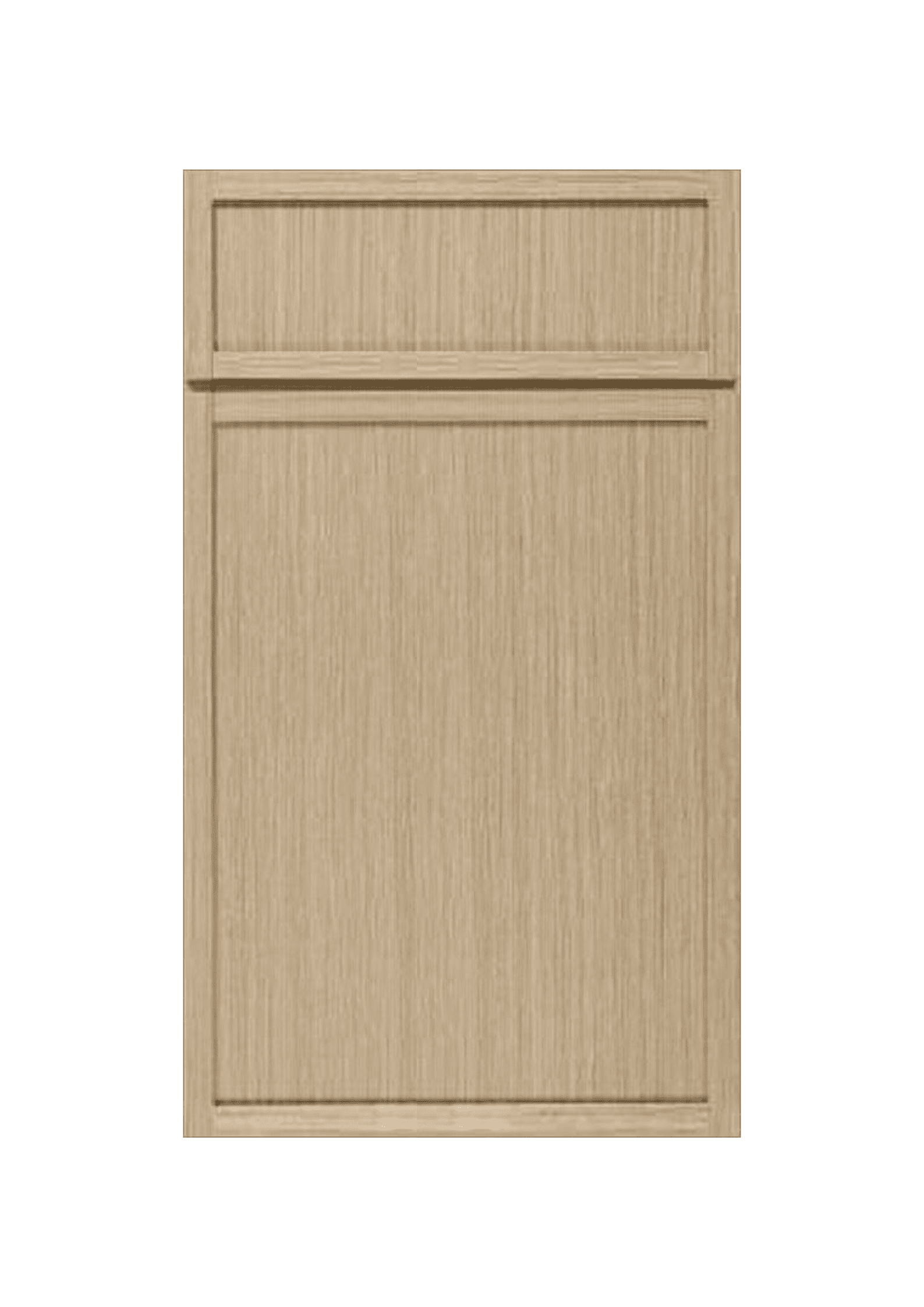
Thermofoil and melamine finishes round out the entry tier for private label programs targeting builder-grade or high-volume price points. See our thermofoil kitchen cabinets manufacturer Vietnam guide for finish specs, and our kitchen cabinet wood species OEM Vietnam guide for how substrate choice affects long-term durability across each tier.
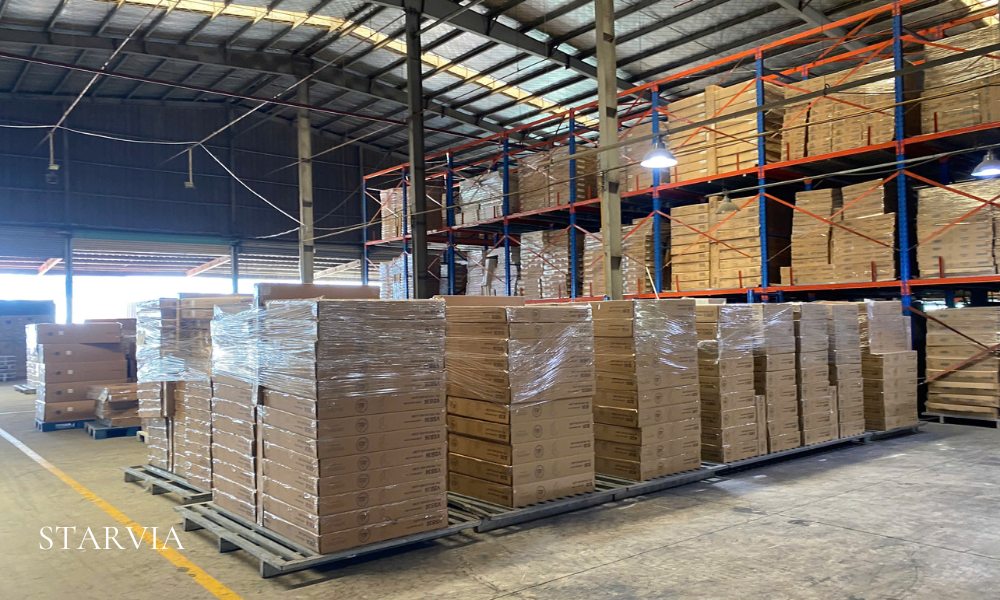
Custom packaging helps distributors present a consistent brand experience to installers and homeowners.
Packaging is where a private label brand becomes visible to the end customer, so box design, labeling, and included documentation should carry the buyer’s brand consistently across every SKU. A factory experienced in private label kitchen cabinets Vietnam production should offer specification options for box artwork, interior labeling, and included assembly documentation under the buyer’s name.
Hardware and accessory bags should also ship labeled under the buyer’s brand where visible to installers, since a mismatched hardware label undercuts the private label positioning a distributor is paying for. Confirming this detail before a first order avoids a rebrand mid-container if packaging arrives with the wrong labeling.
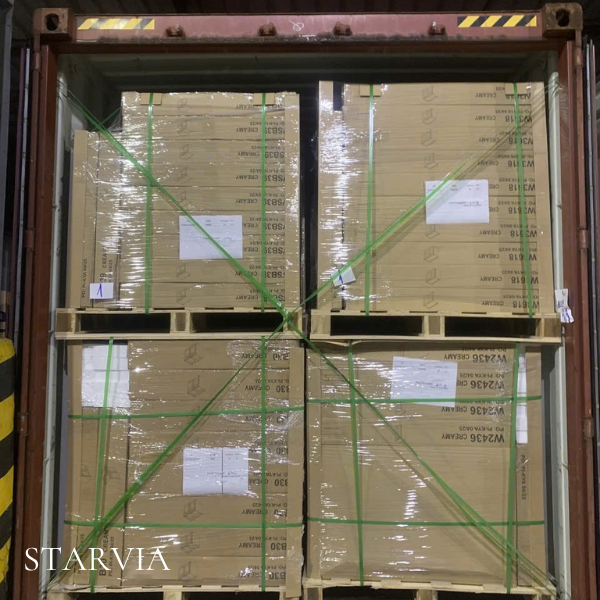
Most private label cabinet programs begin with one 40-foot container under FOB terms.
Private label kitchen cabinets Vietnam programs run on the same FOB and MOQ structure as any other Vietnam OEM order. Our current FOB Hai Phong pricing runs $42,000-$52,000 for melamine and thermofoil, up to $82,000 for lacquer plywood, detailed in our kitchen cabinet FOB price Vietnam guide.
Minimum order quantity is one 40ft container, the same threshold across all Starvia finish categories, which lets a new private label brand test one or two SKUs before committing to a full catalog. Full scheduling detail for scaling beyond a pilot order is covered in our kitchen cabinet MOQ at a Vietnam factory guide.
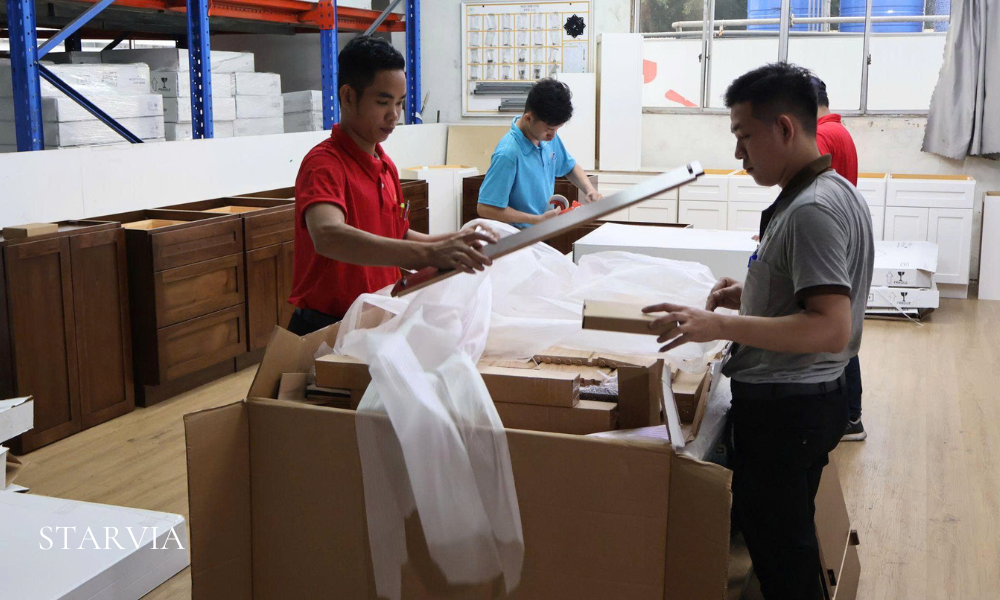
Consistent quality inspection protects both the manufacturer and the buyer’s private label reputation.
A private label brand’s reputation rides entirely on the factory’s consistency, since the buyer has no in-house production to catch defects before they reach a customer. Every batch should be checked for color match, finish consistency, and hardware function before it ships, with documentation the buyer can review on request.
This matters more for private label kitchen cabinets Vietnam programs than for a single specification-based order, because a defect that reaches a private label customer damages the buyer’s brand directly, not the factory’s. Buyers should ask any prospective factory for a claim-rate history from existing private label clients before committing volume.
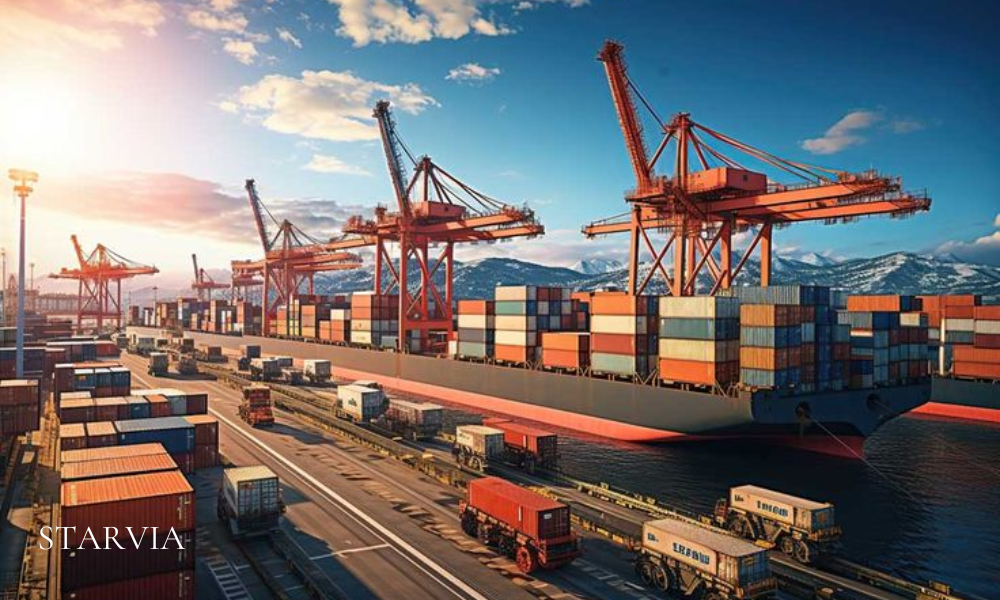
Ocean freight planning helps cabinet brands manage inventory and delivery schedules.
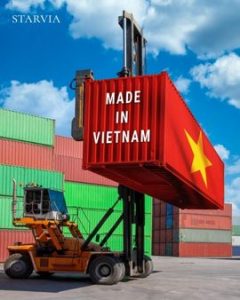
Transit time from Hai Phong to Los Angeles/Long Beach runs 18-22 days; East Coast ports run 28-32 days. Current West Coast ocean freight rates sit around $3,200 per FEU, with East Coast rates around $5,000 per FEU as of Q2 2026, based on benchmarks tracked by freight platforms such as Freightos.
Full detail on how finish complexity affects production scheduling is in our kitchen cabinet lead time Vietnam OEM factory guide, which is worth reviewing before setting a launch date for a new private label SKU with retail or distribution partners already lined up.
A private label brand selling under its own name carries full compliance responsibility in the eyes of US regulators, even though the factory handles manufacturing. Our Vietnam OEM factory holds CARB Phase 2 certification (No. CARB/EPA23072), meeting the composite wood requirements enforced by the California Air Resources Board.
Buyers building sustainability credentials into a private label catalog can also request FSC chain-of-custody documentation, relevant for retailers and design-forward buyers who track sourcing standards published by groups such as the National Kitchen and Bath Association. A factory should provide this paperwork in writing before a first container ships, not after a customer asks for it.
Some distributors eventually consider building their own production capacity once a private label catalog gains traction, but the math rarely favors that move at typical distribution volumes. Standing up even a modest cabinet plant requires equipment, skilled labor, and quality control systems that a factory offering private label kitchen cabinets Vietnam production has already spent years refining.
Staying with a private label partner also keeps a distributor’s capital focused on marketing and sales growth instead of factory overhead. Most brands that succeed with private label sourcing reinvest the margin saved on production into expanding their SKU range or entering new regional markets, rather than diverting cash into machinery a factory already provides at scale.
The exception is a distributor moving toward true OEM development, where design ownership and spec control matter enough to justify closer factory integration. Even then, most buyers stay with a contracted Vietnam factory rather than building their own line, since production risk and capital investment stay with the manufacturer instead of the brand.
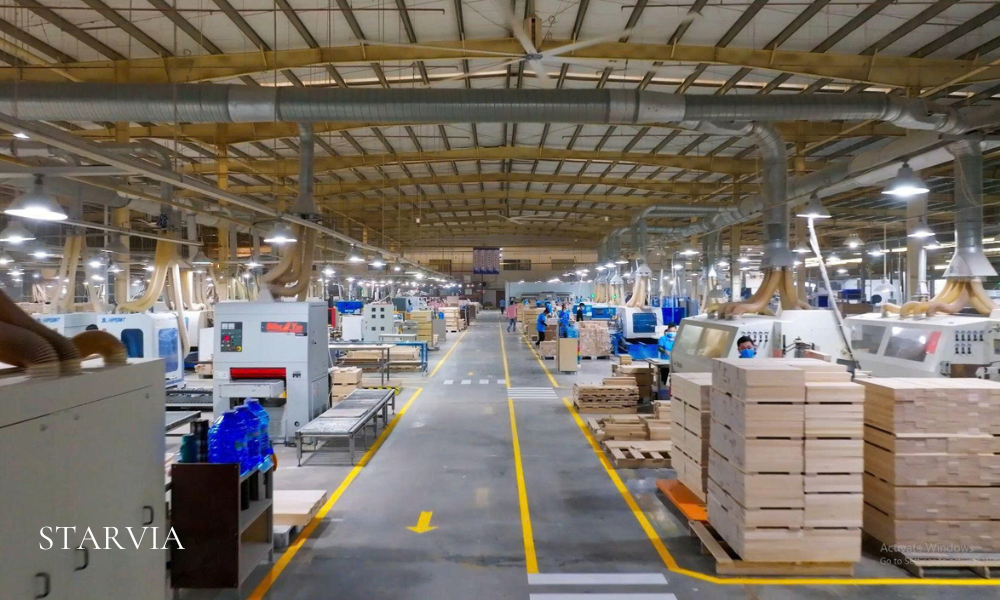
Choosing an experienced factory ensures consistent production capacity, quality and long-term partnership.
Factory selection matters more for private label kitchen cabinets Vietnam buyers than for a single bulk order, since the relationship typically runs for years across multiple SKU launches rather than one transaction. Buyers should evaluate a factory on production capacity, private label client references, and how quickly it can turn around a new SKU sample.
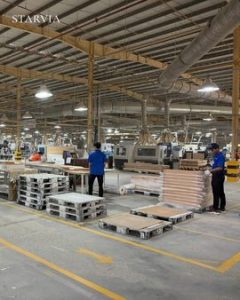
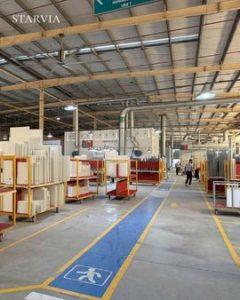
Production scale matters here too – our facilities run approximately 150 containers per month across roughly 1,000,000 sq ft of manufacturing space, supported by a workforce of about 1,000 employees, giving private label brands room to grow their catalog without outgrowing the factory’s capacity. A factory that is already near its own capacity limit is a poor long-term private label partner, since a growing brand needs headroom for volume increases without lead times stretching out.
The most common mistake is skipping the physical sample stage to save time, then discovering a color or hardware mismatch after a full container has already shipped under the buyer’s own label. A sample approved under the buyer’s actual branding catches packaging and labeling issues a factory-branded sample never would.
A second common mistake is choosing a factory based only on per-unit price without checking private label experience specifically. A factory that mainly runs its own branded product line may not have packaging and labeling workflows built for white-label orders, which shows up as inconsistent box branding across a shipment.
A third mistake is underestimating how much catalog breadth matters for a new private label brand. Launching with a single SKU limits how a distributor can market the brand, while a factory offering multiple tiers under one private label kitchen cabinets Vietnam program lets a buyer launch a fuller catalog from day one.
What is the difference between private label and OEM cabinets? Private label means selling a factory’s existing product under a buyer’s own brand with minimal changes, while OEM means the factory builds to the buyer’s own detailed specifications.
What is the minimum order for a private label cabinet program? MOQ is one 40ft container FOB Hai Phong, the same threshold as other Vietnam OEM programs, letting a new brand test a limited SKU range before scaling.
Can a private label brand request its own box design and labeling? Yes, a factory offering private label kitchen cabinets Vietnam production should support buyer-branded packaging, interior labeling, and included documentation as standard.
How long does a private label order take from sample to shipment? Sample approval typically adds a few weeks ahead of standard production lead time, since most buyers confirm branding and color match before committing to a full container.
Before committing to a first order, most experienced buyers request a factory’s private label client history, a sample under their own branding, and written compliance documentation covering CARB and EPA TSCA requirements. That sequence catches branding and quality issues before a container ships, not after it lands at a US port.
Starvia supports private label kitchen cabinets Vietnam programs across Solid Shaker, HDF Painted Shaker, thermofoil, and melamine tiers, with buyer-branded packaging, CARB Phase 2 documentation, and container output of roughly 150 units per month. To request a private label catalog review, sample pricing, or current FOB rates, get in touch with our team directly.

 View collection
 View collection
 View collection
 View collection