- Our Products
-
Choose your Cabinet Style
-
Payment terms kitchen cabinet import Vietnam questions come up in nearly every first call with a new OEM factory, because how you pay determines how much risk you carry before a container ever leaves port. Most Vietnam OEM factories default to a 30% deposit by T/T at order confirmation, with the 70% balance due against shipping documents. Buyers with several containers of history sometimes negotiate lower deposits or move to a letter of credit for added protection.
This guide breaks down every option importers actually encounter — T/T deposit-balance splits, letter of credit, and negotiated terms — so you know what is standard, what is negotiable, and where real risk sits at each stage of the order.
Most Vietnam OEM factories begin production after receiving the agreed deposit.
The baseline structure across most Vietnam OEM factories is simple: 30% deposit by T/T wire transfer when the purchase order is confirmed and production specs are locked, then 70% balance by T/T once containers are loaded and the Bill of Lading is issued. This is the default quoted to first-time buyers regardless of order size.
Some factories quote a 50/50 split instead, particularly on smaller orders or when finish programs require nonstandard components sourced specifically for that order. A few larger factories accept letters of credit for buyers who prefer bank-guaranteed terms over wire transfer, though LC is less common below one container.
| Payment Method | Typical Split | Best For | Bank Cost |
|---|---|---|---|
| T/T Deposit + Balance | 30/70 or 50/50 | Repeat buyers, established relationships | $20–$50 per wire |
| Letter of Credit (L/C) | 100% via bank | First-time large orders, unverified factories | 0.5%–1.5% of invoice value |
| Negotiated Deposit | 20/80 or arrival-inspection release | Buyers with 3+ container history | Same as T/T |
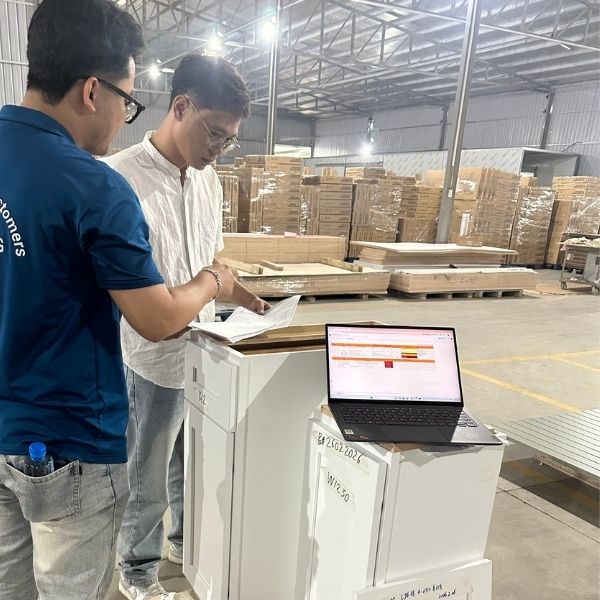
Wire transfer remains the most common payment method between cabinet importers and OEM factories.
T/T, or telegraphic transfer, is a direct bank wire from the buyer’s account to the factory’s account. It clears in two to five business days and costs far less than a letter of credit, typically $20 to $50 per transfer regardless of order value. This is why it remains the default across almost every Vietnam OEM factory relationship.
The tradeoff is buyer risk. Once the deposit lands in the factory’s account, there is no bank verification step confirming the goods match the purchase order before funds move. That risk is manageable with a factory you have vetted through a sample order, a facility audit, or a documented track record — but it is not something to accept on a first order with an unverified supplier.
Most experienced buyers pair T/T with protections that reduce this risk without switching to LC: third-party pre-shipment inspection before the balance is released, holding a portion of the balance until containers clear customs, or requiring photo and video documentation of loaded containers before wiring the final payment.
A letter of credit is a bank’s commitment to pay the factory once it presents documents proving the shipment matches agreed terms — commercial invoice, packing list, bill of lading, and any inspection certificate specified in the LC. Funds only release after the issuing bank verifies these documents, which shifts risk away from the buyer.
LC makes the most sense for first-time orders above roughly $100,000, orders with an unverified factory, or programs where a buyer’s own board or financing partner requires bank-guaranteed terms. It is less common in furniture sourcing generally, and Vietnam OEM factories that accept it are typically larger operations with established export departments.
The cost is meaningful: banks charge 0.5% to 1.5% of invoice value in processing, amendment, and credit line fees, plus slower timelines while documents move through both banks. For a $50,000 order, that is $250 to $750 in bank fees alone — a cost worth paying on a first large order, less justified once a factory relationship is established.
Deposit percentage is not fixed — it moves based on order history, order size, and how much of the production run is specification-driven versus standard stock. A first order from a new buyer almost always starts at 30% minimum, since the factory is committing to material purchases and CNC production time with no track record to lean on.
Buyers with three or more completed containers can often negotiate down to 20%, or move the balance trigger from “before loading” to “after arrival inspection,” which shifts meaningful risk back to the factory. Larger programs — multiple containers per quarter — sometimes unlock net payment terms similar to net-30, though this is the exception rather than the rule in cabinet OEM sourcing.
Orders with finish programs sourced specifically for that run, such as a less common door profile or a hardware finish requiring separate procurement, tend to keep deposits at 30% or higher, since the factory cannot resell those components if the order falls through.
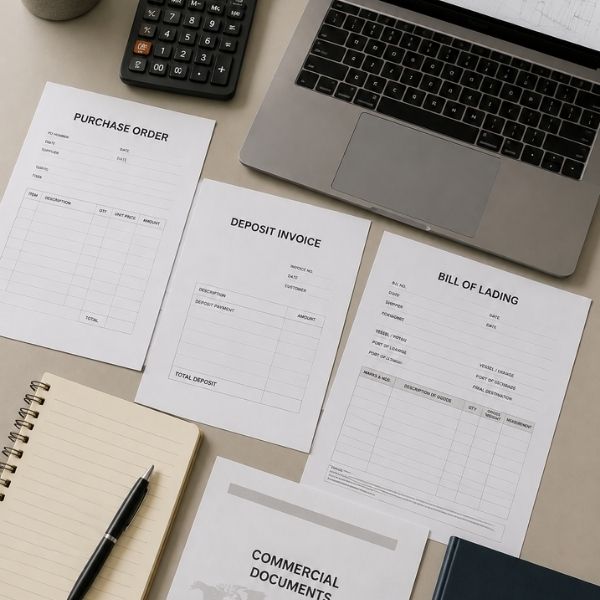
A typical payment terms kitchen cabinet import Vietnam timeline runs in four stages. First, the purchase order is confirmed and specifications are locked — this is when the deposit invoice is issued. Second, the deposit clears, which triggers material procurement and production scheduling, usually starting production within one to two weeks of funds landing.
Third, as containers approach load-ready status, the factory issues the balance invoice along with a pre-shipment packing list. Fourth, once the balance clears — or once the Bill of Lading is issued, depending on the agreed trigger — containers are released for pickup and the shipping documents are sent to the buyer.
Buyers using freight forwarders for FOB shipments should confirm with their forwarder how balance timing interacts with vessel booking, since a late balance payment can push a shipment to the next available vessel and add one to two weeks to transit. For freight cost benchmarks that affect total landed cost planning, Freightos publishes current container rate indices that are useful for budgeting alongside deposit and balance timing.
It helps to build the balance-payment date into your own production calendar well before it is due, since a wire transfer delayed by even one business day on the buyer’s end can cascade into a missed vessel booking and a full week of added transit at the other end.
A few patterns are worth treating as warning signs rather than normal negotiation. Any factory demanding 100% prepayment, regardless of how competitive the quote looks, removes every point of leverage a buyer has if quality or spec issues surface at inspection.
Similarly, be cautious of a factory that refuses any form of pre-shipment inspection or photo documentation before the balance is due, or one that pushes hard for cash wire to a personal account rather than a verified company bank account. Legitimate Vietnam OEM factories operate through corporate accounts and are generally comfortable with a buyer’s forwarder conducting a container-loading inspection.
A sudden request to change payment terms kitchen cabinet import Vietnam buyers agreed to mid-production — such as demanding early balance payment before containers are actually load-ready — is also worth pausing on and verifying directly with factory management before wiring funds.
Buyers comparing Vietnam to other sourcing regions often find deposit structures are broadly similar — a 30% deposit with balance against shipping documents is common across most Southeast Asian OEM manufacturing. The differences that matter more are factory export experience, English-language documentation quality, and whether a factory has a dedicated finance or export department comfortable handling LC paperwork.
Established Vietnam OEM factories exporting to the US, Canada, Australia, and Europe for multiple years typically have export teams experienced with both T/T and LC transactions, which reduces documentation delays compared with newer or smaller workshops still building that infrastructure. This experience gap is often a better indicator of payment-process risk than the payment method itself.
Buyers new to sourcing often ask whether payment terms kitchen cabinet import Vietnam factories quote are negotiable from the first email or only after a sample order. In practice, most factories will not move off the standard 30/70 split until a buyer has completed at least one full container, since the deposit itself is what funds material purchasing for that first run. Track record, not order size alone, is what unlocks better terms over time.
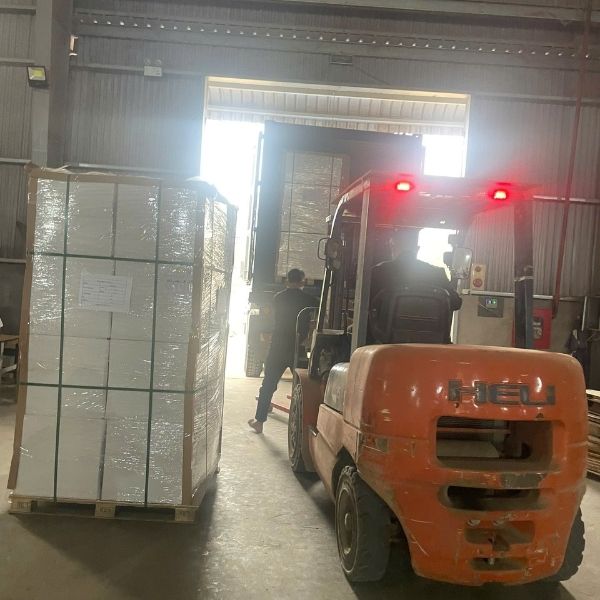
Timely balance payment helps avoid shipment delays and missed vessel bookings.
Starvia’s standard payment terms kitchen cabinet import Vietnam buyers receive follow the 30% deposit by T/T at order confirmation, 70% balance against the Bill of Lading structure, with MOQ starting at one 40-foot container. FOB pricing runs $42,000–$52,000 for melamine programs and $60,000–$72,000 for plywood programs, depending on door style and hardware specification.
Buyers moving from a sample order into a first full container can review exact FOB ranges on our kitchen cabinet FOB price guide, and compare shipping term options on our FOB vs CIF vs EXW breakdown. For buyers still confirming order size against factory minimums, our MOQ guide covers how container minimums interact with deposit amounts.
Repeat buyers with established shipment history can discuss negotiated deposit percentages directly with our sales team, in line with the ranges outlined above. For buyers evaluating private label programs alongside payment structure, see our private label sourcing guide, which covers how OEM production and branding decisions interact with order size and deposit planning.
What are typical payment terms kitchen cabinet import Vietnam factories require?
Most factories require a 30% deposit by T/T at order confirmation, with the 70% balance due against the Bill of Lading before or after container loading, depending on the agreement.
Is a letter of credit better than T/T for cabinet imports?
LC offers stronger buyer protection since banks verify documents before releasing funds, but it costs 0.5%–1.5% of invoice value and takes longer to process. T/T is faster and cheaper but relies on trust built through a vetted factory relationship.
Can deposit percentage be negotiated on repeat orders?
Yes. Buyers with three or more completed containers commonly negotiate deposits down from 30% to 20%, or shift the balance trigger to after arrival inspection rather than before loading.
What payment red flags should importers watch for?
Demands for 100% prepayment, refusal to allow pre-shipment inspection, and requests to wire funds to a personal rather than corporate account are all signs to pause and verify before paying.
Payment terms kitchen cabinet import Vietnam buyers accept should always be confirmed in writing before a deposit is wired, alongside FOB pricing, MOQ, and lead time. Reach out through our about page to discuss deposit structure, LC acceptance, and negotiated terms for your next container.
For additional buyer protections around documentation and supplier vetting relevant to import-dependent trades, the National Association of Home Builders publishes broader guidance that applies well beyond residential construction.


 View collection
 View collection
 View collection
 View collection