- Our Products
-
Choose your Cabinet Style
-
For any importer running a kitchen cabinet program from Vietnam, kitchen cabinet quality control Vietnam procedures are the single largest variable between a profitable container and a costly dispute. Vietnam now exports over $2 billion in wood furniture annually — kitchen cabinets are one of the highest-volume, highest-complexity categories within that figure. The factories exist. The price is right. The question every serious wholesale buyer must answer before committing to a program: how do I verify quality before 500 cabinet doors are loaded onto a vessel 9,000 miles away?
This guide covers the full quality control framework for Vietnam OEM cabinet manufacturing: the four QC stages, AQL inspection standards, the most common failure modes, what certifications to require, and the pre-shipment checklist that professional importers use before authorizing container loading.
The complete quality control workflow from raw materials to container loading.
Kitchen cabinets are among the most specification-intensive products in residential construction. A single 40ft container can hold 400-600 individual cabinet boxes, 500-800 door panels, and thousands of hardware components — all of which must conform to dimensional tolerances, finish standards, structural requirements, and chemical compliance regulations simultaneously.
Vietnam cabinet manufacturing ranges from world-class, ISO-certified factories running European CNC equipment to informal workshops with minimal process controls. Identifying which type of supplier you are dealing with — and putting in place the right QC structure — is the core task of a professional Vietnam sourcing program.
Three root causes drive the majority of quality failures in Vietnam cabinet imports:
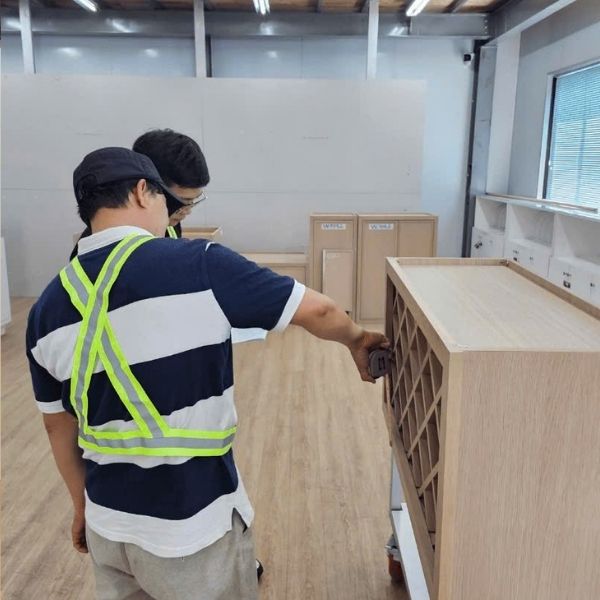
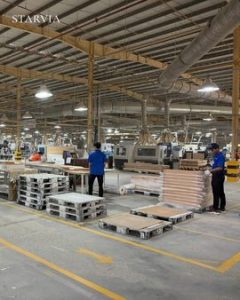
Dimensional accuracy inspection ensures cabinet boxes meet production tolerances.
Professional importers use a four-stage QC process that catches problems at the point in production where they are cheapest to fix:
Performed when raw materials arrive at the factory before production begins. Key inspection points for kitchen cabinets:
Conducted during production — typically at 30% and 70% completion milestones. The most valuable QC stage for preventing rework. Key inspection points:
The most commonly used QC stage for import buyers. Conducted on finished, packaged goods before container loading — typically 1-3 days before vessel cut-off. A third-party inspection company (SGS, Bureau Veritas, Intertek, or independent Vietnam-based inspectors) charges approximately $300-$500 per inspector per day for furniture inspections in Vietnam.
PSI for kitchen cabinets uses AQL 2.5 sampling as the standard. AQL (Acceptable Quality Limit) 2.5 means no more than 2.5% of units may have major defects for the lot to pass. For a container of 500 cabinet boxes, the inspector will physically check approximately 50 units using the random sampling method defined in ISO 2859-1.
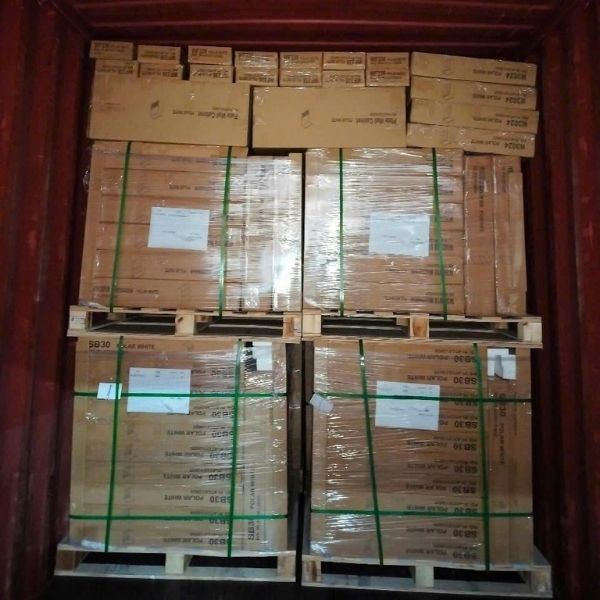
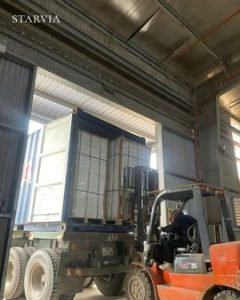
Often overlooked by first-time importers. A brief 2-4 hour loading supervision ensures that: (1) only approved, inspected goods are loaded, (2) packaging is undamaged, (3) loading sequence protects fragile items (glass doors, tall pantry units), and (4) container seals are applied and photographed. This stage typically costs under $200 and has prevented six-figure losses in multiple real-world cases.
The AQL 2.5 standard is the correct default for kitchen cabinet pre-shipment inspections. Here is how defect classification works:
| Defect Class | Definition | Examples | AQL Limit |
|---|---|---|---|
| Critical | Safety hazard or regulatory non-compliance | Sharp exposed edges, CARB non-compliant substrate, structural failure | 0% (zero tolerance) |
| Major | Functional impairment or significant appearance defect | Doors that do not close, finish bubbling, wrong dimensions over 2mm, missing hardware | AQL 2.5 (max 2.5% of units) |
| Minor | Cosmetic imperfection not affecting function | Surface scratch under 5mm, slight grain mismatch, minor glue residue | AQL 4.0 (max 4% of units) |
A professional PSI report classifies every defect found against this table and issues a pass/fail result per AQL level. Require this format explicitly in your supplier agreement — vague “inspection passed” reports without defect classification are not useful for dispute resolution.
The strictest formaldehyde emission standard for composite wood products in the US, and the de facto national standard since the EPA TSCA Title VI rule adopted identical limits. CARB Phase 2 limits formaldehyde emissions from plywood to 0.05 ppm and from MDF to 0.11 ppm. Any kitchen cabinet program sold into the US must use CARB Phase 2 certified substrate.
Require: factory-level CARB certification number, third-party verifier name, and lot-level test reports for each substrate batch in your order. Do not accept CARB compliance claims without a verifiable certificate number you can cross-check with the California ARB registry.
FSC certification verifies that solid wood components come from responsibly managed forests. Increasingly required by large US retailers (Home Depot, Wayfair, IKEA supply chains) and by state procurement programs in California, Oregon, and Washington. If your buyer base includes retail chains, FSC CoC certification is a commercial necessity, not a premium option.
ISO 9001 certification confirms that the factory has documented processes for quality management. The practical value: a factory with ISO 9001 has written procedures for incoming material inspection, in-process QC, and corrective action. This significantly reduces the risk of systemic quality failures and makes dispute resolution faster when problems occur.
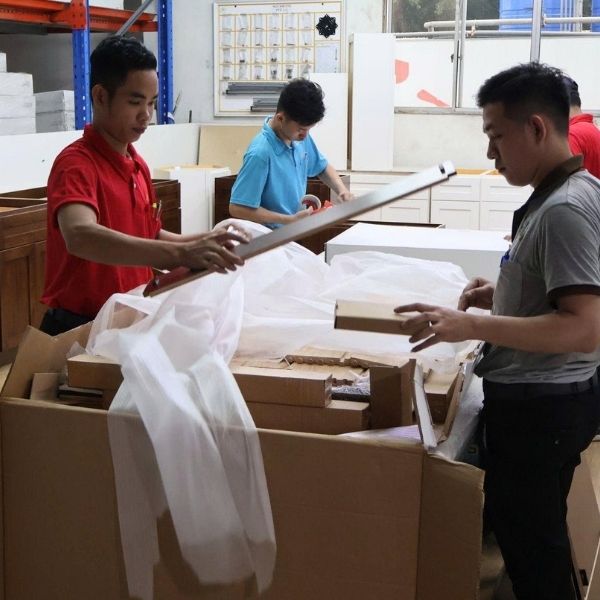
Third-party inspectors verify cabinet quality before container loading.
Use this checklist when conducting or commissioning a PSI for a Vietnam kitchen cabinet container:
At Starvia’s two Vietnam factories (~1,000,000 sq ft combined, ~1,000 staff), quality control is structured across all four stages described above. Production runs on Homag CNC equipment to +/-0.5mm dimensional tolerance on all cabinet components. Every substrate lot is CARB Phase 2 certified (Factory Cert. No. CARB/EPA23072). Finish quality is controlled through colorimeter readings at each spray batch.
For buyers who require third-party inspection, our factories are open to SGS, Bureau Veritas, Intertek, and independent inspectors at any production stage with 48-hour notice. Pre-shipment photo documentation is standard on every container. Current production capacity: approximately 150 x 40ft containers per month. MOQ: 1 x 40ft container. Lead time: 45-60 days after deposit for standard programs.
To discuss your QC requirements or request a factory audit invitation, contact our export team — we respond within 24 business hours.
AQL (Acceptable Quality Limit) 2.5 is an international sampling standard (ISO 2859-1) meaning a maximum of 2.5% of inspected units may have major defects for a shipment to pass. For a container of 500 cabinet boxes, an inspector checks approximately 50 units. If more than 3 have major defects, the lot fails. AQL 2.5 is the correct standard for kitchen cabinets — strict enough to protect quality while accounting for the reality of high-volume manufacturing.
A professional third-party PSI costs approximately $300-$500 per inspector per day in Vietnam. A standard kitchen cabinet container inspection requires 1-2 days depending on order size and complexity. This cost — typically $400-$800 — is minimal relative to the cost of a failed shipment, which can run $15,000-$50,000 or more in rework, freight, and customer chargebacks.
For US-bound programs: CARB Phase 2 is mandatory under EPA TSCA Title VI. ISO 9001:2015 is strongly recommended for quality management system assurance. For retail chain buyers: FSC or PEFC chain-of-custody for solid wood components. CARB Phase 2 is non-negotiable — importing non-compliant cabinets into the US exposes the importer to EPA enforcement action and recall liability.
Finish inconsistency accounts for approximately 40% of defect reports in Vietnam furniture inspections. Color variation between production batches — or between cabinet box and door faces — is the most common form. It is also the most preventable: require matched-batch production, specify finish sheen level (matte/satin/semi-gloss) in the PO, and require colorimeter readings in the QC report.
Yes — and for any program exceeding 5 containers annually, a factory audit before the first PO is strongly recommended. A structured factory audit (1 day, $400-$700 cost) evaluates production capacity, equipment quality, QC procedures, certifications, and worker welfare compliance. Most reputable Vietnam cabinet manufacturers welcome audits from qualified buyers. Factories that refuse audits should be treated as a red flag.
A failed PSI is not automatically a failed shipment. Review the inspection report to determine whether defects are major or minor. For minor defects, a 100% re-inspection of defective units with rework may allow the container to pass. For major defects affecting structure, finish, or dimensions, negotiate a hold on container loading and give the factory 3-5 business days to sort and rework affected units. Document everything in writing — PSI failure reports become critical evidence in any freight insurance or supplier warranty claim.
The importers who consistently receive quality kitchen cabinets from Vietnam are not the ones who trust factory assurances — they are the ones who build quality control into every stage of the sourcing process. Clear specifications, staged inspections, AQL 2.5 PSI, and verified certifications eliminate the majority of quality risk before a single cabinet leaves the port.
The cost of a rigorous QC program — $800-$1,500 per container for third-party inspection — is a fraction of the cost of one failed shipment. It is also the fastest way to build the supplier accountability that makes repeat programs run smoothly year after year.
For a factory audit invitation, QC framework consultation, or custom quote on your next cabinet program, contact Starvia export team. We respond to all qualified buyer inquiries within 24 business hours.

 View collection
 View collection
 View collection
 View collection