- Our Products
-
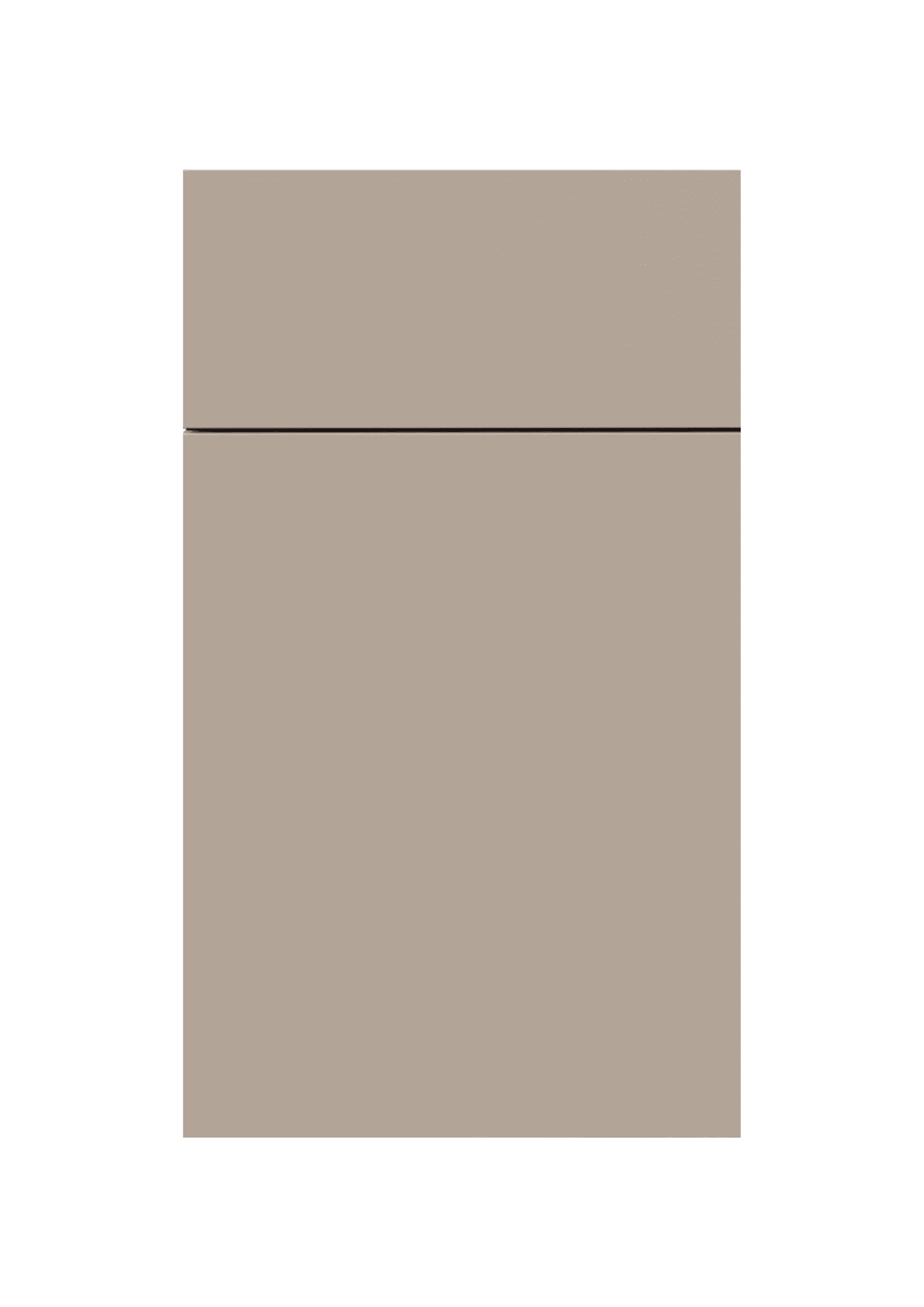
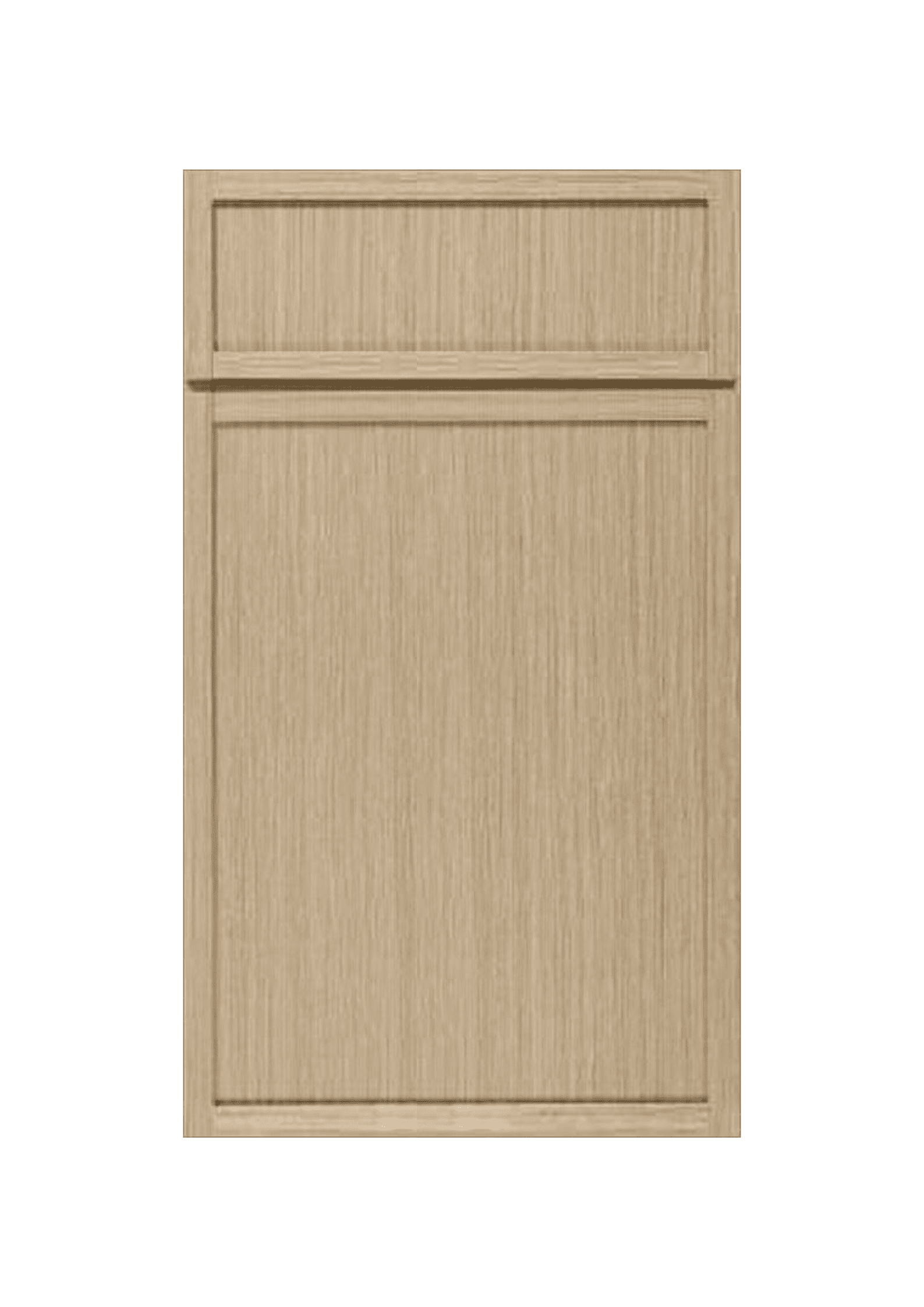
Choose your Cabinet Style
-

Getting kitchen cabinet door overlay wholesale OEM specifications locked down before production starts determines whether every door and drawer front in a kitchen reads as one continuous, intentional surface or as a slightly uneven grid a homeowner notices within the first week. Full overlay, partial overlay, and inset each place a different reveal gap between doors, and that gap is governed by hinge geometry, not paint color or door profile, which is why buyers need the number, not just the look.
Overlay type describes how much of the cabinet box or face frame a door covers, and the reveal gap is the visible sliver between adjacent doors and drawers once everything is installed. These two numbers — overlay coverage and reveal gap — are what separates a modern full-overlay kitchen from a traditional partial-overlay one, and they are set by the hinge hardware a kitchen cabinet door overlay wholesale OEM factory specifies, not by the door style itself.
Buyers frequently discuss overlay in terms of look alone — “modern” versus “traditional” — without pinning down the actual gap measurement, which is the detail that determines whether a finished kitchen looks precise or inconsistent once every cabinet run is installed side by side.
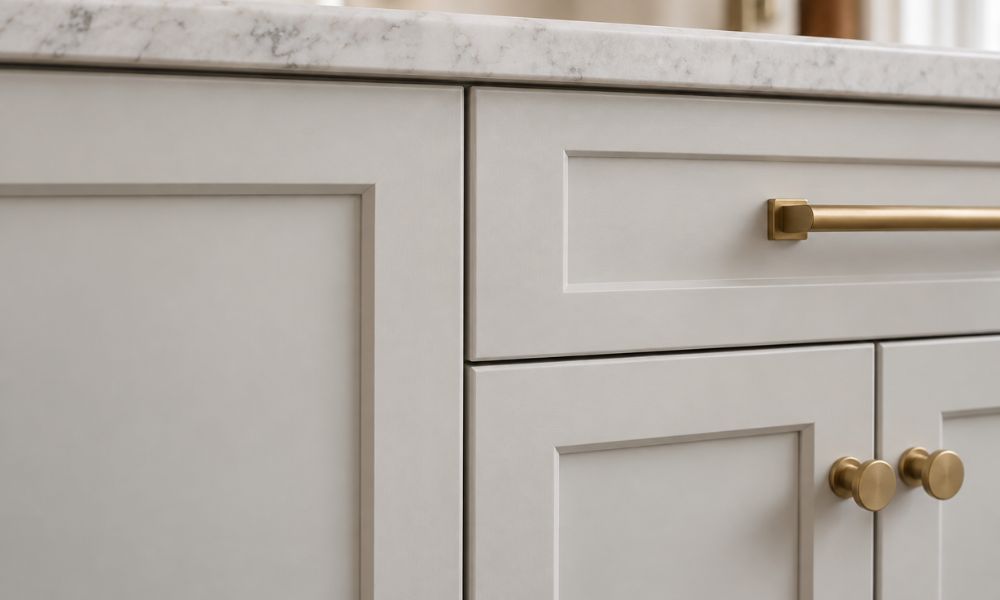
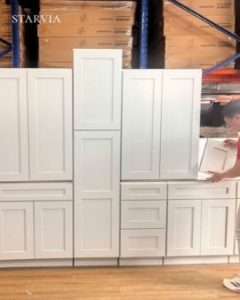
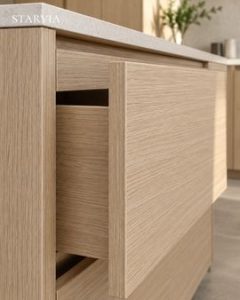
Full overlay construction minimizes visible face frame and creates a narrow, consistent reveal between adjacent fronts.
Full overlay doors cover nearly the entire cabinet face, leaving only a narrow reveal between adjacent doors and drawers. The Architectural Woodwork Institute standard calls for a 3.2mm (1/8 inch) reveal gap on full overlay doors, with a tolerance of plus or minus 0.8mm for Premium grade work, plus or minus 1.6mm for Custom grade, and plus or minus 2.4mm for Economy grade.
A kitchen cabinet door overlay wholesale OEM factory working to Premium or Custom grade tolerance on full overlay reveal produces a visibly tighter, more consistent gap across a full kitchen run than a factory working to Economy grade tolerance, even though both might describe their product as “full overlay” on a spec sheet.
| Overlay Type | Reveal Gap | Face Frame Visible | Hinge Mounting Range |
|---|---|---|---|
| Full Overlay | 3mm (1/8″) standard | Minimal | 1-3/8″+ face frame / 1/4″-1-5/8″ frameless |
| Half (Partial) Overlay | 1/2″ to 1″+ | Moderate to significant | 1″ to 1-9/16″ frameless |
| Full Inset | Flush with frame | Full face frame visible | 3/8″ to 3/4″ frameless |
Partial overlay leaves 1/2 inch to as much as 1 inch or more of the face frame visible between doors and drawers, giving a kitchen a more traditional appearance where the frame itself becomes a visible design element rather than something hidden behind tight-fitting doors. This wider reveal also uses less door material per cabinet opening, which is why partial overlay construction typically carries a modest cost advantage over full overlay at the same production volume.
A kitchen cabinet door overlay wholesale OEM supplier offering partial overlay should specify the exact reveal width as part of the quote, since “partial overlay” alone spans a real range from a tight 1/2 inch to a much more pronounced 1-to-2-inch frame reveal, and that range changes the kitchen’s visual character significantly. Buyers comparing quotes across factories should treat “partial overlay” as a category, not a fixed measurement, and ask each supplier for their specific default reveal width in writing.
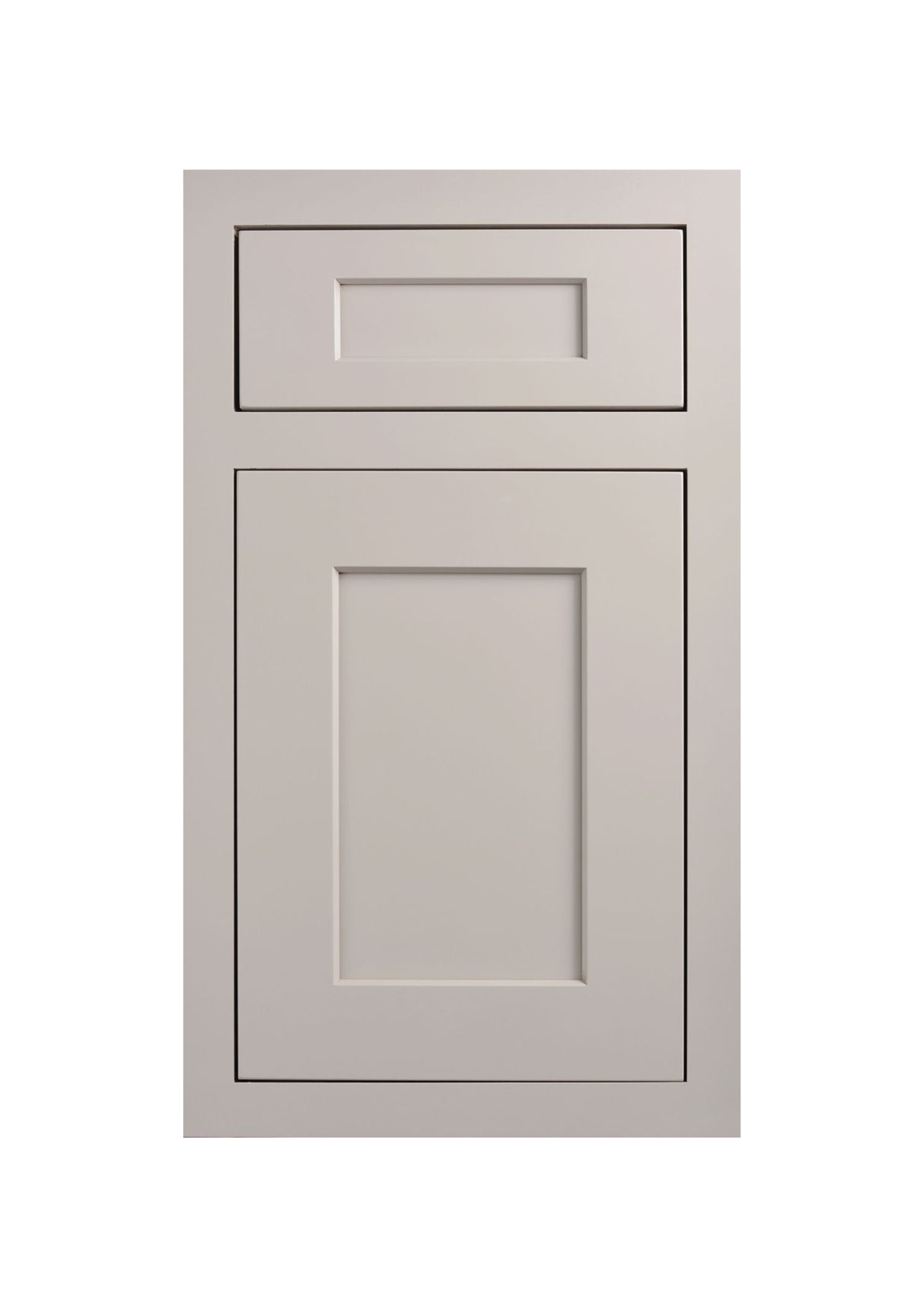
Full inset doors sit flush within the face frame opening rather than overlaying it, requiring the tightest manufacturing tolerance of the three overlay types since the door must fit the opening with only a few millimeters of clearance on every side. This construction method is covered in depth in our inset cabinet guide, including the tighter dimensional tolerance inset construction demands compared to either overlay type.
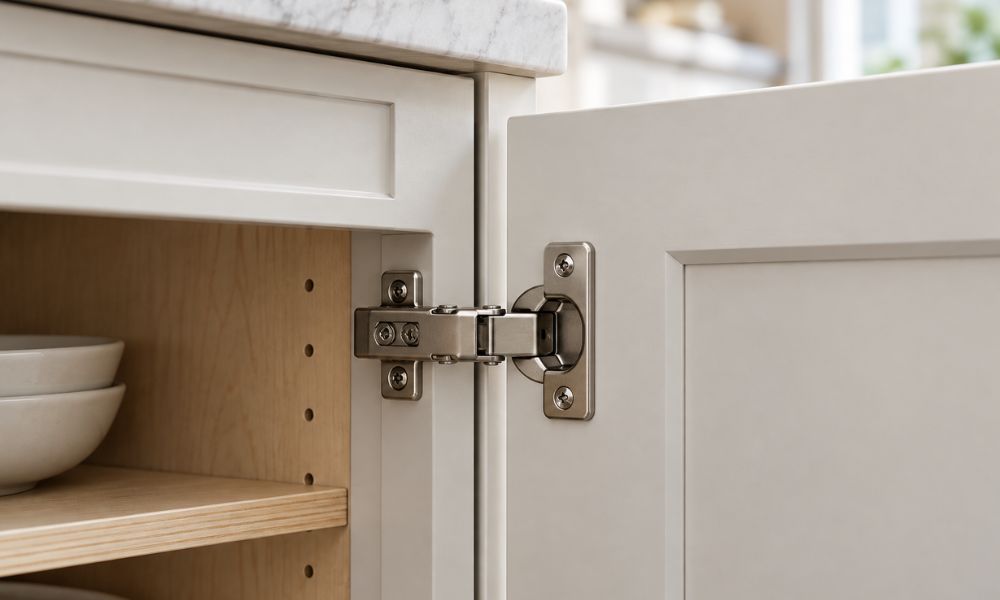
Concealed hinge geometry and mounting position determine how far a cabinet door overlays the box or face frame.
Overlay type is determined by which concealed hinge mounting plate and cup boring pattern a factory uses, not by the door front itself — the same door panel can be hung as full overlay, half overlay, or full inset depending entirely on the hinge hardware selected. Standard concealed hinge cups run 35mm in diameter with a 5mm bore distance and 12mm boring depth, dimensions that stay consistent across overlay types while the mounting plate offset changes.
This is directly connected to the hinge durability data covered in our hardware brands comparison, since cycle rating and overlay adjustability both come from the same hinge mechanism, and a kitchen cabinet door overlay wholesale OEM factory specifying premium hinge brands typically delivers better adjustment range on both dimensions.
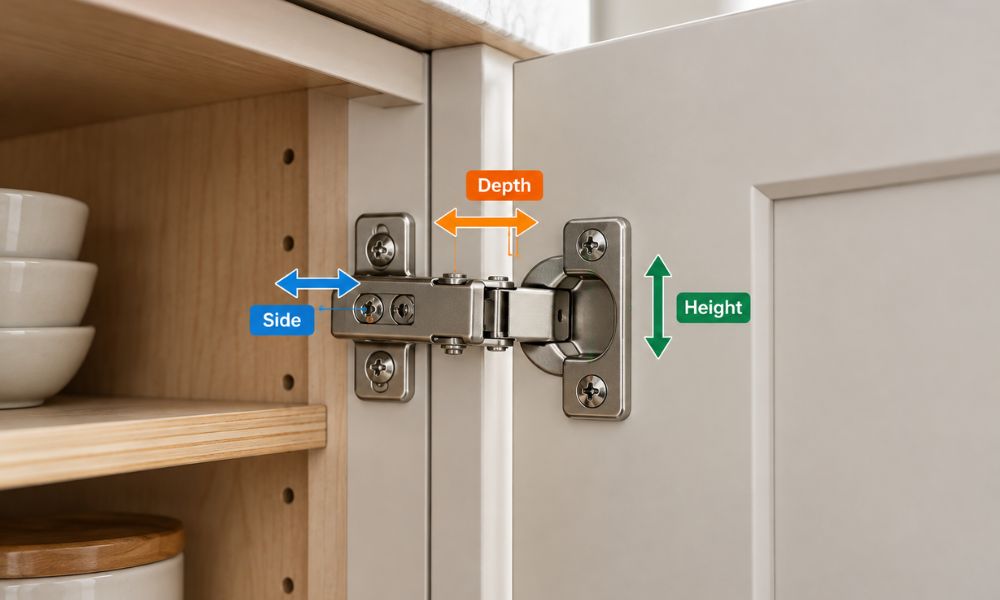
Multi-direction hinge adjustment allows installers to fine-tune door position and maintain consistent reveal gaps.
Quality concealed hinges built for any overlay type include adjustment range that lets installers correct minor reveal inconsistencies without rebuilding a cabinet: typically 4mm of side-to-side adjustment, up to 5mm of depth adjustment achieved through roughly one and three-quarter screw revolutions, and plus or minus 2mm of height adjustment on the mounting plate. Cam adjustments on the hinge itself add up to another 4mm of correction range for overlay and position fine-tuning.
A kitchen cabinet door overlay wholesale OEM factory using hinges with this full adjustment range gives installers the tools to correct a reveal gap that looks slightly inconsistent on arrival, rather than leaving the installer to either live with a visible gap or request a warranty replacement.
Reveal gap consistency depends on more than initial installation — a hinge with poor cycle rating sags over years of use, widening the reveal gap unevenly across a kitchen as different doors see different amounts of daily use. Cabinet hardware is graded by cycle count under ANSI/BHMA A156.9, and a kitchen cabinet door overlay wholesale OEM factory specifying Grade 1 hinges (100,000+ cycles) as standard maintains reveal consistency far longer than one relying on Grade 2 or 3 hardware.
This connects directly to the structural considerations in our box construction guide, since hinge mounting point strength depends on the same cabinet side panel integrity that supports reveal consistency over the cabinet’s service life.
Full overlay suits a contemporary kitchen design and typically costs more per door due to larger panel size and tighter tolerance requirements. Partial overlay fits traditional and transitional styles at a modest cost advantage, while full inset commands the highest cost of the three due to its tight-tolerance flush fit requirement.
Buyers should specify overlay type explicitly in their purchase order rather than relying on door style photos alone, since the same shaker or slab door front can be built to any of the three overlay types, and the overlay choice — not the door panel design — is what drives both the visual reveal and a meaningful share of the per-door cost.
A single kitchen with a slightly inconsistent reveal gap is a cosmetic annoyance. The same inconsistency repeated across fifty or a hundred identical units on a multifamily project becomes a pattern property managers and inspectors notice unit after unit, which is a far more visible quality signal than any single kitchen reveals on its own.
Buyers sourcing multifamily kitchen cabinets should request that overlay type and reveal gap tolerance be locked into the specification for every unit, not just the model unit shown to prospective buyers or the first batch off the production line. A kitchen cabinet door overlay wholesale OEM factory that holds Premium or Custom grade reveal tolerance consistently across a full multi-unit order is a stronger long-term partner than one that hits the target reveal only on early samples.
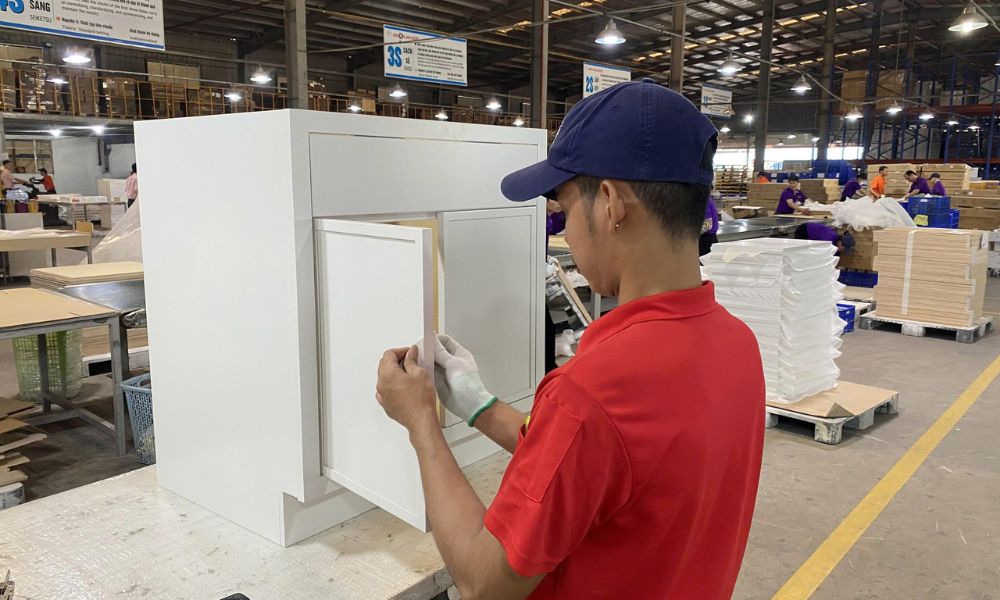
Installed cabinet samples allow reveal gaps and overlay consistency to be measured before full production begins.
Request a sample door and drawer front pair installed on an actual cabinet box, not just a flat sample panel, so you can measure the real reveal gap with the hinge hardware your factory intends to use. This is the same verification discipline that applies during a quality control audit: confirm the actual installed measurement, not a spec sheet claim, before committing to a full production run.
Is full overlay always more expensive than partial overlay? Generally yes — full overlay uses larger door panels and requires tighter reveal tolerance, both of which add modest cost compared to partial overlay at the same production volume.
Can the same cabinet box support more than one overlay type? Yes, within limits — overlay type is primarily a function of hinge hardware and door sizing, so a box built to standard dimensions can often accommodate full overlay or half overlay with the correct hinge and door panel size, though full inset requires tighter box tolerance from the start.
What reveal gap should I expect to see in person versus on a spec sheet? A spec sheet reveal gap assumes correct installation and hinge adjustment; request an installed sample to see the gap your specific factory and hinge combination actually produces.
Does reveal gap change over time? It can, if hinge cycle rating is low and hinges begin to sag under repeated use — this is why specifying a tested cycle rating matters as much as the initial reveal measurement.
Is inset more durable than overlay construction? Not necessarily more durable, but less forgiving — inset’s tight tolerance means seasonal wood movement or minor hinge sag shows up more visibly than it would on an overlay door with a wider reveal gap to absorb small variations.
Should overlay type be specified separately from door style on my purchase order? Yes — door style (shaker, slab, raised panel) and overlay type (full, partial, inset) are independent specifications, and both should be documented explicitly rather than assuming one implies the other.
How do I confirm reveal tolerance stays consistent across a large multifamily order? Request mid-production and final sample units pulled from the actual production run, not just the first batch, and measure reveal gap directly rather than relying on the factory’s own quality claim for every unit.
Starvia builds to specified kitchen cabinet door overlay wholesale OEM reveal tolerances across full overlay, partial overlay, and inset construction, with installed sample doors available for buyer measurement before production starts. If your next order needs a specific reveal gap and hinge specification locked into the purchase order, talk to our production team before you approve samples and release your deposit.


 View collection
 View collection
 View collection
 View collection