- Our Products
-
Choose your Cabinet Style
-

Buyers sourcing kitchen cabinet hardware brands wholesale OEM almost always start with a brand name — Blum, Hettich, or Grass — but the name alone does not tell you what you are actually buying. The number that matters is the tested cycle rating behind the hinge or slide, and the certification standard it was tested against.
This guide breaks down what those numbers mean, how the three most common hardware brands in Vietnam OEM factories compare on hinges and drawer slides, and what to verify before you commit to a kitchen cabinet hardware brands wholesale OEM order.
A hinge or drawer slide stamped with a recognized brand name still needs to pass an independent durability test to mean anything in a purchase order. The two reference standards most commonly cited in North American and European specifications are ANSI/BHMA A156.9 for individual hardware components and KCMA A161.1 for complete cabinet system testing, which includes hinge and slide performance under load.
Under ANSI/BHMA A156.9, cabinet hardware is graded by cycle count: Grade 3 covers roughly 10,000 to 25,000 cycles, Grade 2 covers 25,000 to 50,000, and Grade 1 requires 100,000 cycles or more. A kitchen cabinet hardware brands wholesale OEM supplier quoting Grade 1 hardware as standard, not an upcharge option, is a meaningfully different offer than one quoting Grade 2 or 3 as its baseline.
Blum is the brand most frequently specified by name in US kitchen and cabinet industry documentation, and its premium hinge lines are commonly tested to 200,000 cycles, well above the ANSI/BHMA Grade 1 threshold. This positions Blum-equivalent hardware at the top of the durability range typically offered by kitchen cabinet hardware brands wholesale OEM factories in Vietnam.
The trade-off is unit cost. Blum-branded or Blum-equivalent hardware typically carries a higher line-item cost than mid-tier alternatives, which matters at container volumes. Buyers should ask whether the quoted price reflects genuine Blum hardware, a licensed Blum-compatible product, or a visually similar substitute, since all three exist in the OEM supply chain.
Hettich is a major European hardware manufacturer widely used across Vietnam OEM cabinet production, generally positioned as a strong mid-to-premium tier alternative to Blum with comparable soft-close mechanisms and similar adjustment features. Cycle ratings for Hettich’s mainline hinge and slide systems are commonly certified at or above the ANSI/BHMA Grade 1 threshold as well, though buyers should request the specific product line’s test documentation rather than assuming parity across Hettich’s full catalog.
Hettich hardware is frequently the default option quoted by kitchen cabinet hardware brands wholesale OEM factories that want to offer premium-tier performance at a lower price point than Blum, making it a common middle-ground recommendation for cost-conscious commercial and multifamily projects.
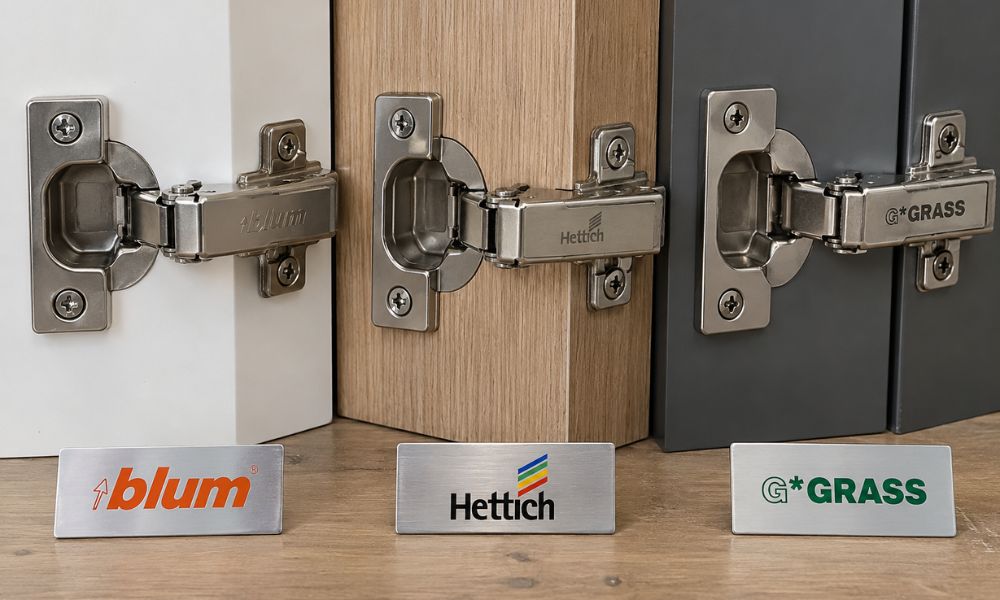
Blum, Hettich, and Grass hinge options commonly specified for OEM kitchen cabinet programs.
Grass hardware, including its Tiomos hinge line, is independently tested to over 80,000 open-close cycles and offers full 3D adjustability, including adjustment after installation, which some installers consider an advantage during final fit-out. This places Grass hardware solidly in the Grade 1 to upper Grade 2 range depending on the specific product line.
Grass is generally positioned as a value-tier premium option: durability that meets or approaches Blum and Hettich on paper, typically at a lower unit cost, which makes it a common choice for kitchen cabinet hardware brands wholesale OEM orders where budget discipline matters as much as brand recognition.
| Brand | Typical Cycle Rating | Market Position |
|---|---|---|
| Blum | Up to 200,000 cycles | Premium, highest unit cost |
| Hettich | Grade 1 and above (line-dependent) | Premium-to-mid, verify per line |
| Grass (Tiomos) | 80,000+ cycles | Value-premium, full 3D adjustment |
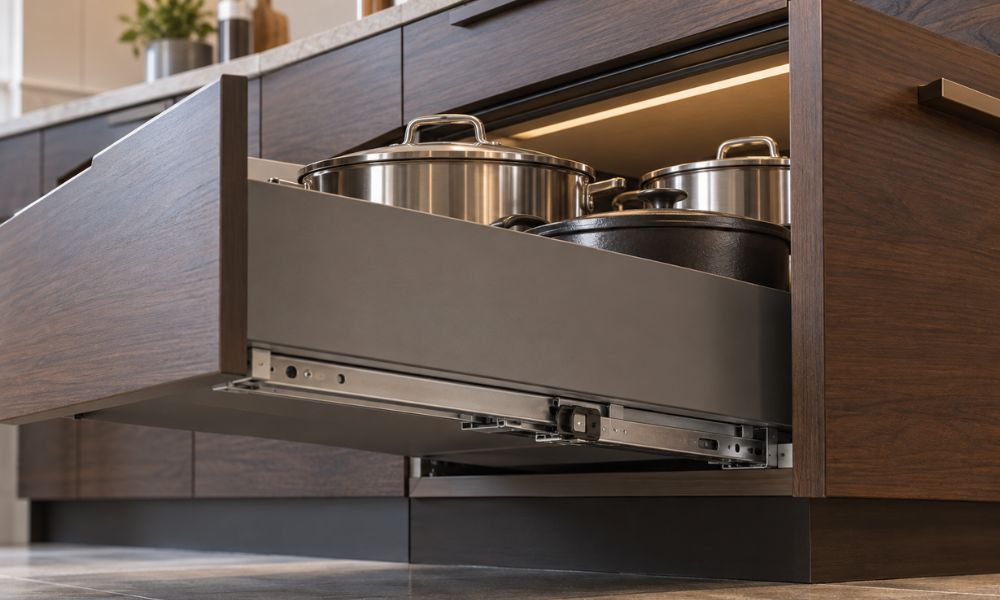
Drawer slide load capacity should be specified separately from hinge and slide cycle ratings.
Hinges get most of the attention in kitchen cabinet hardware brands wholesale OEM discussions, but drawer slide weight capacity matters just as much for deep pot drawers and heavy storage applications. Blum’s Tandem-Plus line rates 90 lb dynamic and 100 lb static load on its standard version, rising to 135 lb dynamic and 150 lb static on the heavy-duty version, though it cannot accommodate push-open soft-close without switching to Blum’s Movento line, which rates slightly lower at 88 to 132 lb dynamic depending on version.
Grass’s Dynapro slides rate 100 lb dynamic and 125 lb static on the standard version, rising to 132 lb dynamic and 150 lb static on heavy duty, and unlike Blum’s system, Grass builds progressive rack-and-pinion synchronization directly into the slide and supports drawers up to 48 inches wide without additional stabilizers. Hettich publishes comparable weight-rated slide lines, but buyers should request the specific published rating for the exact product line quoted, since Hettich’s catalog spans a wider range of series than a single number can represent.
| Slide Line | Standard Rating | Heavy-Duty Rating |
|---|---|---|
| Blum Tandem-Plus | 90 lb dynamic / 100 lb static | 135 lb dynamic / 150 lb static |
| Blum Movento | 88 lb dynamic / 125 lb static | 132 lb dynamic / up to 170 lb static |
| Grass Dynapro | 100 lb dynamic / 125 lb static | 132 lb dynamic / 150 lb static |
For a project with heavy cookware storage or commercial-duty pull-out shelving, specify the weight rating in the purchase order alongside the brand name, not just “heavy duty,” since that term has no fixed numeric definition across suppliers.
Brand and tier choice can affect lead time as much as cost. Genuine Blum hardware sourced through authorized Vietnam distributors sometimes carries longer lead times during peak demand periods than Grass or Hettich equivalents, simply because allocation is tighter. Confirm hardware lead time separately from cabinet box production lead time in your factory’s quote, since a hardware shortage can hold up an otherwise finished container.
This is particularly relevant for drawer slide specification on large multifamily orders, where hundreds of identical slide sets need to arrive in a single, consistent batch rather than a mixed shipment of substituted parts sourced from whatever the factory had on hand that week.
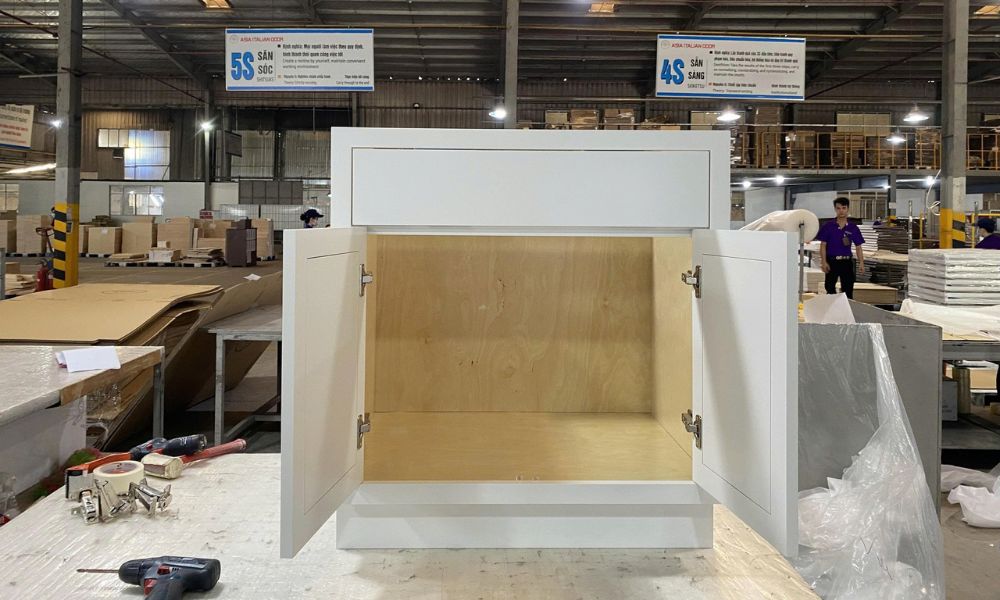
Hardware brand, SKU, specifications, and documentation should be verified before mass production.
Brand name alone is not proof of performance in a purchase order. Request the specific SKU or product line number for the hinges and slides quoted, the cycle rating certificate or test report for that SKU, and confirmation of whether the hardware is genuine, licensed, or a compatible substitute. This is the same documentation discipline that applies to FSC-certified wood sourcing and other verifiable claims: ask for the specific document, not the general assurance.
It is also worth confirming this alongside your broader hardware specification review, since pulls, handles, and hinges are sometimes quoted from different sub-suppliers within the same factory.
At OEM container volumes, the price difference between Grass-tier and Blum-tier hardware is typically a small percentage of total unit cost, not a dramatic swing, since hardware is a fraction of the total cabinet bill of materials. The bigger cost risk is a factory silently downgrading from the quoted brand to a cheaper substitute mid-production without flagging the change.
Lock the specific brand, product line, and cycle rating into your purchase order line items, not just the cabinet specification sheet, so any substitution requires a documented change rather than a quiet swap discovered on delivery.
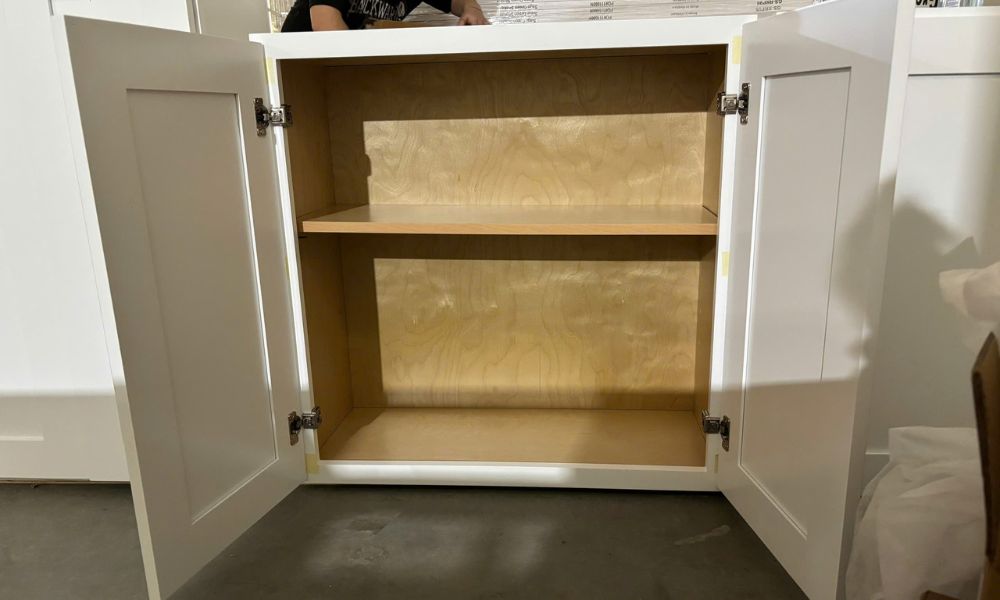
Exact hardware brand and SKU should remain consistent from approved sample through mass production.
Blum, Hettich, and Grass all use proprietary clip-on mounting systems that are not directly interchangeable between brands, which matters for long-term maintenance. If your project may need replacement hardware years after installation, confirm which brand your factory used so your facilities team can source compatible replacements rather than guessing from a photo.
This compatibility question comes up often on commercial and property-management contracts, where a maintenance team years later needs to replace a single damaged hinge without re-specifying the entire kitchen. Keeping a record of the exact brand and SKU used at installation, not just “soft-close hinges” on the original punch list, saves significant time when that request eventually comes in.
Is Blum always better than Hettich or Grass? Not necessarily. Blum has the strongest brand recognition and some of the highest published cycle ratings, but Hettich and Grass both offer product lines that meet or approach the same ANSI/BHMA Grade 1 threshold at a lower cost.
Do all three brands fit the same cabinet box design? Generally yes for standard overlay applications, but mounting plate and clip systems differ by brand, so replacement hardware should match the original brand rather than being assumed universal.
Can a factory mix hardware brands within one order to save cost? Some do, typically by brand-matching hinges but sourcing slides separately. This is not necessarily a problem, but it should be disclosed and specified in the purchase order rather than left ambiguous.
What is the minimum cycle rating I should accept for a commercial or multifamily project? Most specifiers treat ANSI/BHMA Grade 1 (100,000+ cycles) as the practical minimum for higher-traffic commercial and multifamily kitchens, rather than the lower Grade 2 or 3 tiers common in budget residential hardware.
Should I specify weight capacity separately from cycle rating? Yes. Cycle rating measures how many times a hinge or slide opens and closes before failure, while weight capacity measures how much load it holds at any single point in time — a hardware line can score well on one and poorly on the other, so both numbers belong in your spec sheet.
Does upgrading from Grass to Blum meaningfully change delivered quality for a standard residential project? For most residential-grade kitchens, a well-rated Grass or Hettich line performs comparably to Blum in daily use, and the upgrade matters more for commercial-duty or extreme high-cycle applications than for a typical single-family kitchen.
Starvia sources from established kitchen cabinet hardware brands wholesale OEM suppliers including Blum, Hettich, and Grass product lines, with cycle rating and weight capacity documentation available for buyer review before production. If your next order needs a specific brand, cycle rating, or slide weight capacity locked into the spec sheet, request documentation before you approve samples and before the deposit is released.
 View collection
 View collection
 View collection
 View collection