- Our Products
-
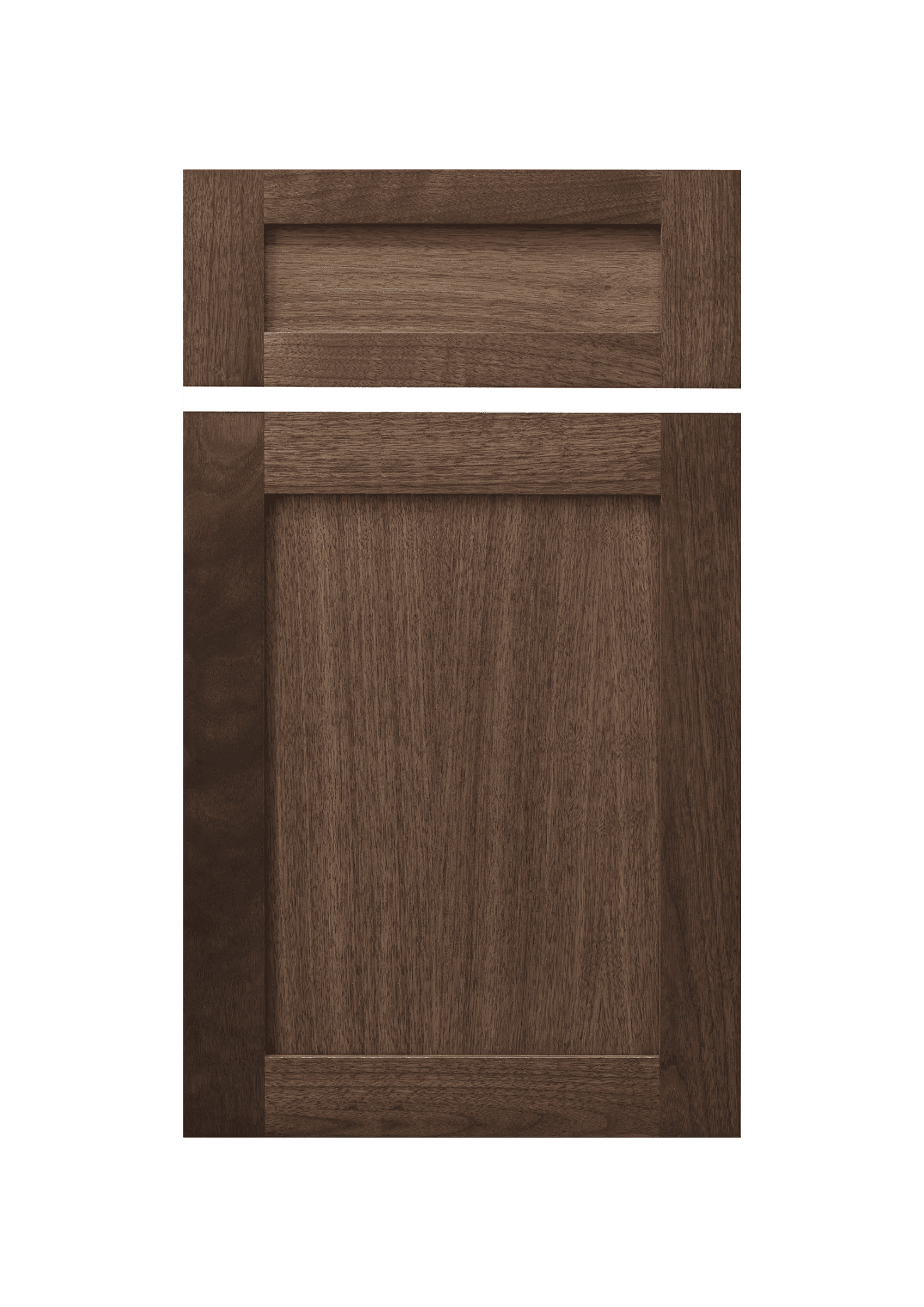
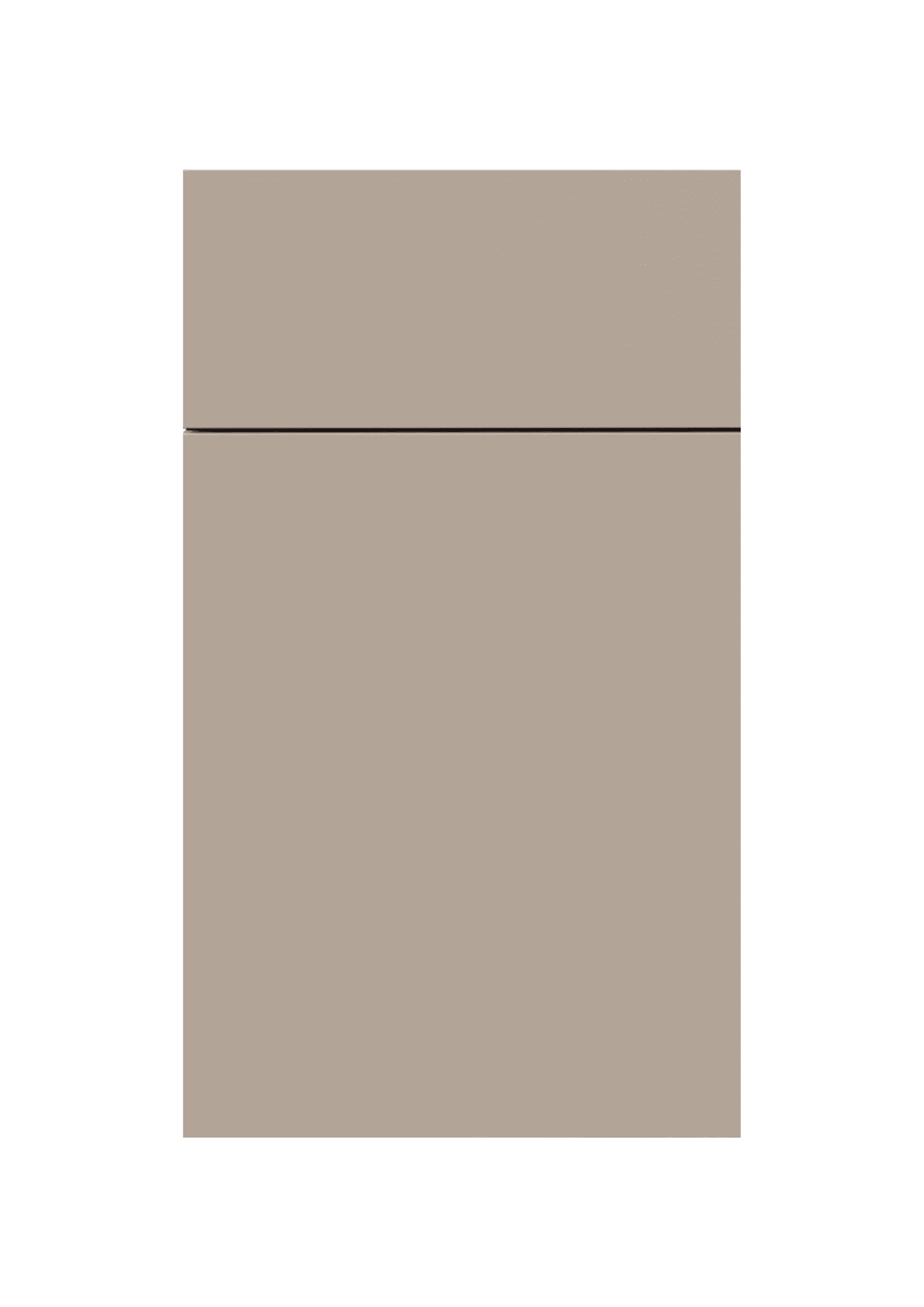
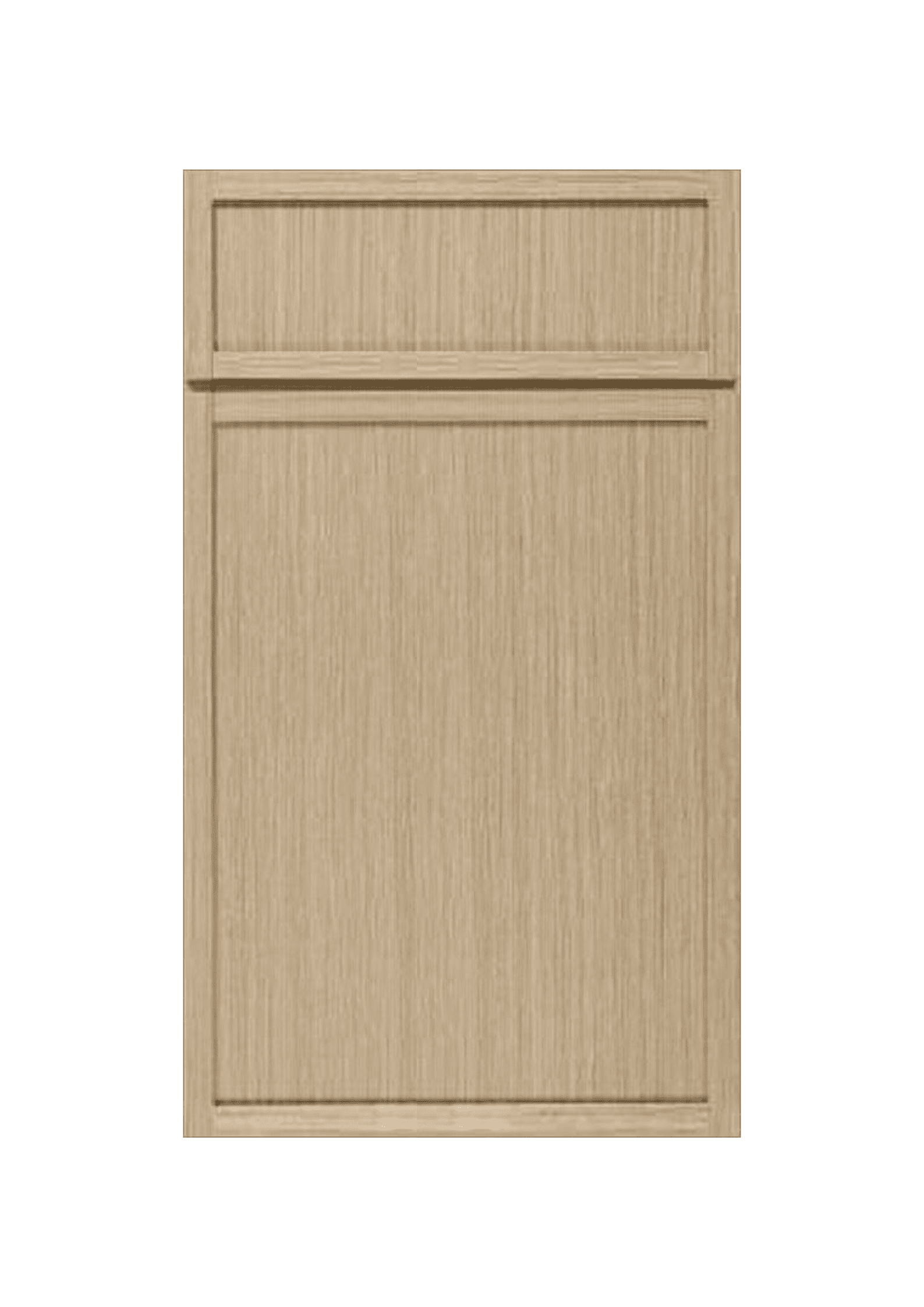
Choose your Cabinet Style
-
US and Canadian importers evaluating a sustainable kitchen cabinets manufacturer Vietnam factory face a real gap between marketing claims and verifiable process. Green building requirements from developers, HOAs, and multifamily investors now routinely ask for documentation, not adjectives. This guide breaks down the five standards a genuine sustainable kitchen cabinets manufacturer Vietnam supplier should be able to prove on request, and how those standards translate into cost, lead time, and LEED credit outcomes for your projects.
“Eco-friendly” appears on almost every cabinet factory’s homepage in Vietnam, but the term has no legal definition in export trade. A credible sustainable kitchen cabinets manufacturer Vietnam partner separates itself through four verifiable inputs: certified wood chain-of-custody, emissions-compliant panel and finish materials, documented waste diversion, and energy use per unit produced. Buyers who only ask “are you sustainable?” get a marketing answer. Buyers who ask for FSC certificate numbers, VOC test reports, and waste logs get a factual one.
This distinction matters commercially. Multifamily and hospitality developers increasingly write green material requirements directly into their RFPs, and a supplier that cannot produce documentation on demand creates project risk late in the process, not early. Vetting a sustainable kitchen cabinets manufacturer Vietnam partner before the first PO protects your delivery schedule.
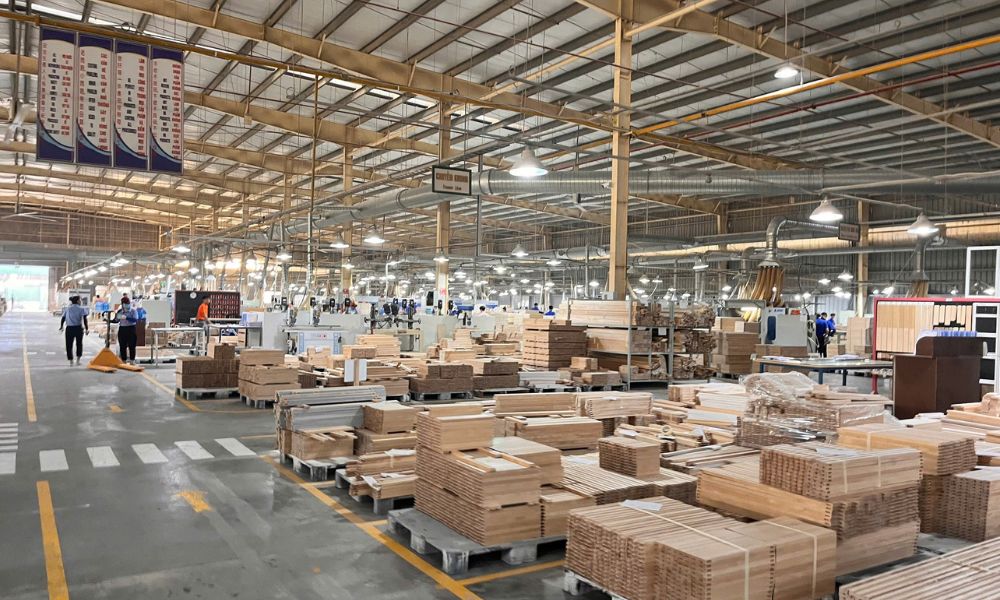
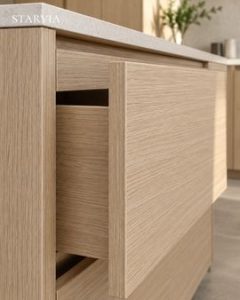
Certified wood sourcing gives buyers a traceable chain from raw material to finished cabinet production.
The starting point for any sustainable kitchen cabinets manufacturer Vietnam supplier is chain-of-custody certification from the Forest Stewardship Council (FSC), which tracks timber from a certified forest through every processing step to the finished cabinet box. Vietnam has expanded FSC-certified plantation forestry significantly over the past decade, particularly acacia and eucalyptus used in plywood cores, giving OEM factories a domestic certified supply chain rather than relying on imported certified lumber. This ties directly into wood species selection, since certified availability varies by species and grade.
When you request documentation, ask for the factory’s own FSC chain-of-custody license number (not just a supplier’s certificate one tier removed), and confirm the specific SKUs on your order are covered under that license. Some factories hold FSC certification but only apply it to a portion of production runs.
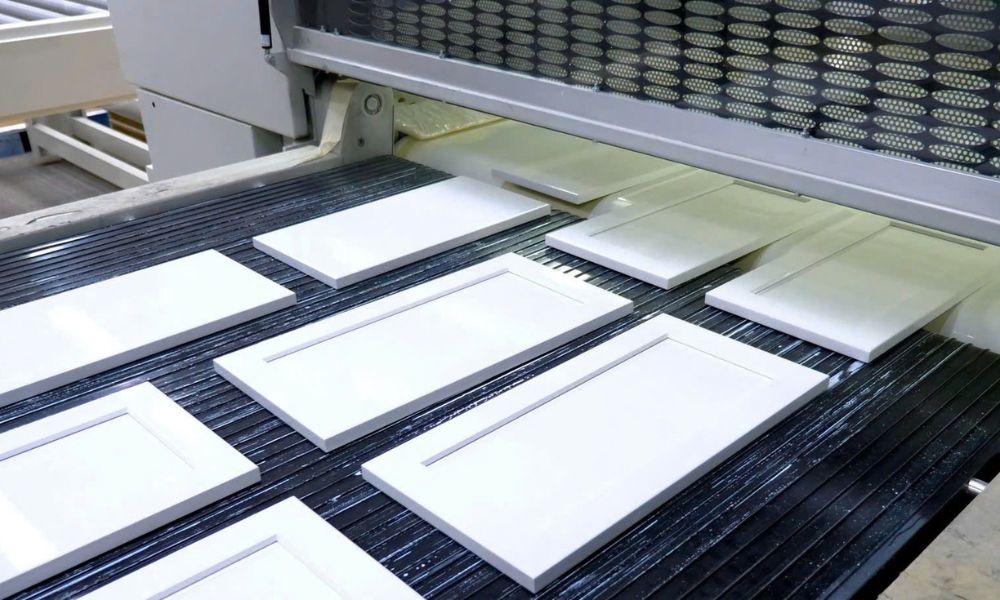
Water-based and UV-cured finishing systems help reduce VOC emissions during cabinet production.
Finish chemistry drives indoor air quality outcomes long after the cabinets ship. A sustainable kitchen cabinets manufacturer Vietnam factory should default to water-based lacquers and UV-cured topcoats over solvent-based systems, cutting volatile organic compound (VOC) emissions during both production and the years the cabinets sit in a finished kitchen. Ask for third-party VOC emission test data, not a one-line claim on a spec sheet.
Low-VOC finishing also reduces production-floor exposure risk for factory workers, which is a labor-and-safety consideration developers with ESG reporting obligations are increasingly asking about alongside the environmental angle.
Particleboard and MDF cores use adhesive resins that off-gas formaldehyde at varying rates depending on the resin formulation. A responsible sustainable kitchen cabinets manufacturer Vietnam supplier uses low-formaldehyde-emission resin systems in its engineered wood panels and can provide mill test certificates for the specific panel batch used on your order, not a generic industry statement. This single line item is one of the most frequently requested documents by US project specifiers, because it feeds directly into building material disclosure requirements on many commercial and multifamily jobs.
Cabinet manufacturing generates substantial offcut wood, sawdust, and edge-banding waste. A sustainable kitchen cabinets manufacturer Vietnam factory with a mature environmental program diverts this material: sawdust and offcuts get compressed into biomass fuel or particleboard feedstock rather than landfilled or openly burned. Ask the factory for its waste diversion rate and how sawdust is handled on-site — this is one of the easiest claims to verify during a quality control audit, whether in person or via video walkthrough.
| Standard | What to Request | Why It Matters |
|---|---|---|
| FSC chain-of-custody | Certificate number + SKU coverage | Verifies legal, traceable timber sourcing |
| Water-based finishes | Third-party VOC test report | Reduces indoor air quality risk |
| Low-formaldehyde panels | Mill test certificate per batch | Meets US material disclosure requirements |
| Waste diversion | Diversion rate + on-site process | Confirms circular production, not just claims |
| Energy use tracking | Per-unit energy or utility data | Supports Scope 3 emissions reporting for buyers |
The least visible standard, and the one fewest buyers ask about, is energy consumption per cabinet unit produced. Factories that track and reduce energy intensity — through equipment upgrades, production scheduling, or on-site solar — give importing brands usable data for their own Scope 3 supply-chain emissions reporting. If your company reports sustainability metrics upstream to investors or retail partners, ask your sustainable kitchen cabinets manufacturer Vietnam supplier whether they can share utility consumption figures tied to your specific order volume.
Cabinetry sourced from a documented sustainable kitchen cabinets manufacturer Vietnam supplier can contribute to project certification under the USGBC LEED rating system. FSC-certified wood content supports Materials and Resources credits, low-VOC finishes and low-formaldehyde panels support Indoor Environmental Quality credits, and documented manufacturing data can support Materials and Resources disclosure credits. None of these credits are automatic — your project’s LEED consultant still has to submit the documentation — but a supplier that cannot produce it removes the option entirely.
This is particularly relevant for the multifamily and senior housing developers we work with, where green certification is increasingly a financing requirement from lenders and municipal incentive programs, not just a marketing preference.
Vietnam’s furniture manufacturing sector has invested heavily in FSC-certified plantation forestry and compliance infrastructure over the past fifteen years, partly driven by EU and US import scrutiny on wood legality. This gives buyers sourcing from an established sustainable kitchen cabinets manufacturer Vietnam factory more mature documentation systems than in some newer manufacturing regions still building out certified supply chains and testing infrastructure.
The trade-off buyers should still verify independently: certification density varies significantly between individual factories, even within the same industrial zone. A factory’s location in a wood-processing hub does not guarantee its own certification status — always verify at the specific factory level, not the regional level.
Buyers often assume certified sourcing adds significant cost and delay. In practice, the premium for FSC-certified panel stock at OEM volumes typically runs a few percentage points above uncertified material, not a step-change in landed cost, and container logistics from Vietnam to major US ports run on the same schedule regardless of certification status — commonly 24 to 29 days port-to-port for full-container-load ocean freight, with door-to-door timelines extending further depending on inland trucking on both ends. Certification affects your paperwork and factory vetting timeline more than your shipping timeline.
Where certified sourcing does add time is upfront: verifying FSC chain-of-custody scope, reviewing VOC and formaldehyde test reports, and confirming a factory’s waste-handling process typically extends the supplier qualification phase by one to two weeks compared to a purely price-based vendor selection. Developers working against a fixed green-certification submission deadline should build this verification window into their sourcing timeline rather than treating it as a same-day confirmation.
A sustainable kitchen cabinets manufacturer Vietnam factory that already maintains organized documentation — certificates, test reports, and waste logs on file rather than assembled ad hoc per request — collapses this verification window significantly, which is itself a useful signal of how seriously the factory treats its environmental program day to day.
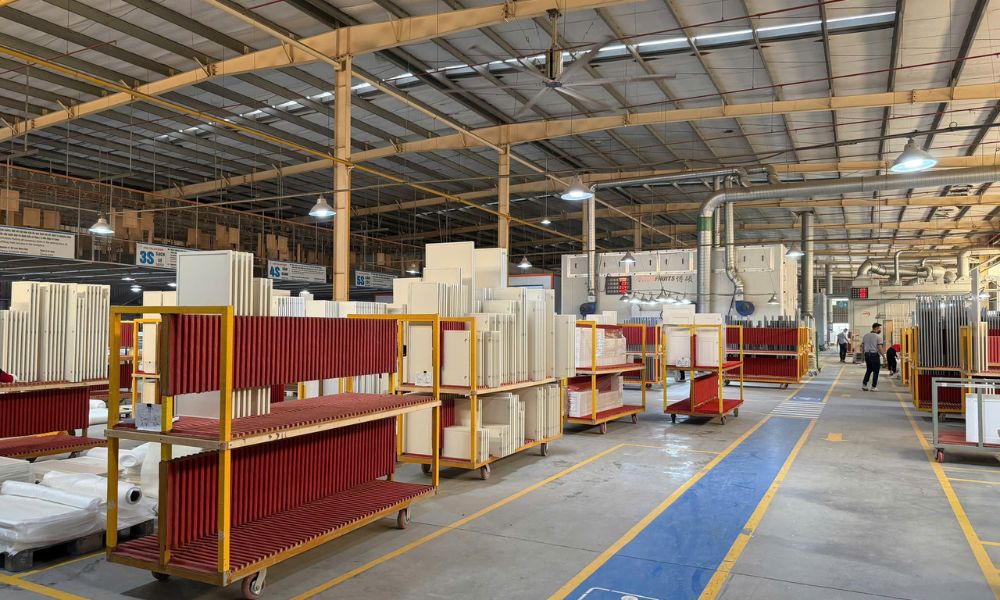
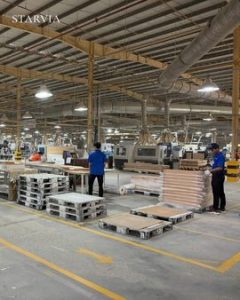
A documented sustainability program connects material sourcing, production controls, waste management, and factory-level reporting.
Before releasing a deposit to any sustainable kitchen cabinets manufacturer Vietnam supplier, request the following as a documentation package rather than verbal assurances:
Factories that resist providing this package, or that only offer a generic sustainability statement instead of order-specific documents, should be treated as a sourcing risk on any project where green material compliance is contractually required — not just preferred.
A supplier who answers all five without hesitation has likely built sustainability into daily operations. A supplier who answers only the first one has likely built it into marketing copy. For a broader pre-order checklist, see our guide to importing kitchen cabinets from Vietnam.
Does FSC certification cost more per cabinet? Certified plantation timber typically carries a modest premium over uncertified lumber, but the difference is usually small relative to total OEM unit cost, especially at container-load volumes.
Can a factory be FSC certified for some products but not others? Yes. Certification applies per product line under a specific chain-of-custody scope, which is exactly why buyers should confirm SKU-level coverage rather than assuming a blanket certification.
Is low-VOC finish durability different from solvent-based finish? Modern water-based and UV-cured systems match solvent-based durability for residential and light-commercial kitchen use when applied correctly, with the added benefit of faster cure times in production.
How do I verify these claims before placing a large order? Request documentation in writing before sampling, then confirm the same certifications and test reports on the actual sample batch — not just on a general factory brochure.
Does choosing a sustainable kitchen cabinets manufacturer Vietnam supplier delay my container booking? No. Certification and testing happen during factory qualification and sampling, well before production starts, so it does not add time to the actual ocean freight or container-loading schedule once your order is confirmed.
Will a sustainable kitchen cabinets manufacturer Vietnam factory still meet standard OEM MOQs? Yes, in most cases. Certified wood sourcing and low-VOC finishing are process-level commitments, not volume-based programs, so factories that have them typically apply them across their standard OEM order minimums rather than reserving them for large custom runs.
Starvia operates as a sustainable kitchen cabinets manufacturer Vietnam partner for US and Canadian importers, with FSC chain-of-custody sourcing, water-based finish lines, and documented waste diversion available for buyer audit. If your next project specifies certified materials, learn more about our production standards or request documentation for your current sourcing plan.
 View collection
 View collection
 View collection
 View collection