- Our Products
-
Choose your Cabinet Style
-
Soft-close kitchen cabinets have moved from premium upgrade to baseline expectation across the U.S. wholesale market. Walk through any mid-range kitchen showroom today and you will find soft-close hinges and drawer systems presented as standard — not as an add-on. For wholesale buyers sourcing soft close kitchen cabinets from OEM manufacturers in Vietnam, understanding the hardware specification is as important as the cabinet construction itself. The wrong hardware package can undermine an otherwise competitive product, while the right specification creates a defensible quality position at the price point you’re targeting.
With U.S. cabinet demand projected at $20.9 billion in 2026 (ResearchAndMarkets) and demand for soft-close and concealed hinge systems up approximately 44% in recent years (Global Growth Insights), wholesale importers who get the hardware specification right — and lock it into their OEM agreements — are better positioned to defend margins in a competitive sourcing environment.
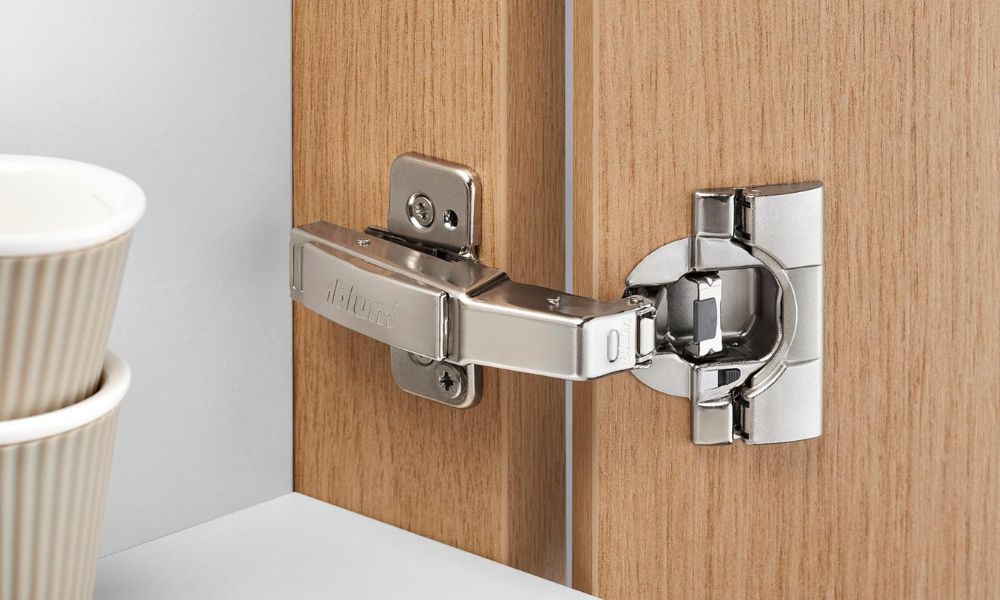
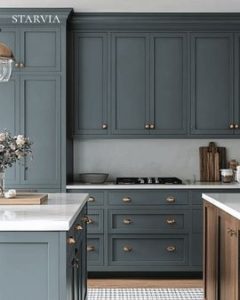
Integrated soft-close hinges provide smoother and more durable cabinet operation than clip-on dampers.
Soft-close refers to the integrated damping mechanism in both hinges and drawer slides that decelerates the door or drawer in the final 15–25mm of travel, preventing slamming. There are two separate hardware components wholesale buyers must specify:
1. Soft-close hinges (for cabinet doors): The damping mechanism is built into the hinge body itself (integrated) or attached as a separate clip-on damper. Integrated soft-close (e.g., BLUM BLUMOTION, Hettich Sensys) is superior — the damper is precisely calibrated to the hinge geometry and closing force, and cannot be omitted or fall off during shipping.
2. Soft-close drawer slides (for drawers): Either built into the drawer box system (e.g., BLUM Tandembox with BLUMOTION, Hettich InnoTech with SilentSystem) or added as an undermount or side-mount slide with integrated damper. For wholesale kitchen cabinets, the most common and cost-effective approach is a full drawer box system with built-in soft-close, which eliminates the separate slide + damper assembly and reduces installation error.
When requesting quotes from Vietnam manufacturers, specify both components explicitly. A quote that says “soft-close hardware” without specifying brand, model, and whether soft-close is integrated may include clip-on dampers on standard hinges — a meaningfully lower quality and durability profile.
The hardware brand is a key differentiator in Vietnam OEM kitchen cabinets, directly affecting the quality of the final product and the price per container. The following comparison covers the main brands used by Vietnam exporters:
| Brand | Origin | Hinge Model | Drawer System | Market Position | Est. Cost Add vs. Generic |
|---|---|---|---|---|---|
| BLUM | Austria | CLIP top BLUMOTION | Tandembox / LEGRABOX | Premium; ~16% global market share | +$1,200–$2,000 / container |
| Hettich | Germany | Sensys / Intermat | InnoTech Atira / ArciTech | Premium; ~13% global share | +$1,000–$1,800 / container |
| Grass | Austria | Tiomos / Nexis | Nova Pro / Vionaro | Premium-mid | +$900–$1,500 / container |
| Salice | Italy | Futura / Silentia+ | Boxer / Slider | Mid-market | +$700–$1,200 / container |
| DTC / King Slide | Taiwan | Various | Various | Value / OEM | +$300–$600 / container |
| Generic Chinese | China | Unbranded | Unbranded | Budget | Baseline |
For the U.S. wholesale market — particularly buyers supplying kitchen remodelers, builders, and distributors — BLUM and Hettich remain the recognized quality benchmarks. Specifying either brand signals product quality to your downstream customers and reduces warranty claims. For price-sensitive segments (rental, multifamily value), Grass or Salice offer a credible mid-tier alternative. Generic hardware should be avoided in any U.S.-bound wholesale program due to cycle-life and corrosion reliability issues.
When contracting soft close kitchen cabinets from a Vietnam manufacturer, the hardware specification should be written into the purchase order or OEM agreement with the following level of detail:
Hinges:
Drawer systems:
Door catches / push-to-open: If the design is handleless (no pull hardware), specify push-to-open mechanism (BLUM TIP-ON or equivalent). For standard handled cabinets, magnetic catches are not needed with soft-close hinges — the hinge itself provides positive closure.
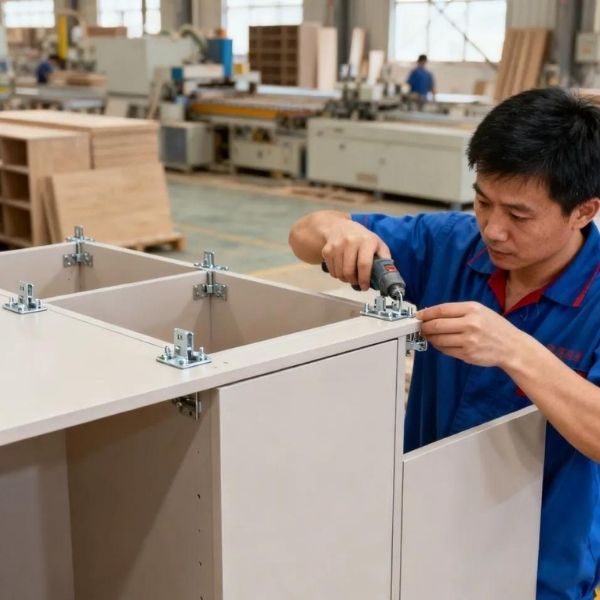
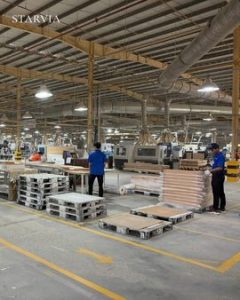
Modern Vietnam factories integrate premium hardware into export-ready kitchen cabinets.
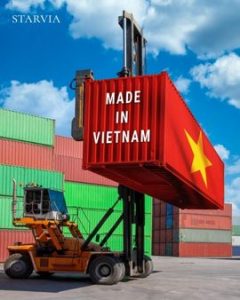
Vietnam’s position as the dominant source for U.S.-bound wholesale kitchen cabinets is well established, but what makes it specifically compelling for soft-close cabinet programs is the combination of skilled assembly labor and proximity to premium hardware supply chains.
BLUM, Hettich, and Grass all have regional distribution in Southeast Asia, with warehousing in Vietnam, Thailand, and Singapore. Vietnam cabinet factories with established OEM programs order hardware in bulk, often achieving pricing 15–20% below what U.S. assemblers pay for the same components. This means a Vietnam-sourced cabinet with genuine BLUM Tandembox can land in the U.S. at a lower total cost than a domestically assembled equivalent.
The current Section 232 tariff of 25% on Vietnam cabinets (scheduled to increase to 50% on January 1, 2027) is partly offset by this hardware and labor cost differential. For buyers placing H2 2026 orders, the landed cost advantage at 25% tariff is substantial — and diminishes significantly if the rate escalates.
For buyers looking to import kitchen cabinets from Vietnam, a factory with established BLUM or Hettich supply agreements and dedicated hardware assembly lines is a significantly more reliable partner than one that sources hardware order-by-order.
Starvia supplies soft close kitchen cabinets to wholesale buyers across the U.S., Canada, Australia, and Europe from production facilities in Vietnam (~1,000,000 sq ft, ~1,000 employees, ~150 containers/month).
Standard hardware package for U.S. export orders:
Hardware brand substitution is contractually locked per purchase order — Starvia does not substitute hardware brands without written buyer approval. Each shipment includes hardware brand certification documentation available for customs and quality audit purposes.
Cabinet construction uses CARB Phase 2 certified substrates (Certificate No. CARB/EPA23072) processed on Homag CNC cutting centers at ±0.5mm dimensional tolerance. All door and drawer alignment is checked 100% pre-packing with pull-force testing on drawer slides (minimum 45kg rated load).
Commercial terms for soft-close cabinet programs:
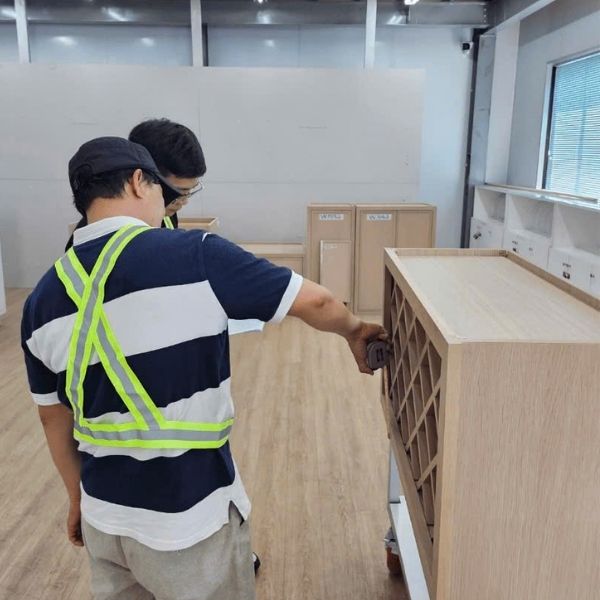
Every cabinet should be tested to ensure smooth and consistent soft-close performance.
Before committing to a full container order of soft close kitchen cabinets from any Vietnam manufacturer, request a sample set and conduct the following checks:
Door test: Open each door to 90° and release. The door should decelerate smoothly in the final 25mm of travel with no audible click or thud. The damping should be consistent across all hinges — inconsistency indicates mixed hinge batches or improper adjustment. At 45° open, the hinge should self-close; at 90°+, it should hold open without creep (for 110° hinges).
Drawer test: Load each drawer with a 25kg weight (approximately a full kitchen drawer load) and close from full extension. The soft-close should engage at approximately 100mm from closed and decelerate smoothly to a flush close. The drawer face should align within 1mm of adjacent faces. Pull-force to open should be consistent and smooth throughout the extension range.
Hinge marking: Check the hinge body for brand marking (BLUM, Hettich, etc.). Genuine BLUM CLIP top hinges have “BLUM” embossed on the hinge body and carry an article number. Any hinge with no marking or a different brand name than specified is a substitution.
For a detailed breakdown of how to source and import RTA kitchen cabinets from Vietnam, including hardware inspection protocols, our full supplier evaluation guide covers the complete due diligence process.
Soft close kitchen cabinets from Vietnam represent excellent value when the hardware specification is right. The difference between a BLUM Tandembox and an unbranded drawer system is not just brand prestige — it’s cycle-life (BLUM rates its systems to 500,000 cycles vs. 50,000–80,000 for generic), dimensional precision, and downstream customer satisfaction. At the container level, upgrading from generic to BLUM typically adds $1,200–$2,000 to FOB cost — a small premium relative to the warranty and reputation risk of hardware failure in the field.
For wholesale buyers sourcing at scale, locking the hardware brand and model into the OEM agreement — and verifying compliance in sample sets — is the single most impactful quality control step available before container loading.
Ready to spec a soft-close cabinet program from Vietnam? Contact Starvia’s B2B team for a quote with full hardware specification, sample availability, and current lead times.
 View collection
 View collection
 View collection
 View collection