- Our Products
-
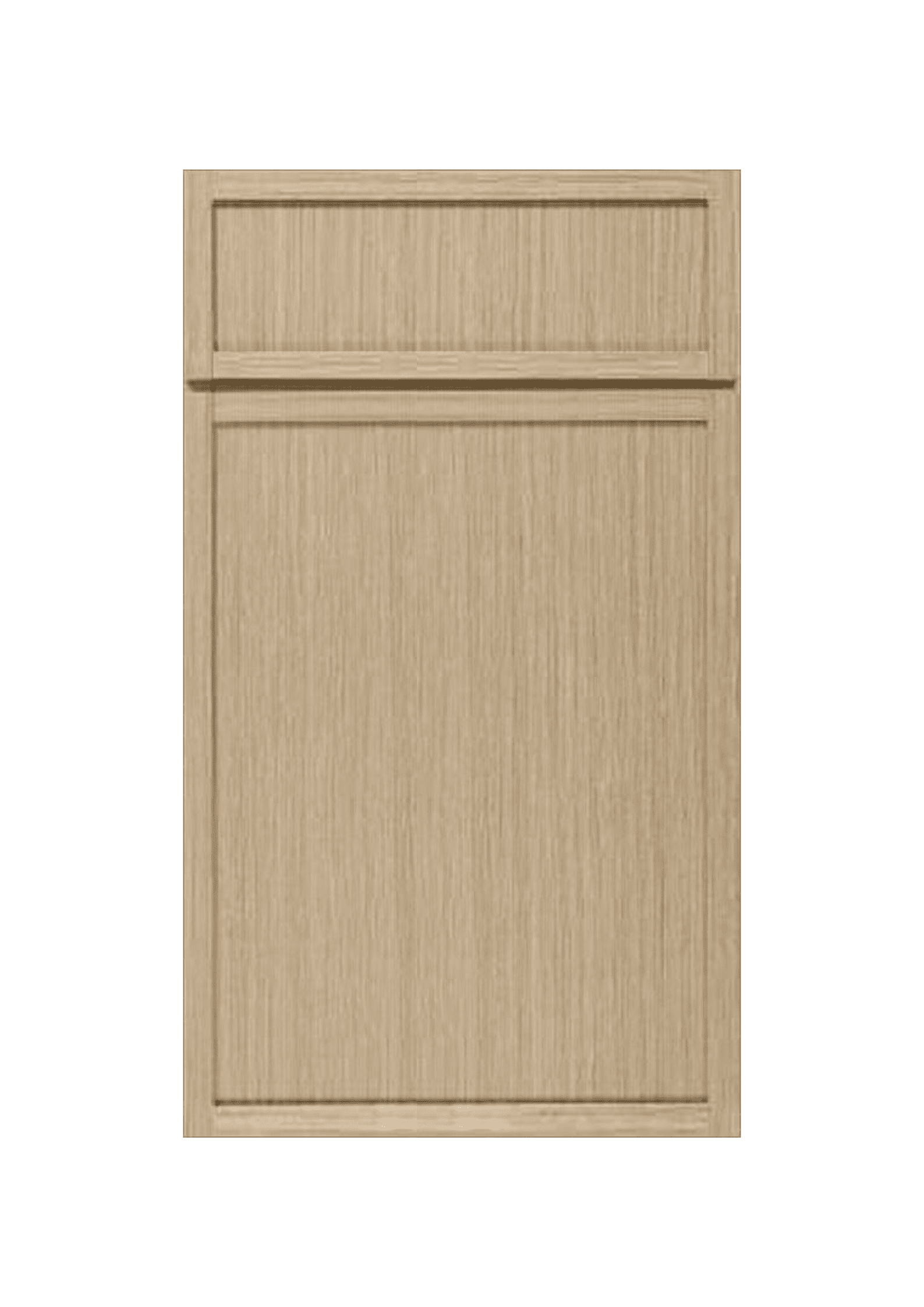
Choose your Cabinet Style
-

Sourcing from an RTA kitchen cabinets manufacturer Vietnam has become the dominant strategy for US and Canadian wholesale buyers rebuilding cabinet supply chains since 2023. RTA — ready-to-assemble — kitchen cabinets ship flat-packed, maximizing container utilization, minimizing freight cost per unit, and delivering installation-ready product that assembly crews can process quickly on-site. Vietnam has emerged as the global leader in RTA cabinet manufacturing for export, combining competitive production costs, CARB Phase 2 compliance, and container-scale output that no other regional manufacturing hub currently matches.
This guide covers everything a B2B importer needs to know about working with an RTA kitchen cabinets manufacturer in Vietnam in 2026: how RTA compares to pre-assembled on cost and logistics, what specifications define export-quality RTA cabinets, how to evaluate and qualify a Vietnam factory, and what a first container program actually looks like from order to delivery.
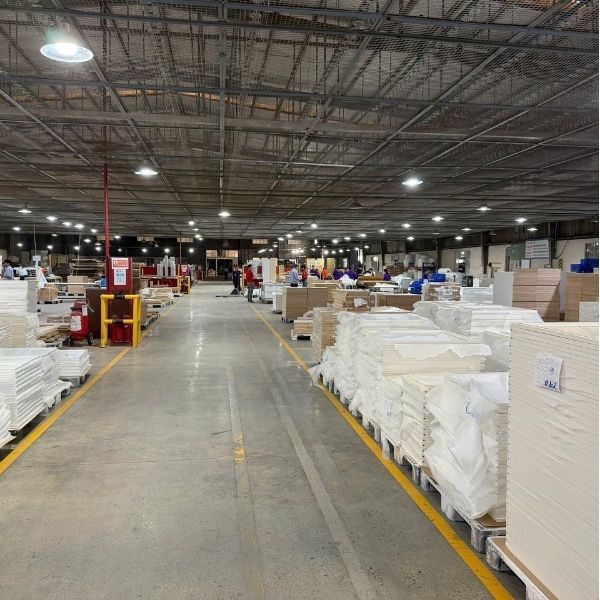
RTA cabinets ship flat-packed to maximize container utilization and reduce freight costs.
RTA kitchen cabinets — ready-to-assemble — are manufactured as flat-packed component sets: the cabinet box panels (sides, top, bottom, back), the door, drawer fronts, hardware (hinges, drawer slides, cam locks), and assembly hardware ship together in a single labeled carton. On arrival, the end buyer or installer assembles the cabinet box in minutes using included hardware. No specialized tools are required beyond a screwdriver or drill.
For wholesale importers, the RTA format offers three structural advantages over pre-assembled cabinets. First, container utilization: a 40ft container from a Vietnam RTA kitchen cabinets manufacturer typically holds 800 to 1,000 flat-packed cabinet pieces versus 30 to 50 pre-assembled sets — a 15-20x unit volume difference per container. Second, freight cost per unit drops dramatically at that volume ratio, improving landed-cost competitiveness in both retail and project distribution channels. Third, RTA inventory is more flexible — distributors can break pallet quantities into individual cabinet orders without the space and damage risk that pre-assembled inventory creates in warehouse environments.
The decision between RTA and pre-assembled sourcing from a Vietnam kitchen cabinets manufacturer comes down to four factors: distribution channel, assembly labor cost at destination, warehouse capacity, and end-buyer installation capability. The comparison table below covers the key parameters for US wholesale buyers.
| Factor | RTA Flat-Pack | Pre-Assembled |
|---|---|---|
| Units per 40ft container | 800-1,000 pieces | 30-50 kitchen sets |
| FOB price per unit (mid-range) | $15-25 USD | $45-90 USD per set |
| Freight cost per unit | Low (high cube utilization) | High (low cube utilization) |
| Assembly required | Yes (15-30 min per cabinet) | No (installation-ready) |
| Best for | Retail distribution, DIY, wholesale stock | Project contractors, hospitality, multi-unit |
| Warehouse space per unit | Low (flat-stack) | High (3D footprint) |
| Damage risk in transit | Low (flat-packed, padded) | Higher (door alignment, hinge stress) |
| Lead time from Vietnam | 45-60 days production + 28-32 days transit | 45-60 days production + 28-32 days transit |
For most US wholesale buyers distributing through retail showrooms, online channels, or contractor supply programs, RTA is the operationally superior format. Pre-assembled sourcing makes sense when the buyer is supplying directly to hospitality or multi-unit residential developers who require installation-ready product and have the project scale to justify the higher per-unit freight cost. Many experienced importers maintain both SKU types — RTA stock inventory from their Vietnam RTA kitchen cabinets manufacturer for standard distribution, and pre-assembled orders for specific project contracts.
Vietnam now accounts for approximately 94% of all US kitchen cabinet imports by shipment count, with the majority of that volume moving in flat-packed RTA format. This concentration reflects a structural shift in the global cabinet supply chain driven by three converging factors.
First, anti-dumping duties against Chinese wooden cabinet manufacturers — ranging from 4% to over 200% per producer as determined by the US Department of Commerce — have effectively removed China as a viable RTA sourcing option for US buyers at scale. Vietnam carries no equivalent anti-dumping exposure on wooden kitchen cabinets. Second, Vietnamese factories have invested heavily in the specific production technology that RTA manufacturing requires: precision CNC panel processing, automated edge banding, cam-lock hardware assembly lines, and flat-pack carton systems designed for container-optimized shipping. Leading Vietnamese RTA kitchen cabinets manufacturers operate European CNC equipment from Homag, SCM, and Biesse and produce RTA cabinet components to dimensional tolerances of ±0.5mm, ensuring consistent assembly fit across high-volume production runs.
Third, Vietnam’s cost structure delivers compelling economics even under the 25% tariff that currently applies to certain imported kitchen cabinets entering the US market. According to the Mordor Intelligence US Kitchen Cabinet Market Report, Vietnamese-manufactured RTA cabinets land in US warehouses at 20-35% below equivalent Chinese-sourced product on a fully-loaded basis, after tariffs, freight, and compliance certification costs. The National Kitchen and Bath Association (NKBA) reports that Vietnam-sourced cabinets now dominate mid-range and premium-mid distribution channels in the US market, a position that has solidified rapidly since 2023.

High-quality RTA cabinets use precision cam-lock systems for fast and reliable assembly.
Not all RTA kitchen cabinets from Vietnam are manufactured to the same specification. When evaluating an RTA kitchen cabinets manufacturer Vietnam for a wholesale program, the following specifications determine product quality, assembly ease, and end-customer satisfaction.
Box construction: Export-grade RTA cabinets use CARB Phase 2 compliant MDF or plywood panels with ABS or PVC 1mm edge banding on all exposed edges. Panel thickness should be 16-18mm for wall and base cabinet boxes. Thinner panels (12mm) appear in lower-tier product and create structural issues under load. Verify panel thickness against the spec sheet and production samples before ordering.
Cam-lock assembly system: The assembly hardware in flat-pack RTA cabinets — cam locks, shelf pins, back panel clips — determines how quickly and reliably the cabinet assembles and how stable the finished box is under daily use. Premium RTA programs from leading Vietnam manufacturers use European-standard Rafix or Minifix cam-lock systems with a rated clamping force above 1,000N. Lower-tier product uses generic cam locks that loosen over time.
Door and drawer hardware: Soft-close Blum concealed hinges and under-mount soft-close drawer slides are the market standard for export-grade RTA cabinets in the US distribution channel. Buyers should request Blum certification documentation or equivalent third-party certification from the manufacturer — not just hardware labeled as “Blum equivalent.”
CARB Phase 2 certification: All panels and composite wood components in RTA cabinets sold through US distribution channels must be CARB Phase 2 certified. Request the current certificate number from the manufacturer and verify it on the CARB Composite Wood Products database before placing an order. Certificates expire annually.
Qualifying a new RTA kitchen cabinets manufacturer Vietnam requires evaluating four areas before committing to a container purchase order: factory certifications, production sample quality, assembly documentation, and references.
Certifications: A credible export-scale RTA kitchen cabinets manufacturer Vietnam will hold current CARB Phase 2 certification (verifiable by certificate number), FSC chain-of-custody certification covering timber sourcing, and ISO 9001 quality management system certification. These are not optional credentials for US distribution — they are entry requirements for retail channels and major project supply contracts.
Production sample assembly test: Request a production sample set — not a showroom display sample — covering at least one base cabinet, one wall cabinet, and one drawer unit in the specification you plan to order. Assemble each yourself (or have your team assemble them) using only the included instructions and hardware. Time the assembly. Evaluate fit tolerance at every cam-lock joint, door hang alignment, drawer slide smoothness at full extension, and finish consistency across all components in the box. A sample that assembles in 20 minutes with zero fit issues represents genuine manufacturing precision. A sample that requires forcing panels or shims represents a production problem that will compound across a 1,000-unit container.
Assembly instructions quality: For RTA cabinets sold through retail or distributed to end installers, assembly instruction quality directly affects customer satisfaction and return rates. Request the actual printed assembly instructions included with the production sample. They should be multilingual (English essential for US market), diagram-based rather than text-heavy, and cover all sub-assemblies including toe-kick attachment, drawer slide adjustment, and door hinge adjustment.
References from US distributors: Request two verifiable contact references from US wholesale buyers who have been receiving regular container shipments from the manufacturer for at least six months. Verify independently. An RTA kitchen cabinets manufacturer Vietnam that cannot provide multi-container US references is not yet operating at export scale.
For a broader overview of what to look for when sourcing from Vietnam, see our guide to importing kitchen cabinets from Vietnam. If you are evaluating door styles for your RTA program, our white shaker kitchen cabinets guide covers the most popular RTA door profile in the US market.
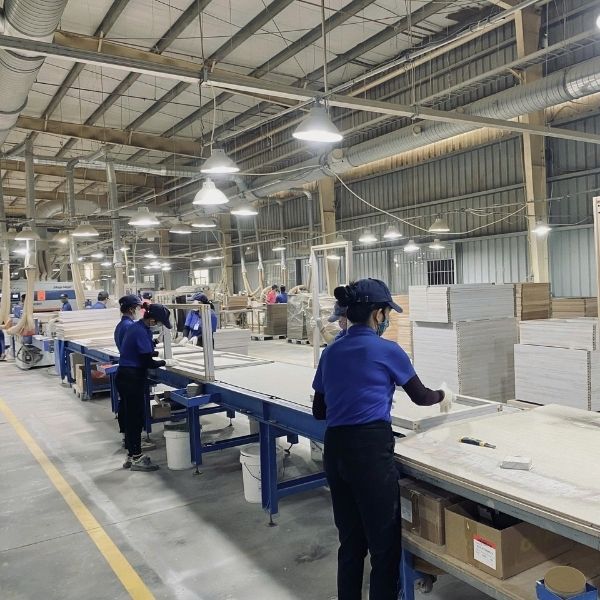
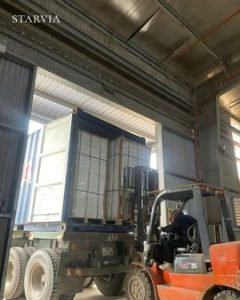
Modern manufacturing facilities enable large-scale production of RTA kitchen cabinets for export markets.
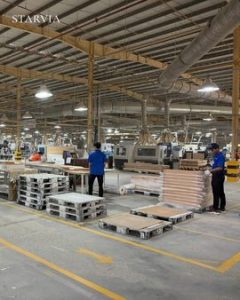
Starvia operates two manufacturing facilities in Vietnam, North Vietnam, covering approximately 1,000,000 square feet with a production workforce of approximately 1,000 skilled staff. Monthly RTA cabinet output is approximately 150 containers across all door styles — shaker, slab, frameless, slim, and inset — shipped from Hai Phong port to US, Canadian, Australian, and European wholesale buyers.
Our RTA kitchen cabinet program is built on CARB Phase 2 compliant MDF and plywood construction (certification No. CARB/EPA23072, valid through December 7, 2026), European-standard cam-lock assembly hardware, soft-close Blum concealed hinges, and under-mount drawer systems. Every RTA cabinet ships with multilingual assembly instructions and a full hardware kit. Panels are processed on Homag CNC lines to ±0.5mm tolerance, ensuring consistent assembly fit across every unit in a container run.
The entry MOQ for our RTA kitchen cabinet program is 1 x 40ft container at approximately $42,000 USD FOB Hai Phong. New buyers typically begin with a production sample set (8-12 cabinets across two door styles, 7-15 day lead time), then proceed to a trial container, then establish standing monthly orders. Our export team handles all documentation: certificate of origin, CARB compliance records, packing list, fumigation certificate, and bill of lading coordination with your nominated freight forwarder.
Vietnam is the world’s leading RTA kitchen cabinets manufacturing destination for US wholesale buyers in 2026, combining anti-dumping-free sourcing, CARB Phase 2 compliance, precision CNC production, and container-scale output at competitive FOB pricing. Choosing the right RTA kitchen cabinets manufacturer Vietnam requires evaluating certifications, sample quality, assembly precision, and US distribution references — not just price.
If you are building or scaling an RTA kitchen cabinet import program for 2026, contact Starvia to request a production sample set and factory quotation tailored to your door style and volume requirements.


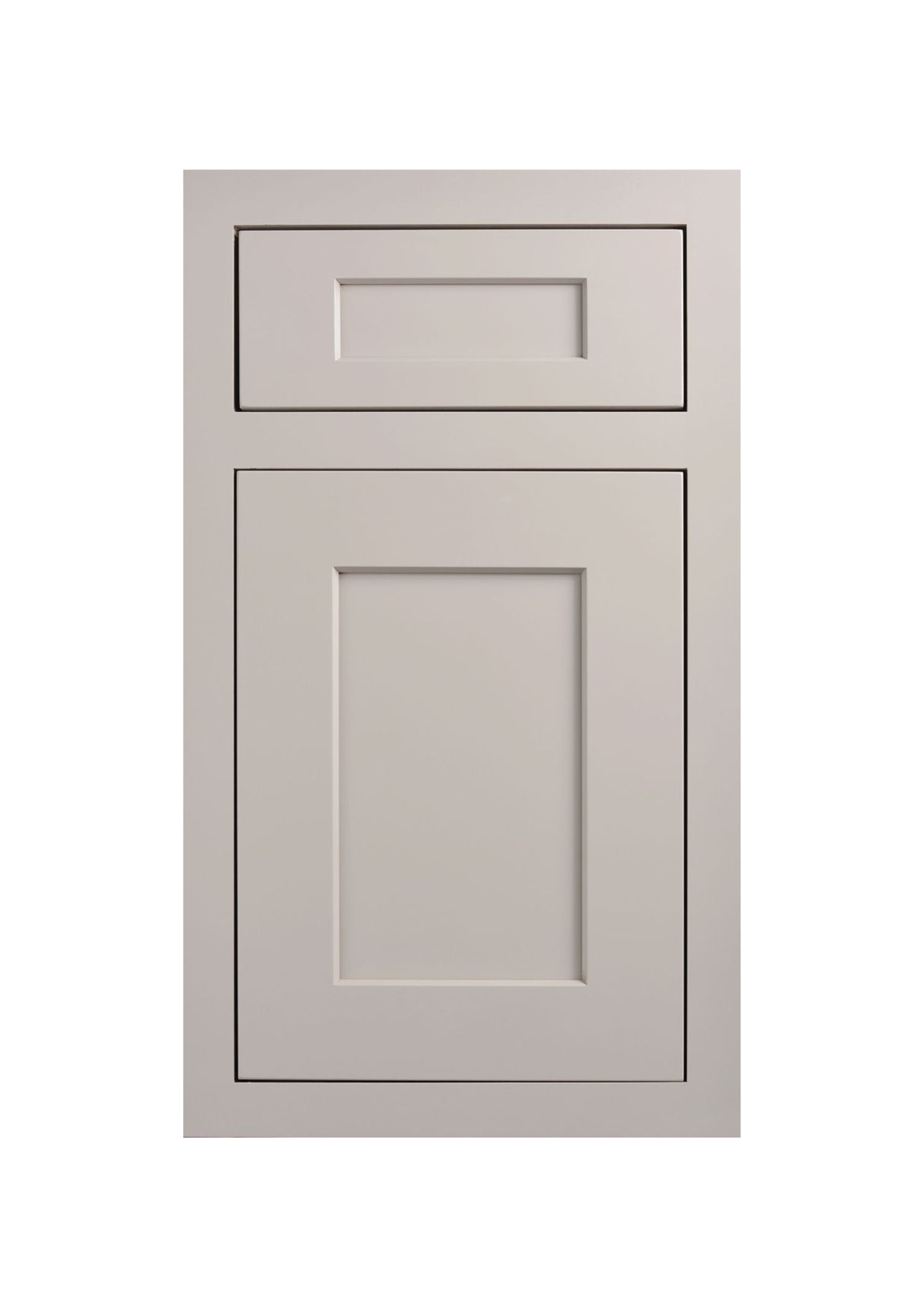 View collection
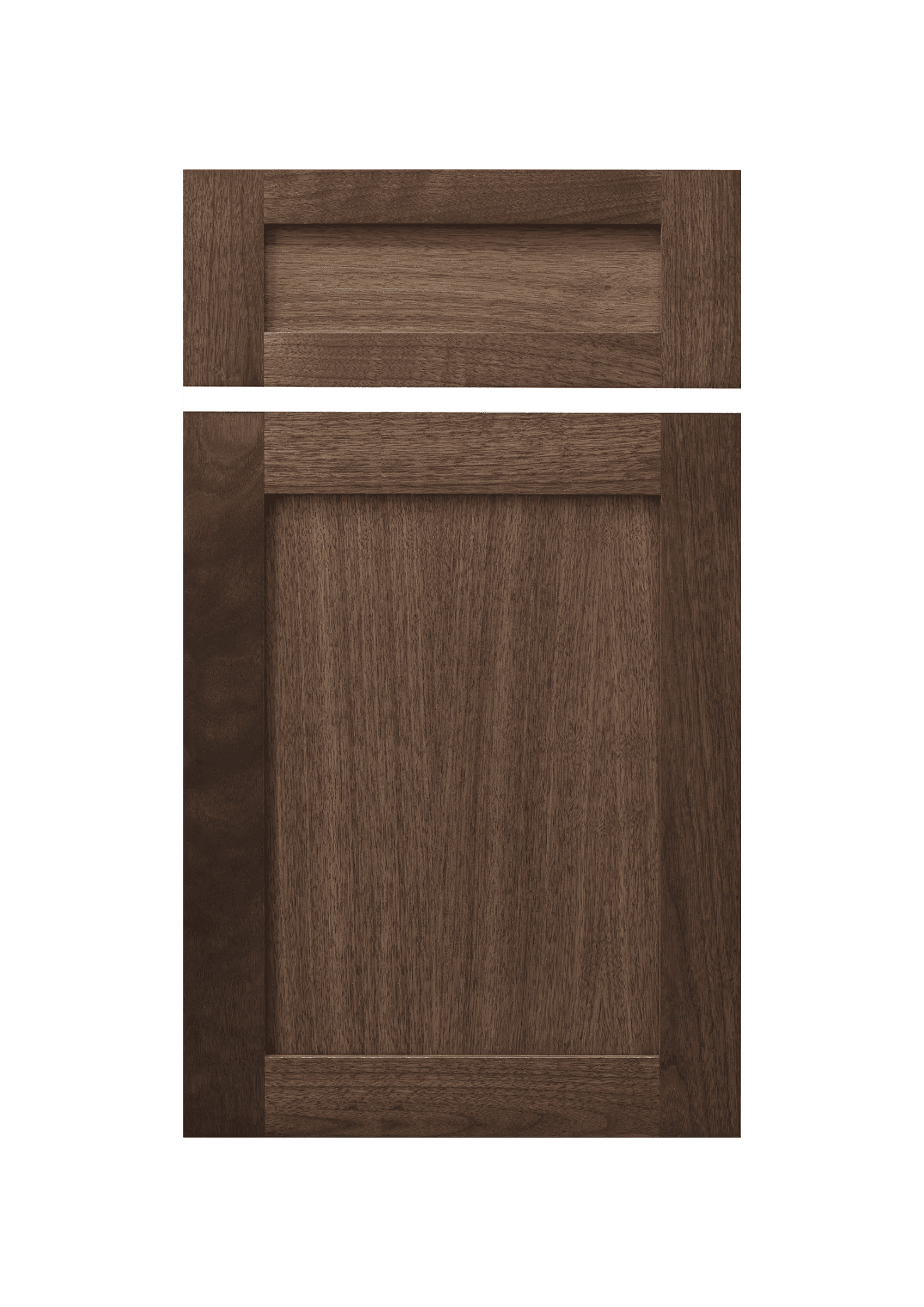 View collection
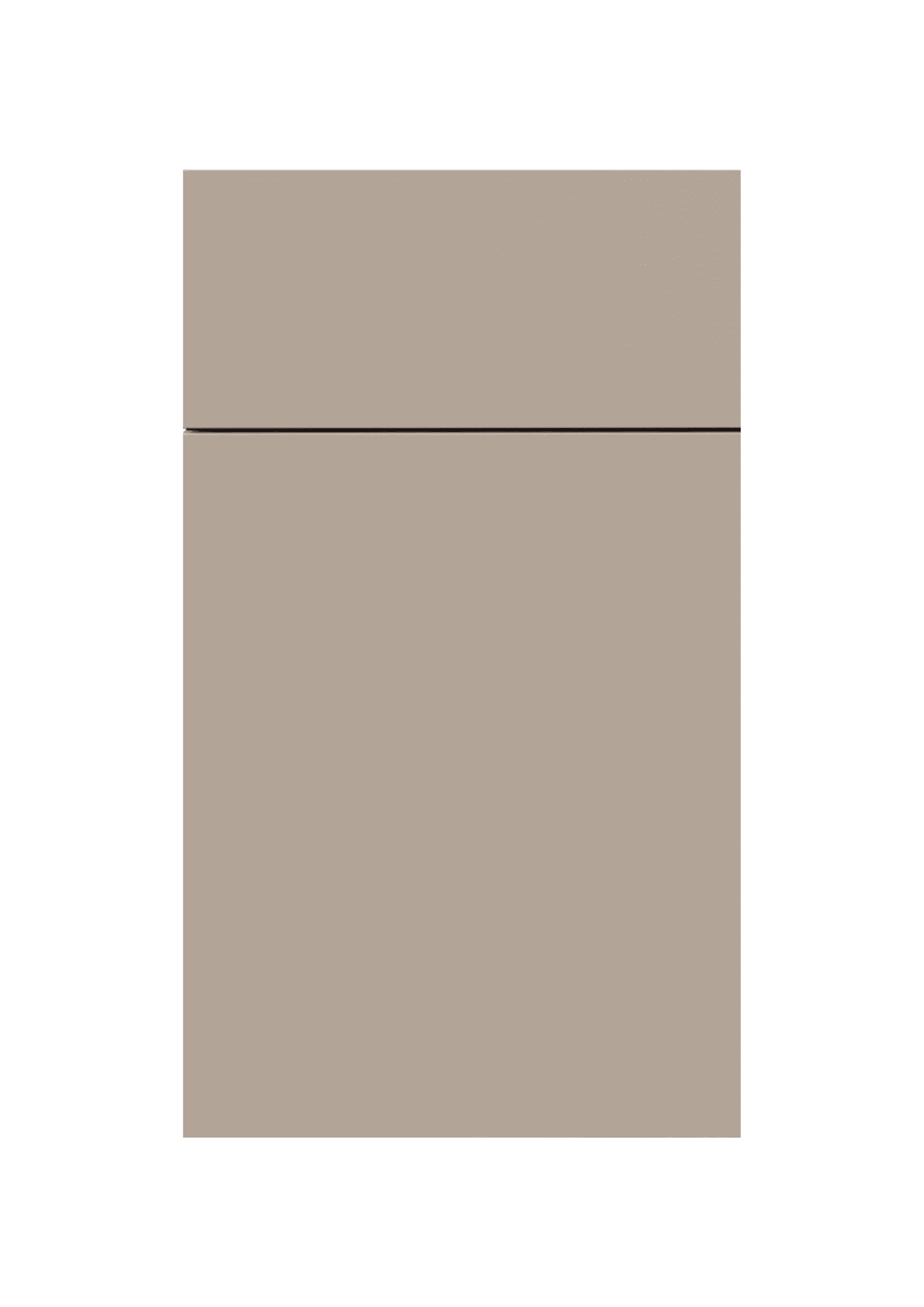 View collection
 View collection