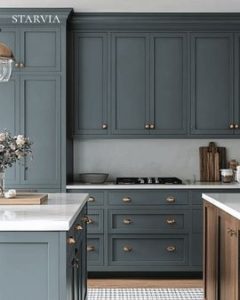
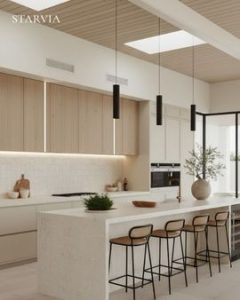
- Our Products
-
Choose your Cabinet Style
-

Shaker cabinets have remained one of the most popular cabinetry styles for decades thanks to their clean lines, versatility, and timeless appeal. Today, homeowners have more options than ever when choosing a Shaker-inspired design, with slim shaker cabinets emerging as a modern alternative to traditional Shaker doors.
While both styles share the same fundamental design principles, they create very different visual effects within a kitchen. Traditional Shaker cabinets offer classic proportions and architectural detail, while slim shaker cabinets provide a more contemporary appearance influenced by modern European design.
If you’re planning a kitchen renovation, understanding the differences between these two styles can help you make the right investment for your home.
Before comparing the two options, be sure to explore our complete guide to Shaker Cabinets to learn more about the history, construction, and design flexibility of this timeless cabinet style.
| Feature | Slim Shaker Cabinets | Traditional Shaker Cabinets |
| Rail Width | Narrow (¾”–1½”) | Wider (2¼”–3″) |
| Appearance | Modern and refined | Classic and timeless |
| Design Influence | European-inspired | American traditional |
| Best For | Contemporary kitchens | Farmhouse and transitional kitchens |
| Visual Weight | Light and clean | Strong and substantial |
| Cost | Slightly higher in some cases | Widely available at all price points |
| Popular Finishes | White, oak, walnut, black | White, cream, navy, sage |
Although both styles belong to the Shaker family, their proportions significantly affect the overall look and feel of a kitchen.
Traditional Shaker cabinets trace their roots back to the Shaker communities of the 18th century. Built around principles of simplicity, craftsmanship, and functionality, these cabinets have become a cornerstone of American kitchen design.
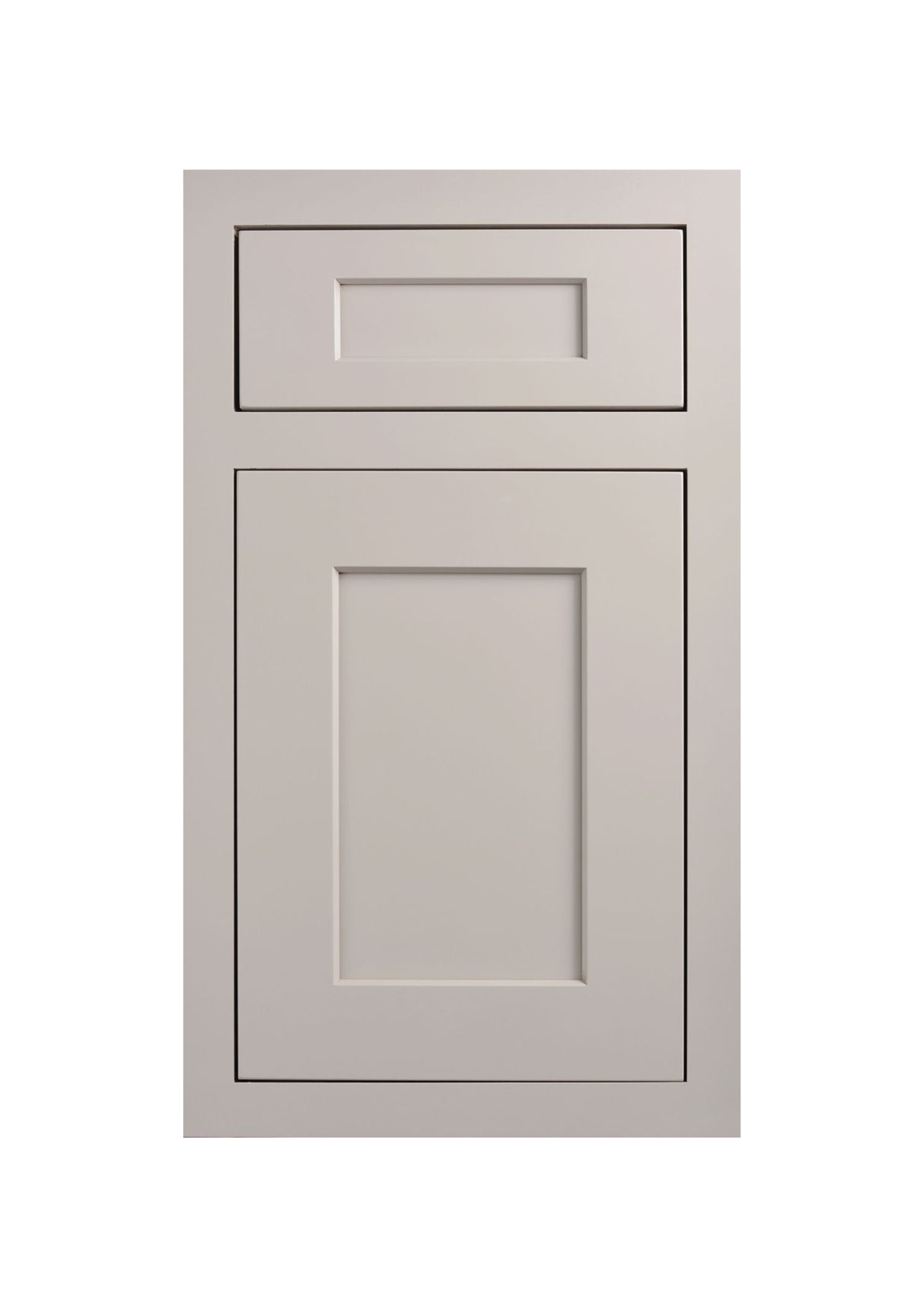
A traditional Shaker door features a recessed center panel surrounded by relatively wide rails and stiles. This framing creates a strong visual border that gives each cabinet door depth and character.
One reason traditional Shaker cabinets remain popular is their versatility. They can work equally well in farmhouse homes, transitional kitchens, craftsman houses, and even some contemporary interiors.
Their timeless design has allowed them to remain relevant despite changing trends, making them a safe choice for homeowners focused on long-term value and broad market appeal.
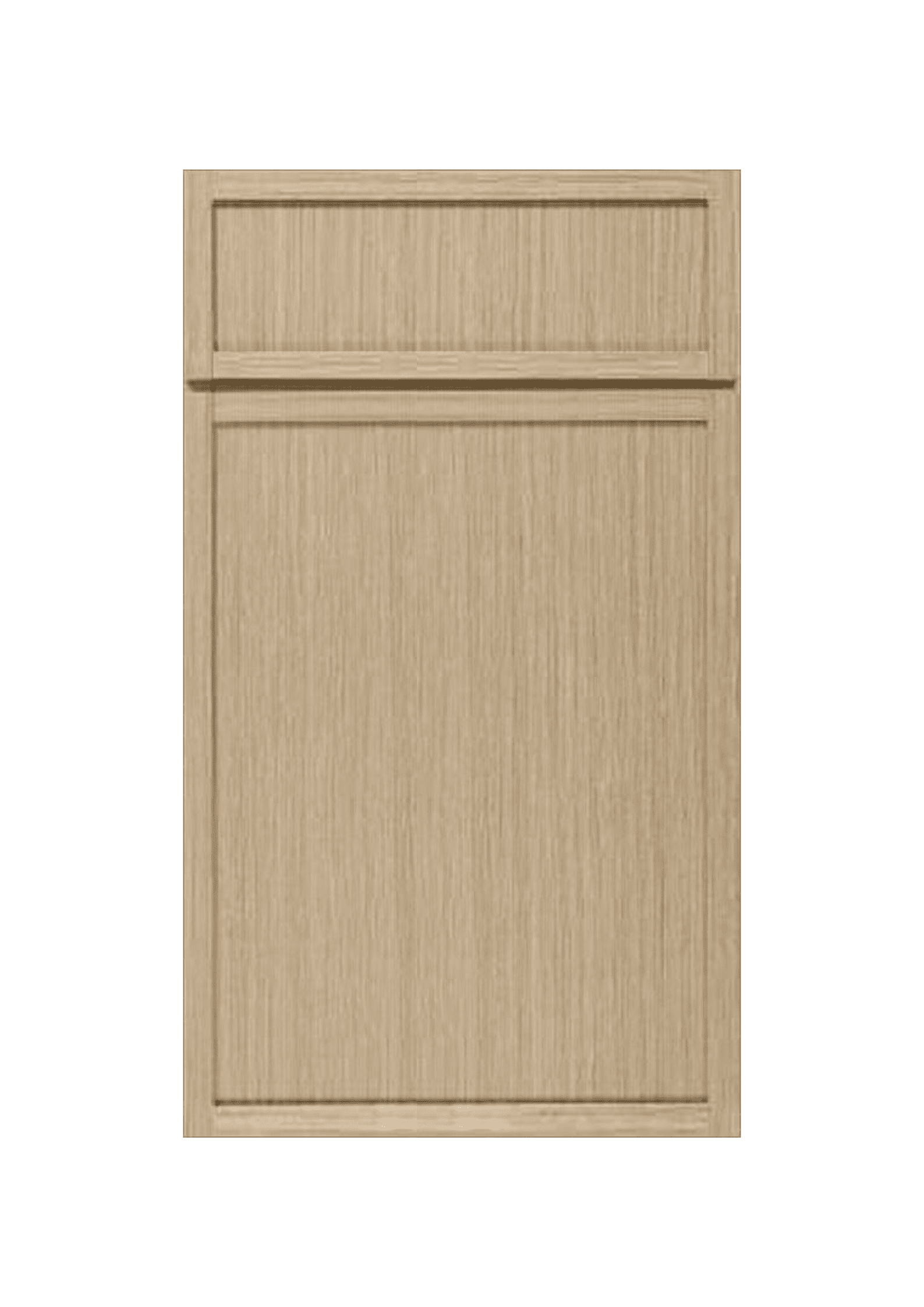
Slim shaker cabinets are a modern evolution of the classic Shaker style. Rather than using wide framing around the center panel, these cabinet doors feature narrower rails and stiles that create a cleaner, more streamlined appearance.
The slimmer frame instantly changes the visual character of the cabinetry. Instead of drawing attention to the door’s border, slim shaker cabinets emphasize simplicity and uninterrupted surfaces.
Many designers view slim shaker cabinets as the perfect middle ground between traditional Shaker doors and flat slab cabinetry. Homeowners get the detail and craftsmanship associated with Shaker construction while maintaining the sleek look often found in contemporary kitchens.
Homeowners interested in contemporary kitchen design can also explore our guide to modern shaker cabinets to see how this evolving style is being used in today’s homes.
As modern design continues to gain popularity, slim shaker cabinets have become one of the fastest-growing cabinet styles in residential remodeling.
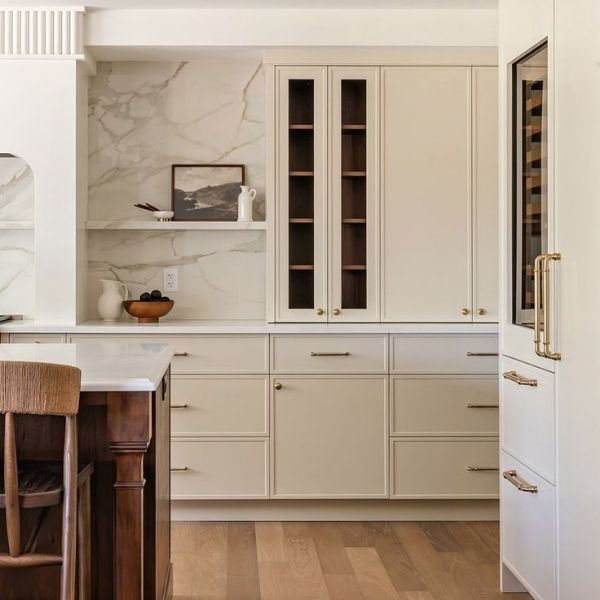
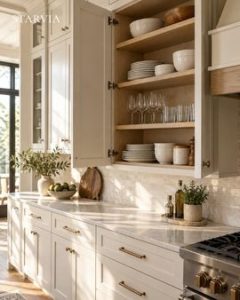
Slim shaker cabinets create a clean and modern kitchen aesthetic.
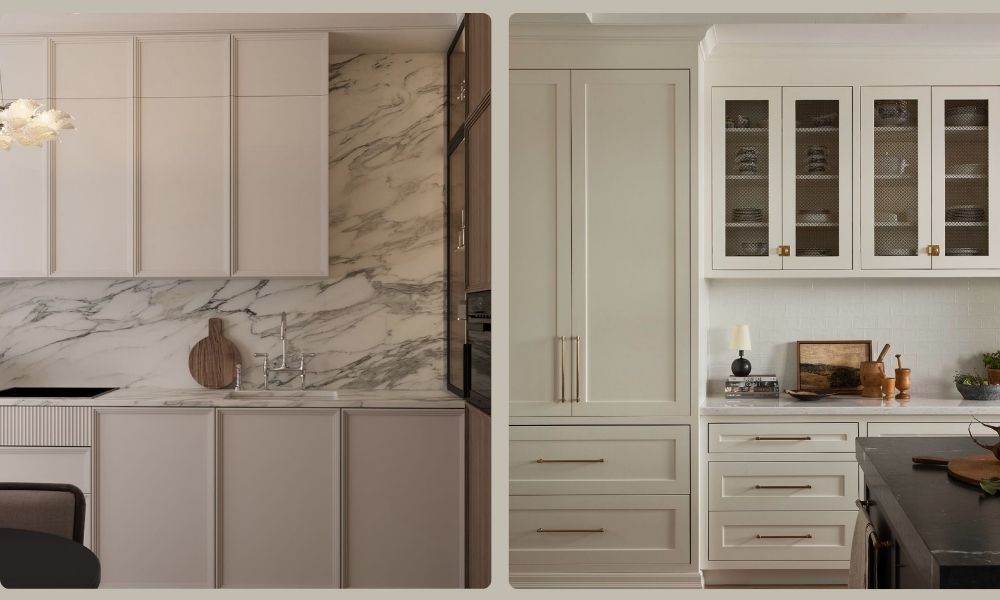
The width of cabinet rails is the biggest visual difference between the two styles.
The most important distinction between traditional and slim shaker cabinets is the width of the rails and stiles.
Traditional Shaker doors use wider framing that creates a bold and substantial appearance. The wider profile adds depth and texture to cabinetry, helping the kitchen feel more detailed and architectural.
Slim shaker cabinets, on the other hand, use significantly narrower framing. This subtle change creates cleaner sightlines and reduces visual clutter throughout the kitchen.
The impact becomes especially noticeable in larger kitchens where dozens of cabinet doors are visible at once. Narrow rails create a more seamless appearance, allowing the overall kitchen design to feel lighter and more open.
For homeowners seeking a contemporary aesthetic without completely eliminating decorative detail, slim shaker cabinets often provide the ideal balance.
One reason slim shaker cabinets have become so popular is their connection to modern European design.
European kitchens have long emphasized:
For years, slab doors dominated European cabinetry. However, many homeowners wanted a softer look that still maintained modern simplicity.
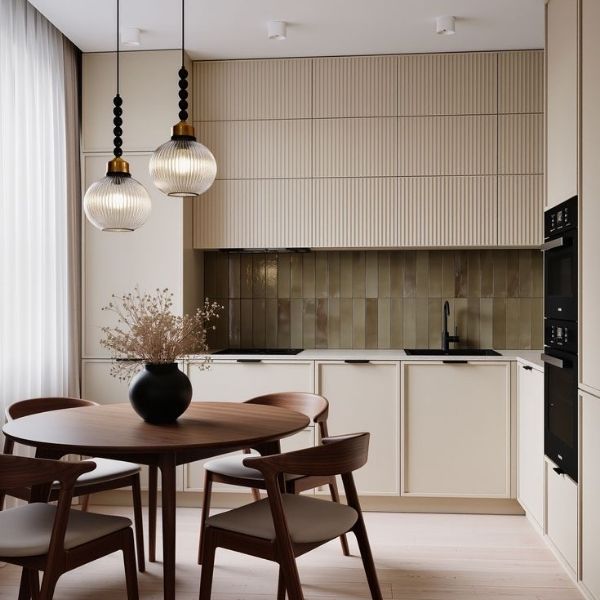
Modern European kitchens have influenced the rise of slim shaker cabinetry.
Slim shaker cabinets emerged as the perfect solution. They retain the framed construction associated with traditional cabinetry while embracing the sleek proportions common in contemporary European interiors.
Today, many luxury kitchen manufacturers incorporate European-inspired design principles into their cabinet collections, helping drive the popularity of slim shaker cabinets across North America.
The result is a cabinet style that feels sophisticated, current, and highly adaptable to modern lifestyles.
Cabinet design can have a surprising impact on how spacious a kitchen feels.
Traditional Shaker cabinets create more visual segmentation because of their wider rails and stiles. While this adds character, it can also make smaller kitchens appear slightly busier.
Slim shaker cabinets typically create the opposite effect.
Because the framing is narrower, the cabinet fronts appear larger and less interrupted. This creates cleaner visual lines that help a room feel more open.
In compact kitchens, condos, apartments, and smaller homes, slim shaker cabinets can contribute to a greater sense of spaciousness without requiring structural changes.
Many kitchen designers recommend slim shaker cabinets specifically for projects where maximizing visual openness is a priority.
When comparing slim shaker cabinets and traditional Shaker cabinets, the door profile itself does not limit your material or finish options. Both styles can be manufactured using the same cabinet construction methods and wood species, including maple, oak, walnut, MDF for painted doors, and plywood cabinet boxes.
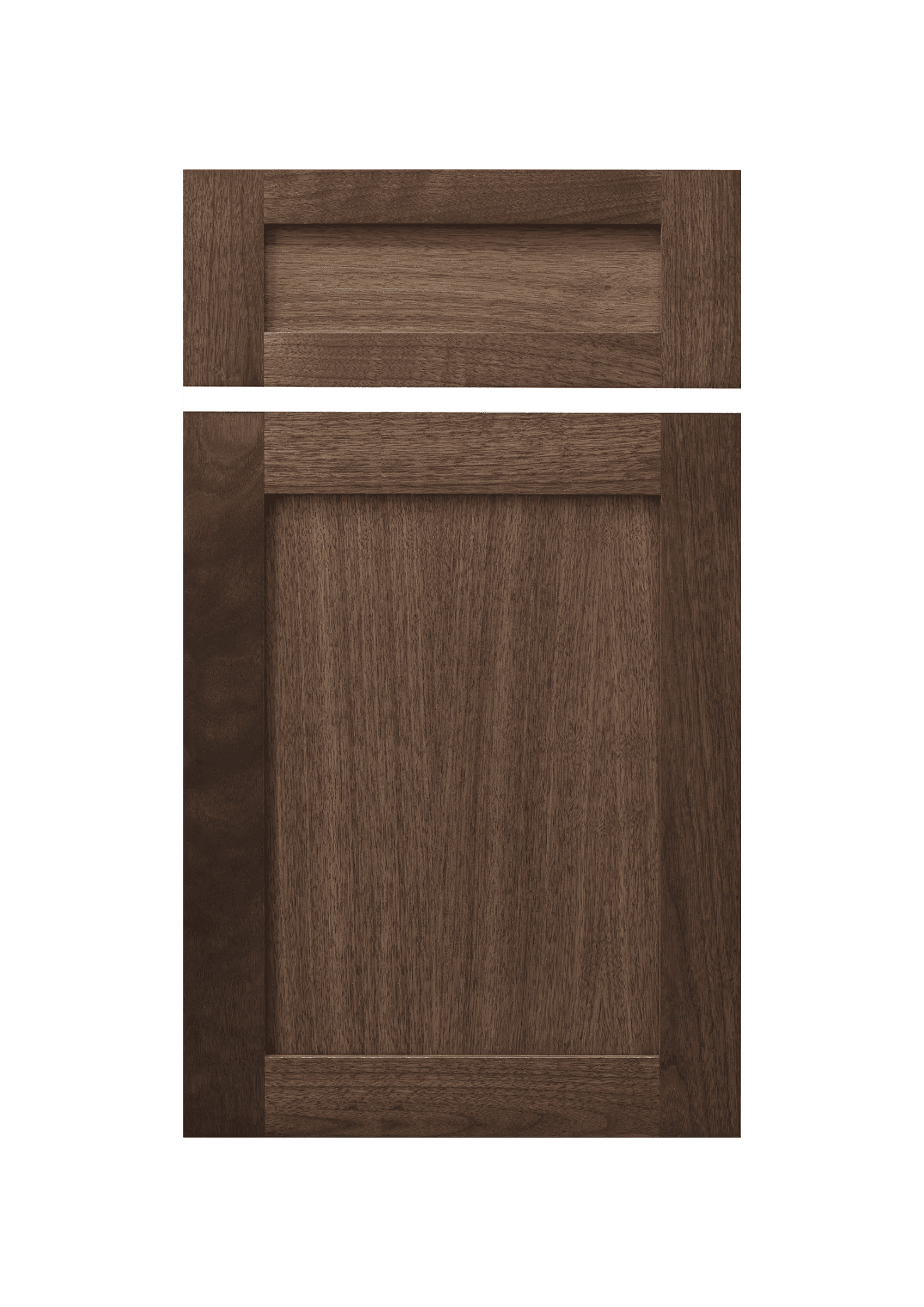
The main difference lies in how the chosen material and finish are visually presented. Traditional Shaker cabinets feature wider rails and stiles, which create more shadow lines and architectural detail. This added dimension can enhance the natural grain of wood species such as oak or walnut and complement classic painted finishes.
Slim shaker cabinets, on the other hand, have narrower framing that creates a cleaner and more streamlined appearance. Their simplified profile often works particularly well with contemporary finishes, allowing colors and wood textures to take center stage without competing with heavy door detailing.
As a result, homeowners can achieve either a traditional or modern look using many of the same materials. The overall aesthetic is influenced less by the material itself and more by how the cabinet door profile interacts with the chosen finish and the surrounding kitchen design.
Among the most popular finish choices, white shaker kitchen cabinets continue to dominate kitchen remodeling projects because of their timeless appearance and versatility.
For homeowners comparing paint colors and cabinet finishes, exploring the available collections from Sherwin-Williams can provide inspiration for both traditional Shaker and slim shaker cabinet designs.
Homeowners often assume that slim shaker cabinets are significantly more expensive than traditional Shaker cabinetry. In reality, the price difference is usually smaller than expected.
Traditional Shaker cabinets benefit from decades of mass production. Nearly every cabinet manufacturer offers some version of this design, creating intense competition and a wide range of pricing options.
Slim shaker cabinets can sometimes cost slightly more because they require greater manufacturing precision. The narrow rails leave less room for error during construction and finishing.
That said, cabinet pricing is typically driven more by factors such as material selection, construction quality, finish type, hardware, and the level of customization involved. In many projects, premium traditional Shaker cabinets may cost more than standard slim shaker cabinets simply because of the materials and features chosen.
For this reason, homeowners should evaluate the overall cabinet package rather than focusing solely on door style when comparing costs.
The right cabinet style often depends on the overall design direction of the home.
Traditional Shaker cabinets are particularly well suited to farmhouse, craftsman, colonial, transitional, and historic homes. Their wider rails and classic proportions add visual depth and architectural character, making them a natural fit for spaces that emphasize timeless design.
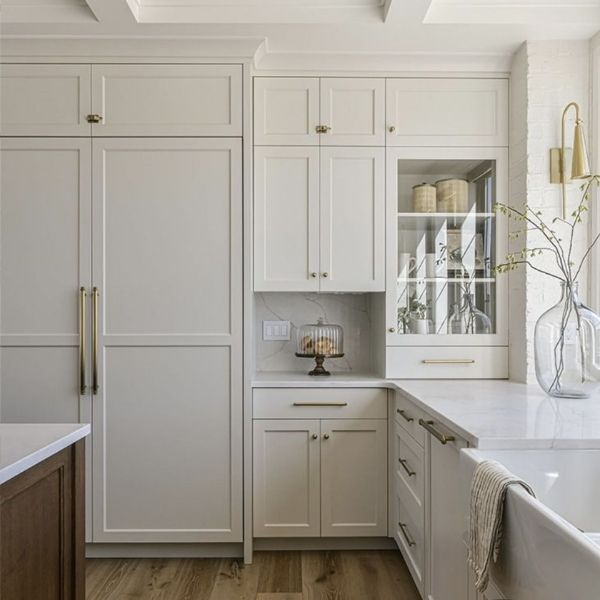
Traditional Shaker cabinets remain a favorite choice for farmhouse-style homes.
Slim shaker cabinets work especially well in contemporary kitchens, modern farmhouse interiors, Scandinavian-inspired spaces, luxury urban residences, and open-concept homes. Their streamlined appearance complements modern architecture while maintaining the warmth and familiarity associated with Shaker cabinetry.
For homeowners who want a kitchen that feels current without becoming overly trendy, slim shaker cabinets often provide an ideal balance between classic craftsmanship and modern aesthetics.
Both cabinet styles perform well from a resale perspective because Shaker cabinetry remains one of the most universally accepted kitchen designs.
Traditional Shaker cabinets offer long-term security because their popularity has remained stable for generations. They rarely feel outdated and appeal to a broad range of buyers.
Slim shaker cabinets provide a more contemporary look that aligns closely with current design preferences. Many buyers associate slim shaker cabinets with luxury renovations and high-end custom kitchens.
Neither option is likely to hurt resale value when paired with quality materials and professional installation.
The best choice depends on whether you want a classic aesthetic or a more modern interpretation of Shaker design.
Choosing between the two styles ultimately comes down to personal preference and the overall character of your home.
If you appreciate timeless design, traditional architecture, farmhouse influences, and stronger visual detailing, traditional Shaker cabinets may be the better choice. On the other hand, if you prefer modern design, minimalist interiors, European-inspired aesthetics, and cleaner visual lines, slim shaker cabinets may be a better fit for your space.
Many homeowners find that slim shaker cabinets offer the perfect balance between traditional craftsmanship and contemporary sophistication.
The choice between slim shaker cabinets and traditional Shaker cabinets is less about functionality and more about visual style. Both options deliver the durability, versatility, and timeless appeal that have made Shaker cabinetry a favorite among homeowners for generations.
Traditional Shaker cabinets provide classic proportions that work beautifully in farmhouse, transitional, and historic homes. Slim shaker cabinets bring a fresh perspective to the same design philosophy, offering a cleaner and more contemporary look that complements modern lifestyles.
If your goal is to create a sleek, sophisticated kitchen with subtle European influence, slim shaker cabinets may be the ideal solution. If you value timeless character and architectural detail, traditional Shaker cabinets remain one of the safest and most enduring choices available.
No matter which style you choose, investing in quality materials and expert craftsmanship will ensure your cabinetry enhances both the beauty and value of your home for years to come.

 View collection
 View collection
 View collection
 View collection