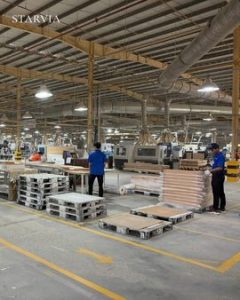
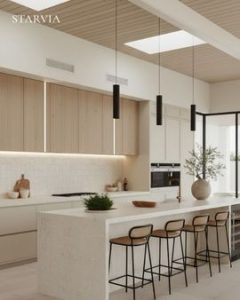
- Our Products
-
Choose your Cabinet Style
-

If you are searching for a raised panel kitchen cabinets manufacturer Vietnam buyers can rely on for consistent profiles, CARB-certified materials, and predictable FOB pricing, this guide covers everything a wholesale importer, contractor, or developer needs before placing a container order in 2026. We break down construction specs, real FOB numbers, certification requirements, and the sourcing mistakes that cost first-time importers the most money.
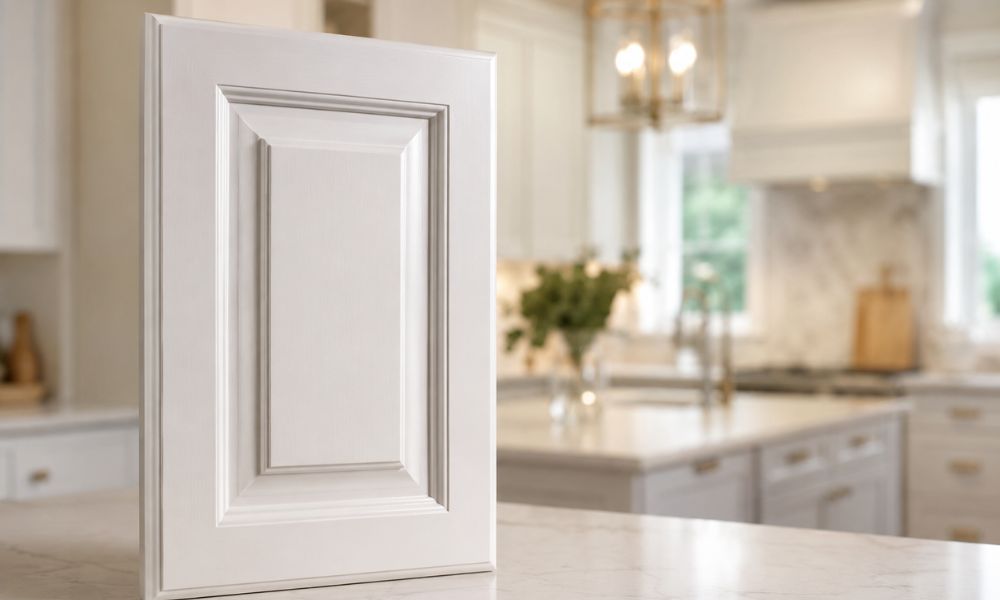
Anatomy of a raised panel cabinet door.
A raised panel door is built from a solid or engineered center panel that sits recessed by roughly 3/8″ to 1/2″ at its edges, then rises to meet the level of the surrounding frame, creating a sculpted, dimensional look. This is the opposite of a flat or shaker panel, which stays flush with the frame. Traditional raised panel doors are milled from solid poplar, oak, or maple, while cost-efficient wholesale versions use MDF cores with a wood veneer or thermofoil wrap to keep pricing stable across large production runs.
Because the panel profile is CNC-shaped rather than hand-carved, tolerance control matters. A qualified raised panel kitchen cabinets manufacturer Vietnam facility uses 5-axis CNC routers to keep the panel radius and reveal line consistent across thousands of doors in a single container order, something hand-finished shops in smaller markets often cannot guarantee at scale.
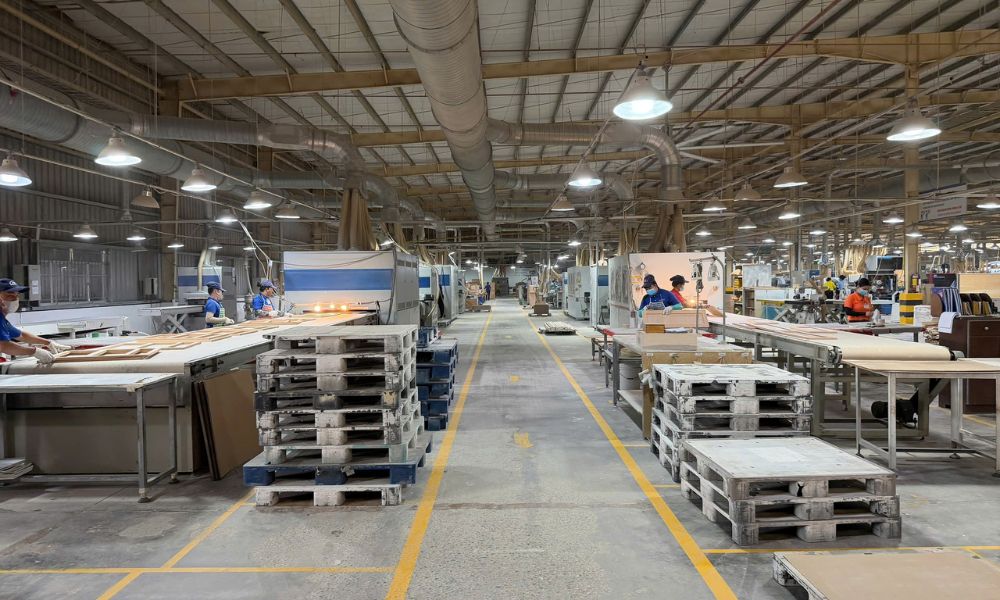
Advanced CNC manufacturing for raised panel cabinets.
US importers have shifted sourcing toward Vietnam for three structural reasons: tariff exposure on Chinese-made cabinetry, consistent CARB Phase 2 / TSCA Title VI compliance, and factory capacity that has scaled significantly since 2020. Vietnam’s cabinet export sector now ships an estimated 150+ containers per month from mid-size factories alone, with raised panel profiles remaining a steady request from traditional and transitional-style home builders in the Southeast and Midwest US markets.
Choosing a raised panel kitchen cabinets manufacturer Vietnam over a domestic finishing shop typically cuts landed unit cost by 30-45%, even after freight, duty, and inland trucking are factored in, provided the buyer works with a factory that offers direct FOB pricing rather than a trading-company markup. Housing starts data also matters here: with US housing starts running around 1,177,000 units annualized in May 2026 and the NAHB Housing Market Index sitting near 35/100, builders are more price-sensitive than in prior cycles, which pushes more mid-market and traditional-style projects toward OEM import pricing rather than domestic custom shops.
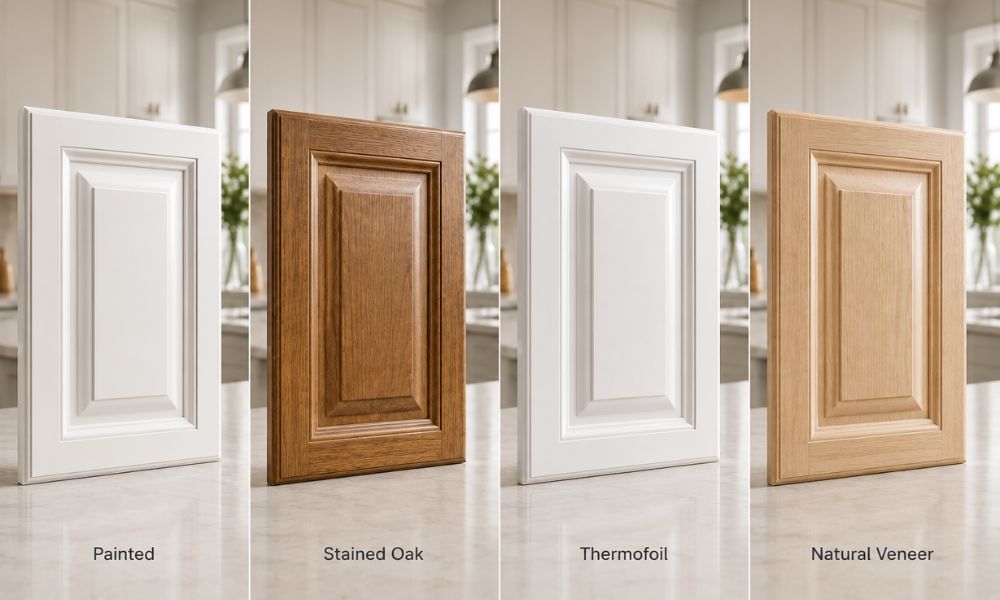
Popular finish options for raised panel cabinet doors.
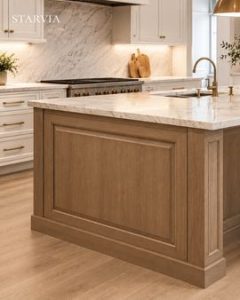
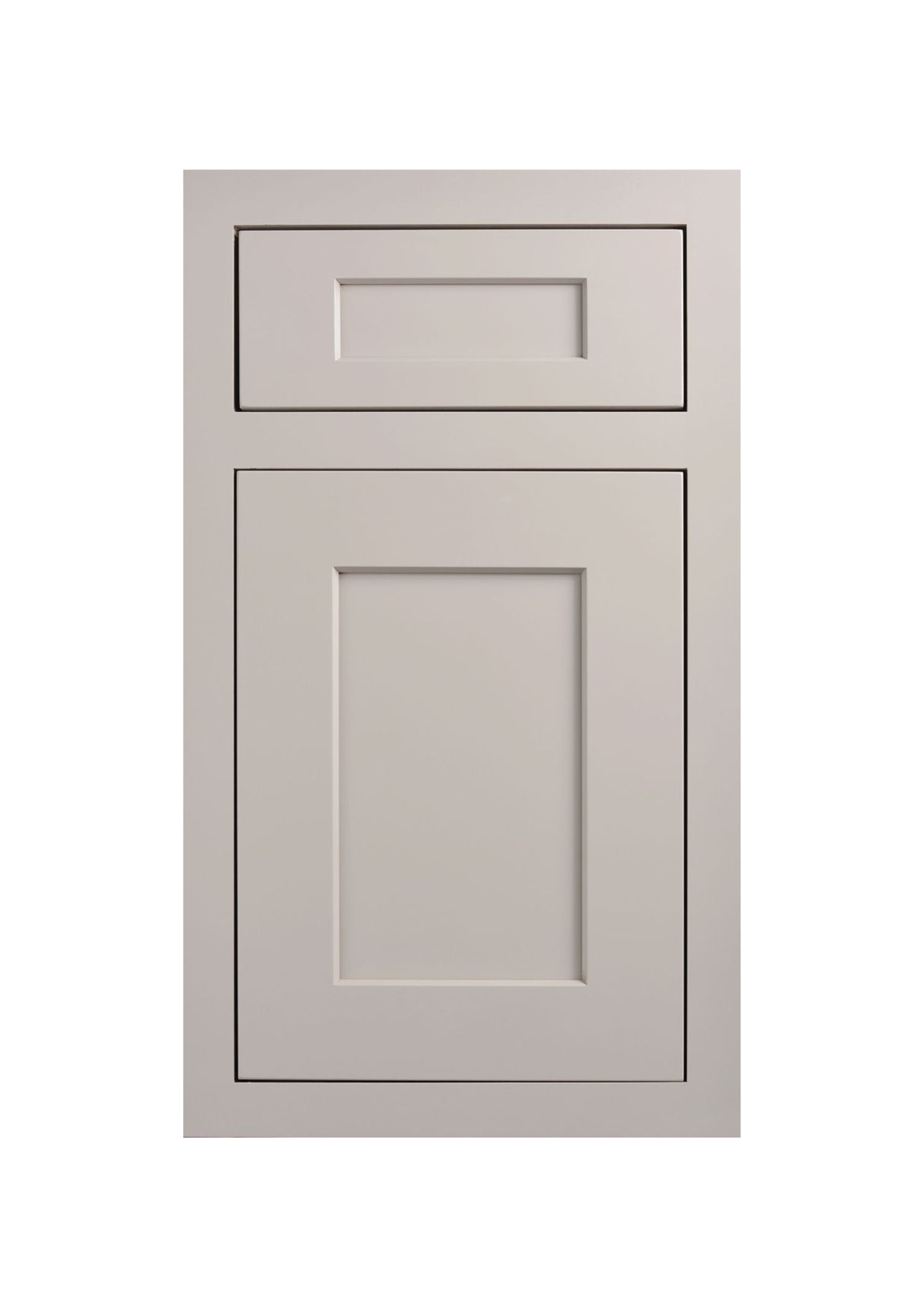
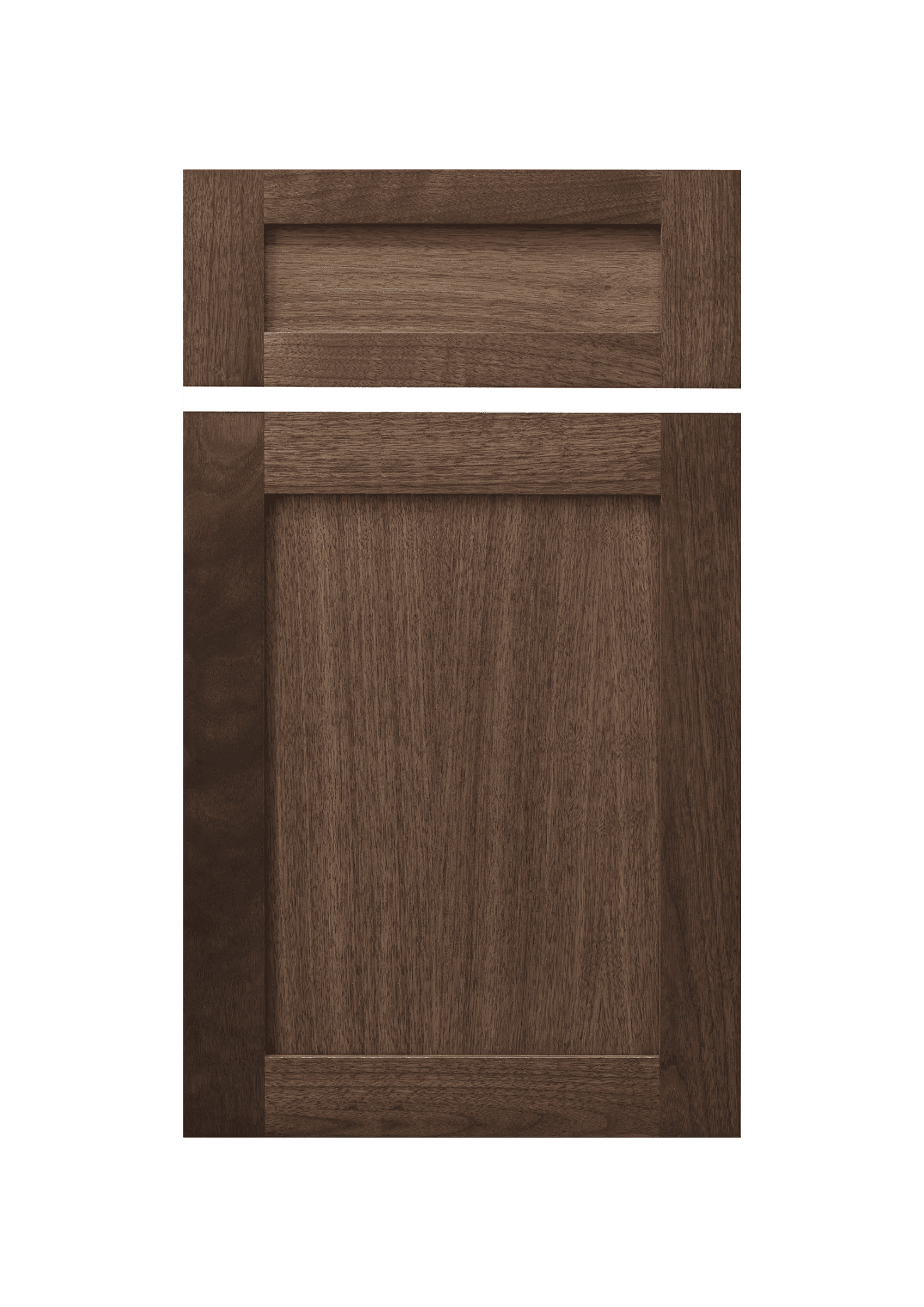
Color and finish selection has shifted even where the raised panel profile itself has stayed traditional. The strongest-selling finishes from a raised panel kitchen cabinets manufacturer Vietnam in 2026 are warm off-whites and creams replacing stark white, deep navy or forest green as an accent color on islands, greige and warm taupe tones, and traditional stained oak or maple for rustic or farmhouse-adjacent projects. Two-tone kitchens, a painted raised panel perimeter paired with a stained or contrasting island, remain one of the highest-margin configurations for wholesale buyers reselling to remodel-focused contractors.
Glazed and distressed raised panel finishes have declined sharply in new orders and are best treated as a custom, low-volume request rather than a standard catalog SKU. Buyers building a 2026 catalog should weight orders toward warm neutrals and two-tone combinations, since these SKUs sell through faster on the retail and remodel side than traditional glazed finishes.
First-time importers run into the same handful of problems repeatedly. Skipping the physical door sample before committing to a full container is the most expensive mistake, since panel depth, sheen level, and color can all read differently in photos than in person. Second, buyers often quote FOB price only and get surprised by inland freight, customs bond, and drayage costs at the destination port; always request a landed-cost estimate rather than comparing FOB numbers alone. Third, not every raised panel kitchen cabinets manufacturer Vietnam factory that claims CARB compliance can produce a current certificate on request, so always verify the certificate number directly rather than accepting a claim on a spec sheet. Finally, ordering mixed door styles, such as raised panel plus shaker or flat panel, in the same container without confirming the factory runs all three profiles on one line can add unplanned lead time and delay the whole shipment.
A related mistake is underestimating packaging requirements. Raised panel doors have a higher profile than flat panel doors, so corner protection and edge banding matter more during ocean transit; a factory experienced with raised panel exports will already account for this in their standard packaging spec rather than charging it as a change order later.
It’s worth being direct with buyers: national design surveys, including data cited by the National Kitchen & Bath Association (NKBA), show flat slab and slim shaker doors now account for the majority of new installs, while heavily ornamented raised panel styles have declined in new-construction specs. That said, raised panel demand has not disappeared, it has concentrated. Resale-focused developers, traditional and transitional remodels, rental property portfolios, and buyers in the Northeast and Midwest continue to specify raised panel doors because they read as “finished” and higher-value to a broader range of home buyers than a flat slab door.
For an OEM buyer, this means raised panel inventory should be planned as a steady, moderate-volume SKU rather than a high-growth line, and a flexible raised panel kitchen cabinets manufacturer Vietnam partner that can also produce shaker and flat-panel doors on the same line gives more pricing leverage across a mixed container order. Treating raised panel as one SKU within a broader catalog, rather than a standalone product line, is generally the more profitable strategy for wholesale importers in the current market.
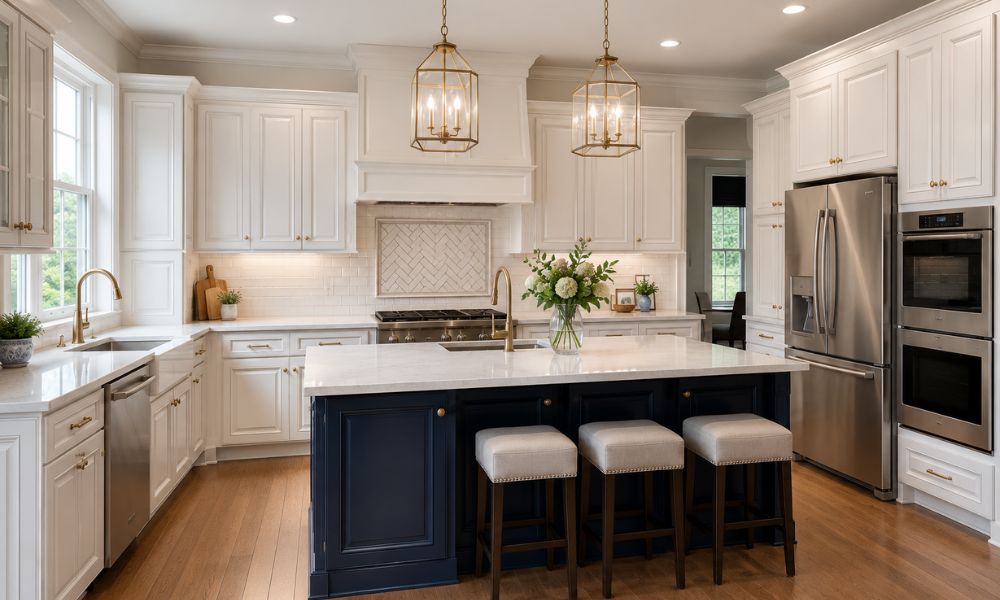
Completed raised panel kitchen cabinet project.
Starvia operates production facilities in Vietnam, Vietnam, totaling roughly 1,000,000 sq ft of production floor with about 1,000 employees and Homag CNC lines holding plus or minus 0.5mm tolerance. For raised panel doors specifically:
Every specification sheet is confirmed with the buyer before production, and a physical door sample ships prior to the full container run so importers can verify panel depth, sheen, and color match before committing to volume. This sample-first workflow is the single biggest factor separating a reliable raised panel kitchen cabinets manufacturer Vietnam partner from a trading company reselling unverified factory capacity.
As of Q2 2026, FOB Hai Phong pricing for a raised panel kitchen cabinets manufacturer Vietnam typically runs:
Freight remains a real variable. Trans-Pacific westbound container rates have hovered near $3,200/FEU and East Coast routings near $5,000/FEU in mid-2026, according to freight index data tracked by Freightos. Buyers should request an all-in landed cost quote rather than FOB alone when comparing suppliers, since two factories quoting similar FOB numbers can land very differently once freight class, port fees, and duty are applied. It is also worth noting that Section 232 tariff treatment on Vietnam-origin cabinetry is scheduled to rise from 25% to 50% starting January 1, 2027, which is pushing many importers to lock in 2026 pricing and volume now rather than wait.
Formaldehyde emissions compliance is non-negotiable for US import clearance. Starvia holds CARB Phase 2 certification, No. CARB/EPA23072, valid through July 12, 2026, aligned with the California Air Resources Board’s composite wood regulation and equivalent EPA TSCA Title VI standards. When vetting any raised panel kitchen cabinets manufacturer Vietnam, buyers should request the current CARB certificate number directly and verify it against the manufacturer’s listed scope, since certifications are product- and facility-specific rather than blanket approvals covering an entire company.
Buyers selling into markets with additional sustainability requirements, or supplying developers with green-building targets, should also ask whether the factory offers FSC chain-of-custody documentation for raised panel doors built from solid wood components, since this is a separate certification from formaldehyde emissions compliance.
A typical B2B order process runs in five steps: first, share cabinet specs, door counts, and finish preferences; second, receive a formal quote and door sample; third, approve the sample and sign a production order with deposit; fourth, factory production and pre-shipment QC inspection, typically at AQL 2.5; fifth, container loading, ocean freight, and customs clearance at the destination port. Most first-time buyers should budget 10-12 weeks from initial quote to cabinets landing at a US port, and experienced importers typically build in an extra one to two weeks of buffer around Vietnamese public holidays such as Tet, which can affect factory scheduling.
Flat slab and shaker styles now lead new-construction specs, but raised panel doors remain a steady seller for resale-focused, traditional, and transitional projects, particularly outside major coastal metro markets.
Most factories, including Starvia, set MOQ at one 40ft container, which typically covers 25-35 kitchen sets depending on door size and configuration.
FOB pricing generally ranges from $42,000 for melamine-core lines to $72,000 for painted plywood-core lines per 40ft container, depending on finish and hardware specification.
A properly sealed MDF-core raised panel with a quality veneer or paint finish performs comparably to solid wood in kitchen environments and resists warping better in humid climates, though solid wood retains a premium market position.
Always request the current CARB Phase 2 or EPA TSCA Title VI certificate number, a recent third-party lab test report, and, if relevant to your market, FSC chain-of-custody documentation.
Ocean transit runs approximately 18-22 days to West Coast ports like LA/Long Beach and 28-32 days to East Coast ports, on top of 35-45 days production lead time.
Yes, most established factories run multiple door profiles on the same production line, so a single 40ft container can combine raised panel, shaker, and flat panel SKUs as long as door counts and finishes are confirmed at the quoting stage.
Raised panel cabinetry still has a defined, profitable place in the US market even as flat and shaker styles dominate new builds. The buyers who win are the ones who lock in a raised panel kitchen cabinets manufacturer Vietnam partner with verified CARB certification, transparent FOB pricing, and a sample-first process that removes guesswork before a full container ships. Starvia has produced raised panel and traditional-style cabinet lines for US importers since 2002, with two CARB-certified factories and direct FOB quoting.
Ready to get a quote on your raised panel cabinet order? Contact Starvia’s export team for a door sample and container-level pricing within 24 hours.
 View collection
 View collection
 View collection
 View collection