- Our Products
-
Choose your Cabinet Style
-

Corner cabinet solutions Vietnam OEM buyers evaluate almost always come down to one decision: lazy susan or blind corner. Both solve the same problem – the dead space created where two runs of cabinetry meet at 90 degrees – but they solve it in very different ways, at very different price points.
This guide breaks down how the two mechanisms compare on storage, accessibility, hardware cost, and what to specify when sourcing corner cabinet solutions Vietnam OEM factories can actually produce at container volume.
A lazy susan is a rotating shelf system, usually circular or kidney-shaped, mounted on a center post inside a corner cabinet. Spinning the shelves brings stored items around to the open door, making it the more accessible of the two options for frequently used cookware and pantry goods.
A blind corner cabinet takes a different approach entirely. It uses a single door on the front-facing side of the corner run, opening into a deep, mostly hidden compartment that extends behind the neighboring cabinet run. Pull-out trays or swing-out shelving systems are typically added to make that hidden space usable.
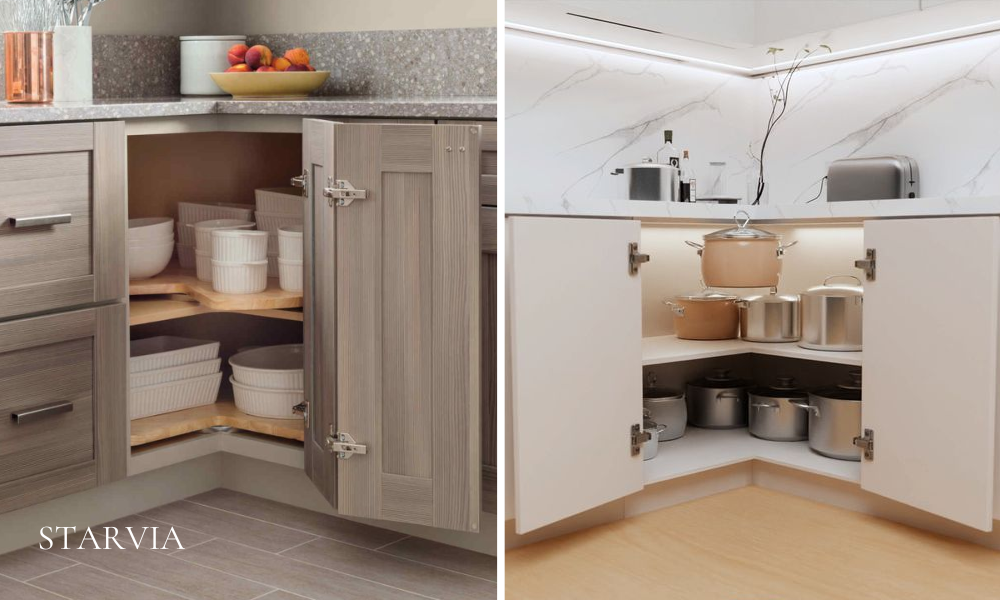
Lazy susans improve accessibility, while blind corner cabinets maximize storage volume.
Blind corner cabinets generally win on raw storage volume. The compartment behind a blind corner door can hold larger, bulkier items – mixing bowls, small appliances, oversized pots – that would leave awkward gaps on a circular lazy susan tray.
Lazy susans win on accessibility. Because the shelves rotate directly into view, there’s no reaching into a dark cavity to find what’s stored at the back. This makes lazy susans a common choice for spice storage, canned goods, and other small, frequently accessed items.
Neither option is universally better. Corner cabinet solutions Vietnam OEM buyers spec for a given project should be matched to the end customer’s storage habits, not chosen by default across an entire product line.
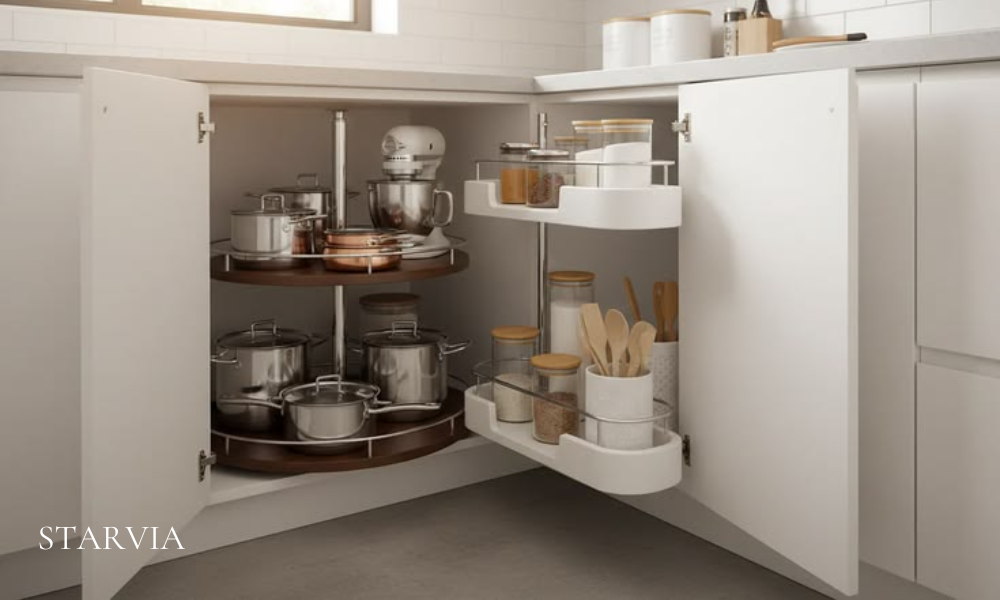
High-quality hardware improves durability and user experience.
The mechanism inside a corner cabinet matters as much as the cabinet box itself. Full-round and kidney lazy susan hardware is dominated by a small number of established brands: Rev-A-Shelf, Hafele, and Kessebohmer are the three most commonly specified across US wholesale cabinet programs.
Hafele’s LeMans II system is a well-known blind corner mechanism, using a swing-out arm design that pulls shelving out and around the blind corner door rather than requiring a buyer to reach into the cavity. Buyers comparing corner cabinet solutions Vietnam OEM factories offer should ask specifically which of these hardware brands is used, rather than accepting a generic “soft-close lazy susan” description.
Soft-close functionality is now close to standard across both mechanism types, but the underlying bearing and post quality varies significantly between hardware tiers. A lazy susan built on a lower-grade bearing will develop wobble and drag well before a Rev-A-Shelf or Hafele unit does.
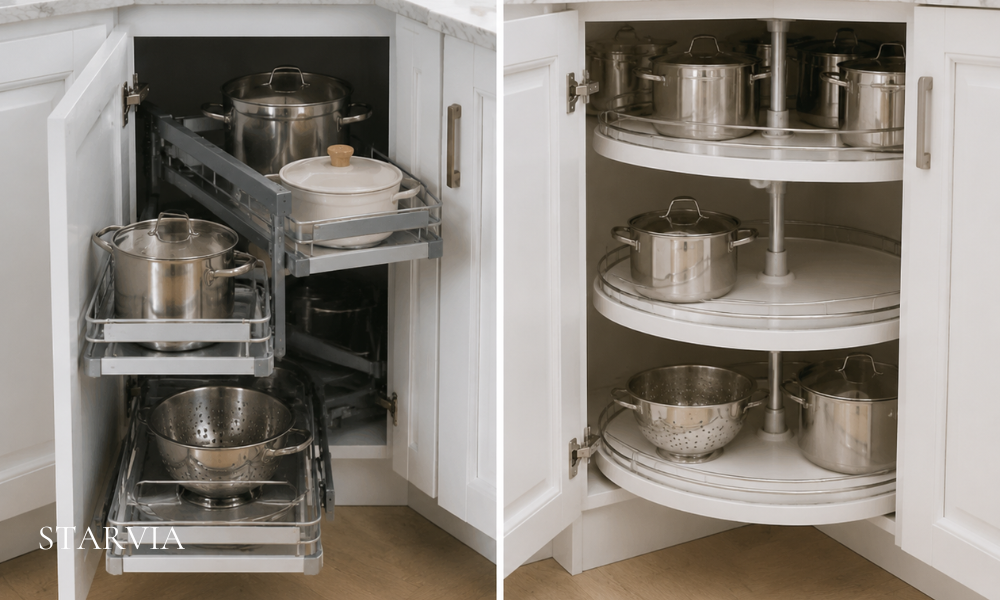
Hardware complexity is one of the biggest cost differences between these two corner cabinet solutions.
Blind corner cabinets are typically the lower-cost option at the box level, since they require less specialized hardware – often just heavy-duty pull-out trays rather than a rotating post assembly. The trade-off is that the usable storage behind the blind panel is harder to access, which is a functional cost rather than a dollar one.
Lazy susan units carry a meaningful hardware premium, particularly full-round designs with three-tier revolving trays. Buyers speccing corner cabinet solutions Vietnam OEM production runs should expect the lazy susan line item to add measurably more to the per-unit cost than a comparable blind corner cabinet, primarily driven by the rotating hardware rather than the cabinet box construction.
For buyers tracking total container economics, our kitchen cabinet FOB price guide for Vietnam breaks down how hardware upgrades like corner solutions typically affect per-container FOB pricing across melamine and plywood product lines.
Remodelers and dealers serving budget-conscious homeowners tend to default to blind corner cabinets, since the lower hardware cost keeps the overall kitchen quote competitive without sacrificing usable storage volume. This is especially common on rental-property and builder-grade projects where cost per unit matters more than convenience features.
Higher-end residential projects lean toward lazy susans, particularly full-round designs, because the rotating access is viewed as a visible upgrade feature during a showroom walkthrough. A spinning shelf demonstrates well in person in a way a blind corner pull-out simply does not.
Distributors serving both segments often stock both mechanism types rather than standardizing on one, since the right answer depends on the specific kitchen layout and the end customer’s budget tier, not a fixed company policy. A sourcing partner that can produce both mechanisms at consistent quality gives a distributor more flexibility than one that only handles a single corner solution well.
The most frequent mistake is ordering corner cabinet boxes and hardware from different sources without confirming fit tolerances match. A cabinet box built to one factory’s standard opening dimension will not necessarily accept a lazy susan post assembly sized for a different factory’s standard, even when both claim to be a common nominal size.
A second common mistake is assuming “lazy susan included” on a spec sheet means a specific hardware tier. Some suppliers use that phrase to describe a basic single-tier rotating shelf, while others mean a full three-tier Hafele or Rev-A-Shelf assembly. Buyers should always ask for the specific hardware model or brand rather than accepting the generic phrase.
A third mistake, more relevant to first-time importers, is underestimating how much corner cabinet hardware adds to overall container weight and volume. Rotating post assemblies and heavy-duty pull-out trays are bulkier than standard shelving, which can affect how many units fit per container and shift per-unit freight allocation.
Buyers sourcing corner cabinet solutions Vietnam OEM factories produce should specify four things clearly on the purchase order: the mechanism type (lazy susan or blind corner), the hardware brand or equivalent, the cabinet opening dimensions the corner unit needs to fit, and the finish or coating on any exposed metal components.
Cabinet opening dimensions matter more for corner units than for standard base cabinets, since a lazy susan post assembly has fixed diameter options and a blind corner pull-out system has fixed extension lengths. A mismatch between the ordered cabinet box and the corner hardware dimensions is one of the more common quality-control issues on first-time OEM orders.
Our own kitchen cabinet hardware guide for wholesale buyers covers how to document hardware specifications on a purchase order so cabinet boxes and corner mechanisms arrive matched and ready to install.
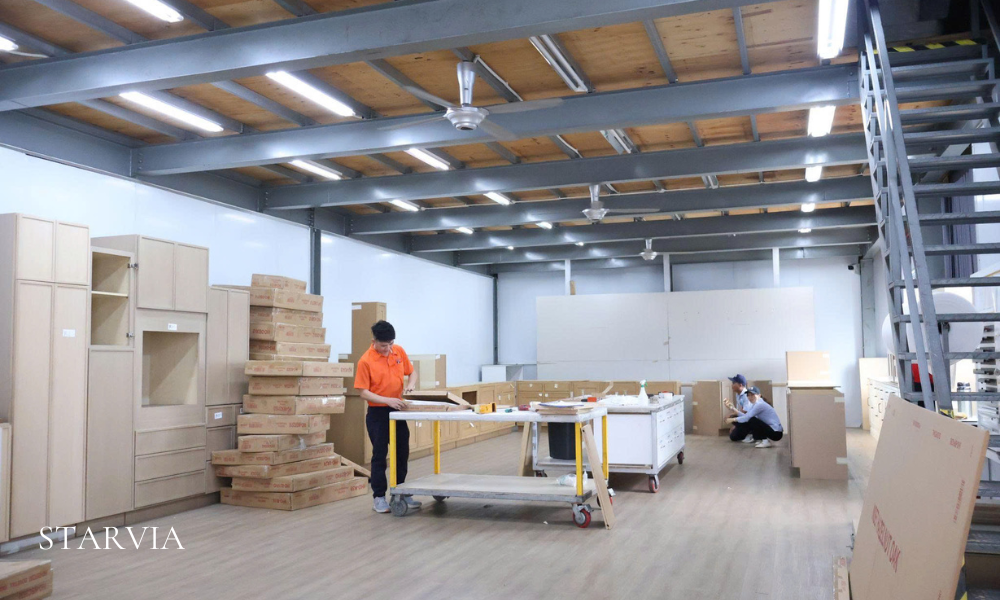
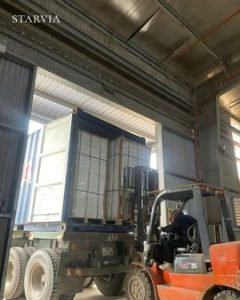
Every cabinet is inspected for dimensions, finish quality and hardware before packaging.
A Vietnam OEM factory that regularly produces corner cabinet solutions should be able to provide cycle-test data on the rotating or sliding mechanism, not just the cabinet box itself. Ask for the rated number of open-close or rotation cycles, similar to how hinge and drawer slide cycle ratings are documented.
CNC precision on the cabinet opening also matters more for corner units than standard cabinetry, since the hardware has to fit within a tighter tolerance to operate smoothly. Our factory runs Homag CNC equipment with ±0.5mm tolerance control, which keeps corner cabinet openings consistent across a full container order rather than varying box to box.
Cabinet hardware performance testing methodology in the US broadly follows structural and cycle-test frameworks published by industry bodies such as the Kitchen Cabinet Manufacturers Association. Buyers can use these published test categories as a reference point when asking any factory, Vietnam-based or otherwise, to document mechanism durability, even where formal certification against a specific standard is not held.
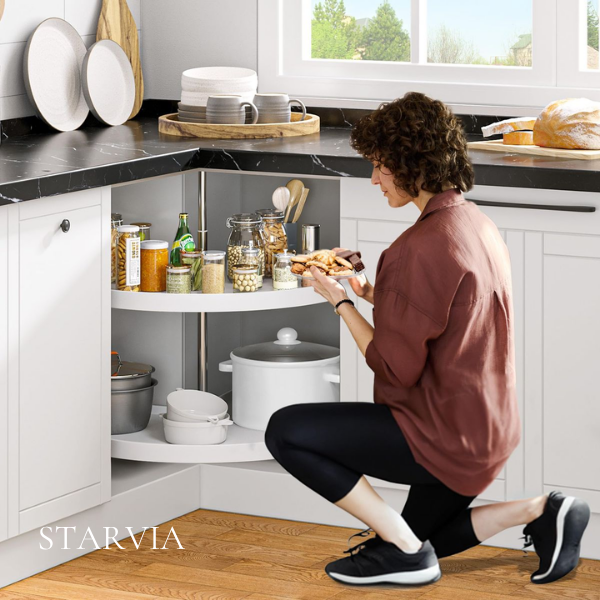
Proper clearance is essential for smooth operation of corner cabinet mechanisms.
Corner cabinet solutions Vietnam OEM factories produce still need to be matched to the specific kitchen layout at install time, not just ordered as a generic SKU. Blind corner cabinets require enough clearance on the adjoining cabinet run for the pull-out mechanism to fully extend without hitting an island or appliance.
Lazy susan units need vertical clearance above the top shelf tier for the post assembly, which can be a problem in kitchens with lower upper cabinets or soffits. Installers who receive corner units without checking these clearances in advance are a common source of post-installation change orders.
Buyers managing multi-unit projects, such as multifamily developments, benefit from standardizing corner cabinet dimensions across unit types where the floor plan allows it, reducing the number of distinct SKUs a factory needs to produce and ship within a single container order.
Which is cheaper: lazy susan or blind corner cabinets?
Blind corner cabinets are typically less expensive at the hardware level, since they use pull-out trays rather than a rotating post assembly. Lazy susans carry a hardware premium, especially full-round three-tier designs.
What hardware brands are most common for lazy susans?
Rev-A-Shelf, Hafele, and Kessebohmer are the three brands most frequently specified in US wholesale cabinet programs for lazy susan mechanisms.
Can a Vietnam OEM factory match a specific hardware brand?
Most factories can source and install branded hardware like Hafele or Rev-A-Shelf on request, or offer an equivalent-spec alternative. Buyers should confirm which option applies before finalizing a purchase order.
Do corner cabinet mechanisms need separate cycle-test documentation?
Yes. The rotating or sliding mechanism should carry its own cycle rating, separate from hinge and drawer slide ratings on the rest of the cabinet line.
How much does corner hardware add to per-container cost?
It varies by mechanism and brand, but lazy susan hardware, especially full-round three-tier designs, typically adds more to the per-unit cost than blind corner pull-out trays. Buyers should request a hardware-specific cost breakdown rather than a bundled cabinet price.
Should MOQ affect which corner solution a buyer chooses?
Not directly, but factories may have different lead times for specialty hardware depending on stock levels. Our guide to minimum order quantity at a Vietnam factory covers how hardware upgrades can affect standard MOQ and lead-time terms.
Corner cabinet solutions Vietnam OEM programs specify are a small percentage of a typical kitchen order by unit count, but they are disproportionately visible to end customers, since corner cabinets sit at a high-traffic point in most kitchen layouts. Getting the mechanism, hardware brand, and fit right matters more than the line item cost might suggest.
Standards bodies like the National Kitchen and Bath Association continue to publish guidance on corner storage ergonomics, reflecting how much attention this single cabinet type gets in kitchen design relative to its share of total cabinet count.
There is no universally correct answer between the two mechanisms, only a better fit for a given kitchen layout, budget tier, and end customer. What matters most is that the choice is made deliberately, with clear hardware specifications on the purchase order, rather than left to a generic cabinet-line default.
To review hardware options and pricing for corner cabinet solutions on an upcoming order, get in touch with our Vietnam OEM team before finalizing specifications.

 View collection
 View collection
 View collection
 View collection