- Our Products
-
Choose your Cabinet Style
-

Veneer cabinets have become one of the most preferred cabinetry solutions in modern kitchen and interior design. Across residential homes, luxury apartments, hospitality developments, and multifamily projects, designers and manufacturers increasingly choose veneer cabinetry because it combines the natural appearance of real wood with scalable and efficient production capabilities.
As modern interior trends continue moving toward warmer textures and minimalist aesthetics, modern veneer cabinets are now widely used in both residential and commercial environments. Many homeowners and developers prefer this cabinetry solution because it delivers the visual depth of authentic wood while maintaining better dimensional stability than many traditional solid wood constructions.
Today, wood veneer kitchen cabinets are commonly found in contemporary kitchens that prioritize clean lines, natural finishes, and long-term design flexibility. At the same time, buyers often compare veneer vs laminate cabinets to better understand differences in appearance, durability, and project suitability.
This article explains how veneer cabinetry is manufactured, why veneer cabinet doors remain popular in modern kitchens, and whether veneer cabinets are durable enough for long-term residential and commercial use.
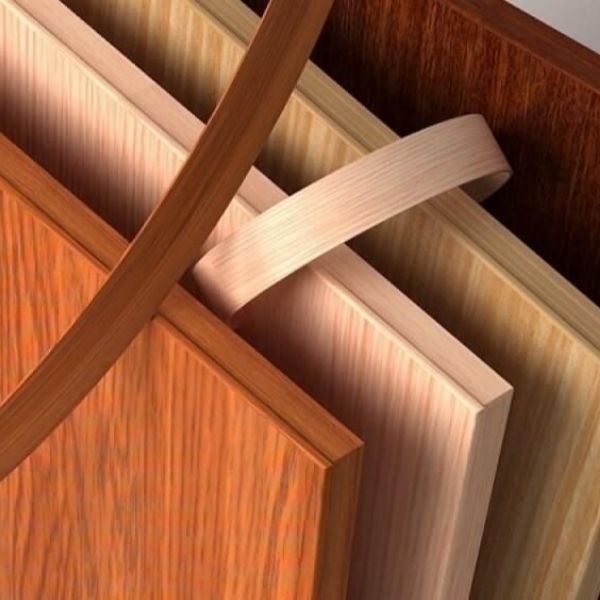
Veneer cabinets use real wood veneer bonded onto engineered core materials.
Veneer cabinets are cabinets constructed using a thin layer of real wood veneer bonded onto an engineered core material such as plywood, MDF, or particle board. Instead of using solid hardwood throughout the cabinet structure, manufacturers apply natural wood sheets onto stable substrate panels to achieve the appearance of authentic wood while improving production consistency and reducing material movement.
Because veneer surfaces use genuine wood, veneer cabinets still preserve natural grain variation, texture depth, and the visual warmth associated with hardwood materials. However, the engineered core underneath provides better dimensional stability, which helps reduce problems caused by humidity and environmental changes.
This manufacturing method has become increasingly important in modern cabinet production because it allows factories to achieve:
Many export-oriented cabinet manufacturers now use veneer systems in both residential and commercial projects because they support premium aesthetics while remaining practical for large-scale production.
Common veneer finishes include white oak, walnut, ash, maple, smoked veneer surfaces, and matte natural wood finishes. These materials are widely used in contemporary kitchens, hospitality interiors, and luxury residential developments.
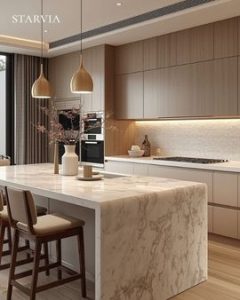
Modern veneer cabinets closely align with current interior design trends that emphasize natural materials, clean architectural lines, and minimalist aesthetics. In recent years, both homeowners and designers have shifted toward warmer and more organic kitchen environments instead of highly decorative or glossy cabinet styles.
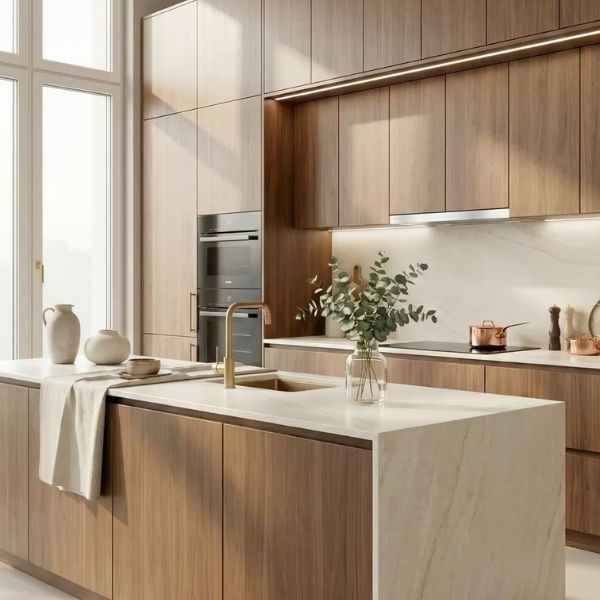
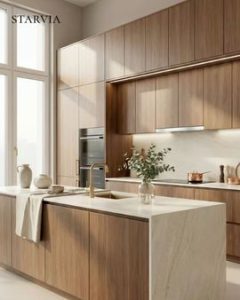
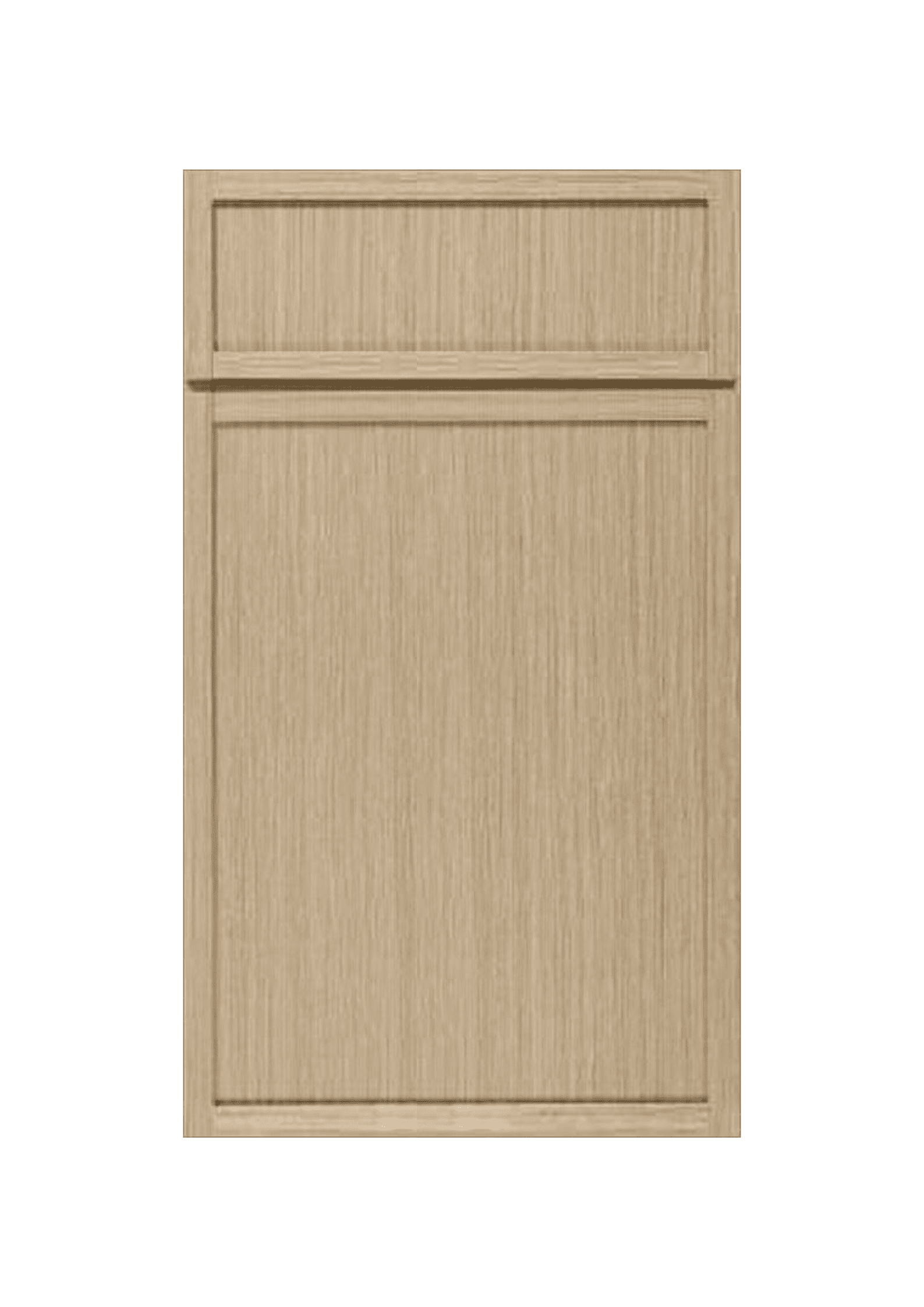
Oak veneer cabinets are widely used in contemporary minimalist kitchens.
One of the biggest reasons for this growing demand is the authentic appearance of natural wood veneer. Since the surface layer uses real wood, every cabinet maintains unique grain patterns and texture variation that synthetic materials often struggle to replicate convincingly. This creates a softer and more sophisticated appearance within contemporary spaces.
Modern veneer cabinets also provide better balance in kitchens that combine:
Beyond aesthetics, veneer-based cabinetry offers improved stability compared with many solid wood applications. Solid wood naturally expands and contracts due to moisture and temperature fluctuations, while engineered veneer construction helps reduce excessive movement. This becomes especially important in export manufacturing where cabinetry may travel through multiple climate conditions before installation.
Another reason for the popularity of veneer systems is manufacturing scalability. Modern factories can process veneer panels more efficiently through CNC machinery, automated sanding systems, and controlled finishing lines. This allows manufacturers to maintain consistent quality across large residential developments and commercial projects.
As a result, wood veneer kitchen cabinets are now commonly specified in:
Wood veneer kitchen cabinets have become strongly associated with contemporary and transitional kitchen styles. Instead of ornate detailing and heavy decorative elements, many modern kitchens now focus on simplicity, texture, and material contrast.
Current kitchen trends increasingly favor:
Within these design directions, veneer cabinetry provides a natural balance between minimalism and visual warmth.
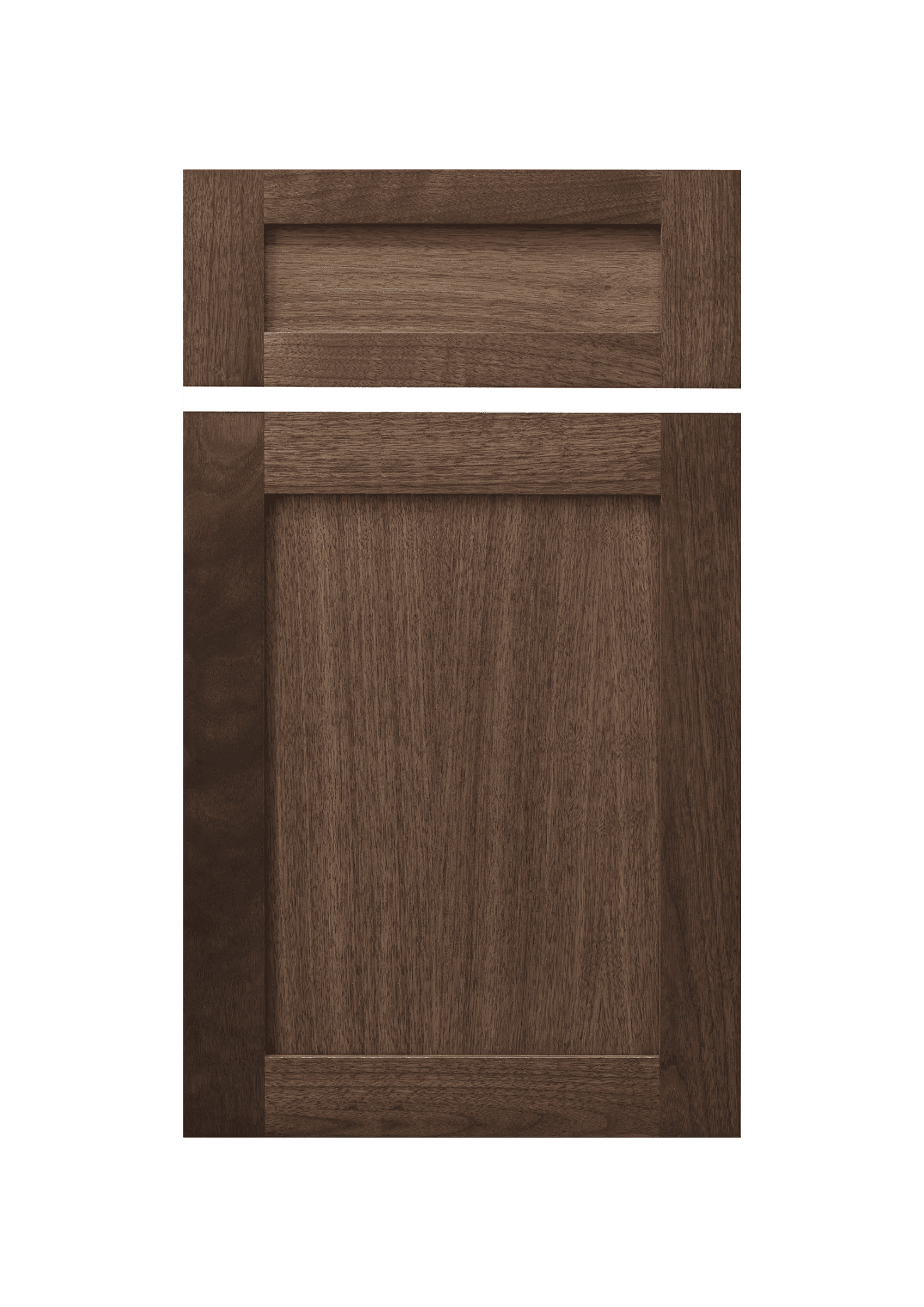
Among the most popular finishes for modern veneer cabinets are white oak and walnut veneer surfaces. White oak creates a softer and more Scandinavian-inspired appearance that works well in open residential spaces and minimalist kitchens. Walnut veneer, by contrast, offers a darker and more premium aesthetic commonly associated with luxury interiors and hospitality projects.
Matte veneer finishes are also becoming increasingly popular because they create a softer and more refined appearance compared with high-gloss surfaces. Many homeowners now prefer low-sheen finishes that emphasize natural wood grain and tactile texture instead of reflective coatings.
Another growing trend involves vertical grain layouts, which create cleaner visual proportions and a more architectural appearance. In many contemporary kitchens, veneer surfaces are carefully aligned to maintain continuous grain flow across cabinet doors and drawer fronts, helping create a more seamless design language.
Because of this versatility, wood veneer kitchen cabinets continue gaining popularity across both premium residential and large-scale commercial projects.
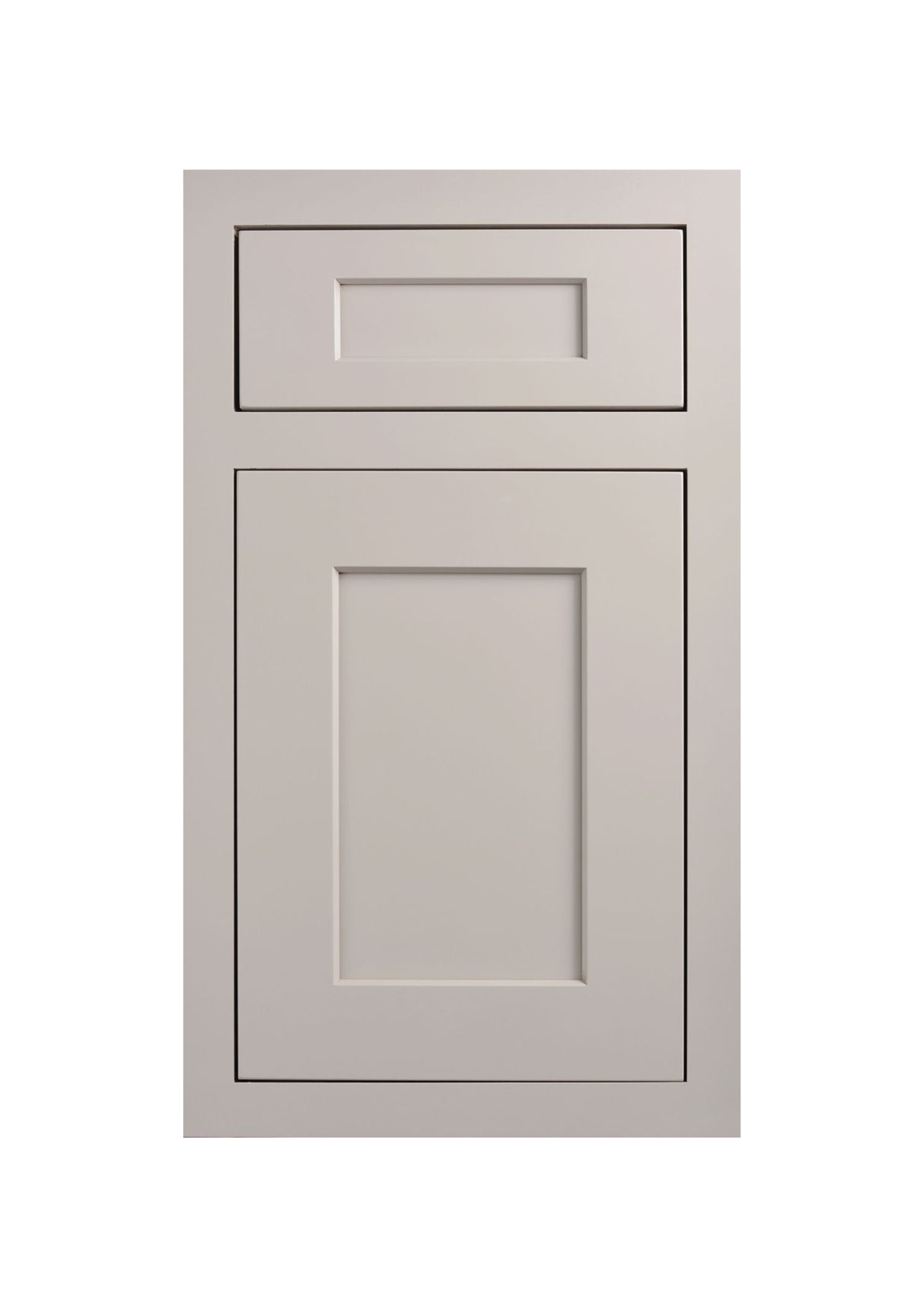
Many contemporary kitchens now combine veneer finishes with slim shaker cabinet profiles for a cleaner and more modern appearance.
Veneer cabinet doors represent one of the most important applications of veneer technology in modern cabinet manufacturing. Instead of relying entirely on solid wood construction, many manufacturers combine engineered core panels with natural veneer surfaces to improve production consistency and long-term performance.
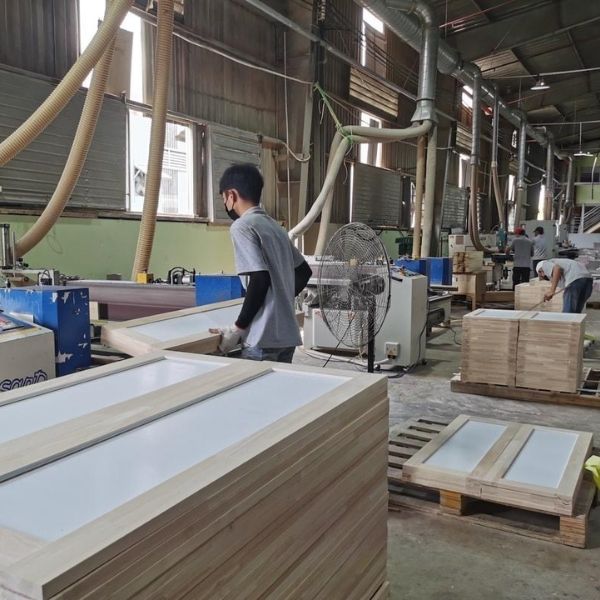
Veneer cabinet doors offer better dimensional stability and finish consistency.
One of the biggest advantages of veneer cabinet doors is improved flatness and dimensional stability. Large slab doors and tall pantry panels can sometimes warp when produced entirely from solid wood, particularly in environments with changing humidity levels. Veneer systems help reduce these risks by using engineered substrate materials that remain more stable over time.
This is particularly important in modern kitchens where clean alignment and minimal gaps are highly visible. Even small amounts of movement can affect the visual consistency of contemporary cabinetry.
Veneer surfaces also allow manufacturers to control:
As a result, factories can achieve cleaner visual alignment across large kitchens and maintain more predictable finishing quality throughout production.
Another important benefit involves manufacturing efficiency. Compared with traditional solid wood processing, veneer cabinet doors support:
For export-oriented cabinet factories, these advantages help improve operational consistency while still delivering premium visual quality to international buyers.
Many large-scale cabinet buyers also evaluate manufacturers based on ISO-certified production systems and quality management standards.
Many buyers compare veneer vs laminate cabinets when selecting materials for residential or commercial projects. Although the two options may appear visually similar from a distance, they differ significantly in construction, appearance, and performance characteristics.
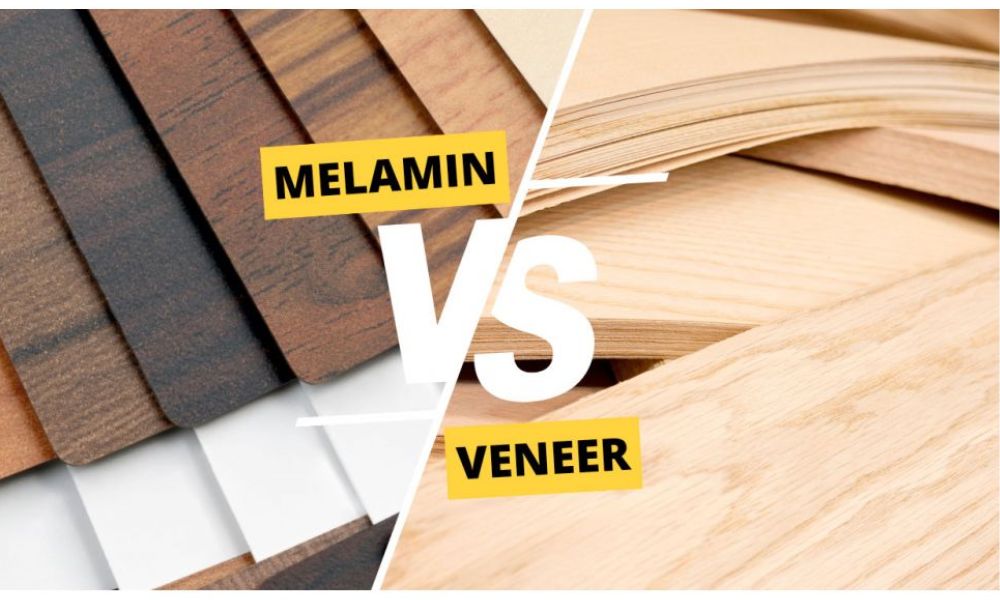
Veneer surfaces provide more authentic wood texture compared with laminate materials.
Veneer cabinets use real wood veneer bonded onto engineered panels. Because genuine wood is used on the surface, veneer cabinetry preserves natural grain variation and authentic texture. This gives the cabinets a warmer and more premium appearance that many homeowners and designers prefer for high-end interiors.
Laminate cabinets, on the other hand, use synthetic printed surfaces applied onto substrate panels. These materials are often more affordable and easier to maintain, but they generally lack the depth and natural texture associated with real wood veneer.
One of the major advantages of veneer cabinetry is its ability to create a more sophisticated and architectural appearance. Veneer surfaces also provide stronger luxury perception in premium residential and hospitality environments.
However, laminate systems may still be suitable for:
When comparing veneer vs laminate cabinets, the right choice ultimately depends on project priorities, budget expectations, and desired visual quality.
For many modern kitchens, veneer cabinetry offers the best balance between authentic wood aesthetics and scalable manufacturing efficiency.
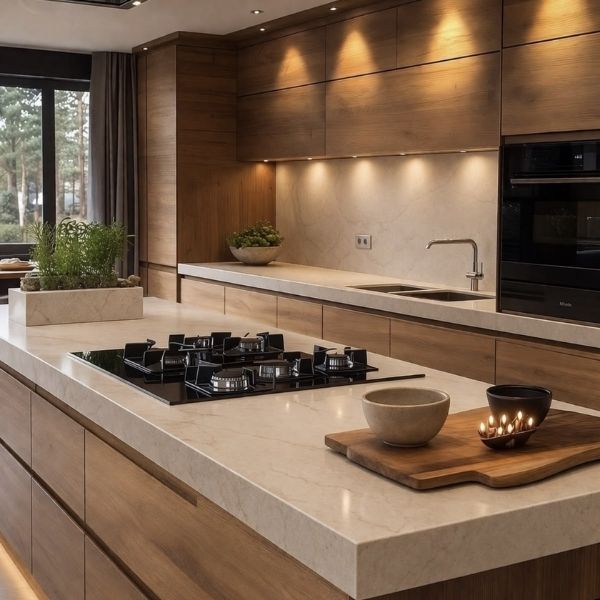
High-quality veneer cabinets can maintain durability for many years with proper manufacturing and maintenance.
A common concern among homeowners and buyers is whether veneer cabinets are durable enough for long-term use. In reality, high-quality veneer cabinetry can perform extremely well when manufactured correctly and maintained properly.
One of the most important factors affecting durability is substrate quality. Premium cabinet manufacturers typically use furniture-grade plywood or moisture-resistant MDF underneath the veneer surface. Stable core materials help maintain structural integrity and reduce long-term movement.
Protective finishing systems also play a major role in performance. Modern finishing technologies help veneer surfaces resist:
Many professional cabinet factories now use UV-cured coatings, polyurethane systems, and water-based protective finishes to improve long-term durability while maintaining a natural appearance.
Manufacturing precision is equally important. Reliable factories carefully control veneer bonding pressure, moisture conditioning, edge sealing, sanding accuracy, and finish application consistency throughout production. These technical processes directly influence long-term cabinet performance.
Proper maintenance also contributes to durability. Veneer cabinetry generally performs best when cleaned with soft cloths and non-abrasive products while avoiding excessive water exposure or prolonged direct sunlight.
With proper manufacturing and routine maintenance, veneer cabinets can maintain their appearance and structural quality for many years in both residential and commercial environments.
Beyond aesthetics, veneer cabinets also provide important operational advantages for cabinet manufacturers, developers, and international buyers.
One major benefit is improved material optimization. Using veneer surfaces allows manufacturers to maximize hardwood utilization more efficiently compared with full solid wood construction. This helps reduce material waste while improving cost management and supply chain stability.
Veneer systems also support export-scale production because they allow:
These advantages are particularly valuable for suppliers serving international markets such as North America, Australia, Europe, and the Middle East.
At the same time, global kitchen design trends increasingly favor warm wood aesthetics, matte textures, and minimalist styling. Because veneer surfaces align closely with these preferences, modern veneer cabinets continue gaining popularity across residential and commercial sectors worldwide.
As sustainability becomes more important in the furniture and construction industries, many buyers also prioritize:
These industry shifts are expected to further strengthen long-term demand for veneer-based cabinetry solutions.
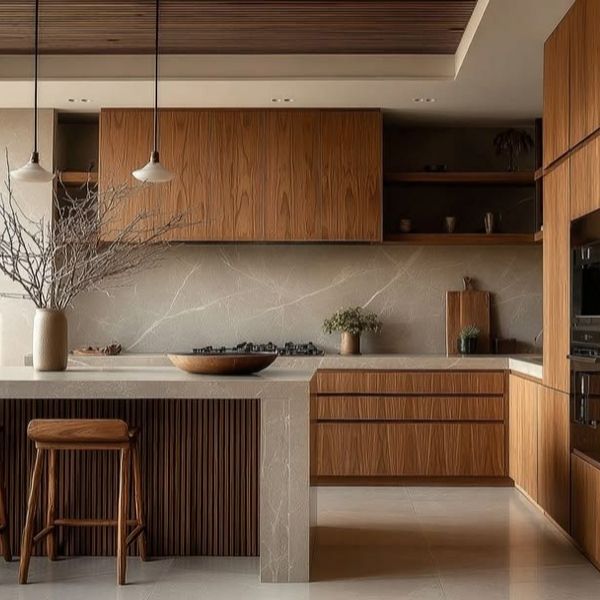
Veneer cabinetry continues shaping modern kitchen and interior design trends worldwide.
Veneer cabinets have become one of the leading material solutions in modern kitchen and interior design because they successfully combine natural wood aesthetics with scalable manufacturing efficiency.
From wood veneer kitchen cabinets in luxury residential projects to large-scale export manufacturing, veneer systems provide the warmth and authenticity of real wood while supporting better dimensional stability and production consistency than many traditional solid wood constructions.
Compared with synthetic alternatives, veneer cabinet doors offer a more sophisticated appearance and stronger architectural appeal. At the same time, buyers evaluating veneer vs laminate cabinets often find that veneer surfaces provide a better balance between premium visual quality and long-term value.
As contemporary kitchens continue emphasizing natural textures, minimalist aesthetics, and refined material finishes, modern veneer cabinets will likely remain one of the most important categories in residential and commercial cabinetry for years to come.
 View collection
 View collection
 View collection
 View collection