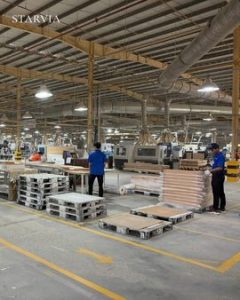
- Our Products
-
Choose your Cabinet Style
-

Sourcing from kitchen cabinet manufacturers in Vietnam has become the go-to strategy for US, Canadian, Australian, and European importers looking to reduce procurement costs by 30–45% without sacrificing quality. With over 1,200 registered furniture exporters, CARB Phase 2–certified factories, and FOB prices starting at $42,000 per container, Vietnam has emerged as the preferred origin for high-volume cabinet procurement. This guide covers everything you need to know: pricing benchmarks, technical specifications, factory evaluation frameworks, logistics, and compliance requirements.
The case for working with kitchen cabinet manufacturers in Vietnam rests on four pillars: cost, quality, compliance, and capacity — each of which has strengthened over the past five years.
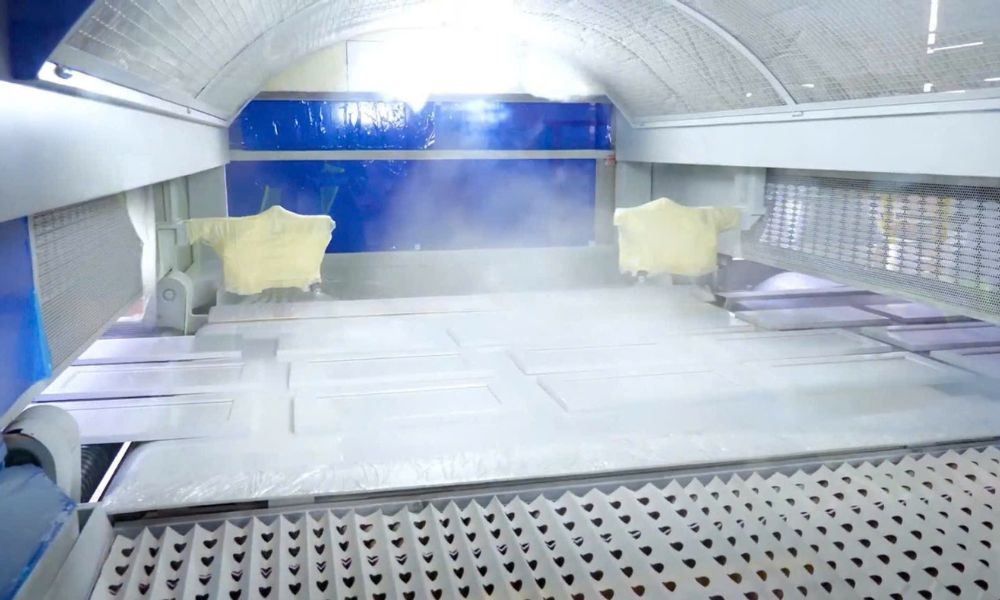
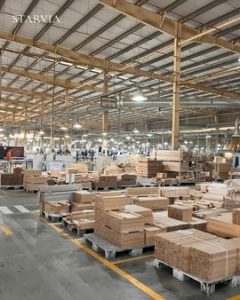
Automated manufacturing helps reduce production costs while maintaining quality.
Vietnam’s labor cost advantage over China has widened significantly since 2022. Factory-gate prices for melamine-finish cabinets run $42,000–$52,000 per 40-foot container FOB Hai Phong, while plywood-box construction with painted or veneer finishes runs $60,000–$72,000/container. Equivalent Chinese product (post-Section 301 tariff, post-Section 232) lands at $65,000–$90,000/container — a 20–40% premium with no quality difference at the top tier.
The US-Vietnam tariff environment is also favorable, though changing: the current Section 232 rate on Vietnam furniture is 25%, rising to 50% effective January 1, 2027. Importers locking in multi-container purchase orders now for delivery before the escalation are driving record booking volumes at Vietnamese factories through Q3 2026.
Leading kitchen cabinet manufacturers in Vietnam have invested heavily in European CNC technology over the past decade. German Homag machining centers dominate the top-tier factories, delivering ±0.5mm tolerance on all box components — the same specification demanded by major US kitchen cabinet brands. Dovetail drawer boxes, soft-close Blum or Grass hardware, and UV-cured multi-coat finishes are standard at factories targeting the North American market.
The composite wood supply chain in the US is regulated under TSCA Title VI, which mirrors California’s CARB Phase 2 standard — the strictest formaldehyde emission limit globally. The US EPA TSCA Title VI program sets 0.05 ppm formaldehyde limits for hardwood plywood and 0.09 ppm for MDF. Top kitchen cabinet manufacturers in Vietnam are certified through CARB-approved Third Party Certifiers (TPCs), with annual surveillance audits and lot-level testing records maintained for each production run.
Vietnam’s cabinet manufacturing clusters — in the Red River Delta (Vietnam, Phu Tho, Hanoi provinces) and the Southern industrial zones (Binh Duong, Dong Nai) — can collectively absorb several thousand containers per month. Individual large factories run 100–200 containers/month. This scale means importers can grow orders aggressively without supply chain risk, a critical factor for distributors and property developers managing multi-project pipelines.
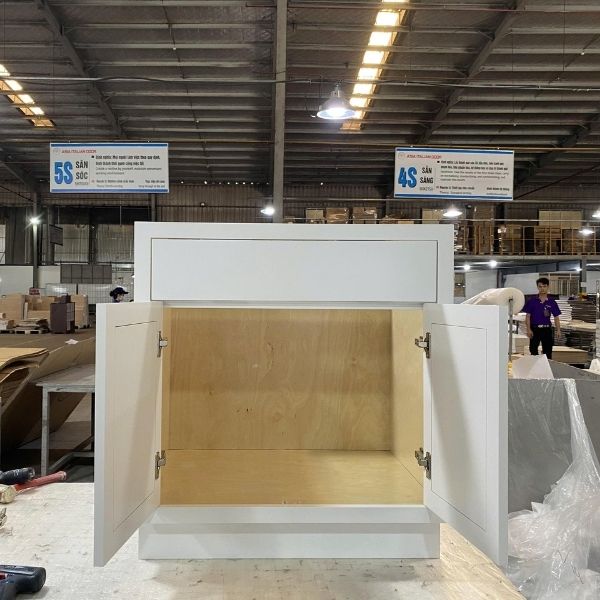
High-quality materials and premium hardware improve cabinet durability.
When evaluating kitchen cabinet manufacturers in Vietnam, the specification sheet tells you more than any factory tour. Here are the technical parameters to request upfront:
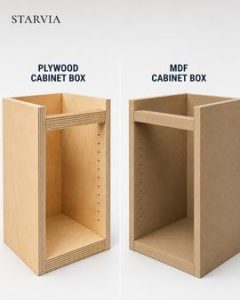
The cabinet box is the foundation of quality. Specify 18mm plywood (birch or eucalyptus) or 18mm CARB-certified HDF for the North American market — avoid particleboard-core boxes, as experienced buyers and receiving inspectors can identify the difference by weight alone. Joinery options range from cam-lock and staple (economy tier) to dowel and staple (standard) to full dovetail corner construction (premium). Tolerance should be ±0.5mm on all dimensions; request CNC calibration records as evidence.
Edge banding specification: 0.5mm PVC for melamine panels, 1mm ABS for painted or lacquer surfaces (better heat and impact resistance), and 2mm solid wood banding for premium exposed applications. Confirm that banding is laser-edge bonded at top-tier factories — traditional hot-melt adhesive banding is acceptable for lower price points but degrades faster in high-humidity environments.
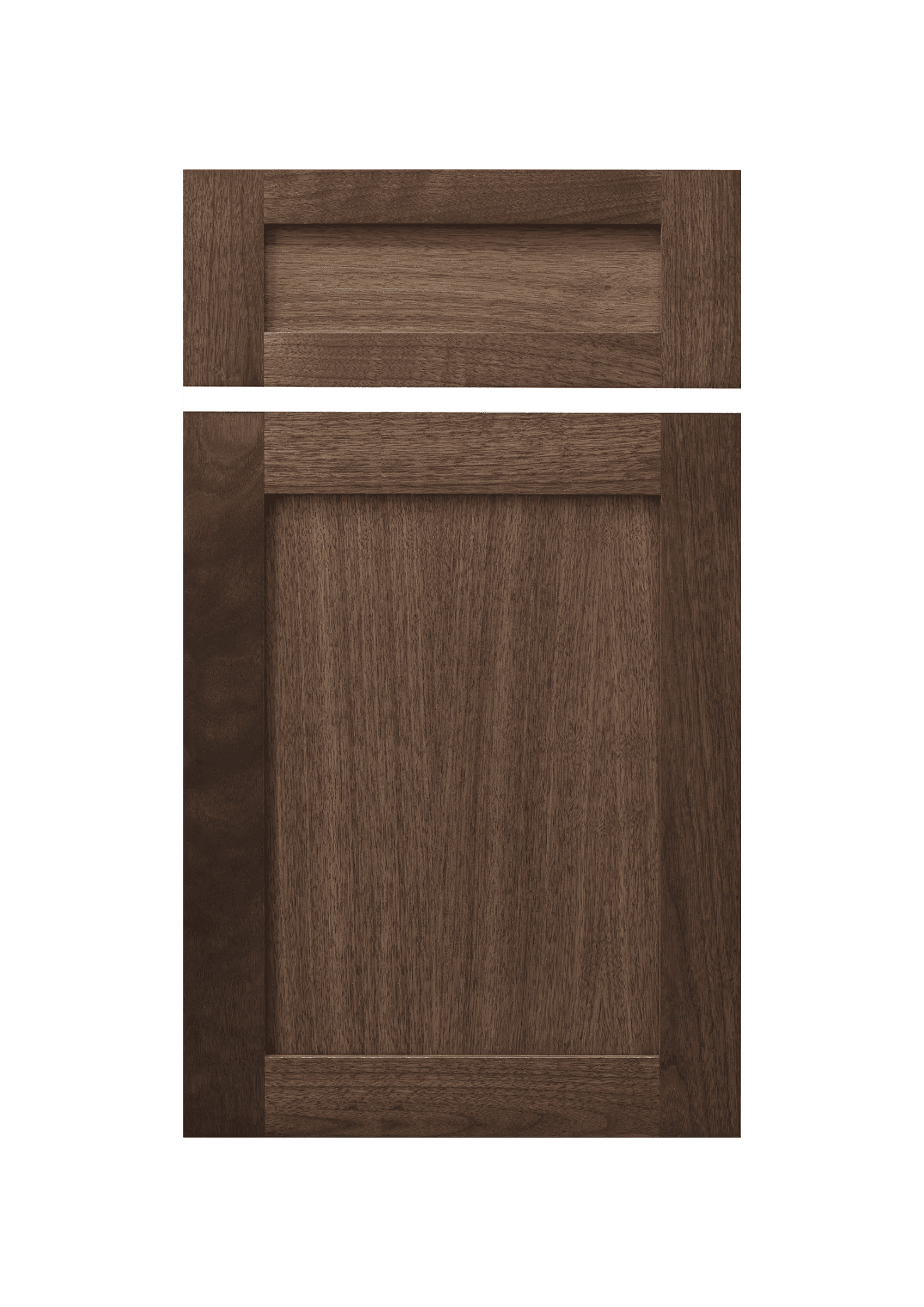
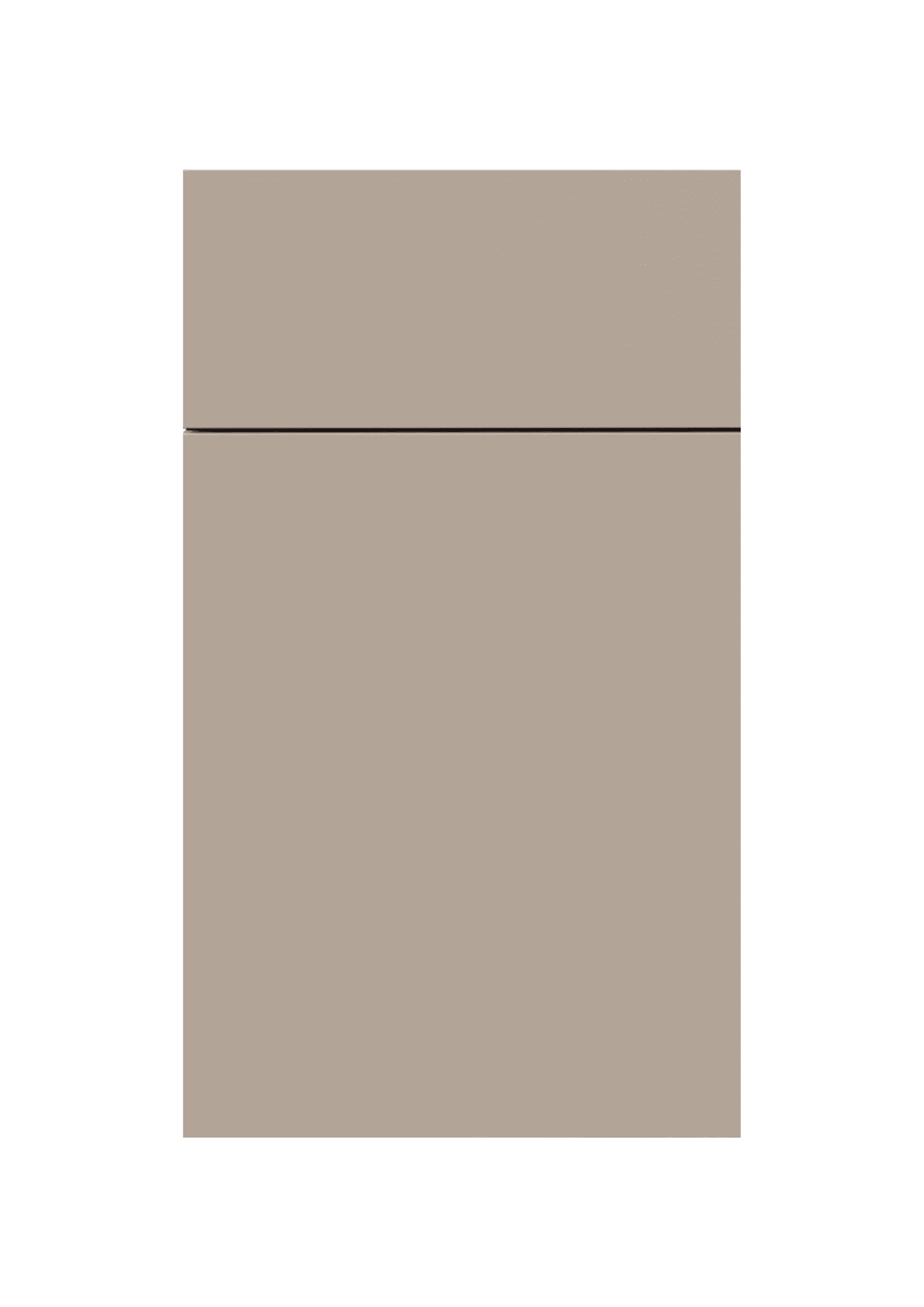
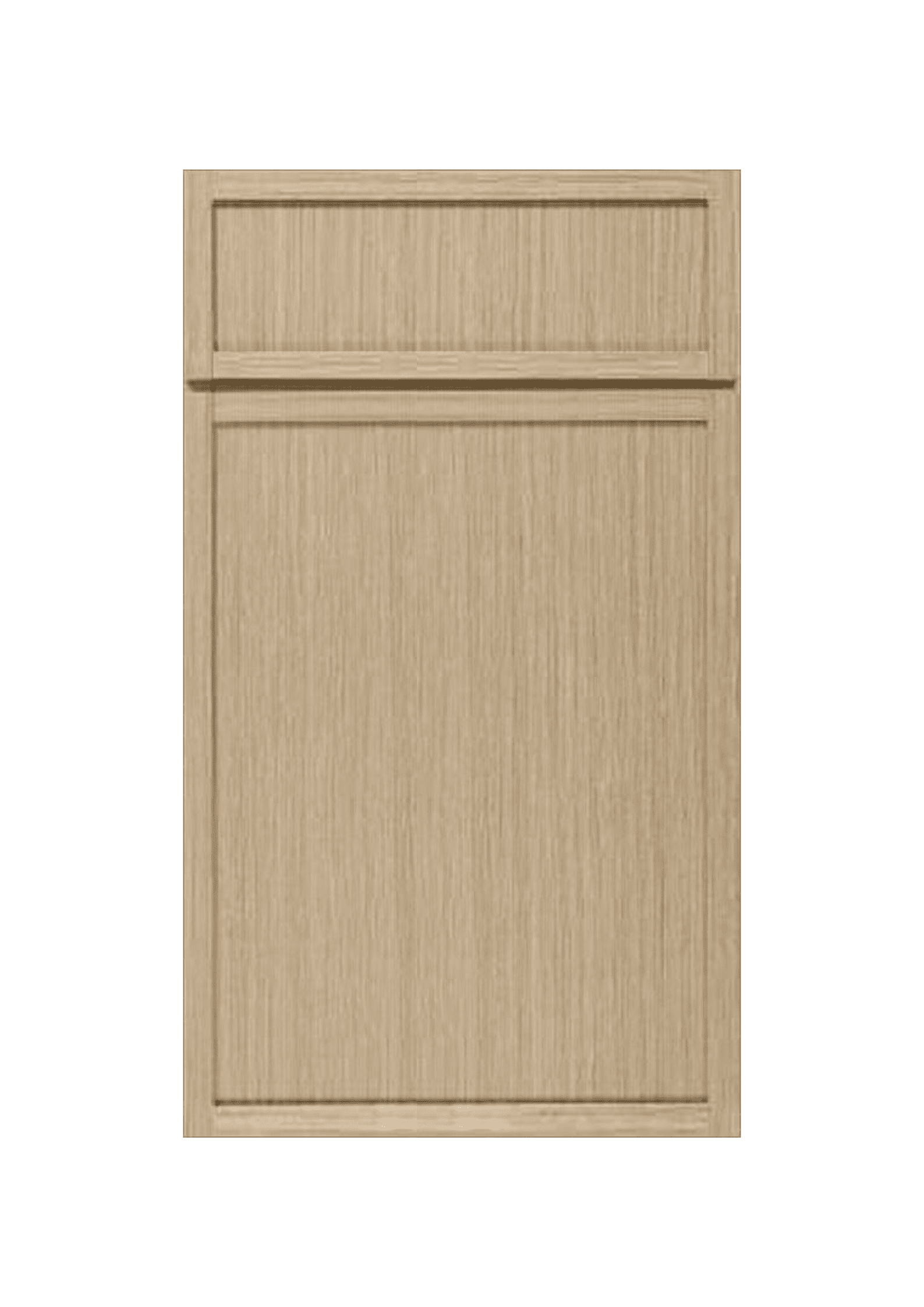
Vietnam factories serving export markets offer the full range of door constructions used in North American cabinetry:
Top kitchen cabinet manufacturers in Vietnam stock Blum, Grass, Hettich, and DTC hardware for export orders. For the US market, specify Blum Tandem Plus Blumotion or Grass Nova Pro drawer systems, and Blum Clip Top Blumotion concealed hinges — these are the brand references that end customers and kitchen designers recognize. Hardware upcharges run $150–$350/container depending on selection.
Dovetail drawer boxes in solid birch or poplar are the premium standard for US cabinetry, particularly for the semi-custom and custom segments. Baltic birch plywood drawer boxes are the cost-effective alternative used in stock and value-line programs. For US custom cabinet buyers, specify 5/8-inch (15.87mm) drawer sides — it is a visual quality indicator experienced buyers look for immediately upon opening a drawer.
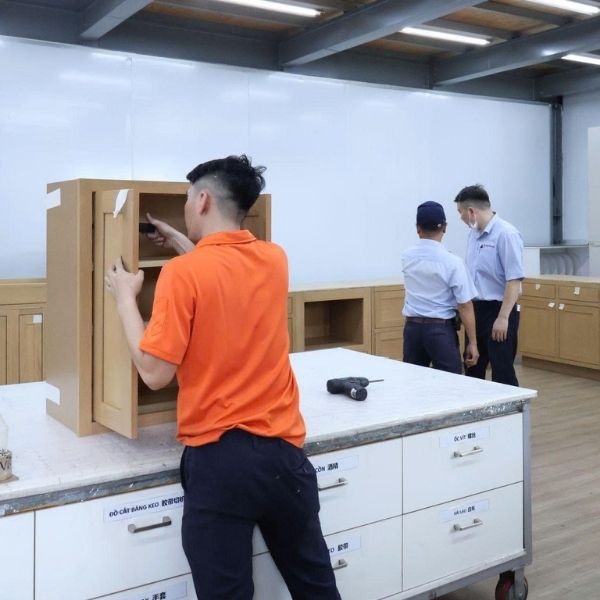
Professional quality inspection before shipment.
Not all factories targeting the export market are equally prepared for US compliance and quality standards. Here is a four-step evaluation framework for vetting kitchen cabinet manufacturers in Vietnam:
Before committing to any sample order, request and verify the following documents:
Order a minimum sample set: one base cabinet, one wall cabinet, one drawer-base cabinet. Evaluate each against the following criteria:
For orders above 3 containers per month, a third-party factory audit through SGS, Bureau Veritas, or Intertek is worth the $600–$900 investment. Key audit areas include raw material storage humidity control, production line layout efficiency, CNC calibration log currency, QC station positioning, and finished goods packaging protocol. Request the audit report before the first production order, not after.
Run a 1-container pilot order before committing to volume. Hire a Vietnam-based QC agent to conduct a 100% pre-shipment inspection before container loading — cost is approximately $200–$400 for a full container PSI. This single step eliminates the majority of quality disputes before product leaves the country, where disputes are exponentially cheaper to resolve than after arrival.
Here is a realistic FOB pricing framework from kitchen cabinet manufacturers in Vietnam, based on a standard 40-foot container (approximately 250–300 linear feet of assembled cabinets):
| Product Type | FOB Hai Phong / 40′ Container | Approx. Linear Feet |
|---|---|---|
| Melamine finish, HDF box | $42,000 – $48,000 | 270–300 lft |
| Melamine finish, plywood box | $48,000 – $55,000 | 260–290 lft |
| Painted/lacquer, plywood box | $60,000 – $68,000 | 240–270 lft |
| Veneer + solid wood door, plywood box | $65,000 – $72,000 | 220–260 lft |
| Full custom (inset, painted, dovetail) | $72,000 – $85,000 | Custom |
Sample total landed cost calculation — US West Coast from Hai Phong:
US-manufactured equivalent cabinetry in the same specification range typically sells wholesale at $380–$650/linear foot, making Vietnam-sourced product highly competitive even after full duty and logistics costs.
US importers bear direct legal responsibility for TSCA Title VI compliance — regardless of whether the kitchen cabinet manufacturers in Vietnam hold valid certificates. Under California Air Resources Board (CARB) ATCM regulations, importers must verify that every production lot is covered by a current TPC certificate. Key compliance checkpoints:
The National Kitchen & Bath Association (NKBA) publishes sourcing best practices and sustainability standards that can help importers build internal compliance protocols when working with international manufacturers at scale.
Accurate logistics planning is essential to understanding total cost when sourcing kitchen cabinet manufacturers in Vietnam. Here are the benchmarks importers should build into their models.
Standard base and wall cabinets pack efficiently in a 40-foot standard container (8.5 feet interior height). For tall pantry cabinets, refrigerator surrounds, or upper cabinets with crown molding, specify a 40-foot high-cube container (9.5 feet interior height) — the extra foot of vertical space prevents damage from forced stacking. Request a container load plan from the factory and have your freight forwarder verify it before packing begins.
Specify to your Vietnam factory: foam-corner protection on all box components, stretch-wrap on all door panels, individual carton barcoding with SKU/dimension/weight, and a master packing list with carton-level detail. Non-compliant or inconsistent packaging is the leading cause of warehouse receiving disputes and damage claims on Vietnam cabinet imports.
Most Vietnam factories quote FOB Hai Phong or FOB Ho Chi Minh City. First-time importers should consider CIF (Cost, Insurance, Freight) to destination port for the initial 1–2 containers — you pay a moderate premium but the factory handles freight booking and marine insurance, substantially reducing operational complexity while you establish your import processes.
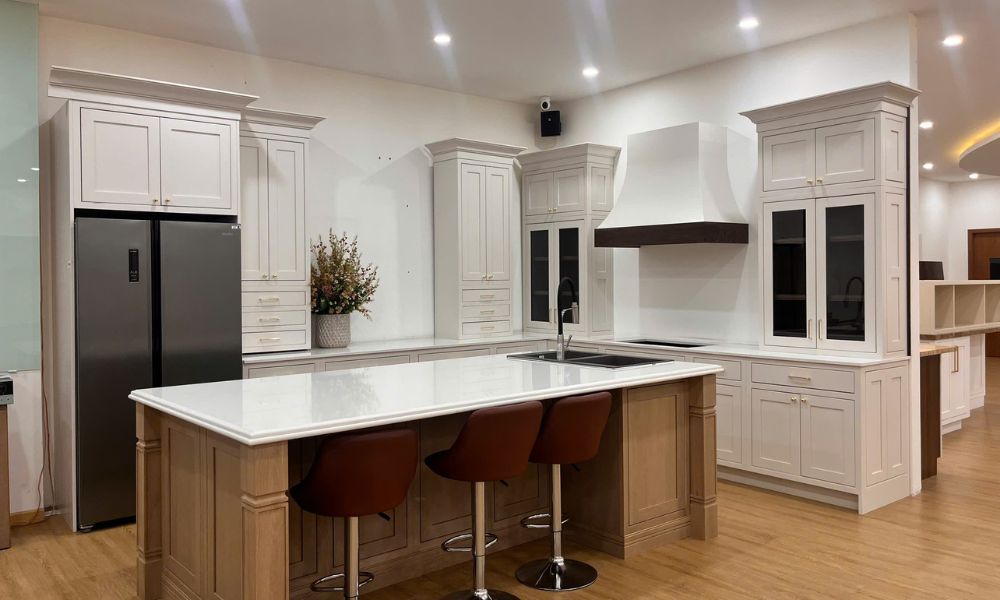
Finished kitchen showcasing premium cabinets manufactured in Vietnam.
Starvia operates production facilities in Vietnam, with a combined manufacturing footprint of approximately 1,000,000 square feet and 1,000 production staff. As a dedicated kitchen cabinet manufacturer in Vietnam serving export markets, Starvia’s monthly output capacity is 150 containers of finished cabinets.
Factory specifications:
Starvia supplies private-label programs for US distributors, Canadian renovation supply chains, and Australian builders. Custom door styles, RAL/Benjamin Moore color matching, and hardware specifications are available with 3-container minimum for new SKU development. Assembly instruction customization and branded packaging are standard for retail-channel partners.
To request a price list, sample catalog, CARB certificate, and factory references, contact Starvia at starvia.com.vn/contact.
The majority of established kitchen cabinet manufacturers in Vietnam set MOQ at 1 × 40-foot container for standard catalog products. Custom specifications — new door profiles, proprietary finishes, non-standard box dimensions — typically require 3–5 containers for the first production run to amortize tooling, setup, and color-matching costs across sufficient volume.
The leading export-focused factories are certified, but compliance levels vary widely across Vietnam’s fragmented furniture manufacturing sector. Always verify TPC certificate numbers directly with the certifying body’s online database — do not rely solely on documents provided by the factory. Under TSCA Title VI, the US importer is the legally responsible party, not the Vietnamese manufacturer. Build certificate verification into your standard procurement checklist.
Standard production lead time from most kitchen cabinet manufacturers in Vietnam is 35–45 days after order confirmation and deposit receipt. Ocean freight adds 18–22 days to the US West Coast and 28–32 days to the East Coast. Total cycle time from purchase order to US port arrival: 55–75 days. For the 2026–2027 tariff window, importers should target Q3 2026 purchase orders to ensure delivery well before the January 1, 2027 rate increase.
The most common species in Vietnam cabinet production include rubber wood (primary species for painted MDF-core doors and face frames), acacia (structural components and solid wood parts), eucalyptus plywood (domestically produced, used in box construction), imported Baltic birch plywood (premium drawer boxes), and imported oak, maple, and ash (premium door programs). FSC-certified material is available at most top-tier export factories — confirm availability and certificate scope during vendor qualification.
Yes — private label is the primary business model for export-oriented Vietnamese factories. Customization options include brand name and logo placement, branded carton design, custom catalog numbering, assembly instruction booklets in English or other languages, and even proprietary product warranties printed on packaging. Factories serving major US retail chains are experienced with compliance documentation requirements for private-label programs.
Standard payment terms from kitchen cabinet manufacturers in Vietnam: 30% deposit by T/T (telegraphic transfer) at purchase order confirmation, 70% balance by T/T against copy of the Bill of Lading. Established importers with 3+ container history can sometimes negotiate 30% at order, 70% on arrival inspection — or Letter of Credit (L/C) at sight for large-volume programs. Avoid 100% prepayment terms regardless of how competitive the quote appears.
Whether you are a first-time importer or an established distributor looking to diversify your supply base, kitchen cabinet manufacturers in Vietnam offer a compelling combination of cost, quality, and compliance. The key is selecting the right factory partner — one with verified CARB certification, proven export track record, and the technical capacity to meet your specification requirements consistently at scale.
Starvia offers a structured sourcing pathway: sample evaluation → factory audit → pilot container → volume program. Request your price list, sample set, and CARB certificate at starvia.com.vn/contact.


 View collection
 View collection
 View collection
 View collection