- Our Products
-
Choose your Cabinet Style
-

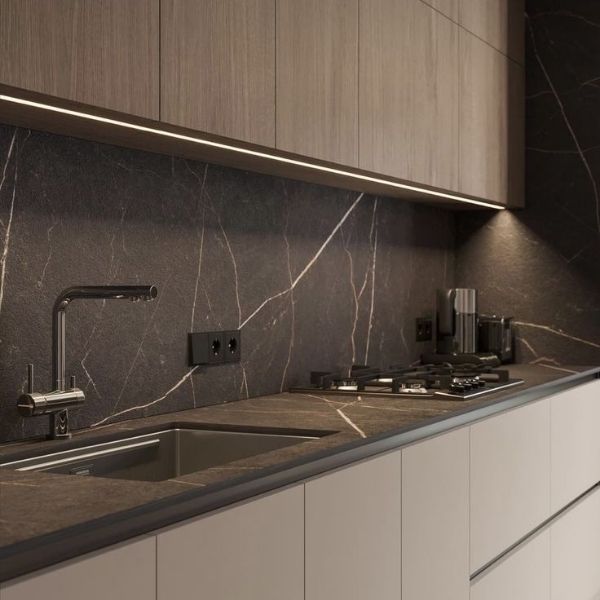
Frameless kitchen cabinets have become one of the fastest-growing cabinet styles in the global kitchen industry. Frameless kitchen cabinets are widely used in modern kitchen manufacturing because of their clean design and efficient structure. As modern kitchen design continues to evolve, more distributors, developers, and cabinet retailers are choosing frameless cabinets for their projects because of their clean aesthetics, efficient storage, and scalable manufacturing advantages.
Originally developed in Europe, frameless cabinet construction has expanded rapidly into North American and international markets over the past two decades. Today, frameless cabinets are widely used in residential developments, apartment projects, and large-scale housing communities where modern design and efficient space utilization are priorities.
For international buyers sourcing kitchen cabinets from overseas factories, understanding the construction and manufacturing requirements of frameless cabinets is essential. Unlike traditional cabinetry that uses a face frame, frameless cabinets depend entirely on the structural integrity of the cabinet box. This means the manufacturing precision, material selection, and quality control system of the factory play a crucial role in the final product quality.
As global supply chains continue shifting toward Asia, many distributors are exploring sourcing opportunities from Vietnam. A professional Vietnam cabinet factory with modern production capabilities can offer both competitive pricing and consistent export-grade quality.
This guide explains what frameless kitchen cabinets are, how they are constructed, their advantages for distributors and developers, and what buyers should evaluate when selecting a cabinet manufacturing partner. For international distributors and developers, frameless kitchen cabinets offer both modern aesthetics and efficient cabinet design.
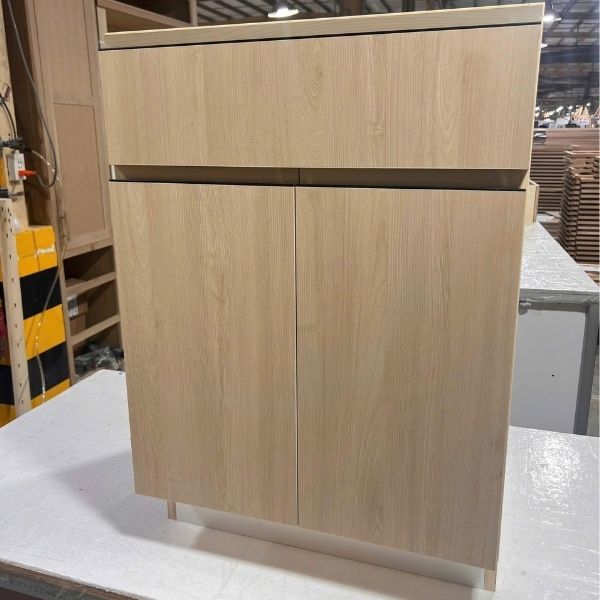
Frameless cabinet construction without a traditional face frame.
Frameless kitchen cabinets are cabinets built without a front face frame. Instead of attaching doors to a wooden frame structure, cabinet doors are mounted directly onto the cabinet box.
Because the cabinet box serves as the primary structural component, frameless cabinets require precise manufacturing and strong panel materials.
This style is commonly referred to as European-style cabinetry, and it has become increasingly popular in modern kitchen design.
Key characteristics of frameless cabinets include:
The absence of a face frame allows for larger cabinet openings, making it easier to access interior storage areas.
For distributors and buyers, frameless cabinets offer both aesthetic appeal and practical functionality.
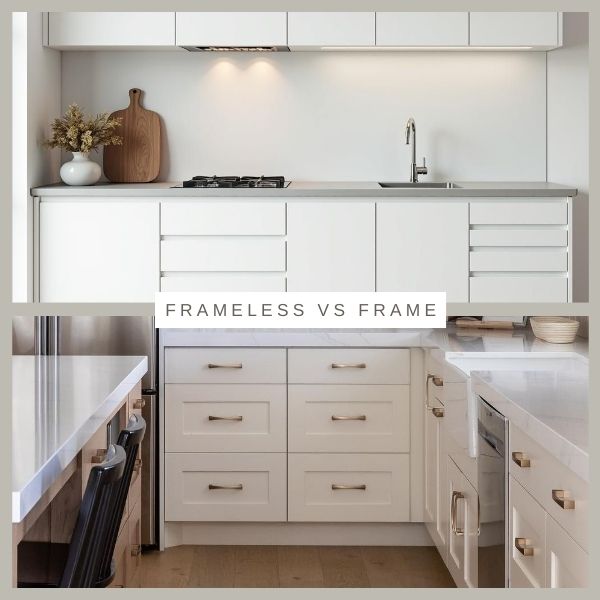
Comparison between traditional face frame cabinets and frameless cabinet construction.
To fully understand frameless cabinet construction, it is helpful to compare it with traditional face frame cabinetry.
Face frame cabinets are widely used in traditional North American kitchens.
In this design, a wooden frame is attached to the front of the cabinet box, and doors are mounted onto this frame.
Characteristics include:
Frameless cabinets eliminate the face frame entirely.
Instead, cabinet doors attach directly to the cabinet side panels.
Advantages include:
Because frameless cabinets rely on panel strength rather than frame reinforcement, precise manufacturing becomes extremely important.
Understanding the structural elements of frameless cabinets helps buyers evaluate product quality when sourcing from cabinet manufacturers.
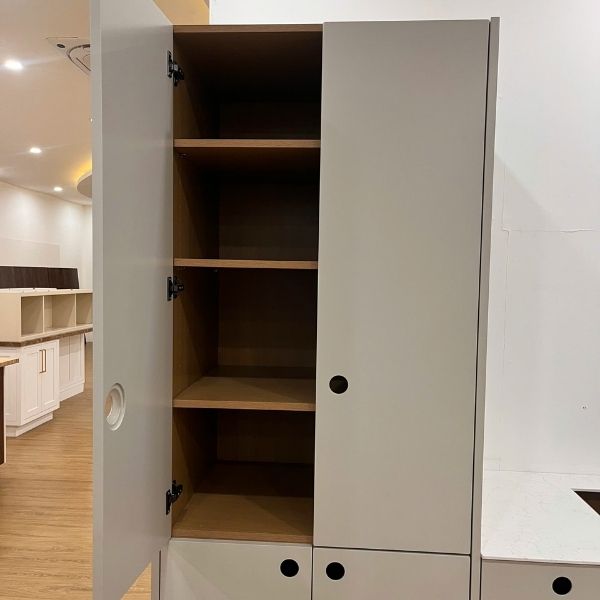
Typical frameless cabinet box built with plywood panels for structural strength.
The cabinet box is the structural core of frameless cabinetry.
Common materials used in cabinet box construction include:
For export markets, plywood is often preferred because of its durability, moisture resistance, and structural stability. Many international buyers request plywood cabinet boxes when sourcing cabinets for long-term residential use.
In addition, some buyers also pay attention to responsible wood sourcing. Certifications such as those provided by the Forest Stewardship Council (FSC) help verify that wood products originate from responsibly managed forests.
Panel thickness significantly affects cabinet durability and strength.
Typical frameless cabinet specifications include:
Consistent panel thickness ensures the cabinet structure remains stable during transportation, installation, and daily use.
Edge banding protects exposed panel edges and improves cabinet durability.
High-quality cabinet factories use automated edge banding machines to ensure consistent bonding and smooth finishing.
Common edge banding materials include PVC and ABS.
Proper edge banding also helps prevent moisture damage and increases product lifespan.
For distributors and project developers, frameless cabinets offer several operational and design advantages.
Without a face frame restricting the cabinet opening, frameless cabinets provide more usable storage space.
This makes them particularly valuable in compact urban kitchens where space efficiency is important.
Contemporary homebuyers increasingly prefer modern kitchen aesthetics.
Frameless cabinets support a wide range of modern door styles including:
This design flexibility makes frameless cabinetry ideal for modern residential developments.
Frameless cabinet construction is highly compatible with automated manufacturing processes.
Because there is no face frame assembly, cabinet production can rely heavily on:
This manufacturing efficiency allows factories to produce large volumes consistently for international buyers.These advantages make frameless kitchen cabinets a practical solution for distributors and developers sourcing cabinets internationally.
Many international cabinet distributors import cabinets in RTA (Ready-To-Assemble) format.
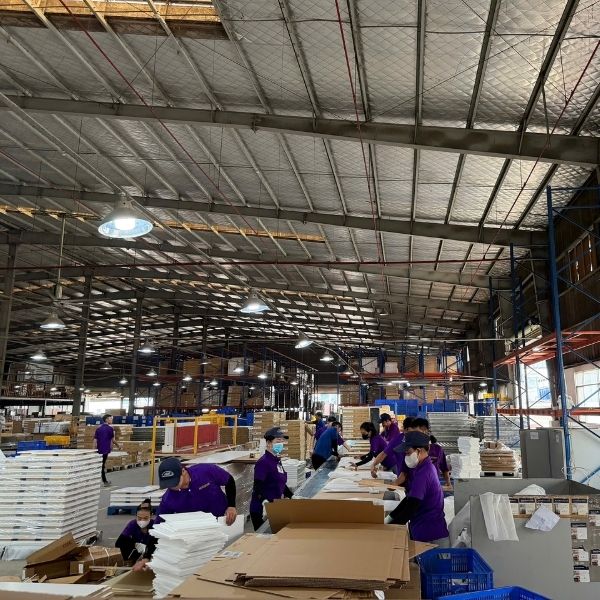
Frameless RTA cabinets packaged for international shipping.
Frameless cabinets are particularly suitable for RTA production due to their simple box structure.
Benefits of RTA frameless cabinets include:
These advantages make frameless RTA cabinets extremely popular among cabinet distributors in North America.
Many professional factories specializing in kitchen cabinet manufacturing in Vietnam supply frameless cabinets specifically designed for RTA distribution.
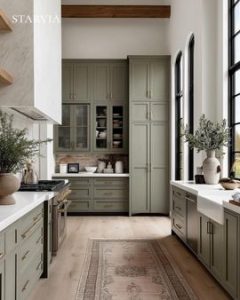
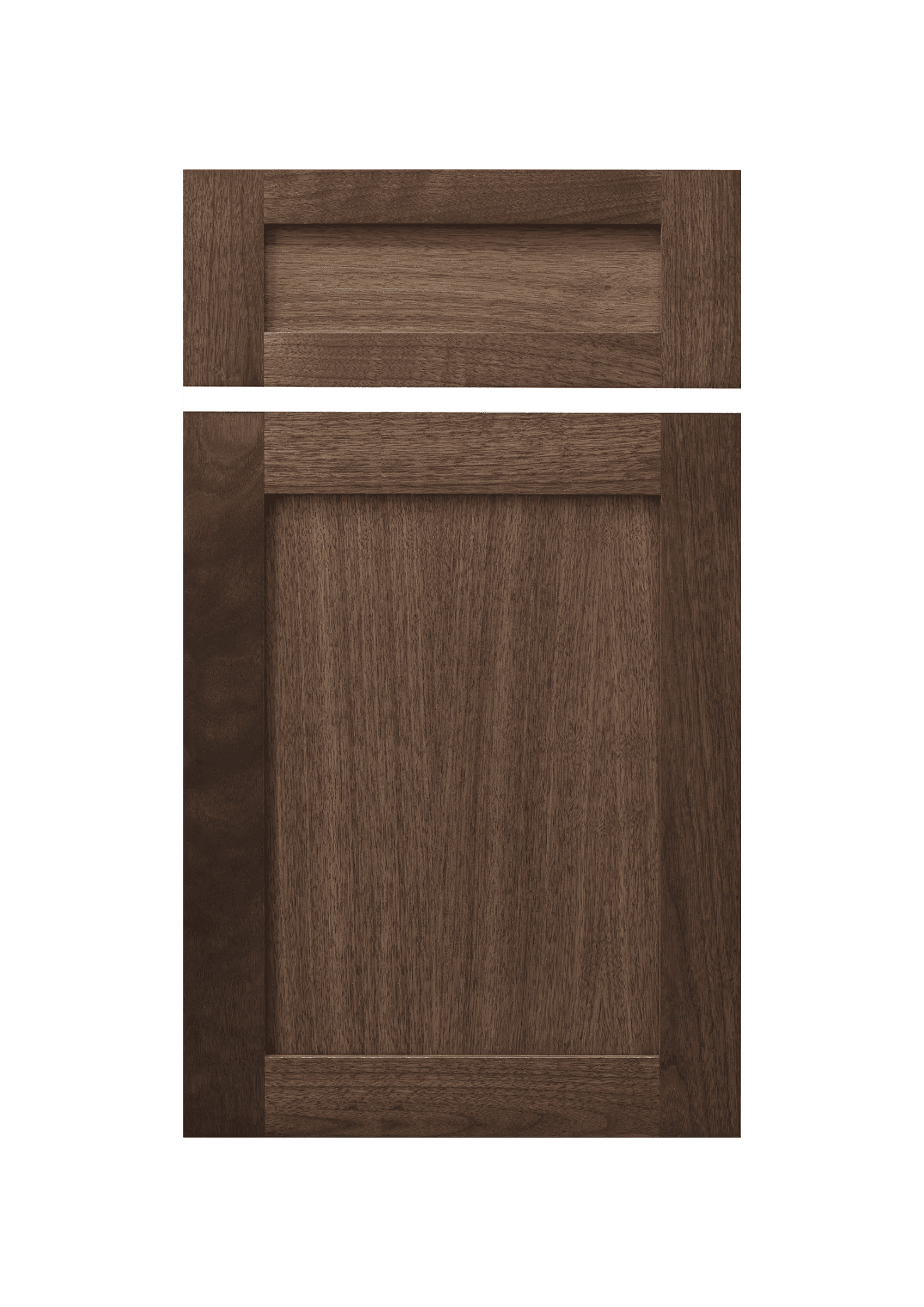
Shaker cabinet doors commonly used with frameless kitchen cabinet construction.
Although frameless refers to cabinet construction rather than door style, several door designs are commonly paired with frameless cabinetry.
Shaker cabinets remain one of the most widely used cabinet door styles in global markets.
They feature:
Shaker doors can easily be integrated into frameless cabinet construction.
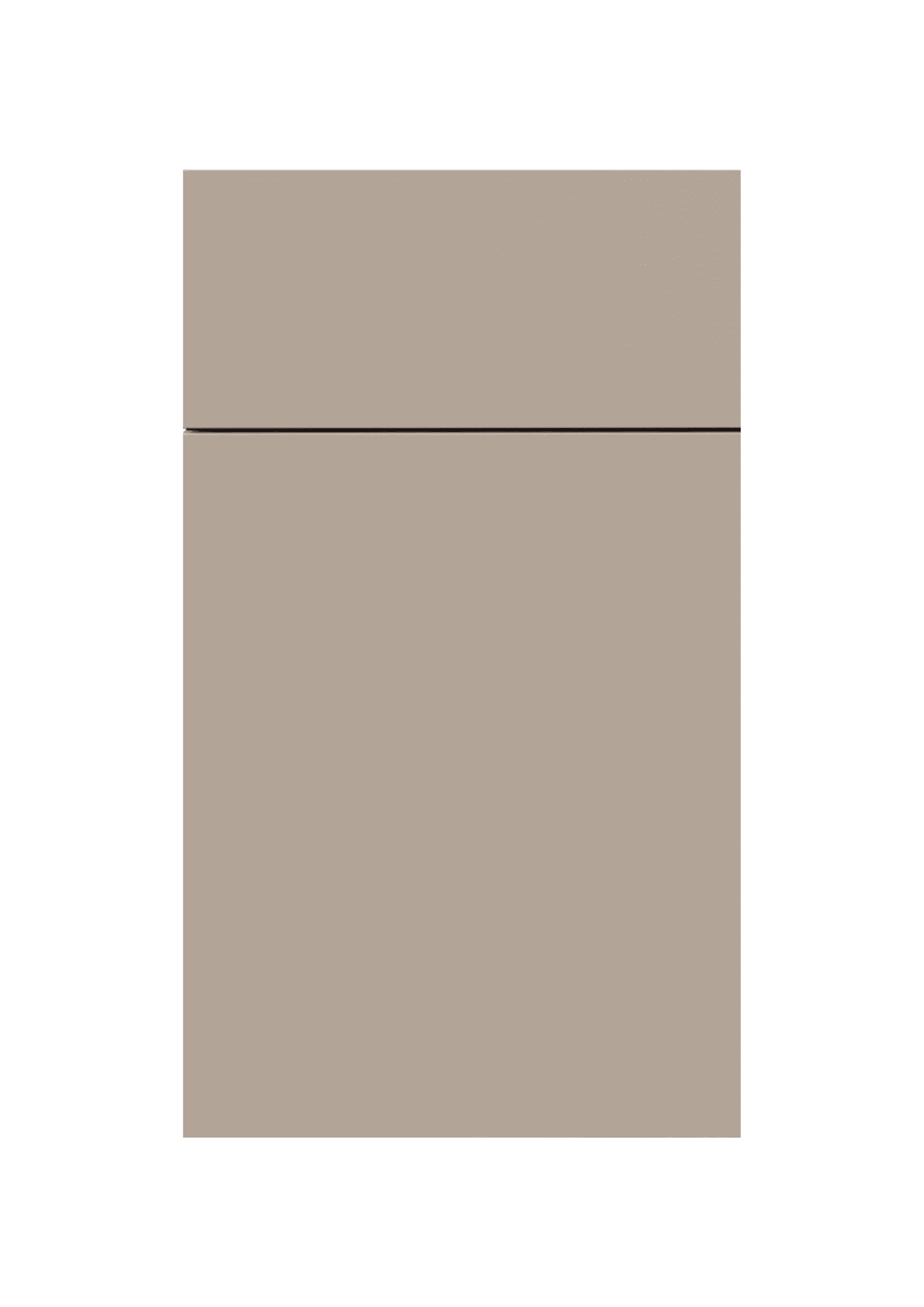
Flat panel or slab doors are commonly used in modern frameless kitchens.
These doors emphasize minimalism and contemporary design.
Common finishes include:
Flat panel doors are especially popular in modern apartments and luxury residential developments.
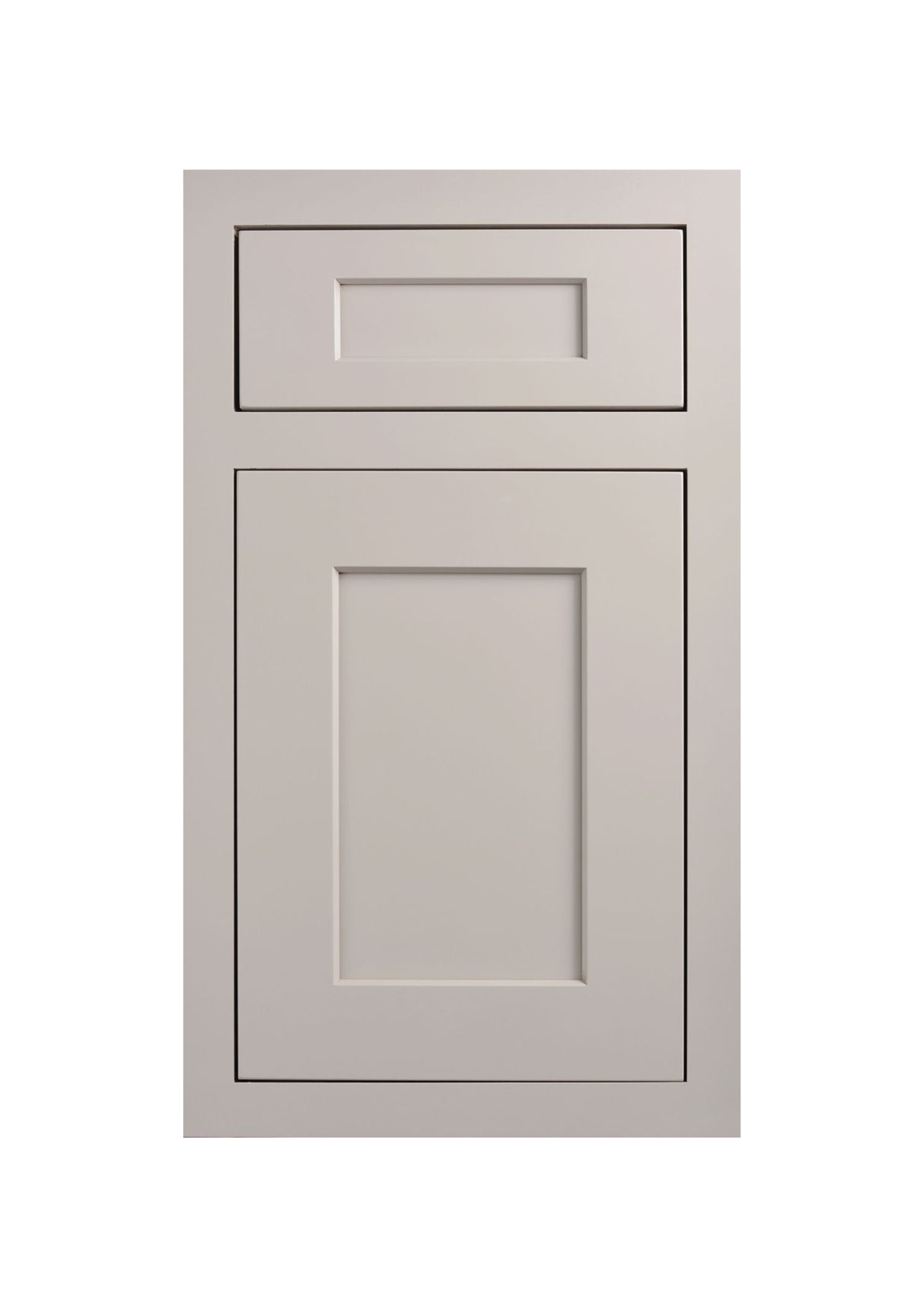
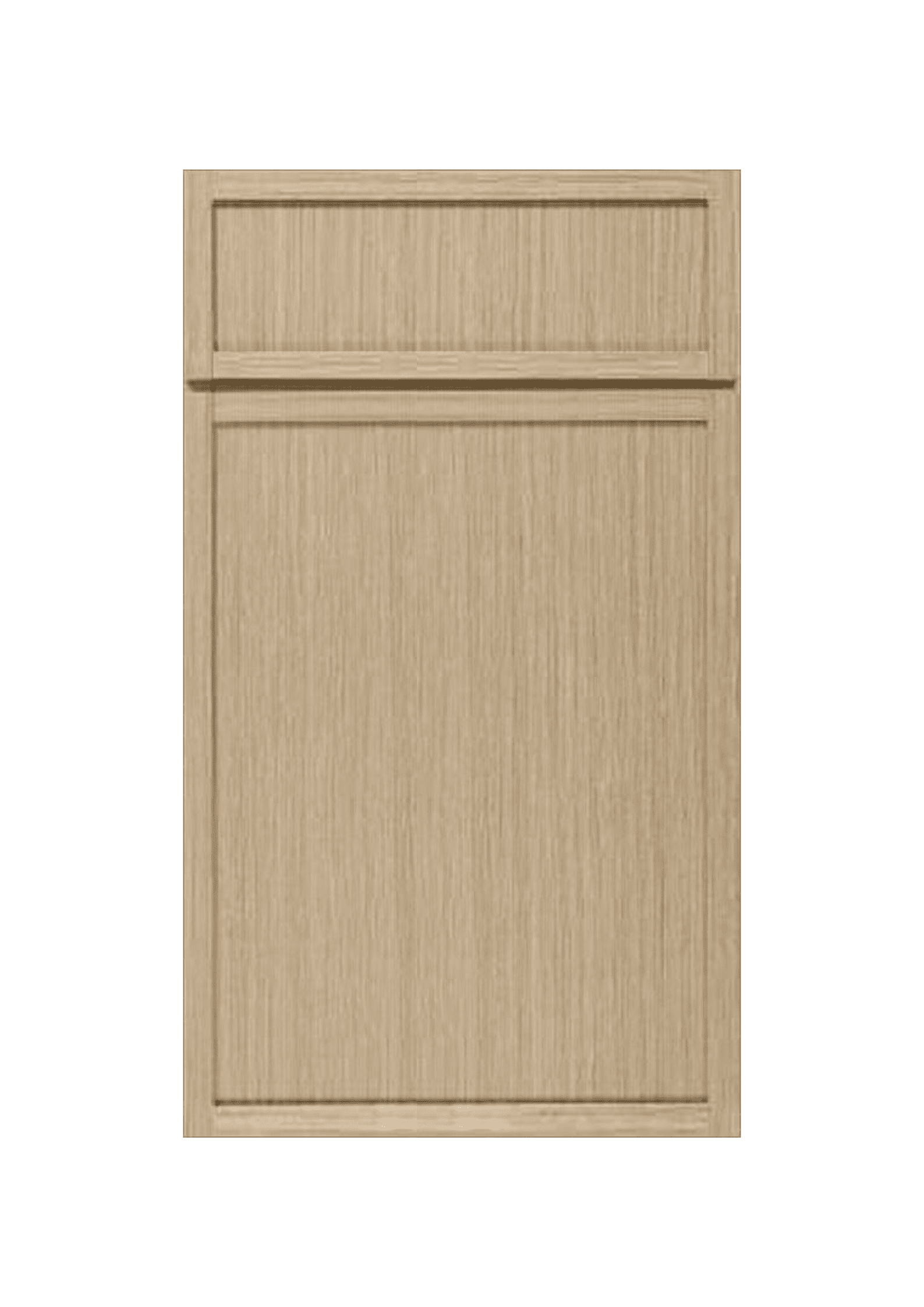
Inset cabinet doors are traditionally associated with face frame cabinets.
However, some cabinet manufacturers now produce modified inset-style systems compatible with frameless cabinet construction.
When sourcing inset cabinet manufacturing, buyers should carefully evaluate hinge systems and door alignment requirements.
Because frameless cabinets depend heavily on panel precision, manufacturing capability is a critical factor in product quality.
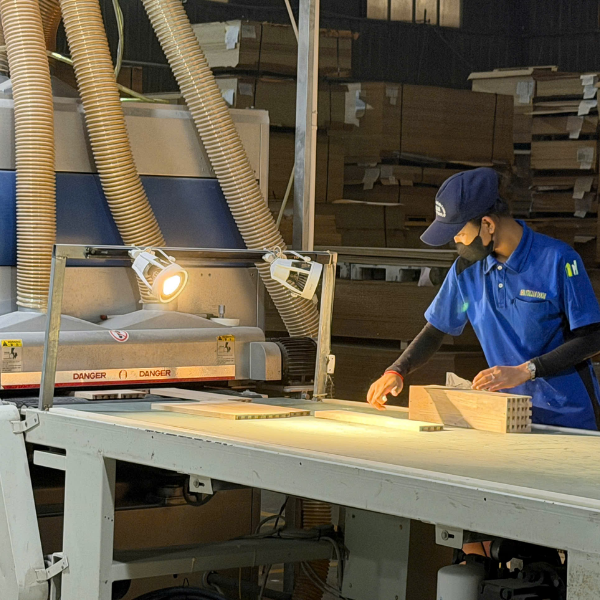
CNC machining used in modern cabinet manufacturing.
CNC machines are used to cut cabinet panels and drill precise hardware holes.
High-precision CNC machining ensures that cabinet components align correctly during assembly.
Finishing quality plays a major role in the visual appearance and durability of kitchen cabinets.
Professional cabinet factories use controlled finishing environments to ensure consistent coating thickness and smooth surfaces.
Reliable cabinet manufacturers implement strict quality control systems throughout production.
Typical QC procedures include:
These systems help maintain consistent quality across large export orders. These manufacturing standards are particularly important when producing high-quality frameless kitchen cabinets for export markets.
Vietnam has rapidly become one of the leading cabinet manufacturing hubs in Asia.
International buyers increasingly choose Vietnam for cabinet sourcing due to several advantages.
Vietnam offers cost-effective manufacturing while maintaining strong product quality.
The country has decades of experience in furniture and woodworking production.
Many factories have invested heavily in advanced CNC machinery and automated production lines.
Vietnam cabinet factories are increasingly specialized in supplying international distributors and project developers.
These factors have made Vietnam an attractive sourcing destination for global cabinet buyers. As global demand increases, frameless kitchen cabinets are becoming a standard product category in international cabinet supply chains.
For international buyers looking for reliable cabinet sourcing, choosing the right manufacturing partner is critical.
Starvia Cabinet is a professional cabinet manufacturer based in Vietnam specializing in export-oriented kitchen cabinetry.
The company focuses on providing consistent quality and scalable production for international distributors and developers.
Key manufacturing capabilities include:
Starvia manufactures a variety of cabinet styles including:
With strong production infrastructure and international supply experience, Starvia supports buyers seeking reliable cabinet manufacturing in Vietnam.
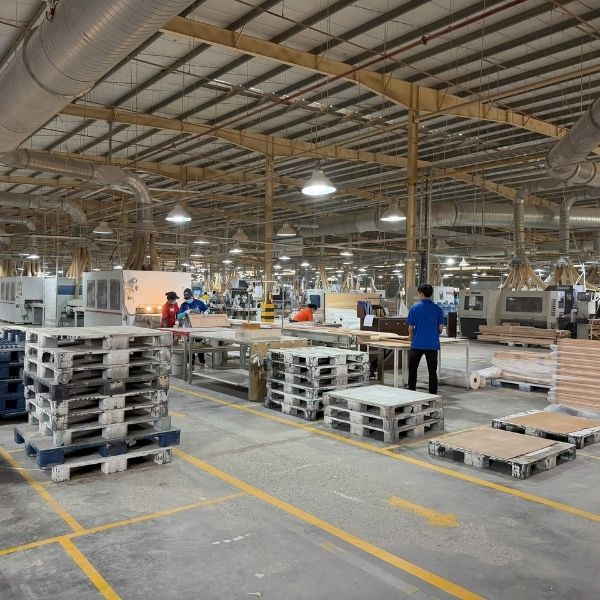
Quality inspection process in professional cabinet manufacturing.
Frameless kitchen cabinets have become an important standard in modern kitchen design, especially for distributors and developers sourcing modern cabinetry solutions. Their efficient structure, clean aesthetics, and compatibility with automated manufacturing make them a preferred choice for many residential developments and cabinet distribution businesses worldwide.
However, the quality and long-term performance of frameless cabinets depend heavily on the manufacturing capability behind them. Precision machining, material quality, finishing systems, and consistent quality control all play critical roles in ensuring reliable cabinet production.
For distributors, developers, and cabinet brands sourcing internationally, working with an experienced and export-focused manufacturing partner can significantly reduce supply risks and ensure stable product quality.
As a professional Vietnam cabinet factory, Starvia Cabinet focuses on delivering reliable cabinet manufacturing solutions for global partners. With modern production equipment, scalable manufacturing capacity, and extensive experience in export markets, the company supports distributors and project developers seeking dependable cabinet supply from Vietnam.
Buyers evaluating frameless cabinet sourcing are encouraged to carefully review factory capabilities, production standards, and long-term manufacturing reliability when selecting their partners.
 View collection
 View collection
 View collection
 View collection