- Our Products
-
Choose your Cabinet Style
-

In large construction projects, installation speed plays a critical role in determining whether a project stays on schedule or faces costly delays. From residential developments to hospitality projects and multi-unit housing, contractors and developers must coordinate multiple trades, materials, and timelines. Within this process, cabinetry installation is one of the final stages before project completion, which means any delays can directly affect the overall project timeline cabinets must follow.
While installation teams often receive attention for productivity and efficiency, the reality is that the speed of installation is heavily influenced by cabinet construction itself. Cabinets that are designed and manufactured with installation in mind can dramatically improve cabinet installation efficiency, reduce labor time, and help projects maintain predictable schedules.
For global developers, distributors, and procurement managers, understanding how cabinet construction impacts installation speed is essential when selecting a cabinet manufacturing partner. Small differences in cabinet engineering, structural design, and manufacturing precision can translate into significant time savings during installation.
This article explores the relationship between cabinet construction, installation efficiency, and how the right cabinet manufacturing standards can help protect construction timelines.
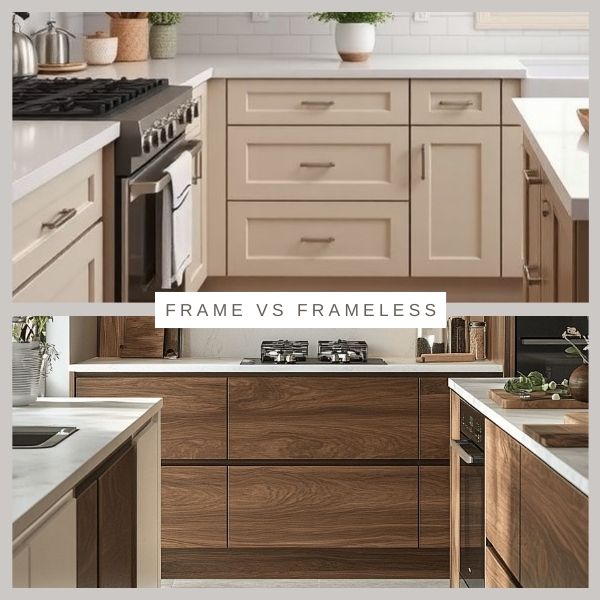
Framed and frameless cabinet construction are the two most common systems used in modern cabinet manufacturing.
Cabinet construction refers to the structural design and assembly method used to build cabinet boxes. It includes the materials, joinery systems, panel thickness, and structural components that determine how cabinets perform both structurally and during installation.
Although cabinets from different manufacturers may appear visually similar, their internal construction can vary significantly. These differences affect durability, dimensional accuracy, and most importantly, installation speed.
Modern cabinet manufacturing typically relies on two primary construction systems:
Each system has advantages depending on design preferences and market demand. However, regardless of style, the precision and consistency of cabinet construction directly affect cabinet installation efficiency.
When cabinets are manufactured with tight tolerances and strong structural integrity, installation teams can work faster and with fewer adjustments on site.
The installation process involves positioning cabinet boxes, aligning them accurately, securing them to walls, and ensuring doors and drawers function correctly. When cabinet construction lacks precision, installers must compensate during installation, which increases labor time and slows down project progress.
Several construction factors play a key role in determining installation speed.
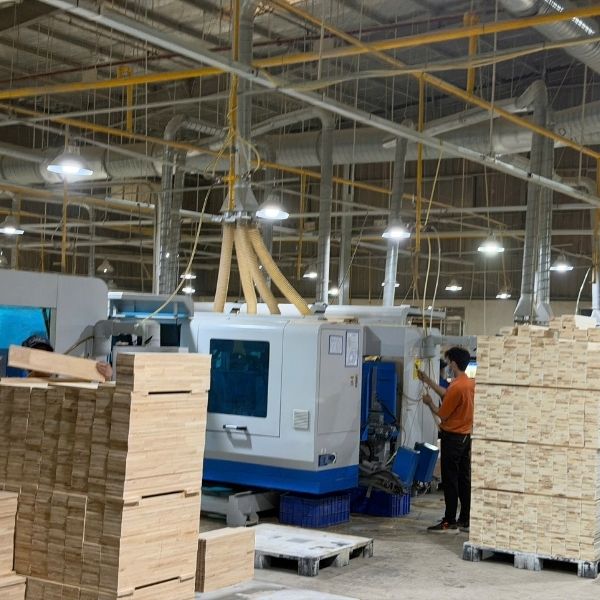
CNC machining technology allows cabinet factories to maintain high dimensional accuracy during production.
One of the most important aspects of cabinet construction is dimensional consistency. If cabinet widths, heights, or depths vary slightly across units, installers must spend additional time adjusting spacing and leveling.
Even small dimensional variations can cause problems when multiple cabinets are installed together in a single run. Installers may need to reposition cabinets repeatedly to achieve consistent alignment.
Factories that invest in advanced manufacturing technologies, such as CNC machining systems, can maintain extremely tight dimensional tolerances. This level of precision improves cabinet installation efficiency by allowing installers to position cabinets quickly without repeated adjustments.
For large-scale projects, precise cabinet construction ensures that installation workflows remain consistent across hundreds of kitchens.
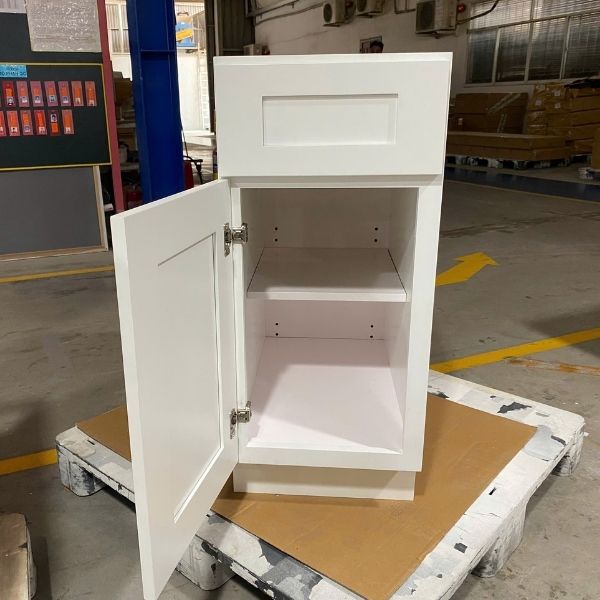
Strong cabinet box construction helps maintain alignment during installation.
Another critical component of cabinet construction is the structural stability of the cabinet box. Cabinets must maintain their shape during transportation, storage, and installation.
If cabinet boxes are not rigid enough, they may twist or warp slightly during handling. This can create alignment problems during installation, forcing installers to spend additional time correcting cabinet positioning.
High-quality cabinet construction typically incorporates structural features such as:
These structural elements help cabinet boxes remain square and stable. As a result, installation teams can align cabinets faster, improving overall cabinet installation efficiency.
When cabinets maintain structural integrity, installation becomes a smoother and more predictable process.
Back panel construction is another factor that influences installation speed. Some cabinets use thin back panels attached with staples, while others use thicker structural back panels integrated into the cabinet box.
Well-designed cabinet construction often includes full back panels or reinforced hanging systems that simplify wall mounting. These features allow installers to secure cabinets to the wall more quickly and maintain consistent alignment.
Efficient back panel systems also distribute cabinet weight evenly, which improves long-term durability and reduces installation complexity.
In large projects, optimized back panel design can significantly increase cabinet installation efficiency and reduce labor time.
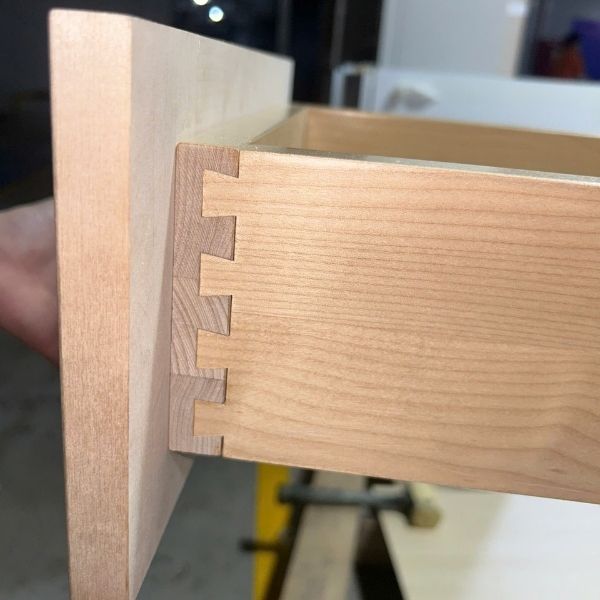
Joinery systems such as dowels and cam locks are commonly used in cabinet construction.
Joinery methods are another essential part of cabinet construction. The way cabinet components are connected determines both structural strength and assembly efficiency.
Common joinery systems include:
Each joinery method has advantages depending on whether cabinets are shipped assembled or in flat-pack form.
Strong and precise joinery ensures that cabinet boxes remain square and stable. This reduces the need for installers to make corrections during installation and helps maintain consistent cabinet alignment.
As a result, well-designed joinery improves cabinet installation efficiency and contributes to faster project completion.
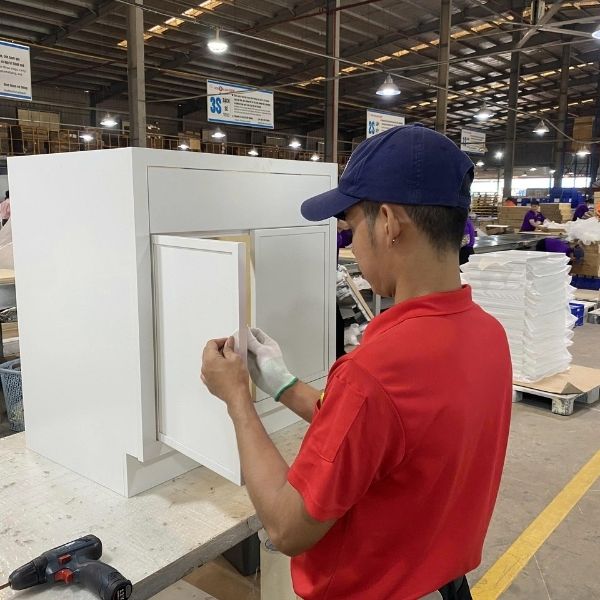
Precise cabinet construction and assembly help improve installation efficiency on site.
In small residential renovations, installation delays may only affect a single kitchen. However, in large construction developments, installation efficiency can influence the entire project schedule.
Projects such as apartment complexes, hotels, and student housing developments often require hundreds or thousands of cabinets to be installed within strict timelines.
If cabinet construction lacks consistency, installation teams may face repeated alignment problems in multiple units. Even small delays in each unit can accumulate into significant disruptions for the overall project timeline cabinets must meet.
On the other hand, when cabinet construction is engineered with precision, installers can follow standardized workflows across units. This dramatically improves productivity and helps construction teams maintain predictable installation schedules.
Reliable cabinet construction therefore plays a key role in protecting the overall project timeline.
Modern cabinet factories rely on advanced production technologies to ensure accurate and consistent cabinet construction. These technologies allow manufacturers to produce cabinets with high precision while maintaining large-scale production capacity.
Key manufacturing technologies include:
Computer-controlled cutting machines ensure panels are produced with extremely precise dimensions. This consistency supports faster installation and better cabinet alignment.
Automated drilling systems guarantee accurate hardware placement and consistent hole positioning, which improves cabinet assembly and installation accuracy.
Edge banding machines protect cabinet panels while ensuring clean finishing and consistent panel thickness.
Quality inspections throughout the production process help verify that cabinet components meet strict dimensional and structural standards.
By combining these technologies, manufacturers can produce cabinet construction systems that support faster installation and improved cabinet installation efficiency.
Surface finishing technology also plays an important role in cabinet manufacturing quality. Advanced finishing systems help ensure consistent coating thickness, smooth surfaces, and long-term durability for cabinet components. For example, industrial finishing technologies developed by companies such as Cefla Finishing are widely used in furniture and woodworking manufacturing to improve surface quality and production efficiency.
For distributors and developers sourcing cabinets internationally, evaluating cabinet construction should be an important part of the procurement process.
Instead of focusing only on visual design or pricing, buyers should also examine structural construction details that affect installation performance.
Key elements to evaluate include:
Understanding these construction details allows buyers to select suppliers capable of delivering cabinets that support efficient installation and reliable performance.
Well-engineered cabinet construction helps reduce installation delays and ensures projects stay aligned with the expected project timeline cabinets must follow.
In recent years, Vietnam has emerged as an important manufacturing hub for cabinet production serving international markets.
Vietnam cabinet factories increasingly combine modern production equipment with experienced manufacturing teams. This allows them to produce cabinets with consistent cabinet construction quality while maintaining competitive pricing.
For global buyers, sourcing cabinets from Vietnam offers several advantages:
As demand for efficient construction solutions grows, manufacturers that prioritize precise cabinet construction are gaining greater attention from international distributors and developers.
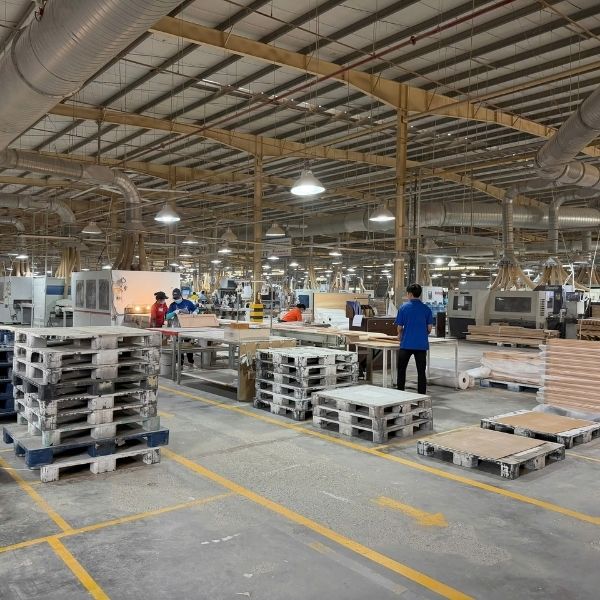
Modern cabinet factories combine advanced machinery and quality control to produce consistent cabinet construction.
Starvia Cabinet is a Vietnam-based cabinet manufacturer focused on delivering reliable cabinet construction for global B2B customers.
The company integrates modern manufacturing technology with strict quality standards to ensure cabinets meet international installation requirements.
Starvia’s manufacturing approach emphasizes:
The factory produces a wide range of cabinet styles including Shaker cabinets, inset cabinets, and RTA cabinets, all designed to support efficient installation and consistent performance across large projects.
By focusing on manufacturing precision and structural reliability, Starvia supports developers and distributors seeking cabinet solutions that help maintain efficient installation workflows and protect project schedules.
In construction projects, installation efficiency depends on more than the skill of the installation team. The quality and precision of cabinet construction play a fundamental role in determining how quickly cabinets can be installed.
When cabinets are manufactured with accurate dimensions, strong structural stability, and well-designed joinery systems, installation teams can work more efficiently and maintain consistent alignment across units.
For developers, contractors, and distributors managing large projects, selecting cabinets with reliable cabinet construction standards is essential for maintaining installation productivity and protecting the overall project timeline cabinets must follow.
As global construction continues to demand faster and more efficient project delivery, cabinet manufacturing that prioritizes engineering precision and scalable production will remain a key factor in successful project execution.




 View collection
 View collection
 View collection
 View collection