- Our Products
-
Choose your Cabinet Style
-

In today’s global construction and renovation landscape, understanding kitchen cabinet refacing cost is no longer optional for B2B buyers. Whether you are a developer managing multi-unit housing, a contractor handling large renovation pipelines, or a distributor sourcing products internationally, cost control is directly tied to sourcing strategy and manufacturing efficiency.
Cabinet refacing has emerged as a practical alternative to full cabinet replacement, especially in projects where structural integrity remains intact. Instead of replacing entire cabinet systems, refacing focuses on upgrading visible components, reducing both material usage and installation time.
From a manufacturing standpoint, this approach aligns well with standardized production models, particularly in regions such as Vietnam where cabinet manufacturing has scaled rapidly. As a result, many global buyers are now evaluating kitchen cabinet refacing cost not only at the project level but also from a supply chain and production perspective.
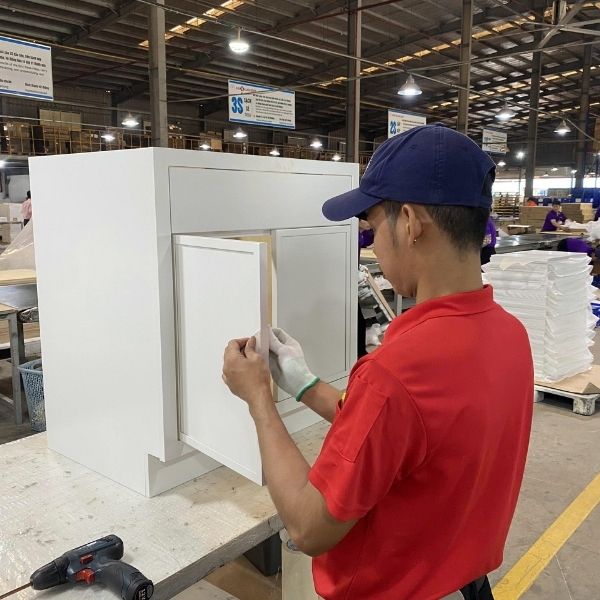
Cabinet refacing process focusing on door replacement and surface finishing
To properly evaluate kitchen cabinet refacing cost, it is important to move beyond surface-level pricing and understand how the cost is structured at the manufacturing level.
Refacing typically includes three primary production components: cabinet doors, drawer fronts, and surface finishing for cabinet frames. Each of these elements requires different materials, machinery, and labor inputs.
Cabinet doors and drawer fronts are often produced using MDF, plywood, or solid wood, depending on the target market. These components go through cutting, profiling, sanding, and finishing processes. Frame surfaces, on the other hand, are treated with veneers or laminates to ensure visual consistency.
Hardware integration is also part of the process. Hinges, slides, and connectors must be compatible with both existing structures and new components. From a factory perspective, this requires precision engineering and standardized specifications.
Because the cabinet box remains unchanged, manufacturers can streamline production and reduce raw material consumption. This is one of the key reasons why kitchen cabinet refacing cost is significantly lower than full replacement.
The average kitchen cabinet refacing cost varies depending on geography, production method, and sourcing model.
In Western markets, refacing costs typically range from $80 to $250 per linear foot, with total project costs between $4,000 and $15,000 per kitchen. These figures are heavily influenced by labor costs, which can account for a large portion of the total.
However, when sourcing directly from a Vietnam cabinet factory, the cost structure shifts. Manufacturing costs are lower due to labor efficiency and optimized production systems. In addition, bulk production allows factories to reduce per-unit costs through economies of scale.
For B2B buyers, this means that the same product specifications can be achieved at a lower total cost when manufacturing is aligned with export-oriented production facilities.
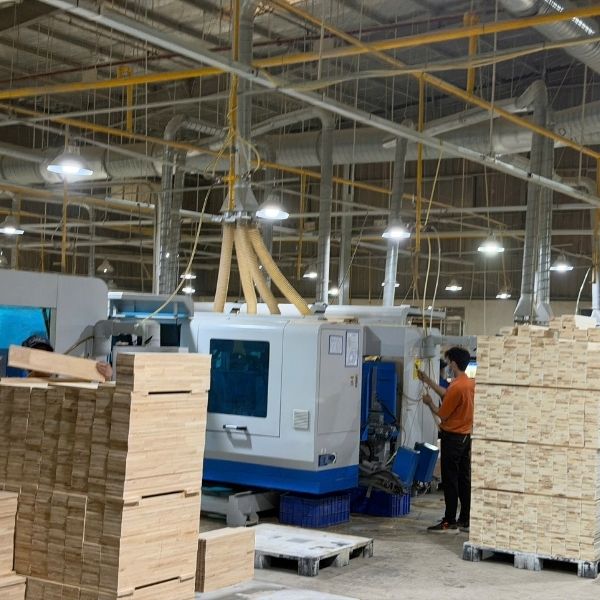
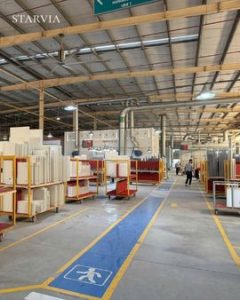
Large-scale cabinet manufacturing in a Vietnam factory
One of the most important factors influencing kitchen cabinet refacing cost is manufacturing scale. Large factories operate differently from small workshops, particularly in terms of efficiency and consistency.
High-capacity factories utilize automated production lines, including CNC cutting machines, edge banding systems, and finishing lines. These systems reduce manual labor, minimize errors, and ensure uniform quality across large orders.
Scale also affects procurement. Large manufacturers can source raw materials in bulk, securing better pricing for plywood, MDF, veneers, and hardware. These cost advantages are then passed on to B2B buyers.
In addition, production planning becomes more efficient at scale. Orders can be scheduled in batches, reducing downtime and improving output consistency. This level of operational control plays a direct role in stabilizing kitchen cabinet refacing cost for large projects.
Modern machinery is a key driver of cost efficiency in cabinet manufacturing. Advanced equipment allows factories to produce high volumes with consistent quality, which directly impacts kitchen cabinet refacing cost.
CNC machines ensure precise cutting and shaping of cabinet components. Automated sanding and finishing systems create uniform surfaces, reducing the need for rework. Spray booths with controlled environments improve coating quality and reduce material waste.
These technologies not only improve product quality but also reduce production time. Faster production cycles mean lower labor costs per unit, which is particularly important for export-focused manufacturers.
For B2B buyers, working with factories that invest in modern machinery ensures that cost savings do not come at the expense of quality.
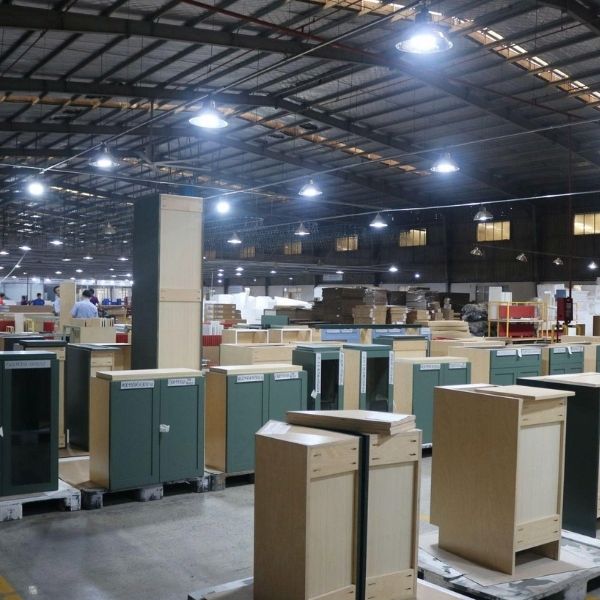
Clean finishing process ensures consistent cabinet quality
Finishing is one of the most critical stages in cabinet manufacturing and has a direct impact on kitchen cabinet refacing cost.
A clean finishing process involves multiple steps, including sanding, priming, painting, and curing. Each step requires controlled conditions to ensure durability and visual consistency. Dust-free environments and automated spray systems are often used in modern factories.
While high-quality finishing increases production cost, it also enhances product value and reduces the risk of defects. Poor finishing can lead to issues such as uneven surfaces, peeling, or color inconsistency, which may result in returns or rework.
For B2B buyers, the goal is to balance cost and quality. Investing in reliable finishing processes often leads to better long-term outcomes, even if the initial cost is slightly higher.
In modern cabinet manufacturing, finishing systems often rely on internationally recognized coating standards and materials from suppliers such as Sherwin-Williams, ensuring durability, color consistency, and long-term surface performance across large-scale production.
Different product configurations influence kitchen cabinet refacing cost in different ways.
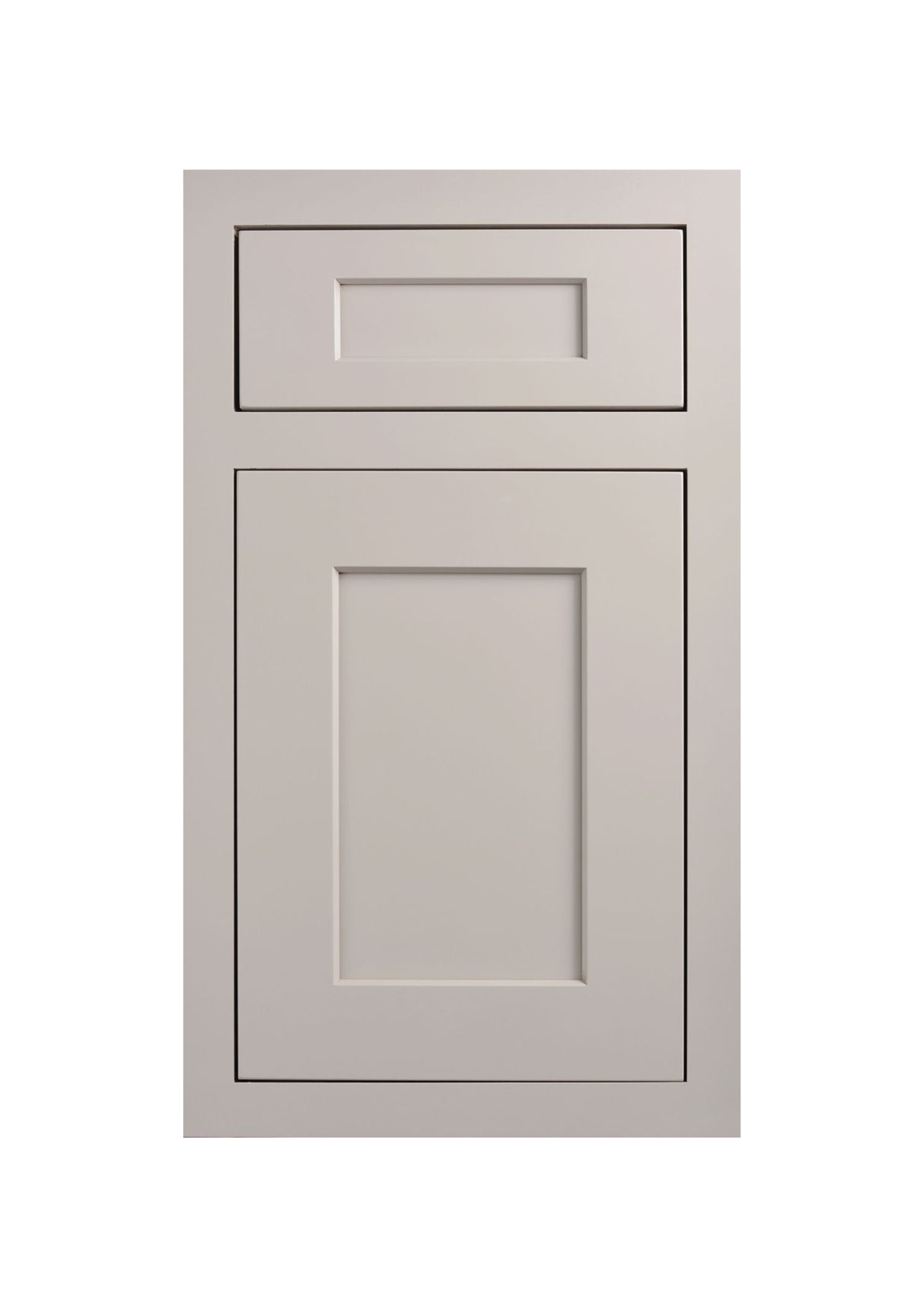
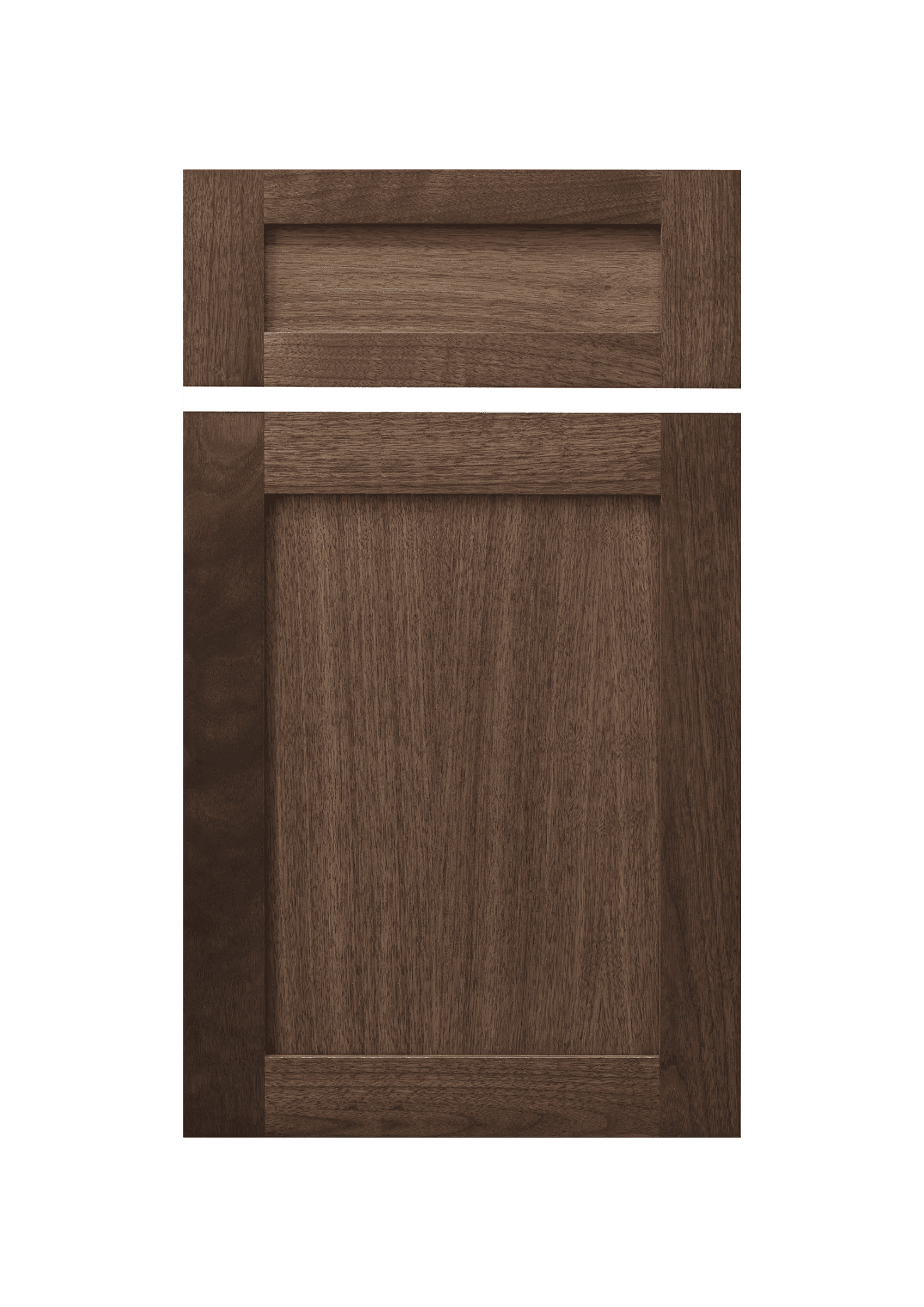
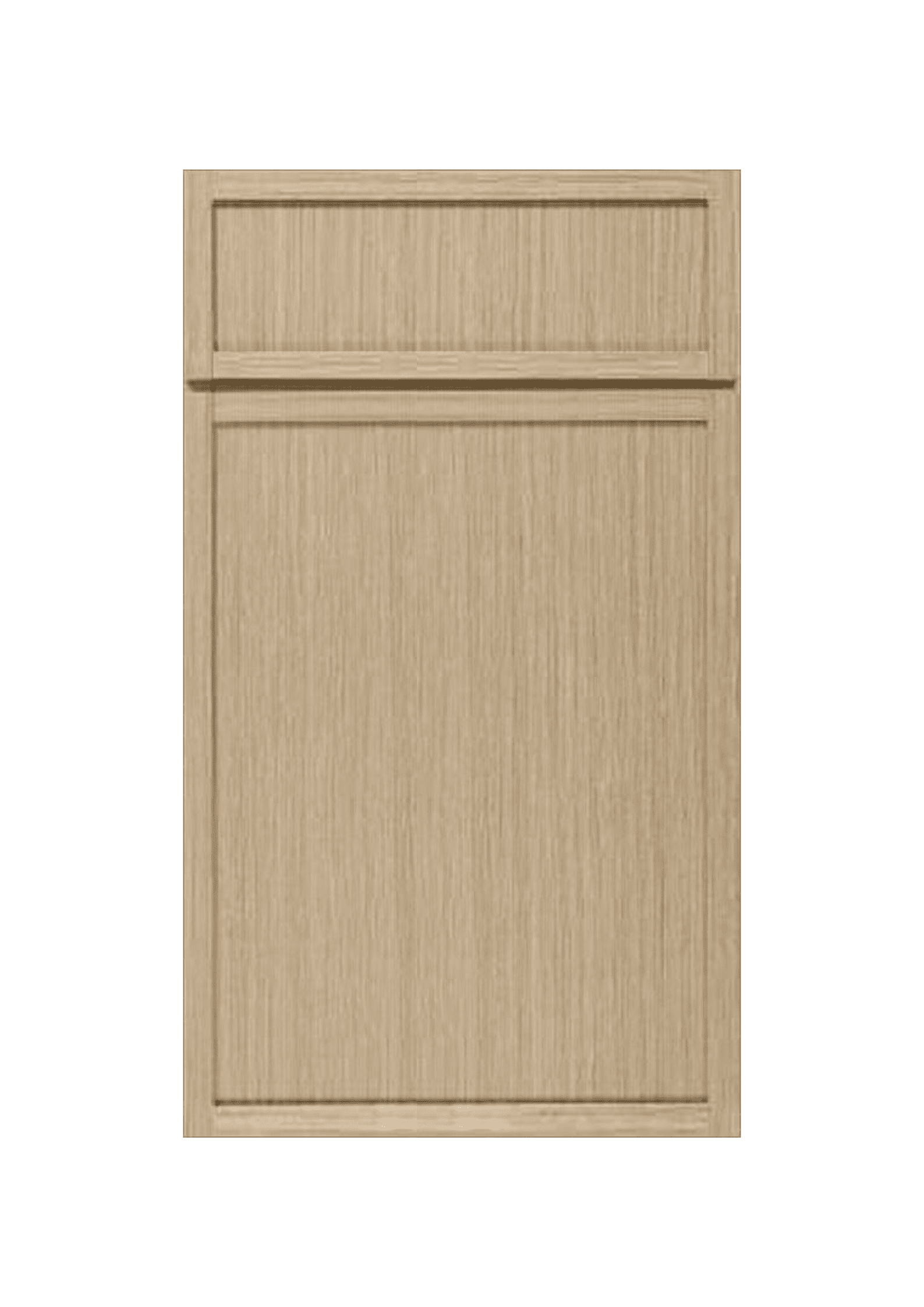
Shaker-style cabinets are among the most efficient to produce due to their simple design. This makes them ideal for large-scale projects where cost control and consistency are priorities.
Inset cabinets require higher precision and additional labor, which increases cost. These are typically used in premium segments where design and craftsmanship are more important than cost efficiency.
RTA (Ready-to-Assemble) cabinets offer a different advantage. By reducing shipping volume and simplifying installation, they help lower overall project costs. This format is widely used in international trade due to its logistical efficiency.
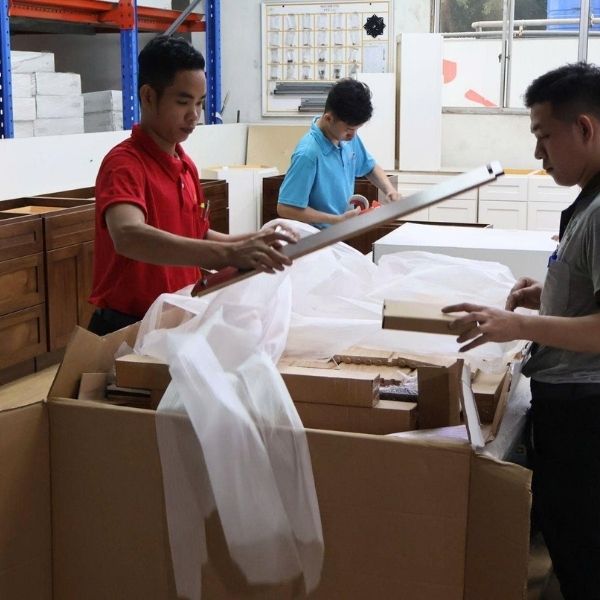
Export-ready cabinet packaging optimized for international shipping
Export capability is a critical factor in determining kitchen cabinet refacing cost for international buyers.
Factories with strong export experience understand packaging optimization, container loading strategies, and compliance requirements. Efficient packaging reduces damage during transit and maximizes container utilization.
Logistics planning also plays a role. Consolidated shipments, optimized routes, and reliable scheduling all contribute to cost control. Delays or inefficiencies in logistics can increase overall project costs, even if manufacturing costs are low.
For B2B buyers, choosing a manufacturer with proven export capability reduces risk and ensures smoother project execution.
Managing kitchen cabinet refacing cost effectively requires a strategic approach that goes beyond price negotiation.
Standardization is one of the most effective strategies. By using consistent designs and specifications, buyers can simplify production and reduce costs. This also improves quality consistency across projects.
Bulk ordering is another important factor. Larger orders allow manufacturers to optimize production and offer better pricing. Consolidating orders across multiple projects can further enhance cost efficiency.
Material selection should be aligned with project requirements. Not all projects require premium materials, and choosing the right balance can significantly impact total cost.
Finally, working with experienced manufacturers ensures better communication, reliable timelines, and consistent quality, all of which contribute to cost control.
One of the most common mistakes is focusing only on unit price without considering total landed cost. Shipping, duties, and installation must all be included in the calculation.
Another issue is overlooking quality consistency. Low-cost suppliers may offer attractive pricing but fail to deliver consistent results, leading to additional costs in the long run.
Over-customization is also a frequent challenge. While customization can add value, it increases production complexity and reduces efficiency. For large-scale projects, standardized solutions are often more practical.
As Vietnam continues to grow as a global manufacturing hub, companies are increasingly focusing on operational excellence rather than short-term pricing advantages.
Starvia Cabinet reflects this shift by emphasizing structured production systems, modern machinery, and clean finishing processes. Instead of positioning itself purely as a low-cost supplier, the company focuses on delivering consistent quality at scale.
With experience in export markets and a strong understanding of B2B requirements, Starvia supports projects that require reliability, efficiency, and long-term value. This approach aligns with the needs of global buyers who prioritize stability over short-term cost savings.
Several trends are expected to influence kitchen cabinet refacing cost in the coming years.
Sustainability is becoming increasingly important. Refacing reduces material waste and aligns with environmental goals, making it a preferred option for many projects.
Modular systems and RTA solutions are also gaining popularity due to their efficiency in production and logistics. These systems allow for faster project completion and lower overall costs.
At the same time, global supply chains are evolving. Vietnam is strengthening its position as a reliable manufacturing hub, offering a combination of cost efficiency, production capability, and export readiness.
Understanding kitchen cabinet refacing cost goes beyond comparing price points. It requires a broader view of manufacturing efficiency, material selection, and supply chain reliability—especially for B2B buyers managing large-scale or repeat projects.
Refacing continues to stand out as a practical solution, offering a balance between cost control, production scalability, and consistent output quality. When aligned with standardized designs and efficient logistics, it becomes a strategic approach rather than just a short-term cost-saving option.
In this context, working with manufacturing partners that prioritize structured production, modern machinery, and clean finishing processes can make a measurable difference. Consistency, not just pricing, is often what determines long-term project success.
Companies like Starvia Cabinet reflect this shift toward reliability-driven manufacturing. With a focus on scalable production and export-ready systems, they represent the type of partner many global buyers are increasingly looking for—where operational stability and product consistency support sustainable growth over time.



 View collection
 View collection
 View collection
 View collection